

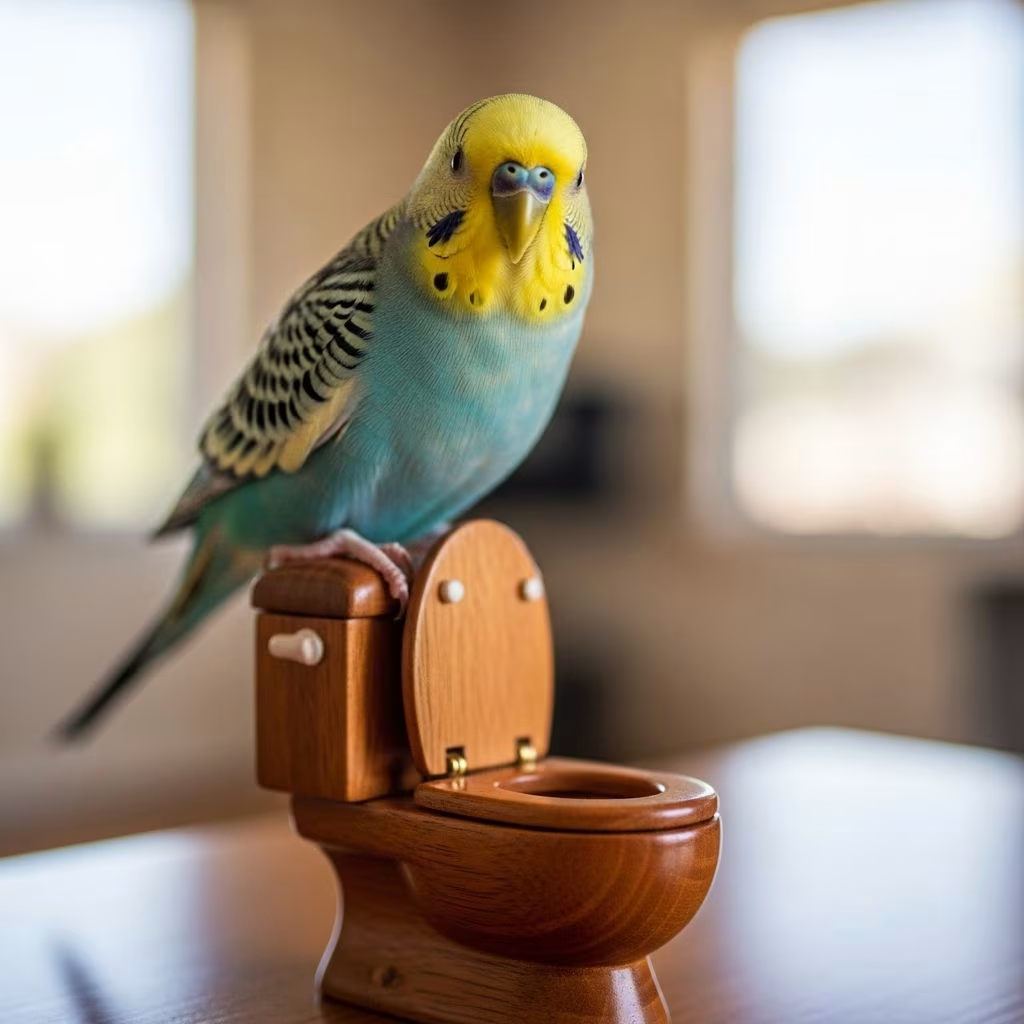
Potty training your pet bird transforms daily interactions, reducing messes and strengthening your bond. By understanding natural elimination patterns and applying consistent techniques, most birds—from parrots to cockatiels—can learn to go in designated spots, making coexistence cleaner and more enjoyable.
Why Potty Train Your Feathered Friend?
Birds eliminate frequently, often every 10-20 minutes, due to their high metabolism. Without training, droppings scatter on furniture, floors, and even shoulders during cuddle time. Successful potty training minimizes cleanup, allows safer out-of-cage time, and boosts confidence in handling your bird. Younger birds adapt quickest, but adults respond well with patience.
Benefits extend beyond hygiene: it encourages positive reinforcement, improving overall behavior and trust. Flighted birds may self-regulate by flying to perches, while hand-raised ones thrive on verbal cues.
Decoding Your Bird’s Elimination Signals
Observation is the foundation. Track when your bird poops—typically post-meal, after waking, or at set intervals. Time multiple instances for accuracy; a parrot might average 15 minutes, a lovebird slightly less.
Watch for pre-poop cues:
- Tail lifting or wagging
- Body shifting or leaning forward
- Perch gripping or stepping back
- Restlessness or ‘antsy’ movements
These signals vary by species. Parrots extend their rear; smaller birds like cockatiels fidget. Log patterns in a journal, noting diet influences—nectar diets speed transit.
Selecting the Perfect Potty Zone
Choose accessible, easy-clean spots: cage floors lined with newspaper, playgym trays, or portable perches. Avoid human body parts to prevent dependency. For on-command training, use wastebaskets or paper plates held steady.
| Spot Type | Pros | Cons | Best For |
|---|---|---|---|
| Cage Floor | Contained, natural | Limited mobility | Stationary birds |
| Playgym Perch | Fun association | Needs covering | Active parrots |
| Handheld Basket | Portable command | Requires holding | Interaction times |
| Toilet Rim | Direct flush | Risk of fear | Advanced training |
Test zones gradually, ensuring your bird feels secure.
Implementing Consistent Verbal Commands
Pick a short, repeatable phrase like “Go potty,” “Poop time,” or “Hurry up.” Consistency is key—use it every session.
Steps to introduce:
- Anticipate need via timer or signal (e.g., 7 minutes before average interval).
- Place bird on zone.
- Repeat command calmly until elimination.
- Praise immediately.
Initial successes are timed coincidences, but repetition builds association. Sessions last 1-2 minutes; avoid forcing.
Leveraging Positive Reinforcement Effectively
Rewards cement learning. Use verbal praise (“Good bird!”), head scratches, or tiny treats like millet sprigs. Timing matters—reward within seconds.
Avoid:
- Punishment for accidents; it breeds fear.
- Over-treats; obesity risks high.
- Inconsistent cues.
Progress markers: bird goes on cue 80% of time within weeks.
Daily Routines for Lasting Success
Integrate training into schedules. Morning wake-up: perch over zone, command, reward. Pre-handling: timer check. Outings: portable perch ready.
Sample schedule for a 15-minute bird:
- 7 AM: Wake, potty.
- Every 12 mins during play.
- Post-meal: Immediate zone.
- Bedtime: Final go.
Adjust for species—lorries poop faster.
Species-Specific Training Insights
Parrots and Macaws
Large parrots learn commands well but need firm timers due to 10-20 minute cycles. Flighted ones self-toilet on perches.
Cockatiels and Lovebirds
Smaller birds go every 5-15 minutes; they self-train when handled over paper. Use finger perches for security.
Other Avians
Conures fidget obviously; budgies respond to millet bribes.
Overcoming Common Training Hurdles
Accidents happen—clean neutrally, resume. If no progress:
- Re-observe patterns; diet changes?
- Shorten sessions.
- Consult avian vet for health issues (e.g., loose stools signal problems).
Myths debunked: Birds can’t be 100% trained; instincts prevail. Aim for 90% success.
Advanced Techniques for Expert Results
Once basic trained, teach multi-zones or mid-flight returns. Use clickers for precision. For travel, portable potty pads work.
Health monitoring: Normal droppings are firm, white-capped green. Changes warrant vet.
FAQs
How long does bird potty training take?
Weeks to months; young birds faster.
Can all birds be potty trained?
Yes, with patience; even messy lories succeed.
What if my bird poops on me?
Anticipate, relocate promptly without scolding.
Is punishment ever okay?
No—positive methods only.
Does diet affect training?
Yes; watery foods increase frequency.
Conclusion: A Cleaner, Happier Aviary Life
Consistent observation, commands, and rewards yield a potty-trained bird, enhancing joy in ownership. Patience pays off—your feathered companion will thank you with cleaner cuddles.
References
- Potty Training Your Bird — Dummies.com. Accessed 2026. https://www.dummies.com/article/potty-training-your-bird-198706
- Potty Training A Parrot: DO’s and DON’T’s — Poodles and Parrots. Accessed 2026. https://www.poodlesandparrots.com/blog/posts/potty-training-a-parrot-do-s-and-don-t-s
- Potty Training Your Parrot FAST — YouTube (Northern Parrots channel equivalent). 2026. https://www.youtube.com/watch?v=cT8IU6gjoJg
- Toilet Training Your Parrot — Northern Parrots. Accessed 2026. https://www.northernparrots.com/blog/toilet-training-your-parrot/
- Potty-training Your Bird — MIT.edu (Rei). Accessed 2026. https://stuff.mit.edu/people/rei/birds-potty.html



