Bird Nail Trimming: 5-Step Guide For Safe At-Home Trims
Discover safe, step-by-step techniques to trim your bird's nails, prevent injuries, and keep your feathered friend comfortable and healthy.
Mastering Bird Nail Trimming at Home
Proper nail maintenance is a vital aspect of caring for pet birds, ensuring their comfort, safety, and mobility. Overgrown nails can lead to discomfort while perching, increased risk of snags, or even injuries during play. This guide provides a thorough overview of why regular trims matter, the right tools to use, detailed trimming methods, and strategies to make the process stress-free for both you and your bird.
Why Regular Nail Trimming Matters for Your Bird’s Well-Being
Birds in the wild naturally wear down their nails through climbing rough bark and foraging on varied surfaces. Captive birds, however, often lack these opportunities, leading to rapid nail growth. Long nails can curl underfoot, causing pain or imbalance, and may puncture skin during handling. Conversely, overly short nails impair grip, raising fall risks from perches.
Maintaining ideal nail length—where nails just barely extend beyond a flat surface when the bird stands—promotes stability and prevents accidents. Frequent, small trims help recede the nail’s inner blood vessel (the quick), making future sessions safer. Establishing this routine early builds trust and minimizes stress.
Essential Tools for Safe Bird Nail Grooming
Gathering the right equipment sets the foundation for successful trims. Here’s what you’ll need:
- Bird-specific nail clippers: Sized for your bird’s species—small scissors for finches, sturdy clippers for parrots—to ensure clean cuts without splintering.
- Nail grinder or file: Optional for smoothing edges, ideal for larger birds to reduce sharpness gradually.
- Styptic powder or alternatives: Cornflour, icing sugar, or cornstarch to staunch bleeding if the quick is nicked; sugar adds antibacterial properties.
- Towels or soft cloths: For gentle restraint without restricting breathing.
- Treats and perches: Positive reinforcement tools to associate grooming with rewards.
Choose sharp, high-quality tools to avoid crushing nails, which can cause pain or splits.
Understanding Nail Anatomy to Avoid Injury
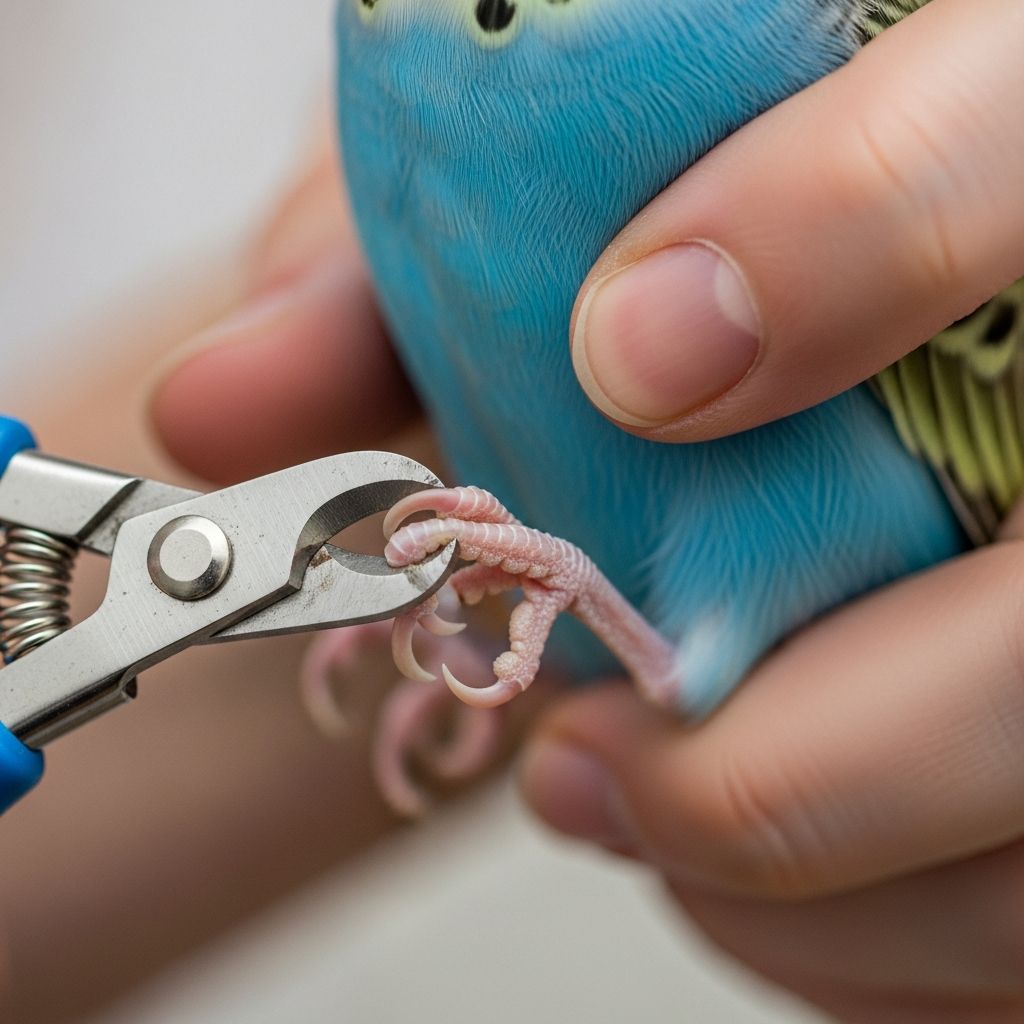
The bird nail consists of a hard outer keratin shell encasing the quick—a sensitive vascular core. In light nails, the pink quick is visible; dark nails require caution, trimming tiny increments (1-2mm) and observing for a gray inner ring.
Ideal length: Position your bird on a flat table; nails should hover slightly above the surface at eye level. Cutting too short risks pain and bleeding, while excess length invites snags. For overgrown nails, trim incrementally over sessions to safely retract the quick.
| Nail Type | Visibility of Quick | Trimming Tip |
|---|---|---|
| Light/White | Clearly pink | Clip just before pink area |
| Dark/Black | Not visible | Small cuts; check for gray ring |
| Overgrown | Extended | Tiny bits weekly to recede quick |
Preparation: Setting Up for a Calm Experience
Timing is key—choose a quiet period when your bird is relaxed, perhaps post-meal. Dim lights and minimal distractions reduce anxiety. Enlist a helper if your bird is large or wiggly.
Desensitize gradually: Introduce tools days ahead, pairing with treats. For young birds, start handling feet playfully. Place natural perches like pumice or sand-covered ones in the cage daily to encourage self-filing between trims.
Step-by-Step Guide to Trimming Nails
Follow these proven steps for safe results:
- Secure your bird gently: Drape a towel over the back, holding sides firmly but avoiding chest pressure—birds lack diaphragms and can suffocate easily.
- Position for access: Offer a finger for gripping; lift each nail individually with your thumb for control.
- Assess and clip: Start with front nails. Cut straight across the tip, leaving a millimeter buffer. Move to back toes last, as they’re often overlooked.
- Monitor and smooth: After each toe, check for bleeding. File edges if tolerated.
- Reward immediately: Offer high-value treats to end positively.
For squirmy birds, try the ‘finger perch’ method: Let them grasp your finger, clipping as they hold steady.
Positive Reinforcement Training for Stress-Free Trims
Forceful restraint erodes trust; training builds cooperation. Use shaping: Reward proximity to clippers, then touch, then clipping.
- Step 1: Bird relaxes on perch near tools—treat.
- Step 2: Clippers approach foot—treat.
- Progress slowly: Touch nail, open clippers nearby, finally clip.
Repeat per session, backing up if stress shows. Over time, birds view trims as fun, associating them with rewards. This method suits parrots especially well.
Handling Accidents: What to Do If Bleeding Occurs
Mistakes happen—stay calm. Apply styptic powder firmly; it clots blood swiftly. For minor nicks, press with cornstarch. Monitor for heavy bleeding; seek a vet if it persists, as birds can lose significant blood volume quickly.
Prevention: Always under-trim initially. Post-trim, observe gait and perching for issues.
Species-Specific Considerations and Frequency
Trim frequency varies: Small birds (budgies) every 4-6 weeks; large parrots every 6-8. Finches may need less with abrasive perches.
- Small birds: Use fine scissors; focus on minimal cuts.
- Parrots/Macaws: Heavy-duty clippers; train for tolerance.
- Backyard species (e.g., chickens): Less frequent, natural wear higher.
Consult avian vets for unique needs, like overgrown cases requiring professional filing.
Enhancing Natural Nail Wear in the Cage
Supplement trims with cage setups mimicking nature:
- Pumice or concrete perches for grinding.
- Various diameters to exercise toes.
- Avoid plastic perches—they promote overgrowth.
Rotate textures; watch for footpad sores from rough surfaces.
Frequently Asked Questions (FAQs)
How often should I trim my bird’s nails?
Every 4-8 weeks, depending on species and growth rate. Check weekly: If nails touch or curl past perch ends, it’s time.
Can I use human nail clippers on my bird?
Not recommended—too blunt, risking splits. Opt for bird-sized tools.
What if my bird hates nail trims?
Train with positive reinforcement over weeks. If uncooperative, visit a vet or groomer.
Is a nail grinder better than clippers?
Grinders suit tolerant birds for smooth results; clippers are faster for quick sessions.
Should I trim during wing clipping?
Yes, combine for efficiency, but prioritize calm.
Long-Term Benefits of Consistent Grooming
Routine trims foster bonding, prevent health issues like bumblefoot, and extend lifespan. Birds with proper nails perch confidently, climb adeptly, and interact joyfully. Pair with beak checks and baths for holistic care.
Word count: 1678 (excluding metadata and HTML tags).
References
- Beak and Nail Care in Birds — VCA Animal Hospitals. 2023. https://vcahospitals.com/know-your-pet/beak-and-nail-care-in-birds
- How to Trim Your Bird’s Nails and Live to Tell the Tale — PetMD. 2023. https://www.petmd.com/bird/grooming/evr_bd_trimming_nails
- What You Need to Know to Give Your Bird a Perfect Nail Trim — BirdTricks Blog. 2022. https://birdtricksstore.com/blogs/birdtricks-blog/what-you-need-to-know-to-give-your-bird-a-perfect-nail-trim
- Nail Trimming — Kaytee. 2024. https://kaytee.com/learn-care/pet-birds/nail-trimming
- Bird Nail Trim Essentials — BirdSupplies.com. 2023. https://birdsupplies.com/pages/bird-nail-clipping-essentials
Similar Articles




Read full bio of Sneha Tete