

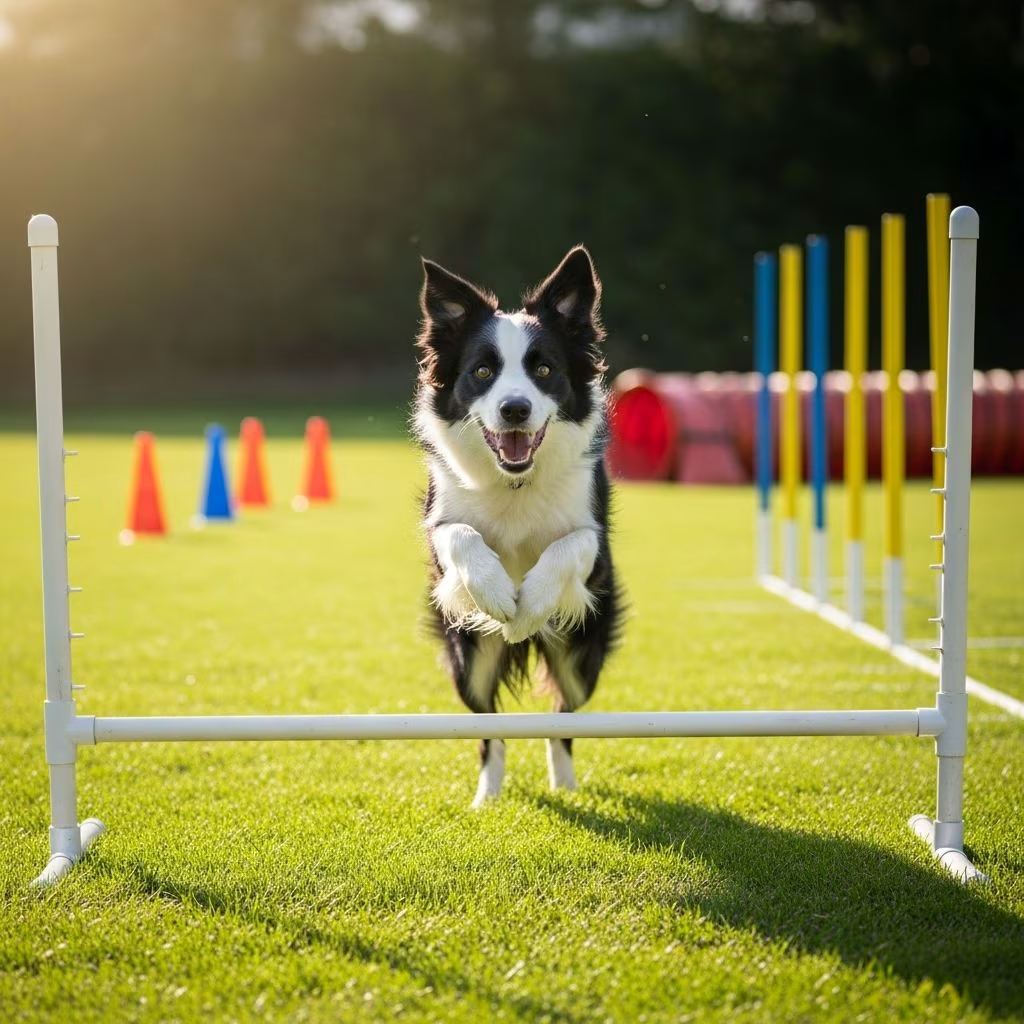
Behavior generalization empowers dogs to perform trained actions reliably across varied settings, from quiet homes to bustling parks. This foundational skill bridges the gap between controlled training sessions and everyday life, ensuring cues like “sit” or “stay” elicit consistent responses regardless of distractions or locations.
Why Dogs Struggle with New Contexts
Dogs naturally tie behaviors to specific environments, treating contextual elements as part of the cue. For instance, a dog might sit perfectly when food is involved but ignore the command elsewhere because it associates the action solely with mealtime cues. This context dependency arises from how dogs learn: they absorb surrounding details like your posture, room layout, or nearby objects as integral signals.
Unlike humans, who generalize concepts fluidly, dogs require deliberate practice to decouple behaviors from these anchors. Without it, training stalls in novel situations, leading to confusion or non-compliance. Early intervention prevents this by introducing variations systematically, fostering a mindset where the verbal or hand signal alone triggers the response.
Core Principles of Effective Generalization
Success hinges on gradual exposure and high reinforcement rates. Begin in low-distraction zones where the behavior is fluent—at least 80% success rate—before escalating complexity. Key variables include location, handler position, surface type, distractions, distance, and duration.
- Location shifts: Move from living room to kitchen, then yard.
- Handler variations: Practice sitting, standing, or turning away.
- Environmental changes: Grass, carpet, concrete, or noisy areas.
- Distraction levels: Add toys, sounds, or other dogs incrementally.
This layered approach builds resilience, teaching dogs the cue’s universality over situational specifics.
Step-by-Step Guide to Generalizing Behaviors
Follow this structured process to transform location-specific tricks into versatile commands.
- Achieve baseline fluency: Ensure 8/10 success in the original setting with minimal prompting.
- Introduce minor tweaks: Alter one variable, like handler position, while keeping others constant. Reward heavily.
- Expand incrementally: Add a second change, such as a new room, maintaining high treat frequency.
- Test and reinforce: In each new scenario, revert to luring if needed, then fade aids.
- Proof against distractions: Layer in mild interruptions, scaling up as proficiency grows.
- Review regularly: Revisit easy spots to solidify gains.
For “recall,” start indoors at short distances, progress to longer ranges outdoors, and incorporate people or balls. Patience yields fluency.
Overcoming Common Generalization Challenges
Trainees often hit plateaus due to rushed progression or overlooked cues. Dogs may fixate on unintended signals, like your treat hand, ignoring the word “down.” Counter this by varying delivery—sometimes pocket treats, sometimes verbal praise.
| Challenge | Symptom | Solution |
|---|---|---|
| Context fixation | Performs only near food bowl | Practice sans props in varied spots |
| Distraction overload | Ignores cue amid noise | Gradual exposure with top rewards |
| Handler dependency | Obeys only owner | Multiple trainers from day one |
| Regression in new places | Forgets basics outdoors | Restart 3Ds: distance, duration, distraction |
Address regressions by mixing known behaviors with novel ones, boosting confidence through play.
Advanced Techniques for Fluency
Once basics solidify, employ “errorless learning” by priming success: Perform the behavior in the old spot just before a new one. Elevate energy—use excited tones and premium rewards like tug toys—to counter novelty’s demotivating effect.
Incorporate discrimination training alongside generalization. Teach “sit” versus “down” in mixed trials across contexts, sharpening cue recognition. For emotional responses, like reduced fear around strangers, pair exposures with positives universally, as dogs generalize feelings faster than actions.
Real-World Applications and Benefits
Generalized dogs excel in obedience trials, hikes, or urban walks. A recall that works at the dog park saves lives; a solid “leave it” prevents scavenging. Owners report fewer frustrations, stronger bonds, and adaptable pets thriving in chaos.
Long-term, this skill accelerates future learning. A dog versed in generalization picks up new commands quicker, applying prior lessons effortlessly. Track progress with a journal noting success rates per variable.
Tools and Rewards for Success
Stock high-value motivators: cheese, hot dogs, or toys. Use clickers for precise timing. Apps logging sessions help monitor variables. Sessions last 5-10 minutes, multiple times daily, prioritizing quality.
- Variable reward schedules mimic real life, enhancing persistence.
- End on successes to build positive associations.
- Involve family for multi-handler proofing.
Frequently Asked Questions (FAQs)
How long does generalization take?
Typically 2-6 weeks per behavior, depending on dog’s age, breed, and prior experience. Consistency speeds it up.
Can puppies generalize?
Yes, start early—pups adapt quickly but need short, fun sessions to avoid overwhelm.
What if my dog regresses?
Drop back to easier levels, reinforce heavily, and rebuild gradually. Avoid punishment, which erodes trust.
Does breed matter?
Some breeds (e.g., herders) generalize faster due to working lines, but all dogs can learn with methodical training.
Should I use verbal or hand signals first?
Both, interchangeably from the start, to maximize flexibility.
Building a Generalization Mindset
View training as a lifelong journey. Celebrate small wins, like a wobbly sit on grass. Communities and workshops amplify skills—consider online courses for structured plans. With dedication, your dog becomes a reliable partner anywhere.
References
- Generalization Variables in Dog Training — Whole Dog Journal. 2023-05-15. https://www.whole-dog-journal.com/training/dog-trainers-use-of-generalizing-a-behavior/
- Teaching Dogs Generalization: Expanding Behaviors — Fenzi Dog Sports Academy. 2024-02-10. https://www.fenzidogsportsacademy.com/blog/teaching-dogs-generalization-expanding-behaviors-beyond-contextual-cues
- A Simple Process for Generalizing Behaviors — Golden Paws Dog Training. 2023-11-20. https://goldenpawsdogtraining.com/a-simple-process-for-generalizing-behaviors/
- Generalizing in Dog Training — Dogmantics. 2022-08-05. https://dogmantics.com/generalizing/
- What Does Generalization Mean in Dog Training? — Dog Possible Austin. 2024-01-12. https://www.dogpossibleaustin.com/blog/what-does-generalization-mean-in-dog-training



