

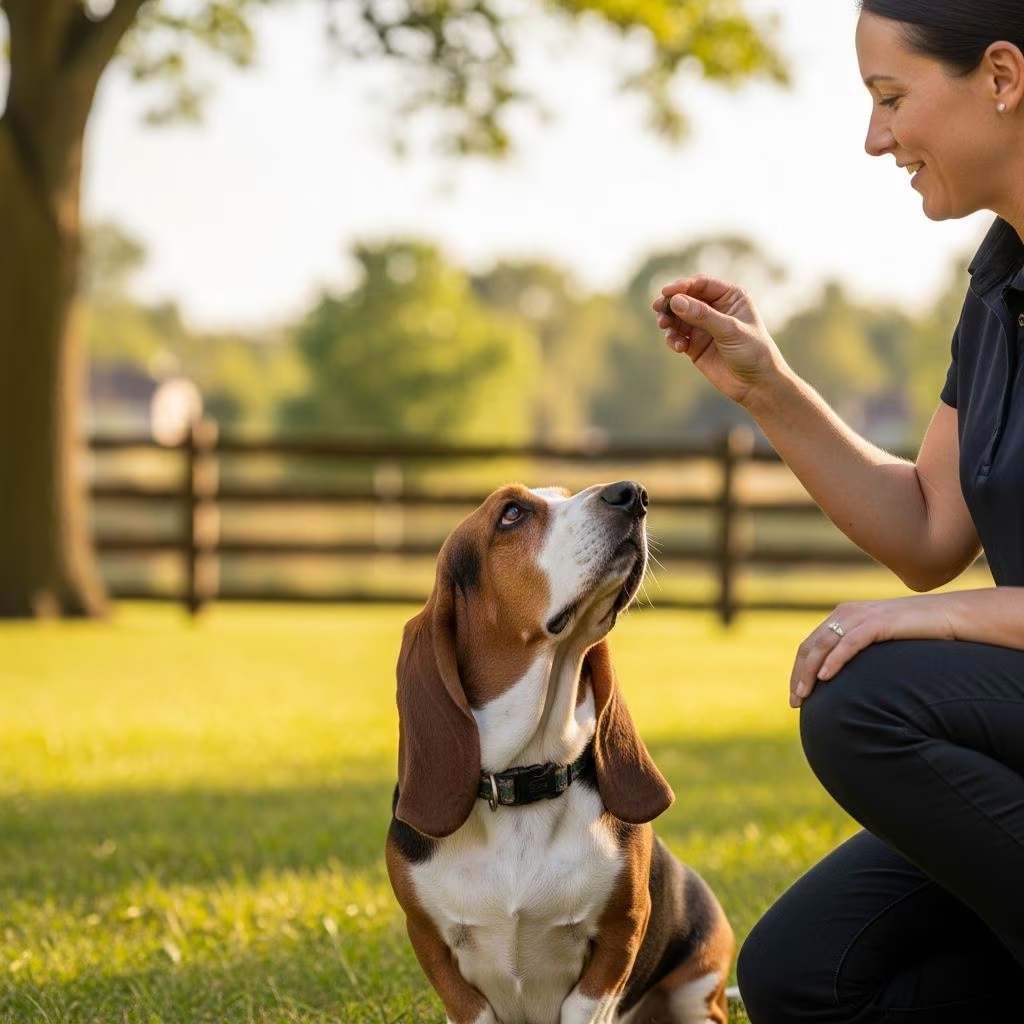
Basset Hounds captivate with their soulful eyes, droopy ears, and endearing waddle, but their hunting heritage presents unique training hurdles. These scent hounds prioritize aromas over commands, demanding tailored approaches rooted in patience and positivity. This guide equips owners with original strategies to foster obedience, curb stubbornness, and build a strong human-canine bond, transforming potential challenges into rewarding successes.
Understanding the Basset Hound Temperament
Basset Hounds descend from French hunting dogs bred for persistence in tracking game. Their exceptional olfactory sense—up to 40 times stronger than humans—often overrides distractions, leading to selective hearing during training. While gentle and affectionate, they exhibit independence, vocal baying, and a penchant for lounging, which can mimic laziness but stems from energy conservation for hunts.
Key traits include:
- High prey drive: Easily sidetracked by scents, requiring scent-inclusive training.
- Food motivation: Responds eagerly to edibles, but over-reliance risks obesity.
- Stubborn streak: Not unintelligent, but prioritizes instincts over immediate compliance.
- Social nature: Thrives on family interaction, benefiting from early exposure to varied environments.
Recognizing these qualities allows owners to adapt methods, emphasizing consistency over force for long-term results.
Building a Solid Foundation: Daily Routines
From day one, impose structure to align your Basset’s internal clock with household expectations. Predictable schedules for meals, potty breaks, play, and rest minimize confusion and accidents.
| Time of Day | Activity | Purpose |
|---|---|---|
| Morning (6-8 AM) | Potty, short walk, breakfast | Empty bladder post-sleep, stimulate digestion |
| Midday (12 PM) | Potty break, brief play | Prevent holding, mental engagement |
| Afternoon (4-6 PM) | Walk, training session, dinner | Exercise scent drive safely, reinforce learning |
| Evening (8-10 PM) | Potty, calm wind-down | Avoid overnight accidents |
Introduce locations immediately: designate potty spots with grass patches, fixed bowl areas, and quiet crates. Deviations confuse, so enforce rigidly, especially during the 8-12 week imprinting phase when puppies absorb habits fastest.
Positive Reinforcement Essentials
Harsh corrections backfire with sensitive Bassets, fostering fear or shutdown. Instead, leverage their love for approval through multifaceted rewards.
- Praise lavishly: Enthusiastic “Good dog!” in a high-pitched tone releases oxytocin, mirroring pack affirmation.
- Physical affection: Ear scratches or chest rubs post-success build trust without calorie overload.
- Toy rewards: Scented plushies or tug games tap hunting instincts.
- Varied treats: Rotate high-value options like freeze-dried liver to maintain excitement, limiting to 10% daily intake.
Avoid treat dependency by randomizing: 70% praise-only, 30% tangible. This mirrors wild reinforcement unpredictability, sustaining motivation sans satiety.
Core Commands for Everyday Control
Begin with binaries before complexities. “No” halts mischief; “Yes/Good” marks achievements, bridging to sits, stays, and recalls.
Implementing “No” and “Good”
For “No,” interrupt gently—stand tall, say firmly without yelling, then redirect. Pair with withholding attention. Success? Immediate “Good” plus reward. Practice 5-10 daily reps in low-distraction zones, graduating to parks.
Progressing to Sit, Stay, and Down
- Sit: Lure with treat above nose, moving rearward until tuck. Mark “Good,” reward.
- Stay: From sit, palm out, step back one pace. Return, reward. Build duration/distraction gradually.
- Down: Lure from sit to floor, or gentle chest pressure. Reward prone position.
Sessions: 3-5 minutes, 3x daily. End on wins to preserve enthusiasm.
Potty Training Mastery
Bassets’ small bladders and scent preferences demand proactive management. Crate training leverages den instinct: confine when unsupervised, releasing post-potty success.
- Watch for circles/sniffing; escort outside instantly.
- Praise extravagantly mid-act, not after, associating outdoors with relief.
- Cleanup accidents with enzymatic cleaners to erase scent cues.
- Night: Last potty at 10 PM, no water post-8 PM.
Expect full reliability by 4-6 months with consistency; setbacks from routine lapses are common.
Socialization: Preventing Fear and Reactivity
Expose puppies weekly to stimuli: strangers, children, dogs, vehicles, surfaces. Host controlled playdates, puppy classes. Reward calm demeanors. Neglect risks baying at doorbells or shyness.
Pro tip: Scent games—hide treats in boxes—desensitize nose obsession while socializing.
Recall Training: Conquering the Scent Chase
Off-leash reliability counters their bolt risk. Start indoors:
- Long-line dragging: 20-50 ft leash for safe practice.
- Call name + “Come” enthusiastically, reel if ignoring, jackpot reward arrival.
- Progress to fenced areas, then distractions.
Never off-lead unsecured early; their speed surprises. Food-driven? Ultra-high-value rewards like peanut butter smears.
Exercise and Mental Stimulation
Daily 30-60 minute walks suffice; sniffing encouraged on loose leads. Puzzle toys, nosework (AKC Scent Work), or tracking games channel instincts, reducing boredom-induced howling.
Avoid high-impact: Joint issues lurk in low-slung frames.
Advanced Techniques: Leash Manners and Beyond
Heel: Treat lure at knee, reward position. Auto-sit at stops.
Place: Designate mat/bed; command to station during chaos (guests, groceries), building impulse control.
Troubleshoot baying: Ignore attention-seeking; reward silence.
Common Pitfalls and Fixes
| Issue | Symptom | Solution |
|---|---|---|
| Selective Hearing | Ignores calls outdoors | Stronger indoor recall first; high-value motivators |
| Potty Regression | Indoor accidents | Re-crate, tighter schedule |
| Weight Gain | From treats | Low-cal options, activity boost |
| Stubborn Refusal | No compliance | Shorter sessions, fun games |
Frequently Asked Questions (FAQs)
Are Basset Hounds Hard to Train?
They require patience due to scent focus but excel with positive, consistent methods. Not stubborn—instinct-driven.
Best Age to Start Training?
Immediately upon adoption, ideally 8 weeks. Early wins prevent habits.
How Long Until Basic Obedience?
4-6 weeks for foundations with daily practice; mastery ongoing.
Can Bassets Be Off-Leash?
Possible with dedicated training, but many safer leashed due to nose pull.
Do They Respond to Punishment?
Poorly; prefer rewards for gentle natures.
Long-Term Success Strategies
Lifelong training sustains behaviors. Enroll in breed-specific classes via Basset Hound Club of America. Track progress journals refine approaches. Bond through shared adventures, yielding a devoted, mannerly companion for 10-12 years.
References
- Basset Hound Club of America: Obedience Training — Basset Hound Club of America. Accessed 2026. https://basset-bhca.org/events-programs/companion-events/obedience/
- Training a Basset Off Lead — Dash the Basset. 2021-08-18. https://dashthebasset.com/2021/08/18/training-basset-off-lead-off-leash/
- Obedience – Basset Hound University — Basset Hound Club of America. Accessed 2026. https://basset-bhca.org/events-programs/companion-events/obedience/



