

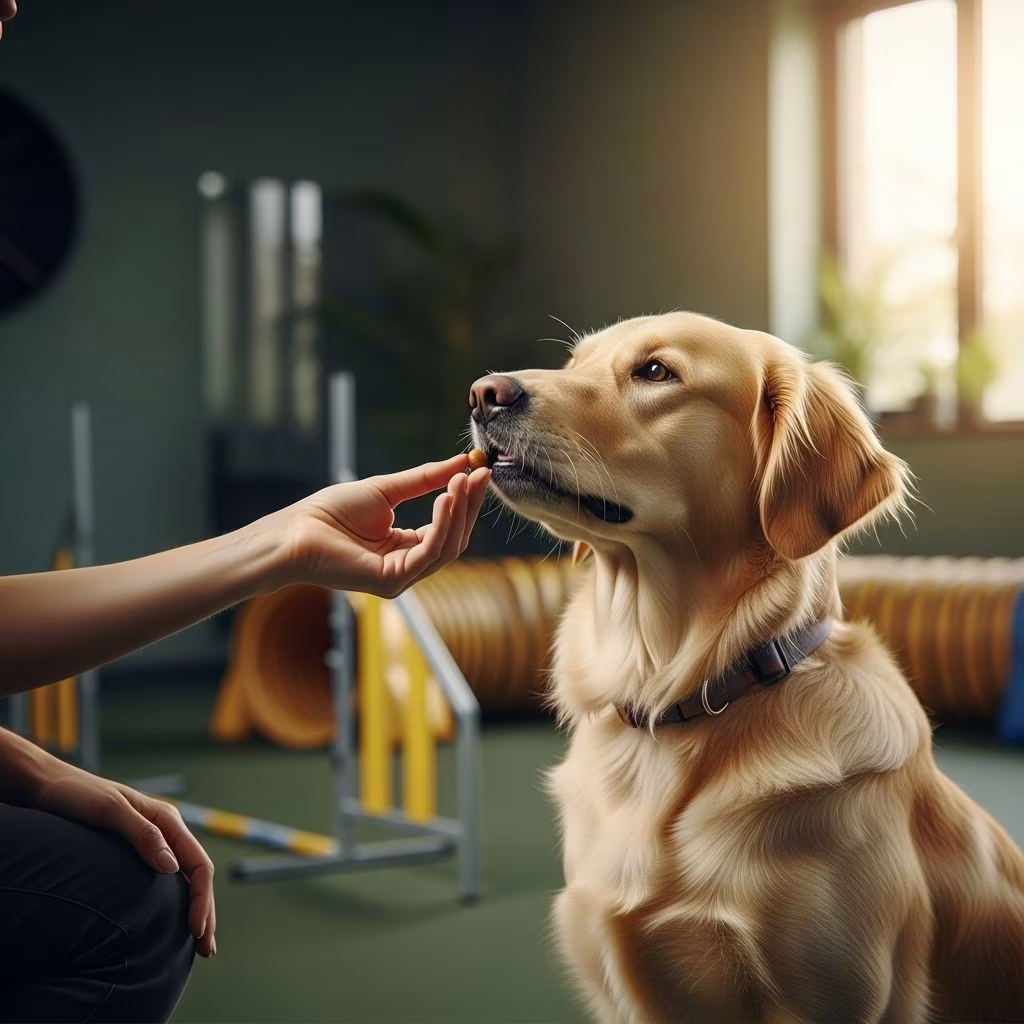
Marker words serve as powerful auditory signals in dog training, precisely indicating the moment a dog performs a desired action, much like a clicker but without equipment. This method, rooted in positive reinforcement, accelerates learning by creating clear associations between behavior and reward.
Why Marker Words Transform Training Sessions
At the heart of effective dog training lies precise communication. Marker words bridge the gap between human intent and canine understanding, allowing trainers to reward fleeting moments of success that might otherwise go unnoticed. Unlike vague praise, a well-timed marker pinpoints exactly what the dog did right, fostering quicker skill acquisition and reducing frustration for both parties.
Research from animal behavior studies supports this: operant conditioning thrives on immediate feedback. Dogs trained with markers show improved focus, especially in distracting settings, as the sound becomes a reliable predictor of rewards. This technique also minimizes reliance on food lures over time, promoting independent behaviors.
- Precision: Captures micro-behaviors for refined skills like heeling or targeting.
- Versatility: Works anywhere, anytime—no tools needed.
- Generalization: Helps dogs apply cues across environments.
Selecting the Perfect Marker Word
Choosing the right marker is crucial for success. Opt for a single-syllable word with a sharp, distinct sound that stands out from daily speech. Common pitfalls include multi-syllable phrases or casual tones that blur the signal.
| Ideal Traits | Examples | Why It Works |
|---|---|---|
| Short & Staccato | Yes, Good, Click | Quick delivery matches behavior timing. |
| Unique Pitch | High, bright tone | Differentiates from commands or chit-chat. |
| Consistent Delivery | Always “Yes!” not “Yeees” | Builds reliable Pavlovian response. |
| Alternatives | Tongue click, Thumbs up | Useful for deaf dogs or quiet settings. |
Avoid everyday words like “okay” or drawn-out exclamations, as they dilute meaning. Household consistency is key—if multiple trainers are involved, align on one word to prevent confusion.
Charging Your Marker: Building the Association
Before using a marker in active training, “charge” it by pairing the word with treats repeatedly. This conditions the dog to anticipate rewards upon hearing it, independent of any behavior.
- Position treats accessibly; keep body still.
- Say the marker word crisply.
- Deliver treat within 1 second.
- Repeat 10-20 times per session, 1-2 sessions daily.
- End when dog’s eyes light up at the sound.
Monitor for signs of readiness: head turns, eager anticipation. Avoid marking unwanted actions like jumping. Most dogs grasp this in days.
Core Training Techniques with Markers
Capturing Spontaneous Behaviors
Capture naturally occurring actions by marking the instant they complete. Spot your dog lying down calmly? Mark and reward. This builds a repertoire of polite defaults without cues.
Shaping Complex Skills
Break skills into approximations. For “go to mat”: mark first glance, then step, then paw on mat, progressing to full settle. Toss treats away to reset, preventing frustration.
Luring and Fading Prompts
Use a treat hand to guide positions, marking success then feeding. Gradually switch to empty hands or signals, marking as before. This fades lures seamlessly.
Incorporate into recall: say name + “come,” mark movement toward you, reward. Progress to longer distances.
Advanced Applications and Troubleshooting
Once basic association holds, deploy markers for proofing in high-distraction areas. Use for new cues or maintenance reps. Pair with variable rewards to build resilience.
- No Treat? No Mark: Switch to praise or play to preserve value.
- Timing Drills: Practice solo: visualize behaviors, mark aloud precisely.
- Quiet Sessions: Minimize talk; let marker shine.
- Not a Cue: Never use to gain attention—reserve for reinforcement.
Common errors: inconsistent tone, delayed rewards, or over-marking advanced behaviors. Vary rewards (food, toys, access) for engagement.
Integrating Markers with Other Tools
Markers complement clickers seamlessly—switch based on context. For walks, “yes” suffices; classes favor clickers for precision. Deaf dogs thrive with visual markers like thumbs-up.
Combine with release words (e.g., “break”) for stays, or error markers (e.g., neutral “oops”) sparingly for no-reward scenarios.
Benefits Backed by Experts
Trainers with decades of experience hail markers as revolutionary for positive methods. They enable force-free shaping, reduce errors, and empower dogs. Veterinary behaviorists note improved welfare via clear signals.
Frequently Asked Questions (FAQs)
What if my dog ignores the marker?
Recharge intensively; ensure treats are high-value. Check timing and consistency.
Can puppies use markers?
Yes, from 8 weeks—keep sessions short (2-5 mins).
How to switch from clicker to word?
Charge the word alongside; fade clicker gradually.
Multiple dogs?
Train individually; use names pre-marker for groups.
No food-motivated dog?
Use toys, play, or life rewards like walks.
Sample Training Plan Table
| Week | Focus | Daily Practice | Goal |
|---|---|---|---|
| 1 | Charging | 3×10 reps | Anticipation response |
| 2 | Capturing | Observe & mark 20x | 5 voluntary behaviors |
| 3 | Shaping Sit | 5-min sessions x4 | Reliable on cue |
| 4+ | Proofing | Distractions added | Generalized skill |
Consistency yields results. Track progress in a journal for motivation.
References
- Training with Marker Words: A Practical Guide for Dog Owners — NWASchoolForDogs. 2023. https://nwaschoolfordogs.com/training-with-marker-words-a-practical-guide/
- Just Say Yes! How to Use a Marker Word in Dog Training — Preventive Vet. 2023-10-15. https://www.preventivevet.com/dogs/how-to-use-a-marker-word-in-dog-training
- Markers, Cues, Release Words — Paws n Play Dog Training. 2024. https://www.pawsnplaydogtraining.com/blog/dog-training-markers-cues-release-words
- The Power of Training Dogs with Markers (Clickers) — Leerburg. 2022-05-20. https://leerburg.com/markers.htm
- Developing a Marker System With Your Dog — ShopKonos. 2023. https://www.shopkonos.com/blogs/the-bork-magazine/developing-a-marker-system-with-your-dog



