

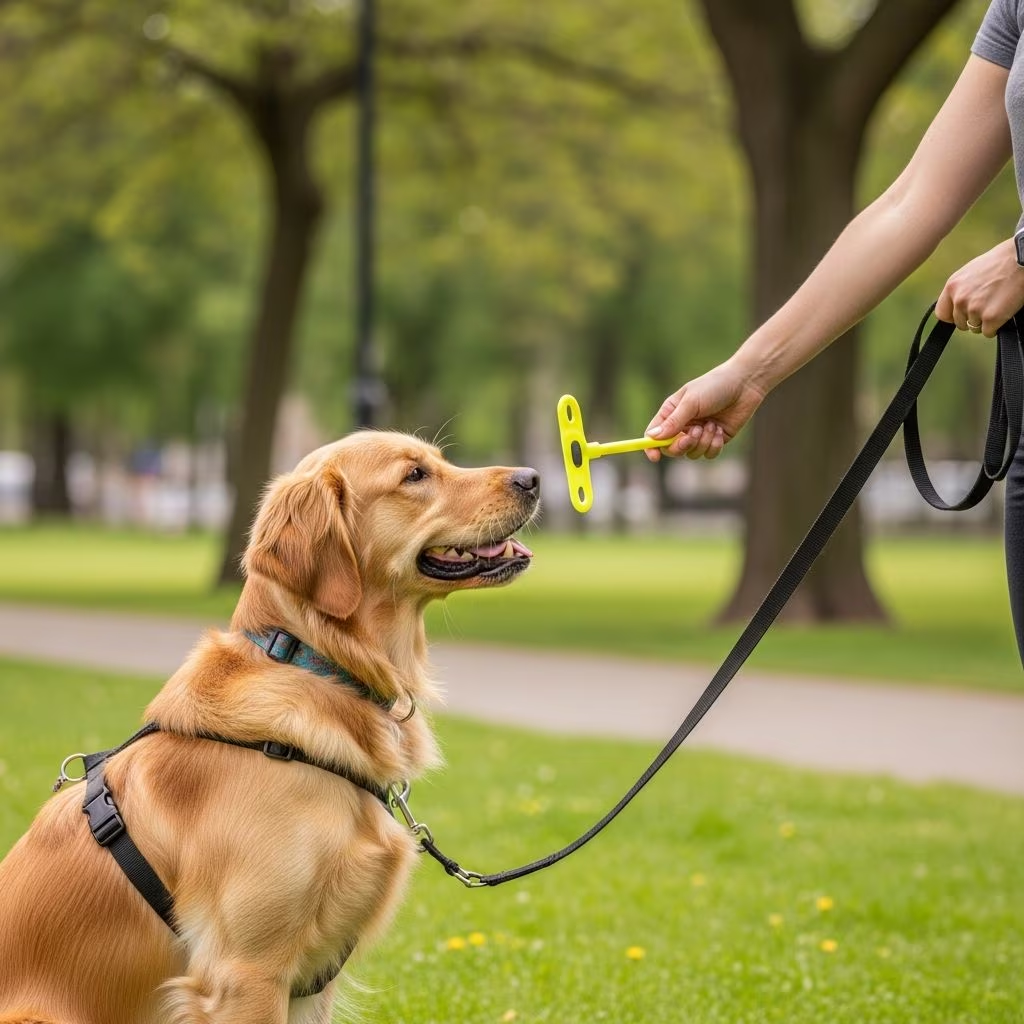
Leash walking challenges frustrate many dog owners, turning potential bonding time into a battle of wills. Target training offers a positive, effective solution by teaching dogs to focus on specific points, leading to reliable loose leash behavior. This method builds on reinforcement principles, making walks enjoyable for both you and your dog.
Why Target Training Excels for Leash Skills
Target training involves guiding your dog to touch a designated spot, like your hand or a stick, using rewards. This technique fosters attention and precise movement, directly addressing pulling issues common in walks. Unlike punishment-based methods, it motivates dogs intrinsically, reducing stress and enhancing the human-canine bond.
Studies and expert organizations highlight its efficacy. For instance, the American Kennel Club emphasizes clear cues and positive reinforcement for puppy leash training, aligning with target methods. Similarly, humane societies advocate tools that encourage check-ins without discomfort.
Essential Gear for Successful Training
Proper equipment sets the foundation for effective sessions. Opt for a well-fitted harness over collars to avoid neck strain, especially for puppies prone to pulling. A standard 6-foot leash provides optimal control without restriction, steering clear of retractable types that reinforce pulling.
| Gear Type | Benefits | Recommendations |
|---|---|---|
| Harness | Distributes pressure evenly; prevents slipping | Front-clip models like Sense-ation or Easy Walk |
| Leash | Allows natural movement; easy grip | Lightweight 6-ft non-retractable |
| Target Tool | Directs focus precisely | Stick, glove, or hand |
| Treats/Clicker | Reinforces behavior instantly | High-value, pea-sized treats |
Front-clip harnesses can reduce pulling by up to 98% when paired with training, as they naturally redirect dogs toward you.
Building the Target Foundation Indoors
Begin training in a distraction-free environment to establish core skills. Start by presenting your open palm at nose level, marking success with a clicker or verbal “yes” followed by a treat when your dog touches it.
- Repeat 5-10 times until reliable touching occurs on cue like “touch.”
- Gradually move the target to different heights and positions.
- Introduce a target stick by taping a soft object to the end for longer reaches.
This phase conditions your dog to seek the target eagerly. The Animal Humane Society recommends holding treats near your desired walking side to encourage positioning. Practice until your dog responds within 2 seconds consistently.
Transitioning Targets to Leash Motion
Once basic targeting is solid, attach the leash and incorporate movement. Hold the target at your side, say “touch,” and reward as your dog follows while walking a few steps.
- Click and treat every 2-3 steps for maintaining contact.
- Slowly fade the target by rewarding glances or proximity alone.
- Introduce cues like “heel” or “with me” paired with target touches.
The RSPCA stresses rewarding loose leads exclusively to teach that pulling halts progress. If tension builds, stop motion until slack returns, then resume.
Advanced Techniques for Real-World Walks
Outdoor distractions demand refined skills. Employ directional cues: say “left” or “right” while presenting the target in that direction, rewarding adherence.
Teach automatic check-ins by marking and rewarding when your dog looks back at leash end. Blue Ridge Humane suggests starting beside your dog, marking heel position, and gradually adding steps.
Handling Common Scenarios
- High Distractions: Use higher-value rewards; revert to target stick.
- Pulling Surges: Employ “red light/green light” – stop on tension, proceed on slack toward a treat goal.
- Turning Corners: Pre-cue with name, then direction while gathering leash smoothly.
Incorporate fun elements like silly voices to keep engagement high, as upbeat communication boosts learning.
Troubleshooting Persistent Pullers
For stubborn cases, analyze root causes. Excitement? Practice calm exits. Fear? Desensitize gradually. Inconsistent handling? Ensure all family members follow protocols.
San Diego Humane’s combined attention and red light exercise proves powerful: reward eye contact during stops, reinforcing that check-ins advance the walk. Persistence yields results; sessions of 5-10 minutes daily prevent fatigue.
Progression Timeline and Milestones
Expect steady improvement with consistency. Week 1: Indoor targeting. Week 2: Leashed basics. Month 1: Short outdoor walks. Track via a simple log:
| Week | Milestone | Success Metric |
|---|---|---|
| 1 | Target touch on cue | 90% reliability indoors |
| 2 | Follows moving target | 10 steps without pull |
| 3-4 | Outdoor check-ins | Loose leash 80% of walk |
| Ongoing | Variable environments | Automatic responses |
Adjust pace to your dog’s learning speed; some grasp quickly, others need months.
Benefits Beyond the Leash
Target training extends to recall, tricks, and vet visits, enhancing overall obedience. It promotes mental stimulation, combating boredom-induced issues. Owners report stronger trust and fewer frustration outbursts.
Frequently Asked Questions (FAQs)
What if my dog ignores the target outdoors?
Increase treat value and shorten sessions. Practice in progressively busier areas.
Can this work for adult rescue dogs?
Yes, all ages benefit; patience is key for those with prior bad habits.
How often should I train?
3-5 sessions daily, 5-15 minutes each for best retention.
Is a clicker necessary?
No, but it provides precise timing over verbal markers.
What treats work best?
Soft, smelly options like cheese or hot dogs; keep them tiny to avoid overfeeding.
Maintaining loose leash walking requires ongoing reinforcement. Randomly reward good positioning during regular walks to sustain habits. Enroll in classes for guided practice if needed, like those from humane societies.
This approach, rooted in positive reinforcement, transforms walks into pleasurable routines. Consistent application yields a polite walker eager for outings.
References
- How To Teach a Puppy To Walk on a Leash — American Kennel Club. 2023-06-15. https://www.akc.org/expert-advice/training/teach-puppy-walk-leash/
- Training Tips: Loose Leash Walking — San Diego Humane Society. 2024-02-10. https://sdhumane.org/resources/training-tips-loose-leash-walking/
- Ask Crystal: Leash Walking Training Tips — Blue Ridge Humane Society. 2023-11-20. https://www.blueridgehumane.org/leash-walking-training-tips/
- To Teach Loose Leash Walking, Loosen the Leash — Kiki Yablon Dog Training. 2019-12-17. https://kikiyablondogtraining.com/kiki-blog/2019/12/17/loose-leash-walking-lessons
- How to train your dog to walk nicely on the lead — RSPCA. 2024-01-05. https://www.rspca.org.uk/adviceandwelfare/pets/dogs/training/walknicely
- Leash Walking Training For Dogs That Are ALWAYS Pulling! — McCann Dog Training (YouTube). 2022-08-12. https://www.youtube.com/watch?v=y2yj2xtCo-k
- Teach your dog to walk on a loose leash — Animal Humane Society. 2023-09-28. https://www.animalhumanesociety.org/resource/teach-your-dog-walk-loose-leash



