

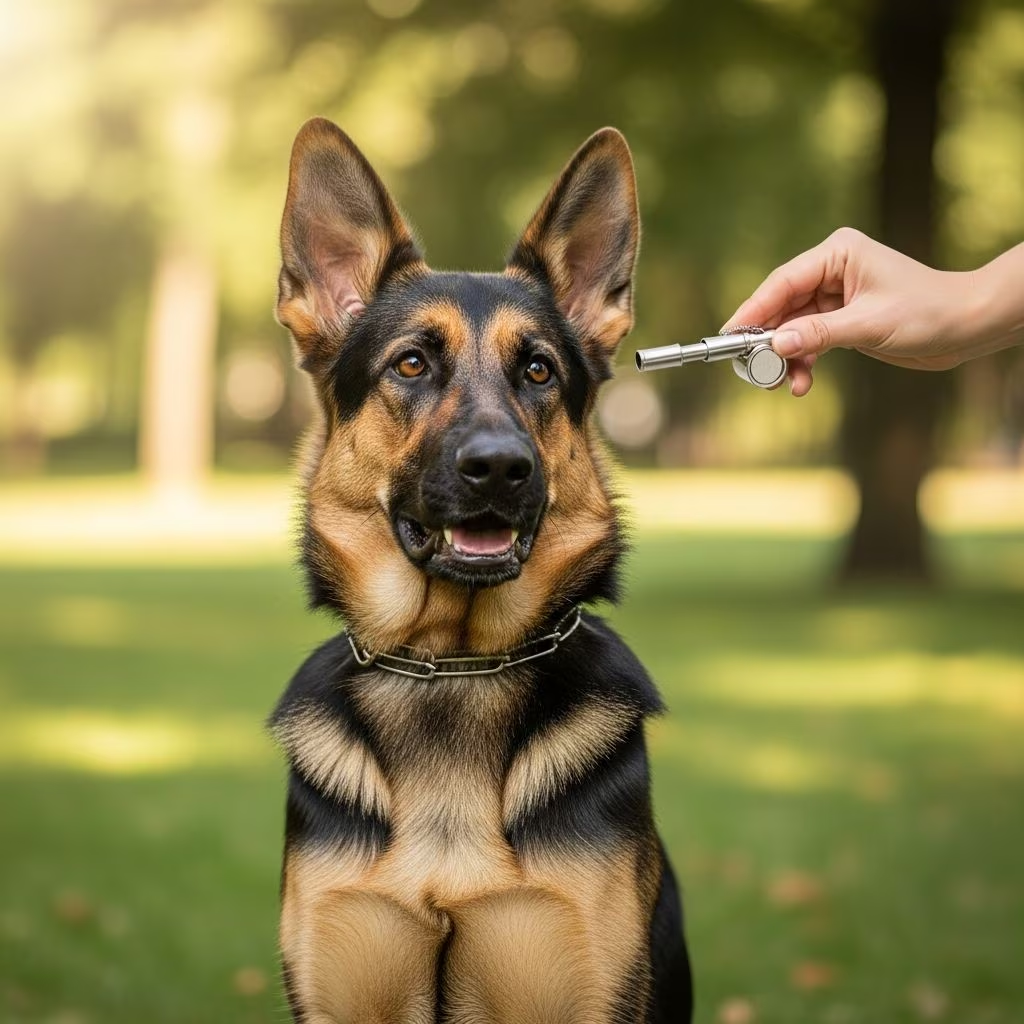
Dog whistles offer a powerful, silent-to-humans tool for communicating precise commands to your canine companion. These devices produce high-frequency sounds that dogs hear clearly while remaining inaudible to most people, making them ideal for training in noisy or distant settings. By associating specific whistle patterns with behaviors, you can achieve reliable responses even amid distractions.
Understanding Dog Whistles and Their Advantages
Dog whistles, often made from metal or plastic, emit sounds typically between 23,000 and 54,000 Hz, far beyond the human hearing range of up to 20,000 Hz. This ultrasonic pitch cuts through wind, traffic, or crowd noise without startling nearby people or animals. Trainers value them for consistency: unlike voice commands that vary with fatigue or emotion, a whistle delivers the same tone every time.
Key benefits include extended range—up to 100 yards or more—and versatility for sports like retrieving or herding. They support positive reinforcement training, where rewards follow the sound, creating eager anticipation. Studies from canine behavior experts confirm that consistent auditory cues strengthen neural pathways for quick obedience.
Selecting the Perfect Dog Whistle
Choose based on your needs: brass whistles offer crisp tones for open fields, while pea-less plastic ones are durable and weather-resistant for hunting. Test the pitch; higher frequencies suit small breeds with sensitive ears, lower ones work for larger dogs. Practice blowing gently to produce steady blasts without sputtering—poor technique leads to inconsistent sounds that confuse dogs.
- Metal whistles: Loud, clear for distance work.
- Plastic whistles: Lightweight, no pea to freeze or stick.
- Adjustable pitch models: Fine-tune for your dog’s hearing.
Fit matters too; opt for ones with clips or lanyards for easy access during sessions.
Foundational Steps: Building the Whistle Association
Start in a quiet indoor space with high-value treats like chicken or cheese. Blow a simple pattern—two short peeps followed by one long blast—then immediately reward. Repeat 2-3 minutes, three times daily for two weeks. This “priming” phase links the sound to positivity, making your dog perk up eagerly.
Progress to movement: Toss a treat 10 feet away. As your dog races back, blow the pattern and jackpot with multiple treats, praise, and play. Gradually increase distance to 20-30 feet, fading your movement to stand still. Use a long line (30 feet) in unfenced areas for safety.
| Session Phase | Distance | Reinforcement | Duration |
|---|---|---|---|
| Priming | 0-5 ft | Treats only | 2-3 min, 3x/day |
| Toss & Return | 10-20 ft | Jackpot + play | 5 min, 2x/day |
| Walk Integration | 30+ ft | Praise + treats | 10 min walks |
Core Commands: Recall, Sit, and Stop
Recall Mastery: On walks, wait for natural check-ins (dog glances back), then whistle and reward heavily. Release verbally to “go be a dog,” repeating until check-ins occur every 30-60 seconds. Practice off-leash in fenced yards once reliable.
Whistle Sit: After verbal sit is solid, pair it with one sharp blast. Blow whistle, say “sit,” reward. Fade the word over repetitions. This instant halt is vital for retrievers or urban walkers.
Stop Signal: Use a single long blast for “stop.” Teach by luring into motion, then whistling to freeze, rewarding position. Essential for safety near roads.
Directional Guidance and Precision Control
Introduce left/right with unique patterns: two short for left, three for right. Pair with hand signals initially. Set up cones or objects; whistle to direct your dog around them. Start close, expand to 50 yards.
For retrievers, combine sit-stop with directionals: whistle sit at distance, then guide to targets. Vary object types and distances to build discrimination skills.
Overcoming Distractions and Environmental Challenges
Transition from quiet yards to parks with joggers, kids, and other dogs. Begin with known commands, rewarding correct responses amid chaos. Gradually amp distractions: start at 10 feet from a ball game, build to 50.
Windy days test volume control—practice steady, forceful blows. Use variable schedules: sometimes reward, sometimes not, to mimic real life and prevent expectation of constant treats.
Advanced Techniques for Expert-Level Obedience
Layer commands into chains: whistle recall, then sit, then down. Build progressively—master two steps before adding third. Use for agility: direct turns, pauses, retrieves in sequence.
Incorporate body language: subtle nods or waves with whistles for fluid control. Train in novel spots like beaches or trails to generalize skills. For working dogs, simulate hunts: send to marks, whistle corrections around obstacles.
Variable patterning sharpens focus—alternate patterns unpredictably. This cognitive challenge keeps sessions engaging, preventing boredom.
Common Mistakes and How to Avoid Them
- Blowing inconsistently: Practice alone first for uniform tone.
- Rushing phases: Wait for 90% reliability before advancing.
- Overusing in low-distraction: Always proof in real-world chaos.
- Punishing failures: Stick to positive reinforcement.
- Ignoring fitness: Tired dogs ignore cues; keep sessions short.
Integrating Whistles into Daily Routines
Use for leashed walks: whistle check-ins for treats. At home, signal dinner or play. Consistency across contexts solidifies habits. Track progress in a journal: note success rates per environment.
Special Considerations for Breeds and Ages
Puppies learn fastest; start at 8-12 weeks. Seniors may need lower pitches. Herding breeds excel at directionals, retrievers at stops/recalls. Adjust for hearing loss: vet-check annually, switch to visual cues if needed.
FAQs
Can all dogs hear dog whistles?
Most can, but age or breed affects range. Test by observing ear flicks.
How long until my dog responds reliably?
2-4 weeks for basics, months for advanced with daily practice.
Is a dog whistle better than a clicker?
Whistles suit distance; clickers for shaping. Combine for best results.
What if my dog ignores the whistle outdoors?
Revert to long line, increase value of rewards, reduce distractions gradually.
Are dog whistles safe for daily use?
Yes, when not overblown. Avoid eardrum damage by keeping volumes moderate.
Strengthening Your Bond Through Whistle Training
Beyond obedience, whistles create a unique dialogue, fostering trust and joy. Your dog anticipates cues as fun challenges, deepening partnership. Celebrate milestones with playdates or hikes, reinforcing the whistle as a bridge to adventure.
References
- Dog Whistles for Training: How and When to Use Them — American Kennel Club (AKC). 2023-05-15. https://www.akc.org/expert-advice/training/dog-whistles-for-training/
- Master Whistle Commands for Retriever Training — Ducks Unlimited. 2024-08-20. https://www.ducks.org/hunting/retriever-training/whistle-commands
- Advanced Training Methods Using Dog Whistles — Acme Whistles. 2023-11-10. https://www.acmewhistles.co.uk/stories/advanced-training-methods-using-dog-whistles
- Dog Whistle Training: Teaching The Recall — K9 Magazine. 2024-02-28. https://www.k9magazine.com/dog-whistle-training/
- How to Train Your Dog to Respond to a Dog Whistle — Whole Dog Journal. 2023-07-12. https://www.whole-dog-journal.com/training/how-to-train-your-dog-to-a-dog-whistle/



