

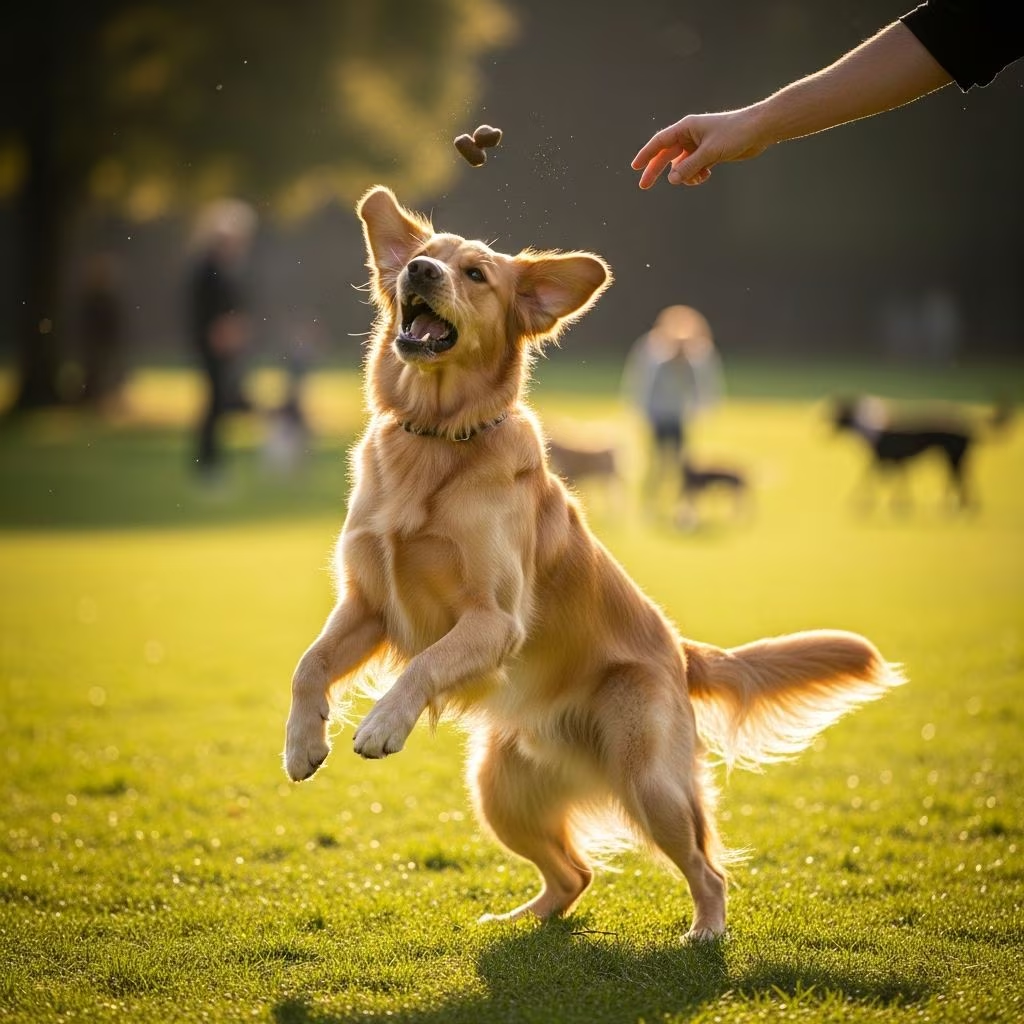
Teaching your dog tricks goes beyond basic obedience; it fosters a deeper connection, boosts mental stimulation, and provides endless entertainment for both you and your pet. With consistent practice using positive reinforcement, any dog can learn a variety of skills, from simple actions like sitting to more complex maneuvers like rolling over. This guide draws on established training principles to help you succeed, regardless of your dog’s age or breed.
Why Train Tricks? The Benefits for You and Your Dog
Engaging in trick training offers numerous advantages. It sharpens your dog’s cognitive abilities, helping to prevent boredom-related behaviors such as excessive barking or chewing. Regular sessions also improve physical coordination and provide essential exercise. For owners, these activities build trust and communication, making everyday interactions smoother. Studies from animal behavior experts emphasize how such training enhances the human-canine bond through shared achievements.
- Mental sharpness: Tricks challenge the brain, reducing anxiety and promoting focus.
- Physical health: Movements involved keep muscles toned and joints flexible.
- Behavioral improvement: Redirects energy positively, curbing destructive habits.
- Confidence boost: Success in learning builds self-assurance in shy or timid dogs.
Essential Foundations Before Starting Tricks
Before diving into flashy tricks, solidify the basics. Commands like sit, stay, and come form the bedrock for advanced learning. Without them, progress stalls. Begin in a distraction-free zone, using high-value treats to motivate. Patience is key—dogs learn at their own pace, so short, frequent sessions work best over marathon efforts.
Setting Up for Success
Prepare your space: Choose a quiet indoor area initially. Gather treats, a clicker for precise marking of good behavior, and a leash for control. Timing matters—train when your dog is hungry but not overly excited. End every session on a high note with a command your dog knows well.
| Item | Purpose | Tips |
|---|---|---|
| Treats | Reward system | Use small, soft pieces; vary types for interest. |
| Clicker | Behavior marker | Click exactly when action occurs, follow with treat. |
| Leash | Safety/control | 6-foot non-retractable for recall practice. |
| Toys | Alternative reward | For play-motivated dogs to mix up incentives. |
Core Obedience Commands to Master First
Teaching the Sit Command
The sit command is the gateway to obedience. Hold a treat above your dog’s nose, move it back over their head slowly. As their head follows, their rear naturally lowers. Say “sit” clearly the moment their bottom hits the ground, then reward immediately. Repeat 5-10 times per session. Once reliable, add distance and fade the treat lure.
- Position treat at nose level.
- Lure backward gently.
- Praise and treat on contact.
- Practice without lure after 3-5 successes.
Perfecting the Down Position
From a sit, hold a treat at nose level and lower it straight down to the floor between their paws. As they stretch forward, their body follows into down. Use your other hand for slight collar pressure if needed, saying “down.” Reward promptly. Build duration gradually from seconds to minutes.
For resistant dogs, use the foreleg method: Gently scoop front legs while pressing the back, guiding into position.
Mastering Stay for Reliability
With dog in sit or down, say “stay” with an open palm signal facing them. Step back one step, hold for 3 seconds, then return and reward. Increase steps and time progressively. Release with “okay” or “free.” This builds impulse control essential for tricks.
Transitioning to Fun and Impressive Tricks
Once basics are solid, introduce engaging tricks. These not only impress friends but also keep training fresh and exciting.
Roll Over for Playful Flair
Start from down position. Hold a treat near their nose, lure it in a full circle over their shoulder toward the opposite side. As they follow, their body rolls. Mark with clicker and treat when complete. Practice both directions for balance.
- Use high-value bait initially.
- Add verbal cue mid-roll.
- Phase out lure over sessions.
Shake Paw for Social Charm
In sit, gently touch their paw while saying “shake.” As they lift, reward the motion. Repeat until they offer voluntarily on cue. Advance to “other paw” for variety.
Spin and Circle for Agility
Lure with treat in a tight circle around you or in place, using “spin.” Reward completion. Ideal for energetic breeds.
Advanced Techniques for Show-Stopping Skills
High-Five and Wave
Build on shake: From raised paw, encourage higher lift with treat above head, saying “high-five.” For wave, add a slight body turn cue.
Back Up and Take a Bow
For backing up, use treat behind them while saying “back.” Reward steps backward. Bow starts from stand: Lure head down between front legs while rear stays up.
Table of Progression:
| Trick | Prerequisite | Difficulty | Est. Sessions |
|---|---|---|---|
| Sit | None | Easy | 1-3 |
| Down | Sit | Easy | 3-5 |
| Roll Over | Down | Medium | 5-10 |
| High-Five | Shake | Medium | 4-7 |
| Bow | Down | Hard | 7-14 |
Addressing Common Training Challenges
Dogs may resist due to distractions, fear, or lack of motivation. Counter distractions by starting indoors and graduating outdoors. For stubborn pups, increase treat value or use toys. Watch for stress signals like yawning or lip-licking—shorten sessions if seen. Consistency across family members prevents confusion.
- High-energy dogs: Tire them with play first.
- Fearful dogs: Use softer lures, more praise.
- Puppies: Keep sessions under 5 minutes.
- Adults: Review basics daily.
Positive Reinforcement: The Gold Standard Method
Avoid punishment; focus on rewards. Clicker training pinpoints exact moments of success, speeding learning. Variable rewards (sometimes treat, sometimes praise) maintain engagement long-term. Official guidelines stress short, fun sessions to keep enthusiasm high.
Tools and Gear for Effective Sessions
Beyond treats, consider harnesses for comfort during heel work, long lines for safe recall practice, and interactive toys. Track progress in a journal to note improvements and adjust methods.
Frequently Asked Questions (FAQs)
How long does it take to teach a dog tricks?
Basic commands take 1-2 weeks with daily practice; advanced tricks 2-4 weeks. Factors include age, breed, and consistency.
Can older dogs learn new tricks?
Yes, with patience. Senior dogs benefit mentally, though adapt for physical limits.
What if my dog ignores commands outdoors?
Practice in gradually distracting environments. Use higher rewards and long-line for safety.
Is clicker training necessary?
Not essential but highly effective for precision. A simple “yes” marker works too.
How often should I train?
3-5 short sessions (5-15 minutes) daily yield best results without fatigue.
Long-Term Maintenance and Fun Variations
Once learned, review tricks weekly to retain skills. Chain commands into routines, like sit-stay-roll for performances. Join clubs or competitions for socialization. Training evolves into a lifelong partnership.
References
- The Basics of Training Your Dog — Wisconsin 4-H. 2021-05. https://4h.extension.wisc.edu/files/2021/05/The-Basics-of-Training-Your-Dog.pdf
- Dog Training Basics — FOUR PAWS USA. N/A. https://www.fourpawsusa.org/our-stories/publications-guides/dog-training-basics
- How to Train Your Dog & Top Training Tips — RSPCA. N/A. https://www.rspca.org.uk/adviceandwelfare/pets/dogs/training
- Basic Dog Training — American Kennel Club. N/A. http://www.akc.org/expert-advice/training/basic-training/
- Dog Training For Dummies Cheat Sheet — Dummies.com. N/A. https://www.dummies.com/article/home-auto-hobbies/pets/dogs/training/dog-training-for-dummies-cheat-sheet-208990/



