
Master Dog Training: Teach Any Skill
Unlock your dog's potential with proven techniques to teach sit, stay, heel, and advanced tricks for a well-behaved companion.
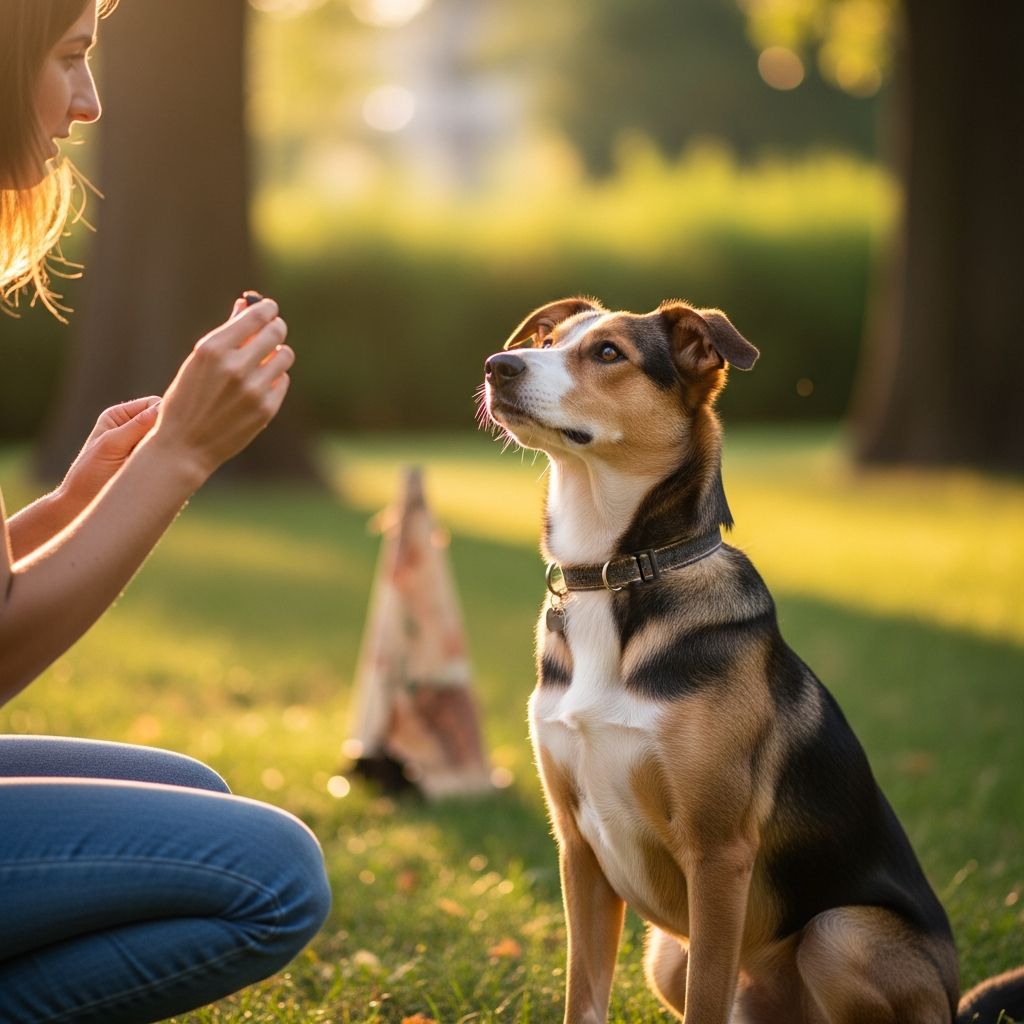
Training your dog to perform a wide range of behaviors transforms the relationship between you and your pet into one of mutual understanding and joy. Whether you’re starting with a energetic puppy or working with an adult dog, the right methods enable you to teach everything from basic obedience to fun tricks. This guide draws on established positive reinforcement principles to equip you with tools for success.
Foundational Principles of Effective Dog Training
Success in dog training hinges on consistency, patience, and positivity. Dogs learn best through rewards for desired actions rather than punishment for mistakes. Key principles include using high-value treats, keeping sessions brief, and gradually increasing difficulty.
- Positive Reinforcement: Reward behaviors immediately to encourage repetition. Food motivators work quickly for most dogs.
- Short Sessions: Limit training to 5-15 minutes to maintain focus and prevent fatigue.
- Low-Distraction Starts: Begin in quiet indoor spaces before advancing outdoors.
- Consistency: Use the same cues and rewards every time for clear communication.
These basics apply across breeds and ages, fostering enthusiasm and reliability.
Essential Tools and Setup for Training
Gather simple, effective equipment to streamline your sessions. A clicker or marker word pairs with treats to pinpoint exact moments of success. Choose small, soft treats your dog loves, and opt for a standard 6-foot leash with a front-clip harness for control without discomfort.
| Tool | Purpose | Tips |
|---|---|---|
| Clicker or “Yes” | Marks correct behavior | Charge it first by clicking and treating repeatedly. |
| High-value treats | Motivates engagement | Use pea-sized pieces; vary types for interest. |
| 6-ft flat leash & harness | Leash training | Avoid retractables for predictability. |
| Toys or praise | Non-food rewards | Phase in after basics are learned. |
Core Training Techniques: Luring and Shaping
Two primary methods—luring and shaping—form the backbone of teaching new skills. Luring guides the dog into position with a treat, ideal for beginners. Shaping rewards incremental progress toward the goal, building complex behaviors over time.
Luring Method
Hold a treat near your dog’s nose and move it to prompt the action. For example, to teach sit, arc the treat over their head backward—their nose follows, tush drops.
- Say the cue (e.g., “Sit”) as you lure.
- Mark with clicker and reward instantly.
- Repeat 5-10 times, then fade the lure by using an empty hand motion.
Shaping Method
Observe for any approximation of the behavior and reward tiny steps. This encourages problem-solving and works well for creative tricks.
- Wait for a slight movement (e.g., head tilt for “target”).
- Click and treat to reinforce.
- Raise criteria gradually until the full behavior emerges.
Combine both for versatility; luring kickstarts, shaping refines.
Step-by-Step Guide to Basic Commands
Teaching Sit
The sit command curbs jumping and sets a polite foundation. Start with your dog standing.
- Treat at nose level, move upward and back over head.
- As hindquarters lower, click and treat.
- Add cue before motion; practice in varied spots.
Progress to sit on cue without lure in 1-2 sessions.
Mastering Down (Lie Down)
Down promotes calm and is useful for vet visits. From sit:
- Lure treat from nose straight down to floor between paws.
- Click when elbows bend; use gentle leash pressure if needed.
- Build duration before releasing with “Okay.”
Perfect Recall (Come/Here)
Recall saves lives. Begin indoors, short distance.
- Say name + “Come” in happy tone; back away excitedly.
- Click/treat upon arrival; jackpot (multiple treats) for enthusiasm.
- Extend distance, add mild distractions.
Use long leash outdoors for safety.
Leash Walking and Heel
A loose-leash walk prevents pulling. Reward for staying at your side.
| Step | Action | Reward Timing |
|---|---|---|
| 1 | Start with treats; encourage position with “Heel.” | Every 2-3 steps. |
| 2 | Walk, stop if pulls; reward auto-returns. | On return to side. |
| 3 | Fade treats; use variable schedule. | Unpredictably. |
Front-clip harness aids steering.
Stay and Wait
Stay builds impulse control. From sit/down:
- Say “Stay,” step back one step.
- Return, reward; build steps/time (up to 1 minute).
- Introduce distractions gradually.
Advancing to Fun Tricks and Proofing
Once basics stick, layer tricks like fetch, spin, or paw. For fetch: shape holding toy, then retrieving from ground, tossing farther.
Proofing ensures reliability: practice in high-distraction areas, with variable rewards to mimic real life. End sessions on successes.
Common Challenges and Fixes
Address pitfalls proactively:
- Dog ignores cues: Increase treat value; reduce distractions.
- Only works for treats: Randomize rewards; add life rewards like walks.
- Pulling on leash: Stop walking until slack; reward position.
- Fear or stress: Read body language (yawns, lip licks); shorten sessions.
Training Puppies vs. Adult Dogs
Puppies (under 6 months) have short attention spans—train post-potty breaks. Adults may have habits to unlearn; patience yields results. Both thrive on daily 10-minute reps.
Building Lasting Habits
Integrate training into life: cue sit before meals, heel on walks. Track progress in a journal. Group classes enhance socialization.
Frequently Asked Questions
How long until my dog learns a command?
Basics take 1-2 weeks with daily practice; reliability varies by dog and consistency.
What if my dog is food-motivated only?
Transition to praise/toys; use variable reinforcement schedules.
Can I train multiple dogs at once?
Yes, but separately first to avoid confusion.
Is a clicker necessary?
No, but it precisely marks behavior for faster learning.
What age to start training?
As soon as they come home—puppies at 8 weeks.
References
- Dog Training 101: Basic Training Tips for Dogs and Puppies — CareCredit. 2023. https://www.carecredit.com/well-u/pet-care/how-to-train-your-dog/
- The Basics of Training Your Dog — Wisconsin 4-H (PDF). 2021-05. https://4h.extension.wisc.edu/files/2021/05/The-Basics-of-Training-Your-Dog.pdf
- Dog Training Basics — FOUR PAWS USA. Accessed 2026. https://www.fourpawsusa.org/our-stories/publications-guides/dog-training-basics
- How to Train Your Dog & Top Training Tips — RSPCA. Accessed 2026. https://www.rspca.org.uk/adviceandwelfare/pets/dogs/training
- Dog Training For Dummies Cheat Sheet — Dummies.com. Accessed 2026. https://www.dummies.com/article/home-auto-hobbies/pets/dogs/training/dog-training-for-dummies-cheat-sheet-208990/
Similar Articles








Read full bio of medha deb




