

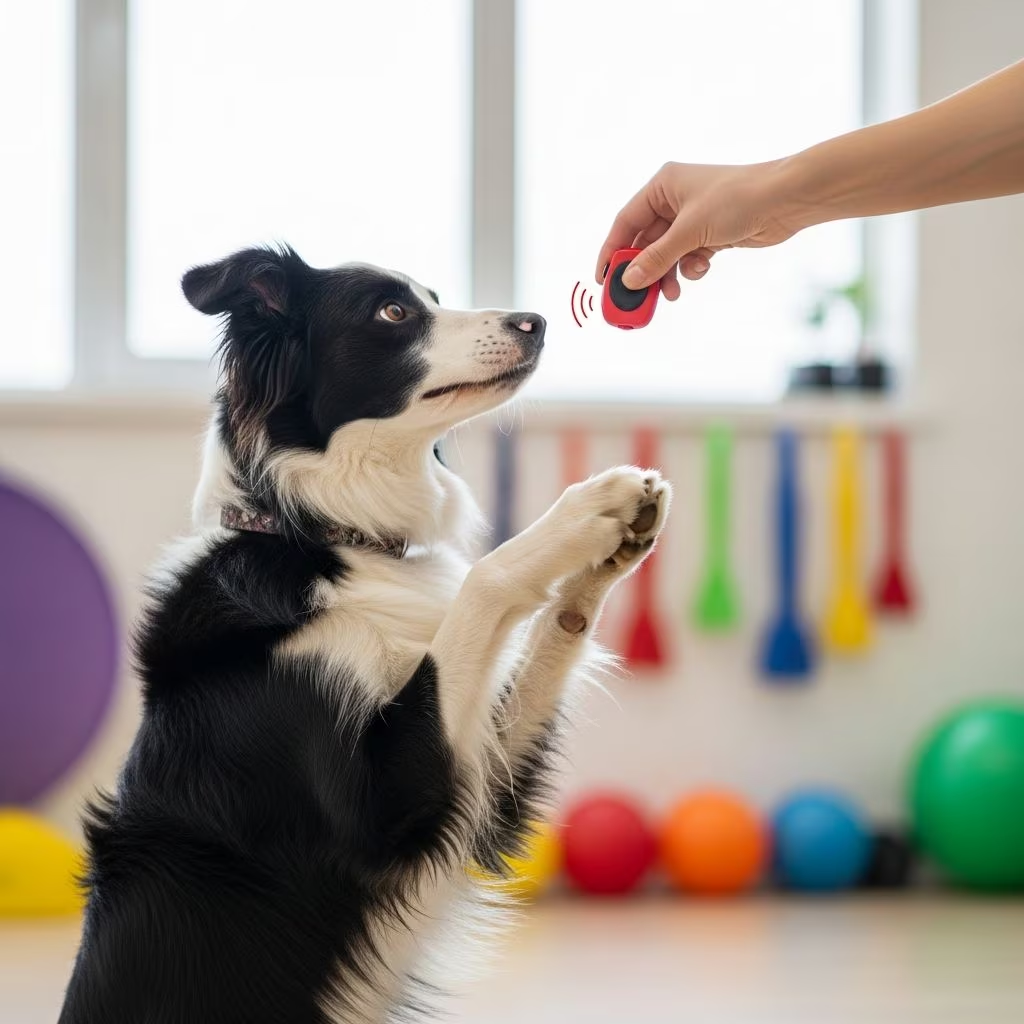
Clicker training revolutionizes dog training by leveraging a simple tool—a small device that produces a distinct clicking sound—to mark exact moments of desired behavior, paired with rewards. This method, rooted in positive reinforcement, helps dogs learn quickly and enjoy the process, making it suitable for teaching everything from basic commands to elaborate tricks.
Understanding the Power of Clicker Training
The core of clicker training lies in its precision. Unlike verbal praise, which can vary in tone, or hand signals that might differ slightly each time, the clicker delivers a consistent, sharp sound that dogs process rapidly in their brain’s amygdala. This reliability allows owners to communicate the precise instant a behavior is correct, such as when a dog’s rear touches the ground during a sit command.
Positive reinforcement underpins this approach: dogs naturally repeat actions that lead to rewards. By “loading the clicker”—repeatedly pairing the click with treats—dogs associate the sound with something good coming soon. After 10-20 repetitions, the click itself becomes a conditioned reinforcer, bridging the gap between action and reward delivery.
Key Advantages for You and Your Dog
Clicker training offers multiple benefits that enhance training efficiency and the human-canine relationship:
- Precision Marking: Captures fleeting behaviors that might otherwise go unnoticed, like a brief calm moment or correct paw lift.
- Boosted Confidence: Especially valuable for nervous dogs, as it provides predictability without scolding, turning sessions into confidence-building games.
- Fun Learning Experience: Dogs love the game-like structure, staying engaged longer and offering behaviors eagerly.
- Stronger Bond: Focuses on successes, reducing frustration for owners and fostering trust.
- Versatility: Applicable to basics, advanced skills, and tricks, adaptable for any age or temperament.
For anxious pups, the emotionless click avoids overwhelming them, allowing self-paced learning that releases feel-good chemicals as they solve “puzzles” for rewards.
Essential Tools and Setup
You’ll need a quality clicker—a box with a metal strip that snaps crisply—and high-value treats like small bits of chicken or cheese. Start in a quiet, distraction-free space. Sessions should last 3-5 minutes, with play breaks to maintain enthusiasm. Trainer Leigh Siegfried advises interspersing fun to keep dogs anticipatory: a click should prompt immediate focus and action.
Step-by-Step Guide to Get Started
Follow these phases to introduce clicker training effectively:
- Charge the Clicker: Click and treat immediately, 10-20 times without commands. Your dog will perk up at the sound, understanding it predicts rewards.
- Capture Spontaneous Behaviors: Watch for natural actions like lying down or four paws on the floor; click and treat to encourage repetition.
- Shape New Skills: Break complex behaviors into tiny steps. For “down,” click slight head lowers or body bends, gradually requiring more.
- Lure with Rewards: Use a treat to guide positions, clicking the moment they comply independently.
- Add Verbal Cues: Once reliable, say the cue just before the behavior, then click and reward.
Consistency is vital: short, frequent sessions prevent fatigue. Aim for an “anticipatory response” where the dog offers behaviors proactively.
Building a Foundation with Core Commands
Master basics first to set the stage for tricks. Here’s a table outlining common commands with clicker tips:
| Command | Training Steps | Common Pitfalls |
|---|---|---|
| Sit | Lure butt down with treat overhead; click contact with ground. | Dog popping up—click only full sits. |
| Down | Shape from stand; click elbow bends, build to full prone. | Impatience—reward approximations first. |
| Stay | Click stationary pose; step back incrementally. | Breaking early—start with 1-second holds. |
| Come | Call in low-distraction; click approach, jackpot reward. | Recalls in yard—practice on long line. |
| Leave It | Place treat under foot; click ignoring it. | Sniffing—use higher-value decoy. |
These build reliability, transitioning from clicker dependence to verbal cues over time.
Fun Tricks to Wow Your Friends
Tricks add joy and mental stimulation. Use shaping for creativity:
- Shake Paw: Click lifted paw; add cue after reliability.
- Spin: Lure circle with treat, fade lure, click completions.
- Roll Over: From down, shape shoulder tucks to full rolls.
- Play Dead: Shape side-lie from down; add dramatic cue.
- High Five: Evolve from paw to upright tap.
Wean off clicker by randomizing: click every other time, mix praise, then phase out. Real-life example: A distractible dog like Pixie mastered spins faster with click precision over treats alone.
Tailoring Training for Special Needs Dogs
Nervous dogs thrive: the clear click offers control, reducing shutdown from pressure. For puppies, capitalize on playfulness; seniors benefit from gentle joint-friendly sessions. Operant conditioning shifts from reflexive to purposeful actions, embedding lasting understanding.
Advanced Strategies and Troubleshooting
Combine with play: end sessions on highs. If progress stalls, lower criteria or increase treat value. For high-drive dogs, vary rewards. Measure success by enthusiasm—clicker-trained dogs actively problem-solve.
Frequently Asked Questions (FAQs)
Is clicker training suitable for all dogs?
Yes, its positive focus works for puppies, rescues, and seniors, especially building confidence in fearful ones.
How long until I can stop using the clicker?
Phase out after reliability: intermittent clicks, then praise. Full fade in weeks with daily practice.
What if my dog fears the clicker sound?
Start softly or use a verbal marker like “yes”; condition gradually.
Can I train without treats?
Eventually yes, via praise or toys, but food accelerates early learning.
Does clicker training fix aggression?
It manages behaviors via alternatives but consult pros for serious issues.
Integrate tricks into daily life for ongoing engagement. This method not only teaches skills but transforms your dog into an eager learner, deepening your partnership.
References
- Clicker Training for Dogs 101: Everything You Need To Know — Chewy. 2023. https://www.chewy.com/education/dog/training-and-behavior/clicker-training-for-dogs
- Mark & Reward Dog Training Using Clickers — American Kennel Club. 2023-10-01. https://www.akc.org/expert-advice/training/clicker-training-your-dog-mark-and-reward/
- The Benefits of Clicker Training for Nervous Dogs — K-9 Divine. 2024. https://k-9divine.com/services/dog-training/the-benefits-of-clicker-training-for-nervous-dogs/
- Clicker Training for Dogs — K9 Connoisseur. 2023. https://k9connoisseur.com/blogs/news/clicker-training-for-dogs
- Appealing to a Dog’s Subconscious: One Hidden Benefit of Clicker Training — Good Doggie. 2023. https://www.gooddoggie.co.uk/appealing-to-a-dogs-subconscious-one-hidden-benefit-of-clicker-training/
- A Guide to Clicker Training Pets — Best Friends Animal Society. 2024. https://bestfriends.org/pet-care-resources/guide-clicker-training-pets
- Why is Clicker Training Effective? — Clicker Training. 2023. https://clickertraining.com/why-is-clicker-training-effective/



