

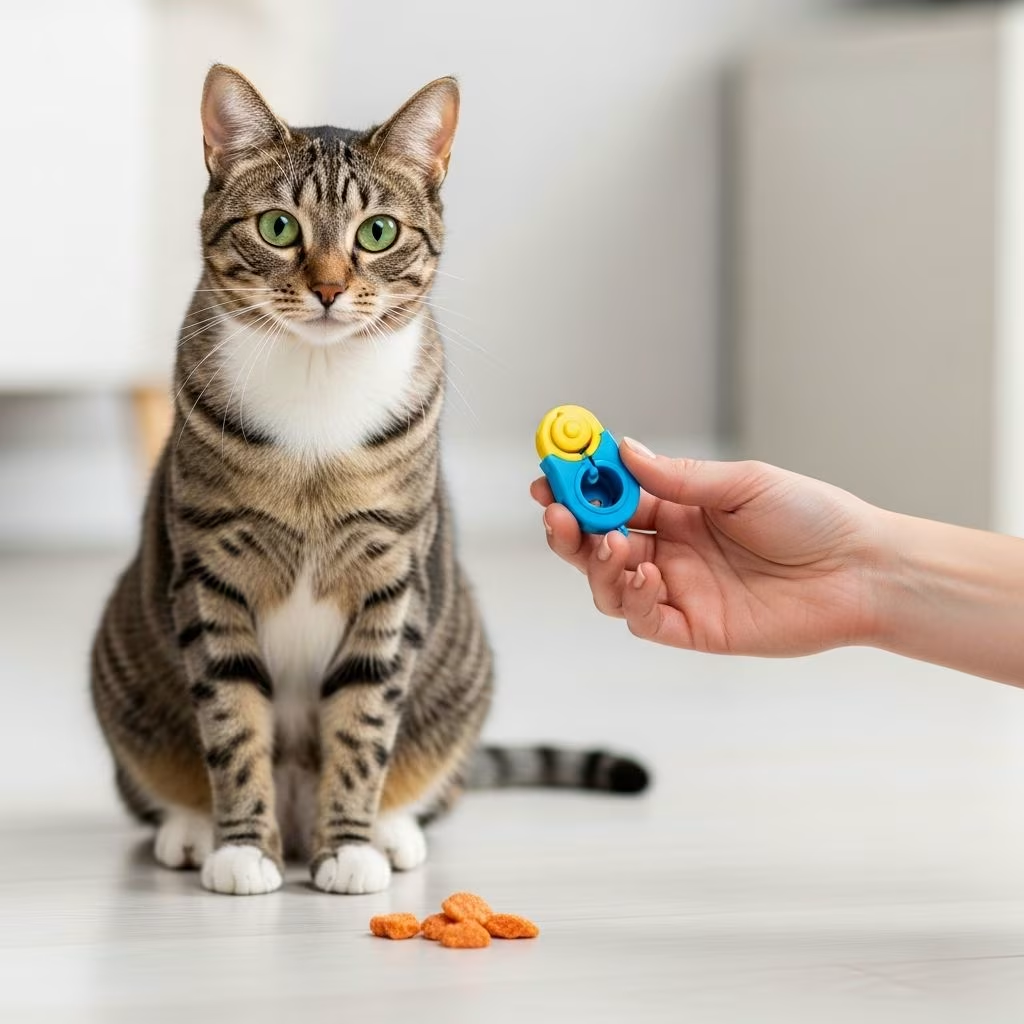
Clicker training revolutionizes how we interact with our feline companions by leveraging precise positive reinforcement to shape behaviors and foster deeper connections. This method uses a small device that emits a distinct clicking sound to mark desired actions instantly, followed by a reward, making it ideal for cats who respond best to clear, consistent signals.
The Science Behind Clicker Training Success
At its core, clicker training operates on classical conditioning principles, where the click sound pairs repeatedly with treats, transforming it into a powerful predictor of rewards. This ‘charging’ process ensures cats associate the sound with positive outcomes, enabling precise timing that verbal praise often lacks. Unlike vague approvals, the click’s consistency bridges the gap between behavior and reward, even across distances or during fleeting moments.
Research supports that this approach enhances focus and motivation in cats, providing mental stimulation akin to puzzle-solving. It promotes neuroplasticity, helping cats adapt behaviors more readily than punishment-based methods, which can induce stress.
Essential Benefits for Cats and Owners
Clicker training offers multifaceted advantages, extending beyond basic obedience to overall well-being.
- Mental Enrichment: Challenges cats intellectually, reducing boredom-related issues like excessive scratching or meowing.
- Behavior Correction: Redirects unwanted habits, such as counter jumping, by rewarding alternatives like floor-staying.
- Bond Strengthening: Builds trust through collaborative learning, improving daily interactions.
- Stress Reduction: Eases vet visits and handling by associating carriers or touch with rewards.
- Versatility: Applicable for tricks, leash walking, or multi-cat harmony.
Owners report calmer households and happier pets, with training sessions doubling as playtime.
Gathering Your Training Toolkit
Success starts with the right supplies. A standard clicker—a handheld plastic device with a metal strip—produces a sharp, uniform sound. Pair it with high-value treats like freeze-dried chicken or tuna flakes, reserved exclusively for sessions to heighten appeal. Toys such as wand lures work for play-motivated cats. For targeting, use a chopstick or clicker stick tipped with catnip. Train in a quiet, familiar space free from distractions.
Step-by-Step Guide to Get Started
Follow this structured progression for reliable results.
Phase 1: Charge the Clicker
Introduce the sound without expectations. Click once, then deliver a treat within half a second. Repeat 10-20 times per session, 2-3 times daily. Your cat will perk up or look expectantly at the click, signaling readiness.
Phase 2: Capture Natural Behaviors
Observe spontaneous actions like sitting or approaching. Click precisely as the behavior occurs, followed by reward. For sitting, step back; when kitty sits upon nearing, mark and treat. Sessions last 3-5 minutes to maintain engagement.
Phase 3: Introduce Verbal Cues
Say the command (e.g., “sit”) just before the anticipated behavior, then click and reward. Gradually fade lures, relying on the cue alone. Consistency across family members accelerates learning.
Phase 4: Shape Complex Tricks
Break advanced skills into micro-steps. For ‘high-five’: Click for paw lifts toward your hand, progressing to touches, then full contact. Reward highest efforts intermittently to build endurance.
| Trick | Steps | Tips |
|---|---|---|
| Sit | Lure over head; mark butt-touching floor. | Use treat scent to guide. |
| Wave | Click paw raises; shape to hand target. | Start with closed fist. |
| Target Touch | Sniff stick end; follow movement. | Add catnip for appeal. |
| Come | Click approach; practice distances. | Bridge for far rewards. |
Overcoming Common Training Hurdles
Cats may ignore clicks initially—persist with charging until anticipation shows. Short attention spans? Limit to 5 minutes, ending positively. Multi-cat homes: Train individually to avoid competition. For shy cats, start with distant clicks building proximity.
Avoid pitfalls: Never click without rewarding, as it erodes trust. Reserve clicker for training only—no nagging uses.
Addressing Problem Behaviors Effectively
Redirect rather than punish. For scratching furniture: Provide posts, click the instant paws engage it, treat lavishly. Cover forbidden surfaces temporarily. Counter surfing? Click and reward floor presence, cueing “off.” Repetition instills preferences for approved spots.
Tailoring Training to Your Cat’s Life Stage
Kittens
Playful energy suits toy rewards; short bursts match attention spans. Early habits prevent future issues.
Adults
Treat-focused; leverage independence for self-offered behaviors.
Seniors
Gentle pacing, soft clicks if hearing-sensitive; boosts mobility and cognition.
Advanced Techniques for Pro-Level Skills
Once basics solidify, chain behaviors: Sit-stay-come. Use clicker sticks for spins or jumps by guiding arcs. Leash training: Target steps forward. Competition-level cats perform agility or service tasks.
Maintaining Progress Long-Term
Phase out clicks gradually, randomizing rewards to sustain behaviors. Daily 1-minute refreshers prevent regression. Track sessions in a journal for patterns.
Frequently Asked Questions
Do all cats respond to clicker training?
Most do, regardless of breed or age, as it aligns with natural learning via rewards.
How long until results show?
Charging: 1-2 days; simple cues: 1 week; tricks: 2-4 weeks with daily practice.
Can I train without a clicker?
Yes, use a consistent word like “yes,” but clicker’s precision excels.
What if my cat fears the click?
Start softly, pair from afar, or use a quieter marker like a pen tap.
Is it safe for multi-cat households?
Absolutely; individual sessions promote harmony.
Real-World Success Stories
Owners share transformations: Aggressive cats mellow via targeting games; bored destroyers learn tricks, slashing vet stress. One reports nail trims now voluntary post-training.
References
- How To Clicker Train a Cat — PetMD. 2023. https://www.petmd.com/cat/behavior/clicker-training-cats
- Cat Training Guide for Beginners — Outdoor Bengal. 2024. https://www.outdoorbengal.com/blogs/clicker-training-cats/cat-training-guide
- Clicker Training for Cats: A Beginner’s Guide — Taste of the Wild Pet Food. 2023-10-15. https://www.tasteofthewildpetfood.com/articles/training-and-behavior/clicker-training-for-cats-beginners-guide/
- Why Train Your Cat? Clicker Training Benefits Explained — Cat School. 2024. https://www.catschool.co/cat-training-articles/science-benefits-cat-clicker-training
- Kitten Training – Using Clickers — Hill’s Pet Nutrition. 2023. https://www.hillspet.com/cat-care/training/cat-clicker-training



