

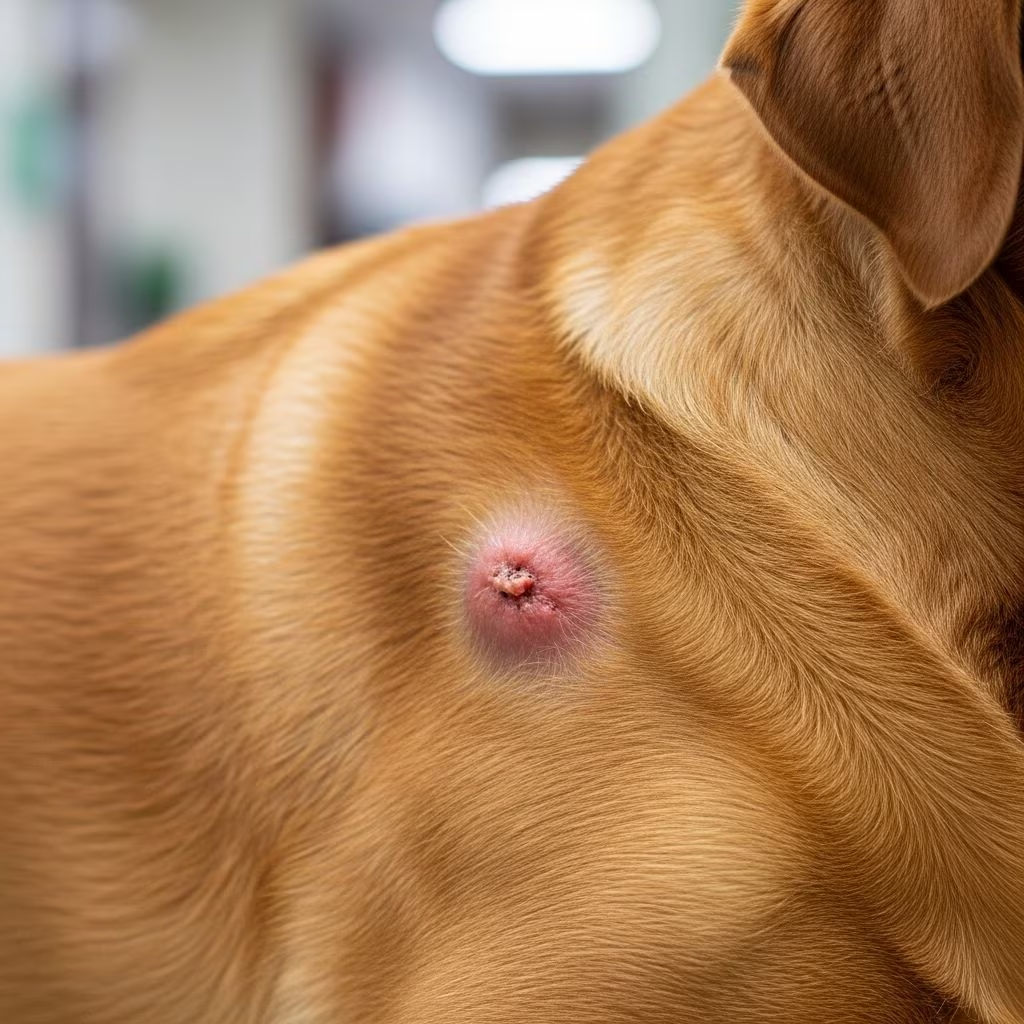
Mast cell tumors (MCTs) represent one of the most common skin cancers in dogs, accounting for up to 20% of all canine skin tumors. These tumors arise from mast cells, which are part of the immune system and release substances like histamine that can cause inflammation and other symptoms. While many MCTs are benign and respond well to treatment, some exhibit aggressive behavior, spreading to lymph nodes, liver, spleen, or other organs, necessitating prompt diagnosis and intervention.
Understanding MCTs is crucial for dog owners, as early detection significantly improves outcomes. Breeds such as Boxers, Bulldogs, Boston Terriers, Labrador Retrievers, and Pit Bulls are predisposed, but any dog can develop them, typically between ages 7-10 years. This article covers symptoms, diagnosis, treatment options, prognosis, and supportive care to empower owners with knowledge.
What Are Mast Cell Tumors?
Mast cell tumors originate from mast cells, immune cells found in connective tissues, skin, and mucous membranes. These cells contain granules with histamine, heparin, and other mediators that promote inflammation. In MCTs, these cells proliferate uncontrollably, forming tumors that vary from small lumps to large masses.
Tumors can appear anywhere on the body but are most common on the trunk, legs, and head. They may be raised, hairless, red, ulcerated, or itchy. Low-grade MCTs grow slowly and are often curable with surgery, while high-grade ones grow rapidly and metastasize. Grading systems, like the Patnaik three-tier (I-III) or Kiupel two-tier (low/high), predict behavior based on microscopic features such as cell shape, nucleus size, and mitotic index.
Symptoms of Mast Cell Tumors in Dogs
Symptoms vary by tumor grade and location. Common signs include:
- A firm, raised lump or bump on the skin that may wax and wane in size due to histamine release.
- Redness, ulceration, or bruising around the tumor.
- Itching, scratching, or licking at the site.
- Swelling in nearby areas from degranulation effects.
- Lethargy, vomiting, diarrhea, or loss of appetite if advanced or metastatic.
Some dogs show systemic signs like stomach ulcers from histamine, leading to bloody stool or vomiting. Internal MCTs in the spleen, liver, or gastrointestinal tract may cause abdominal swelling, weight loss, or anemia without visible skin lumps. Owners should check any new lump promptly, as rapid changes signal potential malignancy.
Diagnosis of Mast Cell Tumors
Diagnosis begins with a veterinary exam and fine-needle aspiration (FNA), where cells are drawn from the lump and examined under a microscope. FNA identifies 85-90% of MCTs but cannot always determine grade.
For definitive diagnosis and grading, surgical biopsy or excisional removal is needed, followed by histopathology. Staging involves:
- Complete blood count (CBC), chemistry panel, and urinalysis to assess organ function.
- Chest X-rays and abdominal ultrasound to check for metastasis.
- Cytology or biopsy of nearby lymph nodes.
- Advanced tests like c-KIT mutation analysis, which occurs in 30-50% of MCTs and influences targeted therapy.
Low-grade tumors rarely metastasize (less than 10%), while high-grade ones do so in up to 90% of cases.
Treatment Options for Mast Cell Tumors
Treatment depends on grade, location, size, and metastasis. Surgery is first-line for most cutaneous MCTs.
Surgery
Surgical excision with wide margins (2-3 cm) is curative for 90-95% of low-grade MCTs. The tumor and surrounding tissue are removed, then analyzed for clean margins (no cancer cells at edges). If margins are incomplete, adjunct therapies follow. Recovery involves 10-14 days of rest, e-collar, pain meds, and antihistamines like Benadryl.
Radiation Therapy
MCTs are highly radiosensitive. Fractionated radiation (15-18 sessions, 46-54 Gy total) achieves local control in 75-96% of incompletely excised tumors. It’s ideal for non-surgical sites like digits or mucosa. Side effects include temporary skin redness.
Chemotherapy
Used for high-grade, metastatic, or non-resectable tumors. Common protocols:
- Vinblastine + prednisone: 71% response rate in some studies, given weekly then tapered.
- Lomustine or doxorubicin for measurable disease.
Side effects: vomiting, diarrhea, low white cells. Not curative but extends survival.
Targeted Therapies
Toceranib phosphate (Palladia), an oral tyrosine kinase inhibitor (TKI), targets c-KIT mutations. Response rate: 37% in non-resectable grade II/III MCTs. Dosed every other day at home, costs $400-700/month. Masitinib is similar.
Innovative Treatments: STELFONTA
STELFONTA (tigilanib) is an injectable therapy FDA-approved for cutaneous MCTs under 3 cm. It disrupts tumor membranes, cuts blood supply, and boosts immunity, destroying 87% of tumors in 1-2 injections. The tumor sloughs off within 14 days, with dogs returning to normal quickly. Not for all tumors (e.g., near critical structures).
Supportive Care
Antihistamines (Benadryl), antacids (famotidine), and appetite stimulants (Entyce, Cerenia) manage degranulation effects like ulcers and nausea. Palliative care focuses on quality of life for advanced cases.
Treatment Comparison Table
| Treatment | Best For | Pros | Cons | Cost Estimate |
|---|---|---|---|---|
| Surgery | Low-grade, accessible tumors | Curative; quick recovery | Invasive; margins may be dirty | $1,000-$5,000 |
| Radiation | Incomplete excision, non-surgical sites | High local control | Multiple anesthesia; travel | $4,000-$8,000 |
| Chemotherapy | Metastatic, high-grade | Extends life | Side effects; not curative | $2,000-$6,000/course |
| Palladia (TKI) | c-KIT+, non-resectable | At-home oral | GI upset; ongoing cost | $400-700/month |
| STELFONTA | Small cutaneous MCTs | Minimally invasive; fast | Not for all tumors | Varies |
Prognosis for Dogs with Mast Cell Tumors
Prognosis hinges on grade, stage, and location. Low-grade MCTs: >90% cure with surgery, median survival >5 years. High-grade: 6-12 months without systemic therapy, improved to 1-2 years with chemo/TKI.
Favorable factors: low grade, low mitotic index (<5/10 hpf), clean margins, no metastasis. Poor: grade III, high MI, mucocutaneous sites, KIUPel high-grade. Perineal/inguinal MCTs have good outcomes with aggressive therapy (MST 37 months). Regular monitoring post-treatment is essential.
Prevention and Early Detection
No proven prevention, but spaying may reduce risk in some breeds. Monthly skin checks for lumps, especially in predisposed breeds, enable early FNA. Bi-annual vet exams aid detection.
Living with Mast Cell Tumors: Owner Tips
- Monitor for new lumps or symptom changes.
- Administer meds consistently for degranulation control.
- Provide a low-stress environment to minimize histamine release.
- Seek oncology consult for high-risk cases.
- Consider clinical trials for novel therapies.
Frequently Asked Questions (FAQs)
What is the most common treatment for mast cell tumors in dogs?
Surgical removal with wide margins is the primary treatment for most cutaneous MCTs, offering cure rates over 90% for low-grade tumors.
Can mast cell tumors be cured?
Yes, many low-grade MCTs are cured with surgery alone. High-grade or metastatic ones require multimodal therapy for control.
How quickly do mast cell tumors grow in dogs?
Growth varies; low-grade are slow, high-grade rapid. Some fluctuate due to degranulation.
Is chemotherapy painful for dogs with MCTs?
Most tolerate it well; side effects like nausea are managed with meds. It’s outpatient.
What breeds are prone to mast cell tumors?
Boxers, Bulldogs, Boston Terriers, Pugs, Pit Bulls, and Retrievers have higher risk.
How much does STELFONTA cost?
Costs vary by vet and tumor size; it’s a single or two-injection treatment with quick recovery.
This guide equips dog owners to navigate MCT diagnosis and management. Consult a veterinary oncologist for personalized plans.
References
- Canine mast cell tumors: diagnosis, treatment, and prognosis — PMC (NCBI). 2020-07-01. https://pmc.ncbi.nlm.nih.gov/articles/PMC7337164/
- About STELFONTA — STELFONTA Official Site. 2023. https://stelfonta.com/about-stelfonta/
- Mast Cell Tumors — NC State Veterinary Hospital. Accessed 2026. https://hospital.cvm.ncsu.edu/services/small-animals/cancer-oncology/oncology/mast-cell-tumors/
- Mast Cell Tumors in Dogs — VCA Animal Hospitals. Accessed 2026. https://vcahospitals.com/know-your-pet/mast-cell-tumors-in-dogs
- Mast Cell Tumors — American College of Veterinary Surgeons (ACVS). Accessed 2026. https://www.acvs.org/small-animal/mast-cell-tumors/



