

Understanding Mast Cell Tumors in Cats
Mast cell tumors (MCTs) represent one of the most common cancers affecting cats today. These tumors develop from mast cells, which are immune cells found throughout the body that play a crucial role in allergic reactions and inflammatory responses. When mast cells become cancerous, they can form tumors in various locations, most commonly on the skin, but also in internal organs such as the spleen and gastrointestinal tract. Understanding this condition is essential for cat owners, as early detection and appropriate treatment can significantly impact their pet’s quality of life and survival rates.
Mast cell tumors occur more frequently in cats than in dogs, and they represent the second most common skin tumor in felines. Additionally, they are the most common splenic tumor and the third most common intestinal tumor in cats. The behavior and prognosis of these tumors can vary significantly depending on their location, grade, and how aggressively they grow.
Types and Locations of Mast Cell Tumors
Mast cell tumors in cats can develop in three primary locations, each with distinct characteristics and treatment considerations:
Cutaneous Mast Cell Tumors
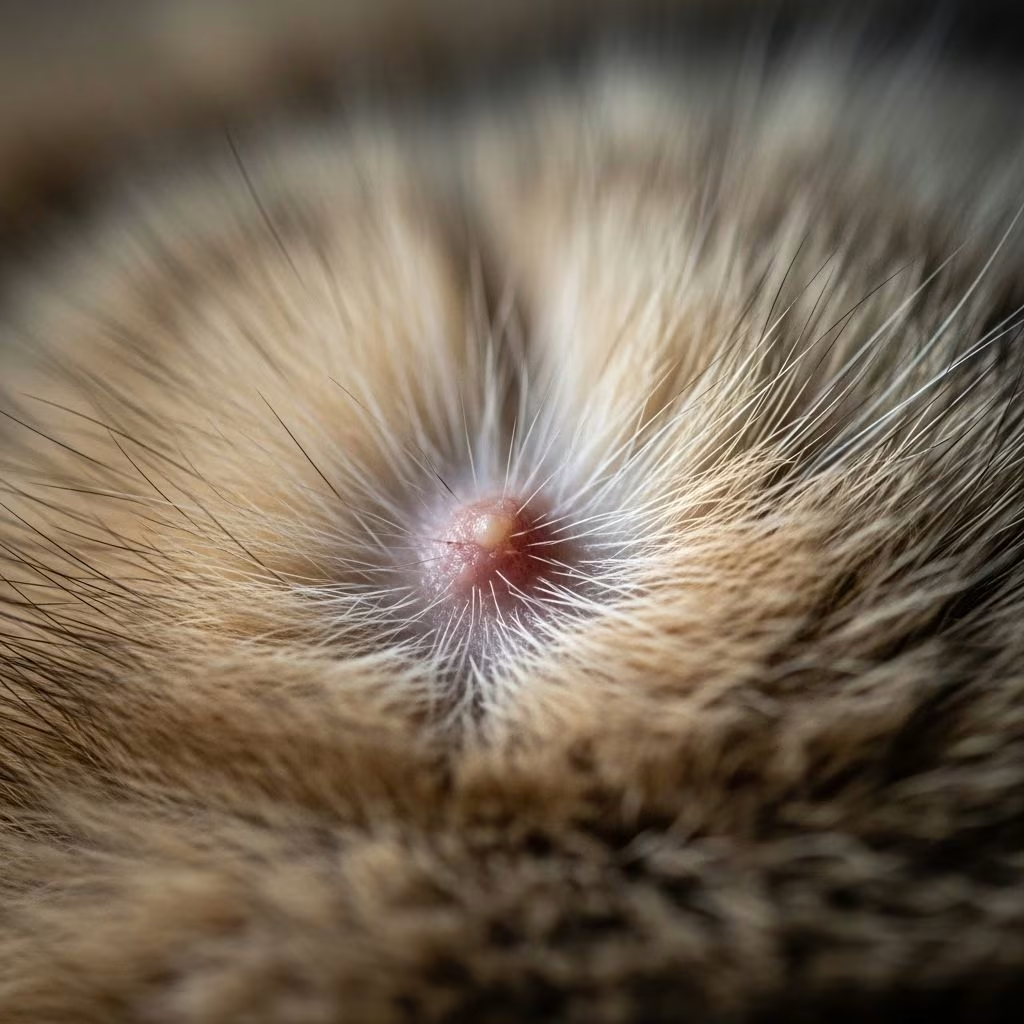
Cutaneous (skin) mast cell tumors are the most frequently encountered type in cats. Most feline cutaneous mast cell tumors are benign, meaning they grow slowly and have a lower risk of spreading to other parts of the body. These tumors typically appear as raised, firm bumps or lumps on the skin, often with missing hair in the affected area. They may appear as single lesions or multiple nodules scattered across the skin.
Splenic Mast Cell Tumors
The spleen, an organ that filters blood and serves various immune functions, is a common site for mast cell tumor development in cats. While the spleen performs important functions, it is not essential for adult cats to survive. Splenic mast cell tumors often present more aggressive behavior compared to cutaneous tumors and may have already spread by the time of diagnosis.
Gastrointestinal Mast Cell Tumors
Gastrointestinal (GI) mast cell tumors develop in the stomach and intestines and represent a particularly challenging form of the disease. These internal tumors are often diagnosed later in their progression because their symptoms can be subtle or attributed to other digestive conditions. GI mast cell tumors tend to be more aggressive than cutaneous tumors and have a higher likelihood of recurring even after surgical removal.
Signs and Symptoms of Mast Cell Tumors
The symptoms of mast cell tumors in cats vary considerably depending on the tumor’s location and severity. Cat owners should be alert to the following warning signs:
Cutaneous Tumors Symptoms
Skin mast cell tumors often present with visible signs that cat owners can detect during routine grooming or petting:
– Raised red or pigmented spots on the skin that are typically missing hair- Swelling or lumps that feel firm to the touch- Itchiness or excessive licking and grooming in one specific spot- Possible bleeding or discharge from the affected area- Enlarged lymph nodes near the tumor site
Internal Tumors Symptoms
Cats with splenic or gastrointestinal mast cell tumors typically exhibit systemic symptoms related to their internal disease:
– Vomiting or regurgitation- Diarrhea or changes in bowel habits- Loss of appetite or decreased food intake- Weight loss and lethargy- Abdominal pain or discomfort- Enlarged liver or spleen (hepatomegaly or splenomegaly)- Signs of general illness and reduced activity levels
Causes and Risk Factors
While the exact cause of mast cell tumors in cats remains not fully understood, researchers have identified several potential risk factors. Some cats may have genetic predispositions to developing these tumors, while environmental factors and chronic inflammation may also play roles. Unlike some other cancers, mast cell tumors do not appear to be contagious or preventable through specific lifestyle modifications. Certain cat breeds and older cats may be at increased risk, though mast cell tumors can develop in cats of any age or breed.
Diagnosis of Mast Cell Tumors
Accurate diagnosis is critical for determining the appropriate treatment plan and prognosis. Veterinarians employ multiple diagnostic tools to evaluate mast cell tumors:
Physical Examination
The diagnostic process begins with a thorough physical examination. Your veterinarian will carefully palpate any lumps or masses, assess lymph node enlargement, and evaluate your cat’s overall health status. They will also take a detailed history of symptoms and their progression.
Fine Needle Aspiration
Fine needle aspiration involves inserting a small needle into the tumor to collect cells for microscopic examination. This minimally invasive procedure can provide preliminary information about the tumor’s nature and helps confirm the presence of mast cells. However, a definitive diagnosis typically requires more extensive testing.
Biopsy and Histopathology
A tissue biopsy remains the gold standard for diagnosing mast cell tumors. During this procedure, a sample of the tumor tissue is surgically removed or obtained through other means and sent to a pathologist for detailed examination. Histopathology provides crucial information including:
– Confirmation of mast cell tumor diagnosis- Tumor grade (benign, low-grade, or high-grade)- Degree of cellular differentiation- Assessment of whether the tumor was completely removed- Mitotic rate and other prognostic indicators
Staging
Staging procedures help determine whether the cancer has spread beyond the primary tumor site. These may include abdominal ultrasound, chest radiographs, bloodwork, and examination of regional lymph nodes. Proper staging is essential for predicting prognosis and determining the most appropriate treatment approach.
Treatment Options for Mast Cell Tumors
Treatment decisions are individualized based on tumor location, grade, extent of disease, and your cat’s overall health status. Multiple treatment modalities may be combined for optimal outcomes.
Surgical Removal
Surgical excision is the primary and preferred treatment for mast cell tumors whenever feasible. Complete surgical removal offers the best chance for cure, particularly for benign cutaneous tumors. During surgery, the veterinary surgeon works to remove the tumor with clear margins—meaning healthy tissue surrounding the tumor is also removed to ensure all cancerous cells are eliminated.
For cutaneous tumors, even benign-appearing lesions should be surgically removed, as malignancy cannot always be determined by appearance alone. For splenic tumors, surgical removal of the affected spleen (splenectomy) is typically recommended and can significantly improve quality of life even if cancer has metastasized. Gastrointestinal tumors should also be surgically removed when possible, though these require more extensive procedures and carry slightly higher surgical risks.
Chemotherapy
Chemotherapy may be recommended as a follow-up treatment after surgery or when surgery is not possible or incomplete. When mast cell tumors appear in clusters or when a cat has multiple nodules in various locations, surgery alone may not be viable, making chemotherapy the primary treatment option.
Fortunately, cats generally tolerate chemotherapy remarkably well compared to other species. The majority of feline patients experience minimal side effects, with only small possibilities of vomiting, diarrhea, or temporary loss of appetite. Cats rarely lose their fur during chemotherapy, though some may lose whiskers. Chemotherapy can be administered intravenously or orally, depending on the specific protocol and tumor type.
Radiation Therapy
Radiation therapy may be recommended when surgical removal is incomplete or when the tumor’s location makes surgery too difficult or risky. This treatment option requires referral to a facility with radiation oncology capabilities and typically involves multiple treatment sessions.
Supportive Medical Management
All three types of mast cell tumors can release compounds called mediators (including histamine) that increase acid production in the stomach. This can cause stomach upset, heartburn-like symptoms, and gastrointestinal distress. To minimize these effects, veterinarians typically prescribe supportive medications including:
– Antihistamines (such as diphenhydramine/Benadryl)- Antacid medications (such as famotidine/Pepcid)- Anti-nausea medications (such as maropitant)- Corticosteroids like prednisone, which can help shrink tumors and manage symptoms- Pain medications as needed
These medications may be prescribed before, during, and after surgical procedures to prevent histamine release complications.
Prognosis and Long-term Outlook
The prognosis for cats with mast cell tumors varies significantly based on several factors. Benign cutaneous tumors can be cured with surgery alone. For more aggressive cutaneous mast cell tumors, the average prognosis is approximately one year, though this varies based on individual tumor characteristics.
Cats with splenic mast cell tumors that undergo surgery have an average prognosis of about 14 months, compared to only 4-6 months without surgery, highlighting the importance of surgical intervention. For gastrointestinal mast cell tumors, the prognosis is variable but can range from 1-2 years with aggressive treatment.
Factors affecting prognosis include tumor grade, completeness of surgical removal, presence of metastasis, and response to adjunctive therapies. Regular follow-up with your veterinarian is essential to monitor for recurrence and manage any complications.
Management and Home Care
After diagnosis and treatment, ongoing management is crucial for your cat’s wellbeing. This may include:
– Regular veterinary check-ups to monitor for recurrence- Administration of prescribed medications as directed- Maintaining a healthy diet and appropriate weight- Minimizing stress when possible- Prompt attention to any new lumps or symptoms- Keeping the surgical site clean if wounds develop
Frequently Asked Questions
Q: Can mast cell tumors in cats be prevented?
A: There is no proven method to prevent mast cell tumors in cats. Regular veterinary examinations can help detect tumors early, which improves treatment outcomes.
Q: Are cutaneous mast cell tumors in cats usually benign?
A: Most feline cutaneous mast cell tumors are benign, but they should still be removed surgically as some can be more aggressive than others, and this cannot be determined by appearance alone.
Q: How often should my cat with a history of mast cell tumors be examined?
A: Cats treated for mast cell tumors should have regular veterinary follow-ups. The frequency depends on the specific case but may be monthly or more frequently if receiving chemotherapy.
Q: Will my cat lose fur during mast cell tumor treatment?
A: Cats generally do not lose fur during chemotherapy for mast cell tumors, though some may lose whiskers. Cats tolerate chemotherapy well compared to other species.
Q: What should I do if I notice a lump on my cat’s skin?
A: Contact your veterinarian promptly for evaluation. A physical examination and possibly fine needle aspiration or biopsy will be needed to determine if the lump is a mast cell tumor or another condition.
References
- Mast Cell Tumors in Cats — VCA Animal Hospitals. 2024. https://vcahospitals.com/know-your-pet/mast-cell-tumors-in-cats
- Mast Cell Tumors in Cats — PetCure Oncology. 2024. https://petcureoncology.com/mast-cell-tumors-in-cats/
- Treatment of Mast Cell Tumors in Cats — PetMD. 2024. https://www.petmd.com/cat/conditions/cancer/mast-cell-tumors-cats
- Medical Oncology: Feline Mast Cell Tumors — North Carolina State University College of Veterinary Medicine. 2024. https://hospital.cvm.ncsu.edu/services/small-animals/cancer-oncology/oncology/medical-oncology-feline-mast-cell-tumors/
- What to Know About Mast Cell Tumors in Cats — WebMD Pets. 2024. https://www.webmd.com/pets/cats/what-to-know-mast-cell-tumors-cats



