The Marvel of Dogs’ Tongues: Anatomy and Function
Discover the incredible anatomy and surprising functions of your dog's tongue.
The Marvel of Dogs’ Tongues: Understanding Canine Anatomy and Function
Your dog’s tongue is far more than just a tool for lapping water or showing affection. This remarkable organ represents a marvel of biological engineering, featuring complex muscular structures, sophisticated sensory capabilities, and multiple vital functions that contribute to your dog’s overall health and well-being. Understanding your dog’s tongue can help you better care for your pet and recognize potential health issues early.
Tongue Anatomy and Structure
The dog’s tongue is primarily composed of skeletal muscle and exhibits a sophisticated internal architecture that enables its wide range of movements and functions. The tongue is divided into three distinct anatomical regions: the root, body, and apex, each serving specific purposes in your dog’s daily activities.
The Three Regions of the Tongue
The root is the caudal third of the tongue and serves as the anchor point, connecting the tongue to the oropharynx and providing structural stability. This region is deeply embedded and less mobile than the other sections.
The body extends from the root and remains attached to the floor of the oral cavity through a structure called the frenulum. This middle section provides the bulk of the tongue’s musculature and participates actively in food manipulation and swallowing.
The apex is the free, mobile tip of the tongue that extends into the oral cavity. This is the most flexible and sensitive portion, allowing dogs to perform fine motor tasks like grooming, playing, and exploring their environment.
The Lyssa: A Unique Canine Feature
One of the most distinctive features of a dog’s tongue is the lyssa, a specialized cartilaginous rod found exclusively in canids. The lyssa is composed of cartilage and fatty tissue that provides structural support and aids in tongue flexibility. While the exact function of the lyssa isn’t fully understood, research suggests it helps maintain tongue shape and assists in complex movements during eating and drinking.
Papillae: The Sensory Workhorses
The surface of your dog’s tongue is covered with specialized structures called papillae, which serve multiple sensory and functional purposes. Different types of papillae are distributed across the tongue’s surface, each adapted for specific functions:
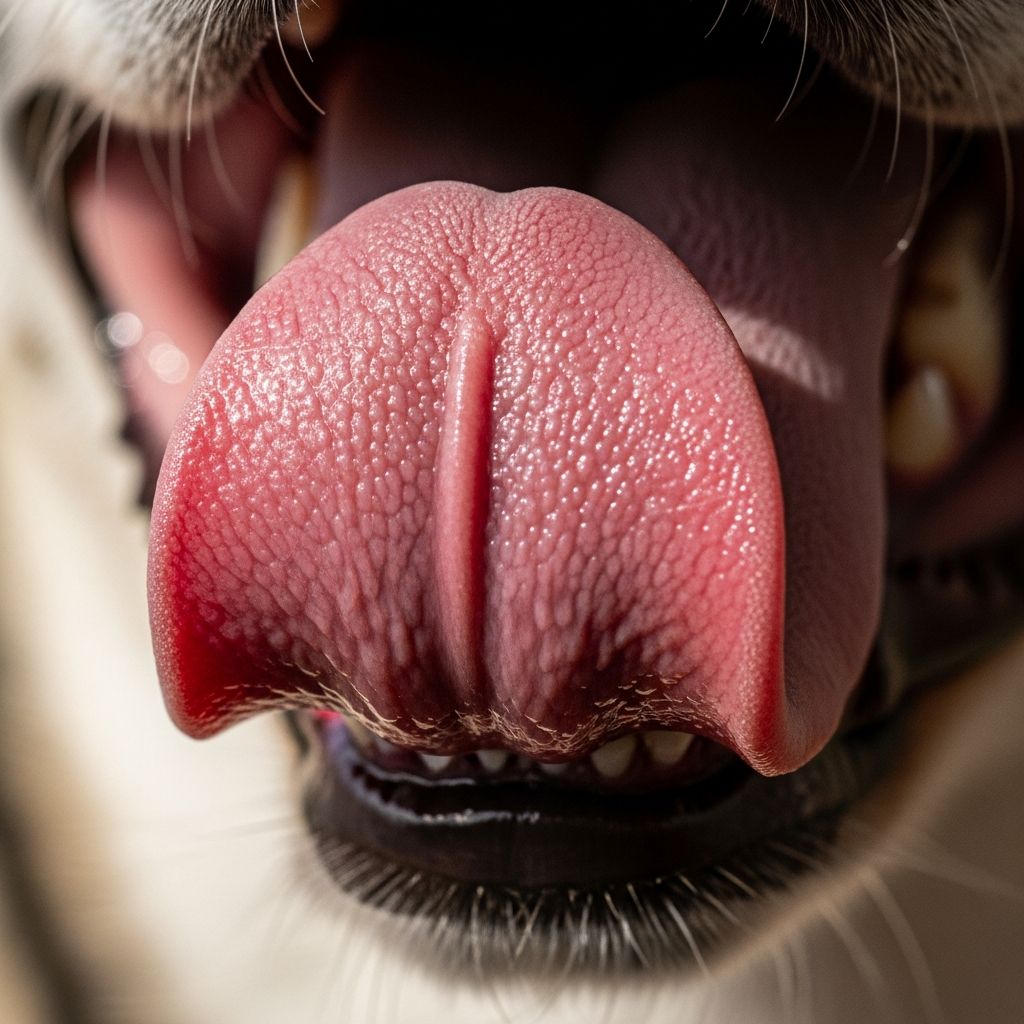
Filiform papillae are the most numerous type and cover most of the apex and body of the tongue. These elongated, cylindrical structures are arranged in rows with tips pointing caudally, helping dogs grip and manipulate food during eating and grooming.
Mushroom-shaped papillae house the majority of your dog’s taste buds, enabling them to detect and appreciate different flavors in their food. These papillae are particularly concentrated in specific regions of the tongue.
Conical papillae replace filiform papillae at the root of the tongue, each featuring a singular tip pointing caudally. These cone-shaped structures provide additional texture and grip capability.
Vallate papillae are the largest of all papillae types and are typically arranged in a V-shape configuration at the junction between the body and root of the tongue. Usually numbering between 4 and 6, these papillae have a raised inner circle surrounded by a sulcus, or groove, which enhances their sensory capabilities.
The Neuromuscular Network
The dog’s tongue is one of the most densely innervated organs in the canine body, featuring an incredibly complex neuromuscular organization that enables precise control and sensation. The hypoglossal nerve (cranial nerve XII) supplies all intrinsic and extrinsic tongue muscles, with approximately 50 primary nerve branches extending throughout the organ.
Intrinsic Muscles
The intrinsic muscles are composed of many neuromuscular compartments arranged in sophisticated patterns. The superior and inferior longitudinal muscles each contain approximately 40 distinct muscle fascicles that span the length of the tongue, with each fascicle supplied by a separate nerve branch. The transverse and vertical muscles are even more complex, with over 140 separate muscle sheets each, where every sheet receives its own terminal nerve innervation.
This intricate organization allows the transverse and vertical muscles to alternate their orientation 90 degrees throughout the tongue’s length, enabling the organ to morph through countless complex shapes necessary for chewing, swallowing, and manipulating food.
Extrinsic Muscles
Several muscles attach the tongue to surrounding structures, providing control over gross tongue movements. The styloglossus muscle originates from the stylohyoid bone and inserts into the middle of the tongue, acting to retract and elevate the tongue during swallowing. The genioglossus muscle extends from the chin to the tongue and is partly embedded in the lingual frenulum, functioning to both protrude and retract the apex of the tongue. The hyoglossus muscle originates on the basihyoid bone and inserts on the caudal two-thirds of the tongue, retracting and depressing the tongue during various movements.
Critical Functions of the Canine Tongue
Your dog’s tongue performs multiple essential functions that go far beyond simple lapping and affection-showing. These capabilities make the tongue one of the most important organs for your dog’s survival and quality of life.
Taste and Flavor Detection
Dogs experience taste through specialized taste receptors located primarily in the mushroom-shaped papillae distributed across the tongue’s surface. While dogs have fewer taste buds than humans, their taste sensitivity is highly developed in certain areas, allowing them to distinguish between different food qualities and preferences. This sensory capability helps dogs identify nutritious foods and avoid potentially harmful substances.
Food Manipulation and Mastication
The tongue plays a crucial role in food handling during the eating process. The filiform papillae provide grip and texture for manipulating food particles, while the complex muscular architecture allows the tongue to position food for optimal chewing and prepare it for swallowing. The tongue’s ability to create precise shapes enables dogs to separate food components and process different textures efficiently.
Swallowing and Airway Management
During swallowing, the tongue undergoes coordinated muscular contractions that propel food toward the pharynx and esophagus. Additionally, the tongue can dilate and position itself to maintain an open airway during inspiration, particularly important during vigorous activity or exercise.
Temperature Regulation
One of the most remarkable functions of the dog’s tongue is its role in temperature regulation. Dogs lack functional sweat glands over most of their body, making the tongue critical for cooling during hot weather or after exercise. The extensive network of blood vessels in the tongue allows efficient heat dissipation through panting, where rapid tongue movement promotes evaporative cooling.
Communication and Social Bonding
Dogs use their tongues extensively for social communication and bonding. Licking is a primary means of expressing affection, greeting other dogs, and investigating their environment. Puppies are licked by their mothers immediately after birth and throughout their early development, and adult dogs continue using licking as a fundamental social behavior.
Grooming and Hygiene
The tongue’s specialized surface texture, particularly the filiform papillae, makes it ideal for grooming. Dogs regularly lick their paws and coat to maintain cleanliness, remove parasites, and keep their fur in good condition. This self-grooming behavior is essential for skin health and comfort.
Sensory Exploration
The tongue is densely supplied with blood vessels and nerves, making it highly sensitive to touch, temperature, and pressure. Dogs use their tongues to explore objects in their environment, similar to how humans use their hands, gathering detailed sensory information about textures, temperatures, and spatial relationships.
What Your Dog’s Tongue Reveals About Health
Your dog’s tongue can serve as an important indicator of overall health status. Regular inspection of your dog’s tongue can help identify potential health issues early:
Color: A healthy dog’s tongue should be pink, indicating good circulation and oxygenation. Pale or white tongues may indicate anemia, shock, or poor circulation and warrant veterinary attention. Bluish or purple discoloration suggests oxygen deprivation and requires emergency care.
Texture: The tongue surface should feel relatively smooth with normal papillae. Excessive roughness, swelling, or unusual growths should be evaluated by your veterinarian.
Moisture: A healthy tongue should remain moist. Excessive dryness might indicate dehydration, while excessive moisture could suggest oral health issues.
Movement: Observe your dog’s ability to move the tongue normally. Difficulty moving the tongue, reluctance to eat, or excessive drooling could indicate nerve damage, injury, or oral disease.
Common Tongue Problems in Dogs
Several health conditions can affect the canine tongue, including glossitis (tongue inflammation), traumatic injuries from foreign objects or fractures, oral tumors, or infections. Additionally, certain genetic conditions can affect tongue function. If you notice unusual changes in your dog’s tongue appearance or function, contact your veterinarian promptly for evaluation and appropriate treatment.
Frequently Asked Questions About Dog Tongues
Q: Why do dogs lick so much?
A: Dogs lick for multiple reasons including showing affection, exploring their environment, self-grooming, cooling down, and seeking attention. Excessive licking might indicate stress, anxiety, or medical issues and should be evaluated if it becomes problematic.
Q: How many taste buds do dogs have?
A: Dogs have approximately 1,700 taste buds, significantly fewer than humans who have around 9,000. However, dogs’ taste buds are highly specialized for detecting certain flavors, particularly salt and meat-based compounds.
Q: Is a dog’s mouth cleaner than a human’s mouth?
A: This is a common myth. While dogs’ saliva has some antibacterial properties, their mouths are not cleaner than human mouths and can harbor various bacteria and parasites. Dogs should not lick open wounds or faces.
Q: Why do dogs hang their tongues out?
A: Dogs hang their tongues out for several reasons including cooling through panting, relaxation, excitement, or as a sign of contentment. Excessive tongue protrusion when not panting might indicate mouth problems or neurological issues.
Q: Can dogs get tongue injuries?
A: Yes, dogs can suffer tongue injuries from sharp objects, thermal burns, fractures, or infections. Signs include difficulty eating, excessive drooling, bleeding, or reluctance to close the mouth. Seek veterinary care for suspected tongue injuries.
Q: What does tongue color indicate about my dog’s health?
A: Normal tongue color should be pink. Pale tongues may indicate anemia or poor circulation, while bluish tongues suggest oxygen deprivation requiring emergency care. White or yellow discoloration could indicate oral disease or infection.
References
- Dog Tongue Guide: Understanding Canine Health — PetsCare.com. Accessed 2025-11-28. https://www.petscare.com/news/post/dog-tongue-guide
- Neuromuscular organization of the canine tongue — PubMed Central, National Institutes of Health. Published 1999. https://pubmed.ncbi.nlm.nih.gov/10589027/
- Part 3: Oral Cavity, Tongue, Pharynx, Larynx, and Associated Muscles — University of Minnesota PressBooks. Accessed 2025-11-28. https://pressbooks.umn.edu/dogcatanatomylabguide/chapter/oral-cavity/
- Soft Tissues of the Oral Cavity — Veterian Key. Accessed 2025-11-28. https://veteriankey.com/soft-tissues-of-the-oral-cavity/
- Understanding the Anatomy of Your Dog’s Tongue — PetCareRx. Accessed 2025-11-28. https://www.petcarerx.com/article/understanding-the-anatomy-of-your-dogs-tongue/4547
Similar Articles







Read full bio of medha deb