
Marine Mammals: 130 Species, Adaptations, And Threats
Discover the biology, adaptations, and diversity of marine mammals thriving in ocean environments worldwide.
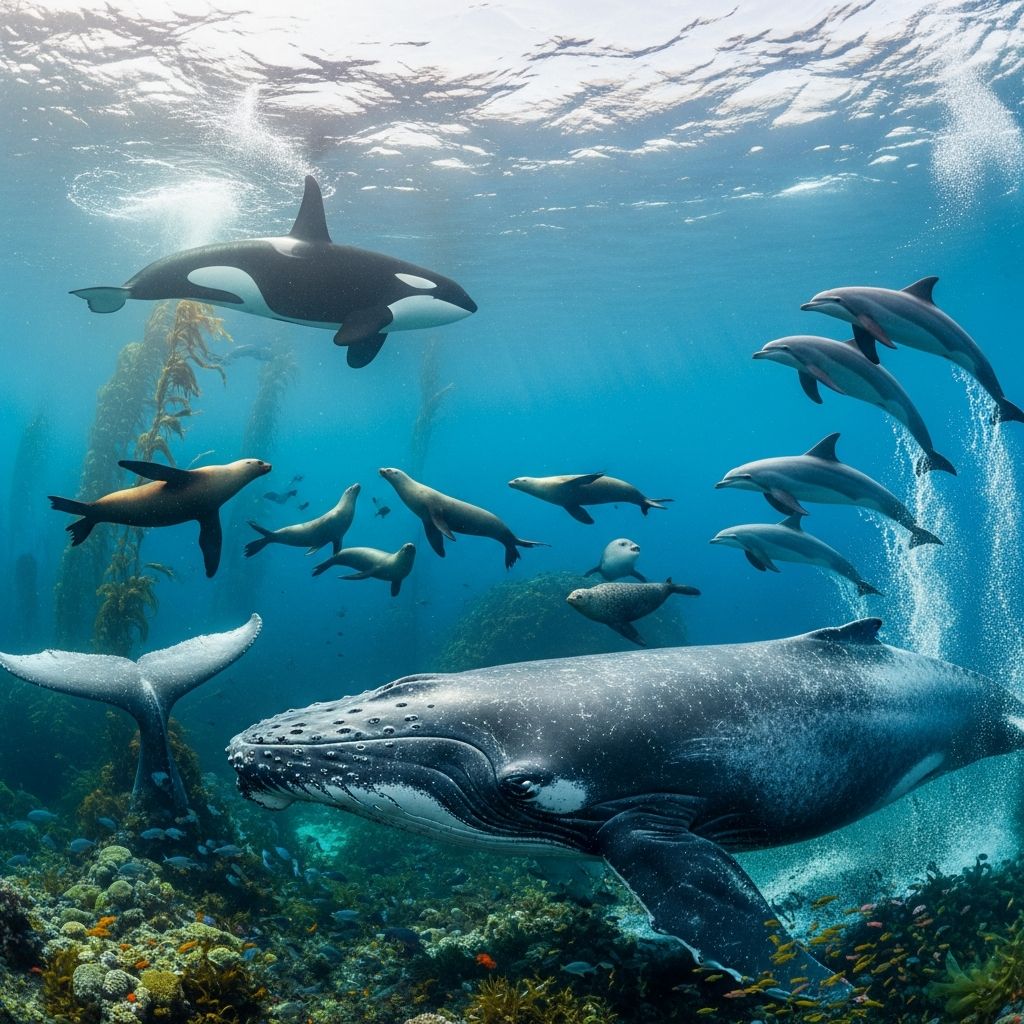
Marine mammals represent a remarkable evolutionary success story, having transitioned from terrestrial ancestors to fully adapted oceanic dwellers. These warm-blooded vertebrates, which include whales, dolphins, seals, sea lions, manatees, and sea otters, possess unique physiological and behavioral traits that enable them to thrive in diverse aquatic environments. This article delves into their classification, adaptations, habitats, reproduction, and the pressing conservation issues they face.
Defining Characteristics of Marine Mammals
At their core, marine mammals share fundamental mammalian traits while exhibiting profound adaptations to life in water. They are endothermic, maintaining a constant body temperature through metabolic processes, and breathe air via lungs, surfacing periodically to inhale. Females nurse their live-born young with milk from mammary glands, and most have some form of hair or fur, though it varies greatly among groups.
- Warm-blooded metabolism: Allows survival in cold waters via blubber insulation and high metabolic rates.
- Live birth: Offspring are born underwater, requiring immediate swimming ability in many species.
- Milk production: Nutrient-rich milk supports rapid growth in neonates.
- Hair or fur: Reduced in cetaceans but prominent in pinnipeds and fissipeds for insulation or sensory functions.
These features distinguish them from fish, emphasizing their mammalian heritage despite aquatic lifestyles.
Major Taxonomic Groups
Marine mammals are primarily classified into four key groups based on evolutionary lineages and morphological traits: cetaceans, pinnipeds, sirenians, and fissipeds. Modern taxonomy places them within orders like Artiodactyla for cetaceans and Carnivora for others.
| Group | Examples | Key Features | Habitat |
|---|---|---|---|
| Cetaceans | Whales, dolphins, porpoises | Streamlined bodies, blowholes, flippers | Open ocean, coastal waters |
| Pinnipeds | Seals, sea lions, walruses | Flippers for propulsion, earless or eared | Polar to temperate seas |
| Sirenians | Manatees, dugongs | Paddle-like tails, herbivorous | Tropical coastal, rivers |
| Fissipeds | Sea otters, polar bears | Retain land mobility, dense fur | Cold coastal regions |
Cetaceans: Masters of the Open Sea
Cetaceans, comprising about 94 species, dominate marine mammal diversity. Divided into Mysticeti (baleen whales) and Odontoceti (toothed whales), they evolved from artiodactyl ancestors around 50 million years ago, closely related to hippos. Baleen whales like blue and humpback use keratin plates to filter krill, while toothed species like sperm whales and dolphins hunt fish and squid using echolocation.
Subspecies variations abound; for instance, recent genetic studies support distinct North Pacific fin whales as Balaenoptera physalus velifera. Their streamlined fusiform bodies minimize drag, and dorsal fins aid stability.
Pinnipeds: Amphibious Predators
Pinnipeds include three families: Otariidae (eared seals and sea lions), Phocidae (earless seals), and Odobenidae (walruses). They haul out on land or ice for breeding, contrasting cetaceans’ fully aquatic life. Molecular data supports pinniped monophyly, though debates persist on origins. Harbor seals (Phoca vitulina) show subspecies complexity, with Atlantic and Pacific forms.
Sirenians: Gentle Grazers
Sirenians, or sea cows, are fully herbivorous, feeding on seagrasses in warm waters. Manatees inhabit coastal and riverine systems, while dugongs prefer reefs. Their rounded tails and paddle flippers suit slow cruising.
Fissipeds: Semi-Terrestrial Specialists
Sea otters and polar bears represent fissipeds, retaining clawed feet for land use. Sea otters’ dense fur (up to 1 million hairs per square inch) traps air for insulation, crucial as they lack thick blubber.
Physiological Adaptations to Aquatic Life
Survival in the ocean demands innovations beyond basic mammalian traits. Blubber layers provide insulation, buoyancy, and energy reserves, thickest in polar species. Cetaceans hold breath for up to 90 minutes via enhanced oxygen storage in muscles and blood.
- Diving physiology: Myoglobin-rich muscles and adjustable lung collapse prevent the bends.
- Sensory upgrades: Echolocation in odontocetes; mustached whiskers in pinnipeds for detecting prey vibrations.
- Thermoregulation: Countercurrent heat exchangers in flippers conserve warmth.
Renal systems concentrate urine efficiently, combating salt intake.
Habitats and Global Distribution
Marine mammals span all oceans, from Arctic ice floes to tropical mangroves. Cetaceans roam pelagic zones, pinnipeds favor continental shelves, sirenians stick to shallows, and fissipeds hug coastlines. Migratory patterns, like humpback whales’ pole-to-equator treks, link distant ecosystems.
Reproductive Strategies and Social Structures
Breeding varies: many pinnipeds form rookeries for polygynous mating, while cetaceans often live in matrilineal pods. Gestation lasts 10-18 months, with delayed implantation in some seals. Milk is high-fat (up to 50%) for fast weaning. Social bonds aid calf survival and cooperative hunting in dolphins.
Feeding Ecologies and Trophic Roles
Diets reflect adaptations: baleen whales gulp krill swarms, orcas apex-predate everything from sharks to whales. Sirenians mow seagrass meadows, maintaining biodiversity. These roles position marine mammals as ecosystem engineers.
Health Considerations and Common Pathologies
Veterinary insights reveal challenges like strandings from sonar disorientation, biotoxin accumulations, and infectious diseases. Parasites thrive in high-lipid tissues, and neonates risk hypothermia without maternal care. Captive care emphasizes UV lighting for vitamin D synthesis.
Conservation Challenges and Threats
Climate change melts ice habitats, fisheries bycatch drowns thousands annually, and pollution bioaccumulates toxins. NOAA and IUCN monitor populations; protected areas like marine sanctuaries aid recovery. Genetic studies refine subspecies protections.
Research and Veterinary Management
Stranding networks and tagging track health; molecular taxonomy updates lists regularly. Rehab facilities treat oil spills’ impacts, focusing on thermoregulation and nutrition.
Frequently Asked Questions (FAQs)
What defines a marine mammal?
Marine mammals are warm-blooded, air-breathing vertebrates that give live birth and nurse young, fully reliant on ocean ecosystems.
How many marine mammal species exist?
Approximately 130 species across major groups, with ongoing taxonomic revisions.
Why do whales beach themselves?
Causes include navigation errors, diseases, and human noise pollution disrupting echolocation.
Are marine mammals endangered?
Many are, due to habitat loss, hunting legacies, and climate impacts; 25% face extinction risk.
Can marine mammals survive in captivity?
Large cetaceans struggle with space needs; pinnipeds fare better in well-managed facilities.
References
- Marine Mammals – NESS/NOAA BWET — National Earth Science Teachers Association. 2024-05. https://nessf.org/wp-content/uploads/2024/05/NESS_NOAA_BWET_Marine_Mammals.pdf
- Marine Mammal Taxonomy — NOAA Fisheries. 2023. https://www.fisheries.noaa.gov/national/outreach-and-education/marine-mammal-taxonomy
- List of Marine Mammal Species and Subspecies — Society for Marine Mammalogy. 2023. https://marinemammalscience.org/science-and-publications/list-marine-mammal-species-subspecies/
- All About Marine Mammals — National Marine Mammal Foundation. 2024. https://nmmf.org/all-about-marine-mammals/
- An Introduction to Marine Mammals — National Center for Biotechnology Information (NCBI). 2000 (authoritative reference). https://www.ncbi.nlm.nih.gov/books/NBK236689/
Similar Articles








Read full bio of medha deb


