
Marek’s Disease: 4 Forms, Signs, And Control Strategies
Comprehensive guide to understanding, preventing, and managing Marek's disease in chickens and poultry flocks.
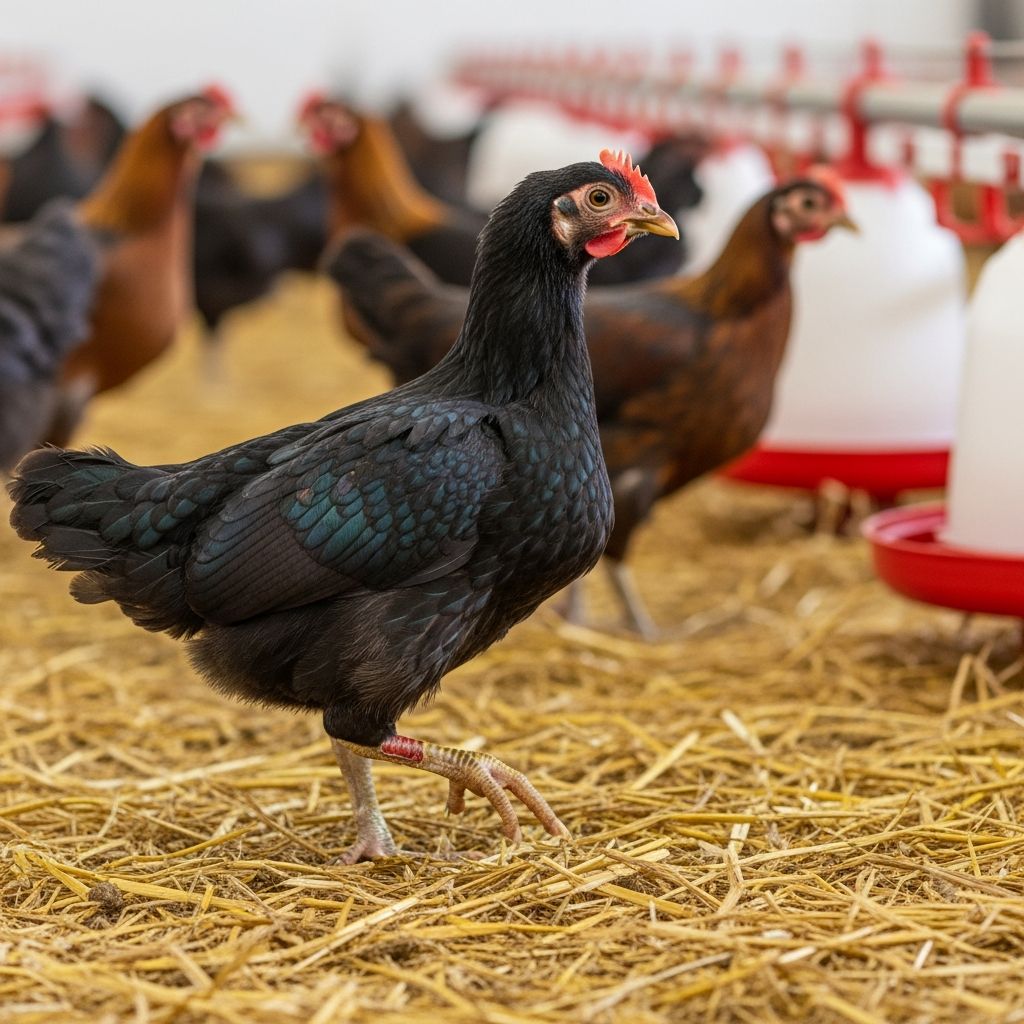
Marek’s disease represents one of the most significant viral challenges in poultry production, primarily affecting chickens through a herpesvirus that induces tumors and neurological damage. This highly contagious condition can lead to substantial flock losses if not managed properly, though vaccination has dramatically reduced its impact since the late 1960s.
The Viral Culprit Behind Marek’s Disease
At its core, Marek’s disease stems from gallid alphaherpesvirus 2, part of a group of herpesviruses divided into serotypes that target poultry. These viruses infect lymphocytes, triggering uncontrolled cell proliferation that manifests as lymphomas and nerve enlargement. While multiple strains exist, including highly virulent pathotypes, the virus persists in feather follicles and dander, facilitating airborne spread within environments.
The pathogen’s lifecycle involves initial replication in the respiratory tract after inhalation, followed by dissemination to lymphoid tissues. This process suppresses the host’s immune response, making infected birds susceptible to secondary infections. Unlike many viruses, Marek’s does not transmit vertically through eggs, meaning chicks hatch virus-free unless exposed post-hatch.
Recognizing Clinical Manifestations Across Forms
Marek’s disease presents in distinct forms, each with unique signs that demand vigilant monitoring. The neural form, historically dominant, strikes young birds around 2-4 months, causing asymmetric paralysis in legs or wings due to peripheral nerve inflammation. Affected chickens struggle to stand, leading to starvation or trampling.
Ocular involvement results in grey irises with irregular pupils, impairing vision and coordination. Visceral outbreaks target organs like the liver, spleen, heart, kidneys, and gonads, producing pale, emaciated birds with high mortality rates up to 30% even in vaccinated groups. Cutaneous lesions enlarge feather follicles, causing processing issues in broilers.
| Form of Marek’s Disease | Primary Symptoms | Affected Age Group | Common Outcomes |
|---|---|---|---|
| Neural | Paralysis, drooping wings, loss of balance | 6-30 weeks | Starvation, death |
| Ocular | Grey iris, irregular pupils, blindness | Variable | Coordination loss |
| Visceral | Weight loss, organ tumors, distress | End of rearing to 45 weeks | High mortality (up to 30%) |
| Cutaneous | Swollen follicles, skin hemorrhages | Broilers/breeders | Processing condemnation |
Additional signs include overfull crops, gasping respiration, pale comb, and rapid emaciation. These symptoms often culminate in dehydration or secondary complications rather than direct viral effects.
Transmission Dynamics and Environmental Persistence
The virus spreads horizontally via inhalation of contaminated dust, dander, and feathers shed from infected birds. Once introduced, it contaminates poultry houses for months to years, resisting elimination even after depopulation. Young chicks face heightened risk as their immature immune systems require 10-14 days post-vaccination for protection, while early exposure overwhelms defenses.
- Primary Route: Airborne dander from feather follicles.
- Survival Time: Up to years in litter and dust.
- No Vertical Transmission: Eggs from infected hens remain clean.
- Risk Factors: Multi-age flocks, poor ventilation, high stocking density.
Breeds like Silkies and light egg-layers show greater susceptibility, with morbidity ranging from 1-50% depending on virulence and immunity status.
Diagnosis: From Field Observation to Lab Confirmation
Initial suspicion arises from clinical signs and gross pathology, such as enlarged, greyish nerves (e.g., sciatic) lacking normal striations. Necropsy reveals lymphoid tumors in viscera, while histopathology confirms lymphoproliferative lesions. Laboratory tests, including PCR for viral DNA, differentiate Marek’s from similar conditions like avian leukosis.
Field practitioners rely on history—vaccination status, age, flock losses—combined with postmortem findings. Biopsy of nerves or tumors provides definitive proof, essential amid rising virulent strains.
Vaccination: The Cornerstone of Control
Since the 1970s, vaccines like HVT (herpesvirus of turkeys), CVI-988, and bivalent combinations have curtailed outbreaks. Administered in ovo at 18-19 days or at hatch, these attenuated serotype 1 or 2 strains induce protective immunity without causing disease. Efficacy demands administration before exposure, with full protection developing in 4-7 days.
Challenges persist: vaccinated birds can shed field virus, and very virulent pathotypes evade partial immunity in stressed or multi-age systems. Broiler producers favor in-ovo methods for uniformity, while backyard flocks benefit from hatchery-vaccinated chicks.
- Vaccine Types: HVT (serotype 3), Rispens (serotype 1), bivalent HVT+Rispens.
- Timing: Day-old or in ovo; isolate chicks 4-7 days post-vaccination.
- Limitations: Reduces tumors/paralysis but not infection/shedding.
Biosecurity and Management Strategies
Beyond vaccination, robust biosecurity minimizes introduction and spread. Key practices include all-in-all-out production, thorough disinfection, and quarantine for new birds. Limit visitors, control wild birds, and maintain optimal ventilation to reduce dust.
For backyard setups, source chicks from reputable hatcheries, dedicate caretakers for young stock, and monitor for early signs. Stress reduction via nutrition and space prevents outbreaks in carriers.
- Disinfect coops with approved virucides after depopulation.
- Quarantine introductions for 4+ weeks.
- Separate age groups; care for young first.
- Optimize density and ventilation.
- Cull clinically affected birds promptly.
Impacts on Poultry Industry and Food Safety
Economically, Marek’s disrupts egg production and meat yields, with visceral forms hitting layers hardest. Despite losses, eggs and meat from affected birds remain safe for human consumption when properly cooked, as the virus poses no zoonotic risk.
Global prevalence necessitates ongoing surveillance; USDA and extension services emphasize integrated control to counter evolving strains.
Frequently Asked Questions (FAQs)
Is Marek’s disease curable in chickens?
No, there is no treatment once clinical signs appear; prevention via vaccination is essential.
Can vaccinated chickens still spread the virus?
Yes, vaccines prevent disease but not infection or shedding.
How long does the virus survive in the environment?
It can persist for months to years in dust and litter.
Are certain breeds more at risk?
Silkies, Leghorns, and light layers are particularly susceptible.
Does Marek’s affect humans or eggs?
No zoonotic risk; eggs are safe if cooked.
Navigating Challenges with Emerging Strains
Recent upticks in outbreaks link to hypervirulent strains and intensive production. Producers adapt with triple vaccines and enhanced biosecurity. Research into broader immunity continues, underscoring vaccination’s irreplaceable role.
References
- Marek’s Disease — The Poultry Site. 2023. https://www.thepoultrysite.com/articles/mareks-disease
- Marek’s Disease: Are Your Backyard Chickens at Risk? — Chicken Coach. 2024. https://chickencoach.com/blogs/learn/mareks-disease-for-chicken-owners-what-you-need-to-know
- Marek’s Disease in Chickens — Penn State Extension (.edu). 2023-10-01. https://extension.psu.edu/mareks-disease-in-chickens
- Marek’s Disease in Chickens — Maine Department of Agriculture (.gov). 2023. https://www.maine.gov/dacf/ahw/animal_health/documents/backyardpoultry/Marek’s%20Disease%20Penn%20State.pdf
- Understanding Marek’s Disease in Chickens — Backyard Boost. 2024. https://backyardboost.co/mareks-disease-in-chickens/
- Chapter 3.03.13 Marek’s Disease — USDA APHIS (.gov). 2023. https://www.aphis.usda.gov/sites/default/files/chapter-3.03.13-mareks-disease.docx
- Marek’s Disease Management — American Association of Avian Veterinarians. 2024. https://www.aav.org/blogpost/1787676/493220/Marek-s-Disease-Management
Similar Articles








Read full bio of medha deb


