

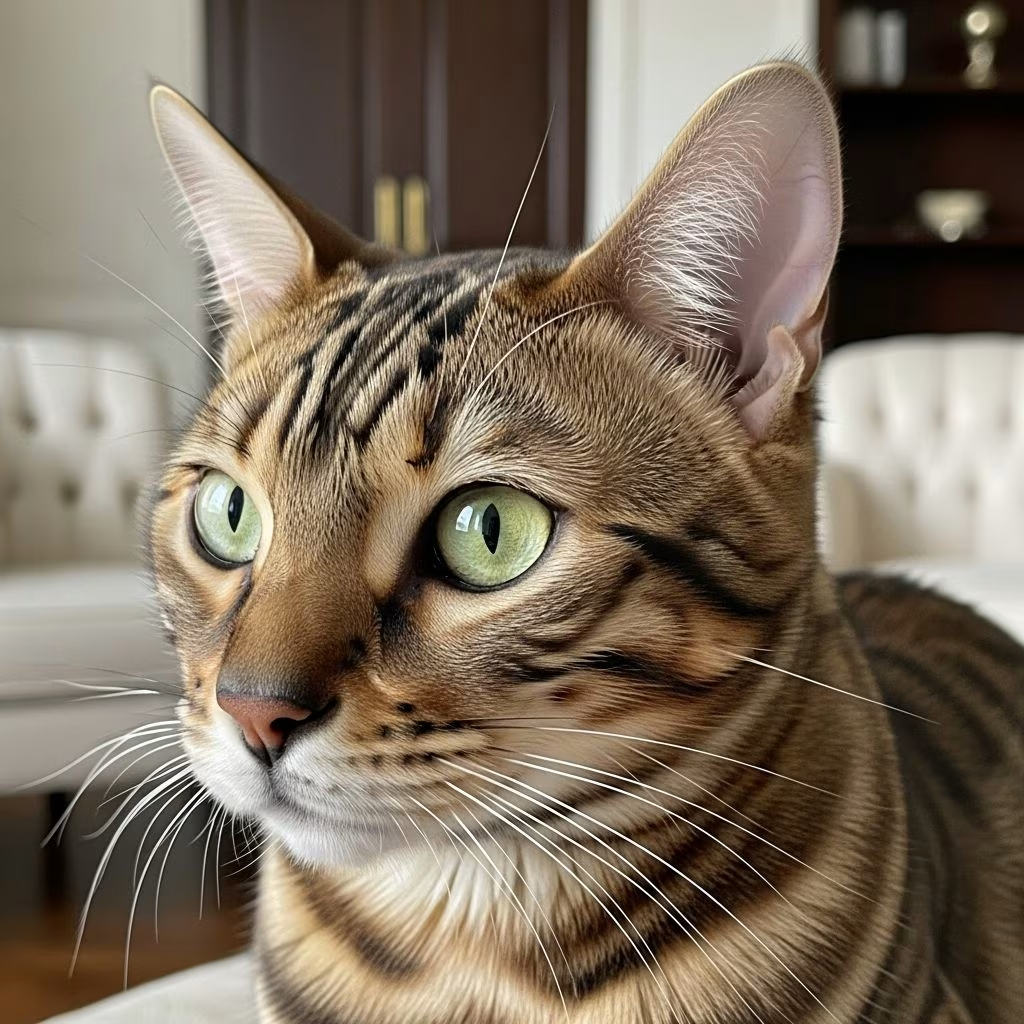
Marble Bengal cats captivate with their swirling, asymmetrical coat patterns that mimic abstract paintings on fur, combining the allure of wild felines with the companionship of domestic pets. These cats, a variation of the Bengal breed, feature high-contrast markings in rich hues, setting them apart as visually striking animals ideal for those seeking an engaging and energetic companion.
The Genetic Marvel Behind Marble Patterns
The distinctive marble coat in Bengal cats stems from a blend of dominant and recessive genes, creating complex inheritance patterns that breeders meticulously select for. Unlike uniform spots, the marble effect arises from the classic tabby gene modified through Bengal lineage, producing intricate swirls rather than simple bullseyes.
Genetic studies reveal that achieving a high-quality marble requires balancing ‘acreage’—the filled space of markings—with detailed rippling and speckling inside darker outlines. Sheeted marbles, where sides lack base color exposure, often emerge from spotted breeding lines, showcasing how breeder programs adapt to emphasize this pattern’s depth.
- Dominant genes promote bold swirls and high contrast against the base coat.
- Recessive traits add subtle variations like multi-toned shoulders or ghosted edges.
- Breeding challenges involve separating marble lines from spotted ones to maximize pattern intricacy.
No two Marble Bengals display identical designs; colors range from warm golds to cool silvers, with black outlines enclosing brown or speckled interiors for a stained-glass-like effect.
Physical Traits and Breed Standards
Marble Bengals embody a medium-to-large frame with substantial boning and a sleek, muscular build, where hindquarters rise slightly higher than shoulders. Their heads feature a wide base with rounded ears, a prominent nose bridge, and full whisker pads, contributing to an expressive, wild-eyed appearance.
| Feature | Description |
|---|---|
| Body | Sleek, athletic; 6-15 lbs, males larger |
| Head | Modified wedge; large nose, strong chin |
| Tail | Thick, rounded tip, carried low |
| Eyes | Green, gold, blue, or aqua; oval shape |
| Coat | Short, glittered; marble swirls preferred |
Official standards from bodies like The Cat Fanciers’ Association (CFA) and The International Cat Association (TICA) prioritize extreme contrast in markings, with desirable multi-toned rosettes on shoulders and legs. Variations include silvered hues on faces and tails, or melanistic forms where ghost marble patterns faintly show through solid coats.
Temperament: Playful Powerhouses with Kitten Spirit
Renowned for retaining kitten-like vigor into adulthood, Marble Bengals are confident, curious athletes brimming with intelligence and energy. They thrive on interaction, often chirping, trilling, or meowing to communicate, forming strong bonds with owners who match their activity levels.
These cats excel in agility, loving to climb, leap, and explore, making them unsuitable for sedentary homes. Their social nature suits families, though early socialization ensures harmony with other pets.
- High energy: Needs daily play sessions.
- Intelligent: Enjoys puzzle toys and training.
- Affectionate: Loyal without clinginess.
- Vocal: Expressive range from purrs to chatters.
Pet-friendliness rates medium, as their rambunctious play may overwhelm smaller animals, but they adapt well with proper introductions.
Color Variations and Coat Diversity
Beyond standard brown marbles, Bengals offer a spectrum including blue, seal, and silver mink tabbies, each with marble adaptations. For instance, blue silver mink features cream-to-silvery grounds with blue-gray undertones, while melanistic versions in black or seal point reveal subtle swirls under closer inspection.
The ‘glitter’ gene imparts a shimmering quality, enhancing the coat’s iridescence in light—a hallmark making Bengals sparkle like dusted gold. Paw pads and nose leathers vary by colorway, from rosy blues to brick reds, adding to their exotic appeal.
Health Considerations and Lifespan
Bengals, including marbles, enjoy robust health with lifespans of 12-16 years when well-cared for, though they face breed-specific risks like hypertrophic cardiomyopathy (HCM) and progressive retinal atrophy (PRA). Regular vet checkups, genetic screening in breeding, and a protein-rich diet mitigate these.
Medium shedding and low grooming needs suit busy owners; weekly brushing maintains coat gloss without overbathing, as their short fur self-cleans effectively.
Care Guide: Thriving with Marble Bengals
Provide ample vertical space with cat trees and shelves to satisfy climbing instincts. Interactive toys, feather wands, and training harnesses channel their high energy, preventing boredom-induced mischief.
Diet should emphasize high-quality, grain-free kibble or wet food mimicking their Asian leopard cat ancestry—wild, high-protein hunters. Fresh water fountains encourage hydration.
- Exercise: 30-60 minutes daily play.
- Grooming: Brush weekly; check ears monthly.
- Litter: Large, uncovered boxes for big cats.
- Vet care: Annual exams, HCM screening.
These cats fare best avoiding pure outdoor life due to theft risk from their valuable looks; indoor enrichment ensures safety and stimulation.
Breed History: From Wild Roots to Home Companion
Bred in the 1980s by Jean Mill, Bengals originated from crossing domestic cats with Asian leopard cats, aiming to capture wild aesthetics legally. The marble pattern evolved as breeders refined tabby genetics, gaining recognition from TICA in 1983 and CFA in 1991 for non-melanistic colors.
Marbles represent a pinnacle of pattern artistry, diverging from spots to offer swirled elegance, now prized in competitive shows.
Bringing Home a Marble Bengal
Select reputable breeders prioritizing health testing and pattern quality over quantity. Kittens develop marbles fully by 2-3 years, starting with clearer markings that blur into swirls. Expect a 4-6 month waitlist for top lines.
Adoption fees range $1,500-$4,000, reflecting genetics and care. Prepare for an active lifestyle—these cats demand engagement but reward with unwavering loyalty and visual splendor.
FAQs About Marble Bengal Cats
Are Marble Bengals hypoallergenic?
No, but low shedding minimizes allergens compared to longhaired breeds.
How big do Marble Bengals get?
6-15 pounds; males up to 15 lbs, females smaller.
Do they get along with dogs?
Often yes, with proper introductions, due to their confident nature.
What’s the difference between marble and spotted Bengals?
Marbles feature swirls with more ‘acreage’; spots are distinct rosettes.
Can Marble Bengals go outside?
Leashed walks preferred; full outdoor access risks due to exotic looks.
References
- Exploring the Coat Patterns of Marble Bengal Cats — Bailey’s CBD. 2023. https://baileyscbd.com/blogs/cat-breeds/exploring-the-coat-patterns-of-marble-bengal-cats
- Bengal Cat Breed: Facts, Temperament, and Care Info — Chewy. 2024-01-15. https://www.chewy.com/education/cat/general/bengal-cat-breed-facts-temperament-and-care-info
- Bengal Breed Standard — The Cat Fanciers’ Association. 2025-09-01. https://cfa.org/breed/bengal/
- Marble Bengal Cat Pattern — Quality Bengal Kittens. 2023. https://quality-bengal-kittens.com/marble-bengal-cat-pattern
- Bengal Breed — The International Cat Association (TICA). 2025-06-20. https://tica.org/breed/bengal/



