

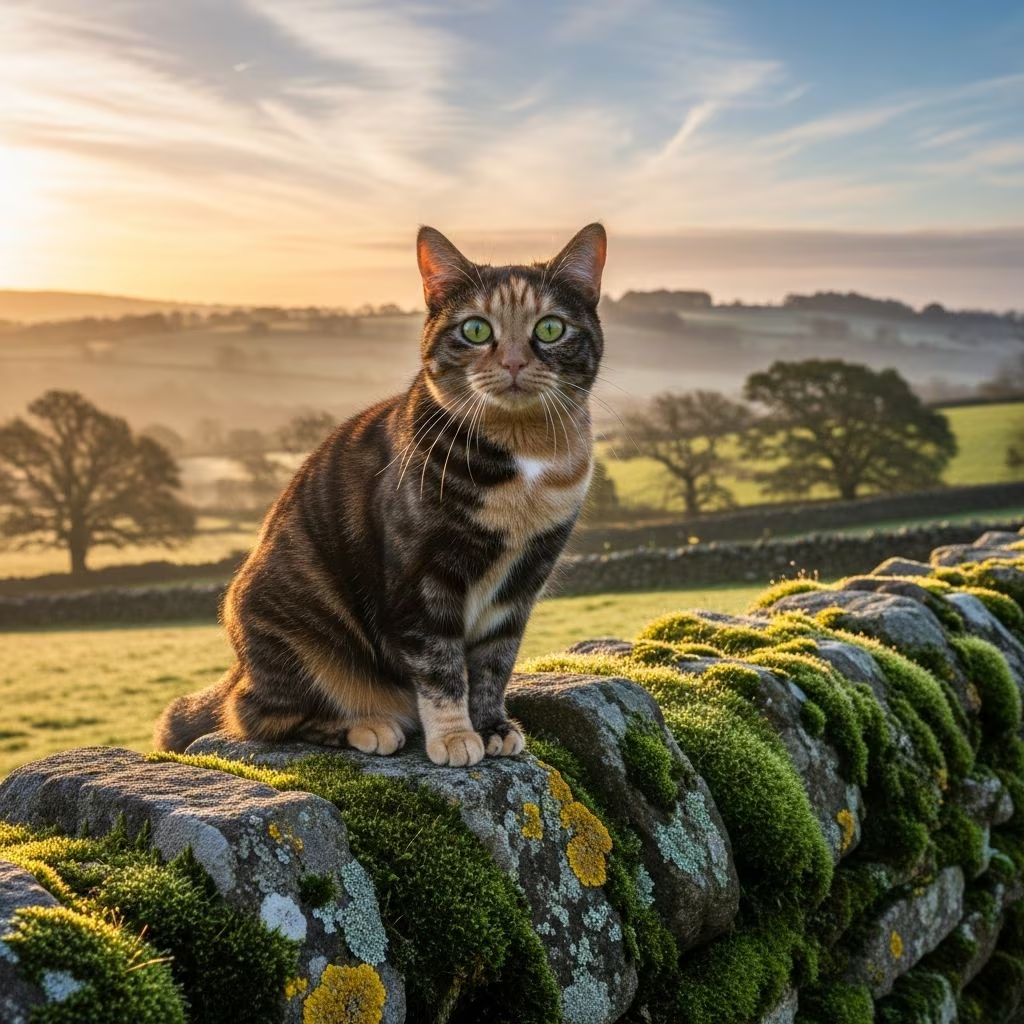
The Manx cat stands as one of the most distinctive and intriguing feline breeds in the world, instantly recognizable by its most defining characteristic—the absence of a tail. These remarkable cats have captured the imagination of cat enthusiasts for centuries, and their unique appearance combined with engaging personalities makes them a sought-after choice for discerning pet owners. Beyond their striking physical features lies a rich history, a fascinating genetic story, and a temperament that belies their unusual morphology.
The Genetic Mutation That Shaped a Breed
The taillessness of the Manx cat is not a carefully engineered trait but rather a naturally occurring spontaneous genetic mutation. This dominant genetic mutation emerged among the cat population on the Isle of Man and became increasingly prevalent due to the island’s isolated geography. The limited gene pool created ideal conditions for this recessive trait to flourish, as cats on the island had no external genetic input to dilute the mutation’s effects. Over generations, selective breeding among the island’s cat population reinforced this characteristic, eventually creating what we recognize today as the Manx breed.
What makes this genetic story particularly compelling is that the taillessness gene did not require human intervention to establish itself. The cats maintained a self-sustaining population over many centuries, demonstrating the viability and inherent strength of this naturally occurring tailless phenotype. This organic development distinguishes the Manx from many modern cat breeds that have been deliberately crafted through selective breeding programs.
Geographic Origins and Historical Development
The Isle of Man, situated in the Irish Sea between Ireland and England, serves as the ancestral homeland of the Manx cat breed. Though the exact timeline of the breed’s emergence remains somewhat shrouded in mystery, historical records and documented evidence place the breed’s establishment sometime during the early eighteenth century. By the mid-eighteenth century, these tailless cats had become established fixtures of island life, intermingling with the native shorthair cat population that already inhabited the region.
Several theories attempt to explain how the tailless trait originated on the island. One popular legend, though lacking scientific basis, suggests that a mating between a cat and a rabbit produced offspring with the distinctive tailless feature. Another hypothesis proposes that tailless cats may have arrived on the island aboard Spanish Armada vessels or through other maritime trade routes. A more plausible theory suggests connections to Norwegian settlers who raided and traded with the Isle of Man as early as 768 CE, potentially bringing ancestry that shares traits with the Norwegian Forest Cat. What remains certain is that the geographic isolation of the island allowed the taillessness mutation to become established and widespread in ways that would have been unlikely on mainland populations.
Physical Characteristics and Distinctive Features
Manx cats present a distinctive silhouette that immediately sets them apart from conventional feline breeds. These medium-sized cats exhibit a notably round body shape with a heavy, muscular build and well-balanced, compact structure. Their physical composition suggests strength and agility despite their stocky appearance. One notable anatomical feature is that their hind legs are typically longer than their front legs, creating a characteristic rabbit-like appearance when they run or jump. This proportional difference contributes to their distinctive gait and enhanced jumping ability.
The defining characteristic of the breed is, of course, the tail—or rather, the absence thereof. Manx cats display significant variation in tail characteristics:
- Rumpy: Completely tailless with no tail bone present
- Rumpy Riser: A very short stump protruding slightly from the body
- Stumpy: A short, partial tail visible above the body line
- Longy: A nearly full-length tail that approaches normal feline proportions
The breed exists in both short-haired and long-haired varieties, offering aesthetic diversity within the breed standard. Coat colors and patterns display remarkable range, though historically, the original island population featured predominantly warm tones with significant bicolor patterns. Modern Manx cats now display virtually every color combination found in domestic felines, from solid colors to elaborate tabby patterns and calico markings.
Temperament and Behavioral Traits
Beyond their unusual physical appearance, Manx cats possess personality characteristics that make them exceptional companions. These felines are renowned for their playful and affectionate nature, demonstrating an unusual capacity for emotional attachment to their human families. Manx cats typically form strong bonds with their owners and actively seek out attention and interaction, often selecting particular family members as their preferred companions.
The breed demonstrates remarkable intelligence combined with strong problem-solving abilities. These cognitive capabilities make them excellent candidates for interactive play and mentally stimulating activities. Despite their taillessness, Manx cats possess surprising agility and athleticism, thoroughly enjoying climbing, jumping, and other physically demanding activities. They maintain strong hunting instincts inherited from their working-cat heritage, making them adept mousers and pest controllers.
Socially, Manx cats present an interesting duality. They are described as social, gregarious creatures highly attached to humans and their family units. Simultaneously, they tend toward shyness around strangers, preferring the security of familiar environments and known individuals. This combination creates loyal, devoted companions who thrive in stable home environments with consistent social interaction.
Historical Significance and Working Heritage
Throughout history, Manx cats earned practical value far beyond their aesthetic appeal. On the Isle of Man, these skilled hunters became prized possessions for farmers battling rodent infestations. Their prowess as mousers made them economically valuable assets in agricultural communities. Beyond farming applications, Manx cats gained particular prominence as ships’ cats aboard maritime vessels. This maritime history proved instrumental in spreading the Manx gene pool worldwide, as sailors transported these cats to ports across the globe, inadvertently establishing populations far from their island origin.
The breed’s formal recognition as a distinct variety came relatively recently in evolutionary terms. While Manx cats appeared in cat shows by the 1800s, the first officially published breed standard did not emerge until 1903. This documentation marked the transition from folk breed to formally recognized pedigree cat.
Health Considerations and Genetic Factors
The same genetic mutation responsible for the breed’s distinctive appearance can occasionally present health considerations for Manx cats. The taillessness gene, while generally viable and maintaining a robust phenotype, sometimes produces spinal variations in affected individuals. Responsible breeders maintain careful breeding programs to minimize potential spinal complications, typically breeding Manx cats with tails to rumpy individuals to reduce the concentration of the mutation in offspring.
Overall, Manx cats demonstrate genetic soundness and inherent vigor, having maintained a viable, self-sustaining population over centuries without human intervention. Their longevity as a breed speaks to the fundamental health and adaptability of the tailless phenotype, though individual health screening and responsible breeding practices remain important considerations for potential owners.
Coat Care and Grooming Requirements
The grooming needs of Manx cats vary depending on coat length. Short-haired varieties require regular brushing to maintain coat health and minimize shedding, while long-haired Manx cats demand more intensive grooming schedules to prevent matting and maintain coat quality. Both varieties benefit from weekly brushing sessions during normal periods and increased frequency during seasonal shedding. Nail trimming, ear cleaning, and dental care represent standard maintenance requirements applicable to all cats.
Suitability as Family Companions
Manx cats adapt well to family environments, particularly households where they receive regular attention and interactive engagement. Their playful temperament appeals to children old enough to respect feline boundaries, though their enthusiasm during play requires supervision with very young children. These cats thrive in homes offering climbing structures and vertical spaces to accommodate their jumping abilities and athletic nature. Multiple Manx cats or compatible feline companions often coexist peacefully, though individual personality assessment remains important.
Distinguishing Manx from Look-Alikes
Several other tailless or short-tailed cat breeds exist, potentially creating confusion among those unfamiliar with feline diversity. The Japanese Bobtail features a distinctly different tail structure—a pom-pom-like tuft rather than complete absence. The American Bobtail also displays a shortened tail with a unique appearance. The Manx breed maintains its distinctive fully tailless or minimally-tailed characteristics combined with their specific body proportions and round appearance, distinguishing them from these related breeds.
Modern Popularity and Breed Recognition
Today, Manx cats maintain significant popularity among cat enthusiasts worldwide, recognized by major cat registries and breed organizations. Their combination of distinctive appearance, engaging personality, and rich historical heritage continues to attract dedicated admirers. The breed remains relatively uncommon compared to mainstream varieties, maintaining an air of exclusivity that appeals to individuals seeking something extraordinary in their feline companions.
Frequently Asked Questions
- Are all Manx cats completely tailless?
- No, Manx cats display significant variation in tail presentation, from complete absence to nearly full-length tails. The most prized show cats are typically rumpies with no visible tail.
- Do Manx cats experience pain from their genetic mutation?
- Most Manx cats live normal, pain-free lives. Responsible breeding practices minimize potential spinal complications associated with the taillessness gene.
- What makes Manx cats good hunters?
- Their natural prey drive, combined with exceptional agility, athleticism, and intelligence, makes them skilled hunters despite their stocky appearance.
- Are Manx cats suitable for apartment living?
- Yes, with appropriate enrichment including climbing structures, scratching posts, and interactive play, Manx cats adapt well to apartment environments.
- How long do Manx cats typically live?
- Manx cats generally enjoy lifespans of 12-16 years or longer with proper care, genetics, and veterinary attention.
The Enduring Legacy of an Extraordinary Breed
The Manx cat represents more than simply a physical anomaly—it embodies a unique intersection of natural mutation, geographic isolation, and human appreciation for distinctive beauty. From their mysterious origins on the Isle of Man to their modern status as beloved companions worldwide, Manx cats have maintained their remarkable characteristics while adapting to contemporary life. Their tailless silhouette, athletic capabilities, affectionate temperament, and rich historical significance combine to create a breed deserving of continued recognition and appreciation. For those seeking a truly unique feline companion with personality, intelligence, and an unforgettable appearance, the Manx cat stands as an exceptional choice.
References
- Manx Cat Breed — AmarPet. 2023-12-21. https://amarpet.com/blogs/manx-cat-breed
- The Manx cat — Cat in the Box LLC. https://thecatisinthebox.com/blogs/kitty-contemplations/the-manx-cat
- Manx Facts – Cat Breeds — Wisdom Panel. https://www.wisdompanel.com/en-us/cat-breeds/manx
- Manx Cat Breed Information — Purina US. https://www.purina.com/cats/cat-breeds/manx
- Manx cat — Wikipedia. https://en.wikipedia.org/wiki/Manx_cat
- The history and ‘tails’ of the Manx Breed — Manx Cat Cafe. https://www.manxcatcafe.co.uk/about-manx-cats/



