

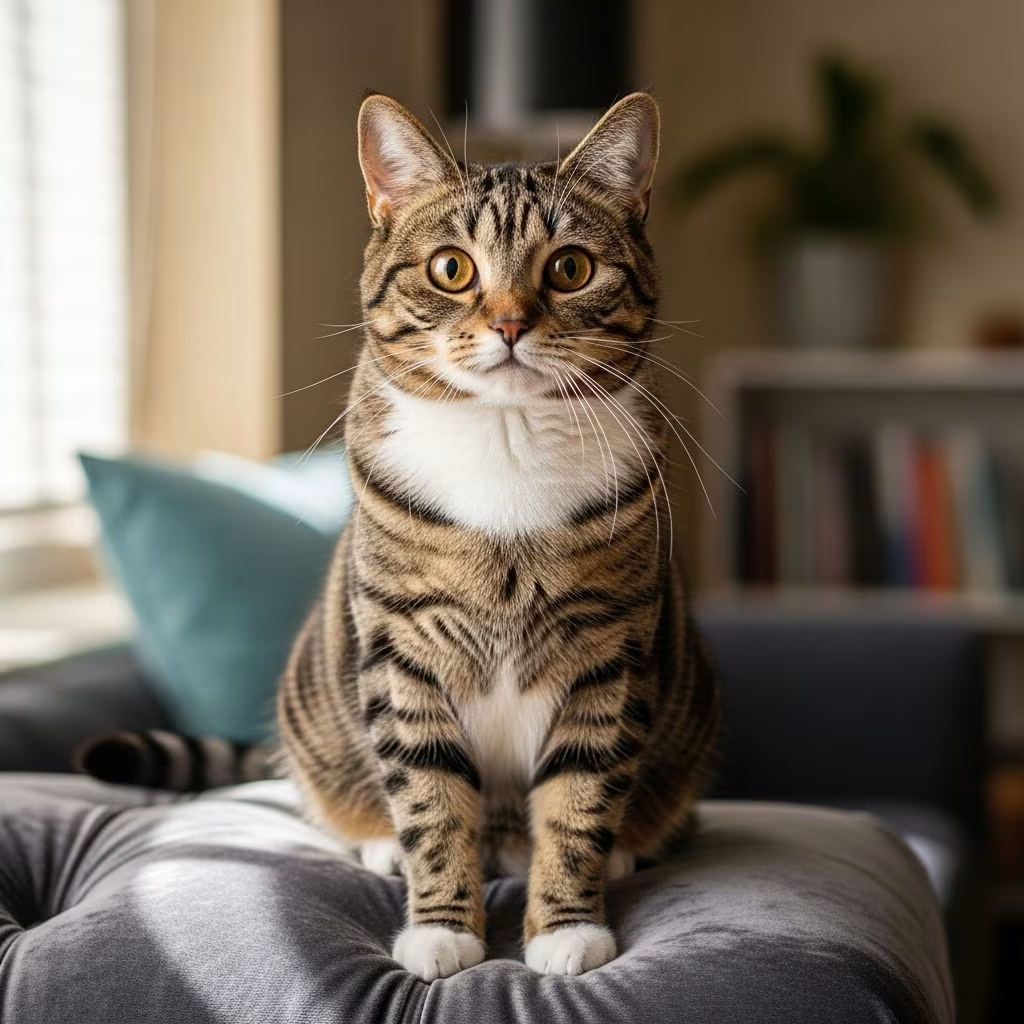
The Manx cat is one of the most distinctive and recognizable cat breeds in the world, primarily because of one remarkable characteristic: the absence or significant shortening of a tail. Originating from the Isle of Man, a small island located in the Irish Sea, this breed has captured the hearts of cat enthusiasts for centuries. The Manx cat is not just defined by its unique appearance but also by its playful, affectionate nature and impressive hunting abilities. Whether you’re considering adopting a Manx cat or simply want to learn more about this fascinating breed, this comprehensive guide will provide you with all the essential information you need to know.
History and Origins of the Manx Cat Breed
The Manx cat breed has a long and intriguing history that dates back to at least the 18th century, with documented records showing the breed’s presence on the Isle of Man since the early 19th century. The breed was first officially recognized by major cat associations in the late 1800s, and the first known breed standard was published in 1903. The Isle of Man, a self-governing British Crown dependency, became the natural home and namesake for this distinctive feline.
The exact origins of the Manx cat remain somewhat mysterious, and various theories and legends have surrounded the breed’s development over the years. One popular myth suggests that Manx cats are the result of a mating between a cat and a rabbit, which would explain their distinctive rabbit-like appearance when running and jumping. Another widespread legend claims that Manx cats swam ashore from wrecked Spanish Armada galleons in 1588, though historical evidence does not support this theory. Perhaps the most intriguing origin story involves the religious interpretation that the Manx lost their tails when Noah closed the door of the Ark too quickly as the cats were boarding.
Regardless of these colorful legends, the scientific explanation is far more straightforward: the Manx cat’s distinctive taillessness is due to a naturally occurring dominant genetic mutation that spontaneously appeared in the island’s cat population. Because the Isle of Man is an isolated island, the limited genetic diversity allowed this unusual trait to become predominant through the founder effect, a principle of population genetics where a small group of founders establish an isolated population with limited genetic variation. The genetic mutation responsible for the Manx’s taillessness eventually became so common on the island that it defined the entire population. Local terms developed to describe the variations: “rumpy” refers to completely tailless cats, while “stubbin” refers to those with a short tail stump.
Physical Characteristics and Appearance
The Manx cat is immediately recognizable by its distinctive physical features, which set it apart from all other domestic cat breeds. Understanding these characteristics is essential for anyone considering this breed as a pet.
Tail Variations
The most notable feature of the Manx cat is its tail, or rather, the lack thereof. While Manx cats are best known for being entirely tailless, not all cats of this breed are completely devoid of a tail. Some Manx cats have a small stub of a tail, varying from just a tiny bump to several inches in length. These variations have led to specific terminology within the breed: completely tailless cats are called “rumpies,” while those with a short tail stump are known as “stubbins.” Despite their lack of a traditional tail, Manx cats maintain excellent balance and agility, compensating for the missing tail through their powerful hind legs and strong core muscles.
Body Structure and Build
Manx cats possess a distinctly rounded, muscular build that gives them a compact and sturdy appearance. Their body structure is characterized by a rounded head, well-developed chest, and stocky frame that conveys both strength and agility. One of the most distinctive physical traits is their hind legs, which are noticeably longer than their front legs, creating a unique silhouette and rabbit-like appearance when they run or jump. This leg length differential contributes to their remarkable jumping ability, making them exceptional jumpers capable of leaping great distances with ease. Their muscular build and powerful hind legs make them naturally athletic and agile despite their compact size.
Coat Types and Colors
Manx cats come in two distinct coat varieties: shorthaired and longhaired. The longhaired variety is sometimes recognized as a separate breed called the Cymric. Both coat types are dense and plush, providing excellent protection and a soft texture. The Manx breed displays remarkable coat color and pattern diversity, coming in virtually all colors and patterns recognized in cat breeds. These include solid colors, tabby patterns, calico, and various combinations. However, all-white Manx cats are relatively rare compared to other color variations. The original stock of Manx cats on the Isle of Man had a more limited color range, but selective breeding has expanded the palette over time.
Personality and Temperament
Beyond their distinctive appearance, Manx cats are beloved for their engaging personalities and unique behavioral traits. Understanding their temperament is crucial for potential owners.
Social and Affectionate Nature
Manx cats are renowned for being social, gregarious, and affectionate with people and other pets they know. They form strong bonds with their human families and are known for being particularly loyal and devoted companions. Many Manx cat owners describe their cats as “dog-like” in their behavior, referring to the breed’s tendency to follow their owners around the house and their enthusiasm for interactive play. They are playful, energetic, and enjoy engaging with their families in games and activities.
Hunting Instincts and Activity Level
Historically, Manx cats were valued as skilled hunters and were often employed by farmers for pest control purposes, as well as being preferred ship’s cats aboard vessels traveling the seas. This working heritage has left its mark on the breed, as modern Manx cats retain strong hunting instincts and excel at catching rodents and small prey. They are naturally active and inquisitive, enjoying opportunities to explore, hunt, and engage in physical activities. Despite their stocky build, they are surprisingly agile and athletic, making them excellent climbers and hunters.
Behavior with Strangers
While Manx cats are generally friendly and social with their families, they can be more reserved or aloof with strangers. This selective sociability means that early socialization and gradual introductions to new people are beneficial for developing confidence and friendliness in unfamiliar situations. With proper socialization from kittenhood, most Manx cats learn to accept and interact positively with new people and environments.
Health Considerations
Like all cat breeds, Manx cats are susceptible to certain health conditions. The genetic mutation responsible for their taillessness can sometimes be associated with health concerns, particularly when two tailless cats are bred together. Potential health issues to be aware of include spinal cord problems, urinary tract issues, and digestive concerns. Responsible breeders screen for these conditions and avoid breeding two completely tailless cats together. Regular veterinary check-ups, a balanced diet, and appropriate exercise can help maintain the health and longevity of your Manx cat.
Care Requirements
Grooming Needs
Grooming requirements for Manx cats depend on their coat type. Shorthaired Manx cats require regular brushing to remove loose fur and maintain coat health, typically once or twice weekly. Longhaired Manx cats (Cymric) require more frequent grooming, ideally several times per week, to prevent matting and tangles. Both coat types should be brushed regularly to reduce shedding and keep the coat healthy and shiny.
Exercise and Enrichment
Manx cats are active and playful and require regular exercise and mental stimulation to remain healthy and content. Providing toys, climbing structures, and interactive play sessions helps satisfy their hunting instincts and physical needs. They enjoy interactive games such as feather toys, laser pointers, and puzzle feeders that engage their minds and bodies.
Nutrition
A balanced, high-quality diet is essential for maintaining optimal health in Manx cats. Feeding them age-appropriate food formulated for their specific life stage supports their nutritional needs. Regular monitoring of weight and body condition helps prevent obesity, which can lead to health complications.
Breed Standard and Recognition
The Manx cat breed is recognized by major cat associations and registries worldwide, including The Cat Fanciers’ Association and other international organizations. The breed standard specifies the characteristic taillessness, rounded head, longer hind legs, and sturdy build as defining features. Manx cats have been exhibited in cat shows since the 1800s, competing in categories based on their coat length and color patterns.
Frequently Asked Questions About Manx Cats
Q: What exactly is a Manx cat?
A: A Manx cat is a distinctive domestic cat breed originating from the Isle of Man, characterized by a natural genetic mutation that results in a shortened or completely absent tail. They have a muscular, rounded build, longer hind legs, and are known for their playful, affectionate personalities and skilled hunting abilities.
Q: Why don’t Manx cats have tails?
A: The taillessness in Manx cats is caused by a naturally occurring dominant genetic mutation that became prevalent in the Isle of Man’s cat population due to geographic isolation and limited genetic diversity. This mutation arose spontaneously and became a defining breed characteristic.
Q: Do all Manx cats have no tail?
A: No, not all Manx cats are completely tailless. Some have a small stub or stump of a tail. Completely tailless cats are called “rumpies,” while those with a tail stump are known as “stubbins.” Both variations are recognized within the breed.
Q: Are Manx cats good pets for families?
A: Yes, Manx cats make excellent family pets. They are known for being social, affectionate, playful, and loyal. They form strong bonds with their families and are often described as dog-like in their behavior. They enjoy interactive play and are generally good with children and other pets when properly socialized.
Q: How much exercise do Manx cats need?
A: Manx cats are active and energetic and require regular exercise and mental stimulation. Daily play sessions, interactive toys, and climbing structures help satisfy their hunting instincts and physical needs. They enjoy activities that challenge both their bodies and minds.
Q: What colors do Manx cats come in?
A: Manx cats come in virtually all colors and patterns recognized in cat breeds, including solid colors, tabby patterns, calico, and various combinations. However, all-white Manx cats are relatively rare compared to other color variations.
Q: Do Manx cats require special grooming?
A: Grooming requirements depend on coat type. Shorthaired Manx cats need weekly brushing, while longhaired Manx cats (Cymric) require more frequent grooming several times per week to prevent matting and maintain coat health.
Q: Are there any health concerns specific to Manx cats?
A: Manx cats can be susceptible to spinal cord problems, urinary tract issues, and digestive concerns related to the genetic mutation causing taillessness. Responsible breeders screen for these conditions and avoid breeding two completely tailless cats together. Regular veterinary check-ups are important for maintaining health.
Q: What is the difference between Manx and Cymric cats?
A: The primary difference is coat length. Manx cats are shorthaired, while Cymric cats are the longhaired variant of the same breed. Some breed registries consider them the same breed with two coat varieties, while others recognize them as separate breeds.
Q: How long do Manx cats typically live?
A: With proper care, nutrition, and regular veterinary attention, Manx cats typically have a lifespan similar to other domestic cats, generally ranging from 12 to 18 years or longer.
References
- Manx Cat Breed – AmarPet — AmarPet. 2023-12-21. https://amarpet.com/blogs/manx-cat-breed
- Manx Cat | The History, Traits, and Care — Feline Fancy. https://felinefancy.co.uk/blogs/cat-breeds-info/manx-cat
- Manx — Europetnet. https://www.europetnet.org/resources/cat-breeds/item/1938-manx.html
- Manx cat — Wikipedia. https://en.wikipedia.org/wiki/Manx_cat
- The history and ‘tails’ of the Manx Breed — Manx Cat Cafe. https://www.manxcatcafe.co.uk/about-manx-cats/



