

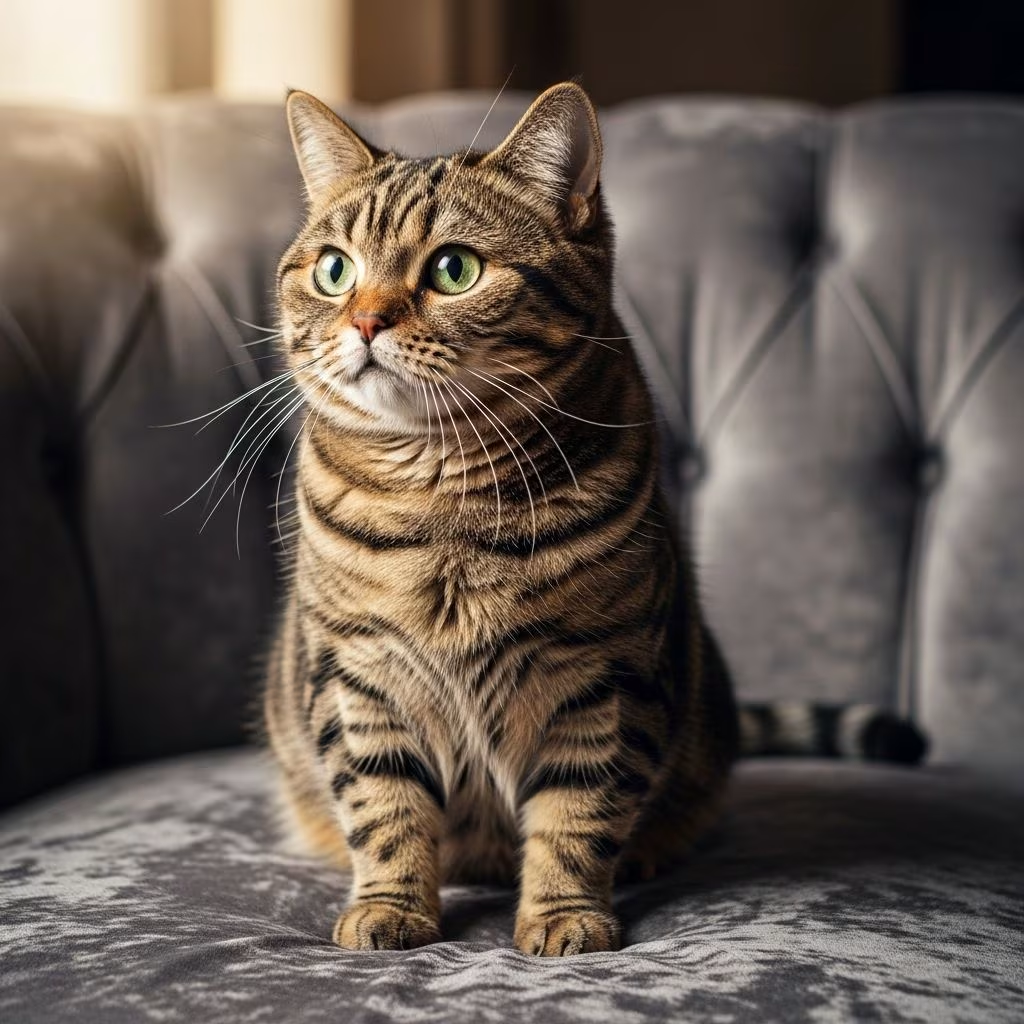
The Manx cat stands out as one of the most distinctive domestic cat breeds due to its naturally occurring taillessness, a trait that has captivated cat enthusiasts for centuries. Originating from the isolated Isle of Man in the Irish Sea, this breed combines a robust build with a playful demeanor, making it a favorite among families and farmers alike.
Origins and Historical Journey
The story of the Manx cat begins on the Isle of Man, a small island between England and Ireland, where the breed developed its signature features through natural selection in a limited genetic pool. Historical records trace the first mentions of tailless cats on the island to the early 18th century, though some theories suggest earlier arrivals via Viking ships around 768 AD, possibly linking them to Norwegian Forest cats through shared physical traits like elongated hind legs and dense coats.
Ancient sailors first documented these cats in the 16th century, noting their presence among island populations. The tailless mutation likely arose spontaneously and became fixed due to the island’s isolation, exemplifying the founder effect in population genetics where a unique trait dominates in a small, closed community. Manx cats quickly earned a reputation as exceptional hunters, prized by farmers for controlling rodents and by seafarers as ship’s cats, which helped spread the gene pool globally.
By the 19th century, Manx cats appeared in cat shows, with the first informal breed standard outlined in 1903 by expert Charles Henry Lane. This marked their formal recognition, distinguishing them from other tailless felines through their unique body structure, movement, and temperament.
Signature Physical Features
What truly defines the Manx is its tail—or lack thereof. Purebred Manx exhibit a range of tail variations classified by local terms: ‘rumpy’ for completely tailless (with a thumb-sized dimple at the base), ‘stumpy’ for a short stub, ‘stubbin’ for a longer stump, and ‘longy’ for full tails. Show standards prioritize rumpies and stumpies, while full-tailed kittens can appear in litters from tailless parents.
Beyond the tail, Manx cats boast a compact, muscular body with a rounded ‘barrel’ shape, short spine, broad chest, and large, round head. Their hind legs are notably longer than the forelegs, giving them a distinctive hopping gait reminiscent of rabbits, especially when excited. This structure contributes to their agile, powerful presence despite a deceptively plush appearance.
| Tail Type | Description | Show Eligibility |
|---|---|---|
| Rumpy | No tail, dimple at base | Preferred |
| Stumpy | Short stub (under 1 inch) | Accepted |
| Stubbin | Medium stub | Limited |
| Longy | Full tail | Not for breed class |
Coat varieties include short, dense double coats typical of the original island stock, and longer-haired versions from interbreeding with cats like the Norwegian Forest. Colors range widely, though early populations favored pheomelanin-rich shades like oranges and bicolors.
The Genetics Behind Taillessness
The Manx’s tailless trait stems from a dominant mutation on the M gene (Manx taillessness gene), highly penetrant but lethal when homozygous. Cats with two copies (MM) typically miscarry in utero, so breeding Manx produce litters with varied tail lengths: about 25% rumpy, 50% stumpy/stubbin, and 25% longy, following Mendelian inheritance patterns.
This mutation affects spinal development, shortening the coccyx while preserving overall viability in heterozygous (Mm) individuals. Island isolation reinforced the trait through inbreeding, creating a self-sustaining feral population that persists today. Modern breeders screen for spinal health to mitigate associated risks.
Temperament and Behavioral Traits
Manx cats are renowned for their dog-like personalities: highly social, intelligent, and affectionate with family members, yet often reserved with strangers. They form strong bonds, following owners room-to-room and enjoying interactive play. Their gregarious nature makes them poor candidates for constant solitude; they thrive in households with attention and companionship.
- Playful and Energetic: Love chasing toys, leaping with their powerful hindquarters.
- Intelligent Problem-Solvers: Quick learners who master tricks and puzzles.
- Hunting Instincts: Exceptional mousers, ideal for rural homes.
- Vocal and Expressive: Communicate with chirps and trills rather than meows.
- Adaptable: Get along well with children, dogs, and other cats.
Early accounts describe them as docile, good-tempered, and alert, traits that align with their historical roles as working cats.
Health Considerations and Lifespan
While robust, Manx cats face breed-specific issues tied to the tailless gene. Common concerns include:
- Manx Syndrome: Coronal dysplasia affecting the spine, potentially causing incontinence, constipation, or hind leg weakness.
- Spinal Defects: From fused vertebrae, impacting mobility.
- Urinary Tract Issues: Due to pelvic malformations in rumpies.
Reputable breeders use X-rays to check spinal integrity before breeding. With proper screening, Manx enjoy a lifespan of 12-16 years. Routine vet care, a balanced diet, and weight management are crucial to support their sturdy frames.
Grooming and Everyday Care
Manx coats are low-maintenance: short-haired varieties need weekly brushing to remove dead fur, while long-haired ones benefit from twice-weekly sessions to prevent mats. Their double coat sheds seasonally, so regular baths aren’t required unless soiled.
Nail trims every 10-14 days, ear cleaning monthly, and dental care via brushing or additives promote hygiene. Provide scratching posts to satisfy their active nature and prevent furniture damage. High-quality protein-rich food supports muscle maintenance, portioned to avoid obesity in their compact bodies.
Ideal Home Environment and Lifestyle Fit
Manx excel in active households offering space for their bounding playstyle—think homes with cat trees, tunnels, and windows for bird-watching. They adapt to apartments if exercise is ample but flourish outdoors or in farms where hunting instincts shine. Early socialization ensures well-rounded adults.
Families with children or pets find them engaging companions, but supervision with very young kids prevents rough handling of their unique rears.
Bringing a Manx into Your Family
Adopt from CFA-registered breeders who prioritize health testing, or rescue through Manx-specific groups. Kittens cost $800-$2000, reflecting genetic screening. Prepare for variable litters and commit to lifelong spinal monitoring.
Frequently Asked Questions (FAQs)
Are Manx cats always tailless?
No, tail length varies; purebreds range from no tail to full, but show cats are typically rumpy or stumpy.
Do Manx cats have health problems?
Yes, primarily spinal issues from the tailless gene, but screened breeding minimizes risks.
Are Manx cats good with kids and dogs?
Absolutely—their social, dog-like traits make them excellent family pets.
How do I groom a Manx cat?
Weekly brushing for shorts, more for longs; focus on nails, ears, and teeth.
What’s the lifespan of a Manx?
12-16 years with proper care and health checks.
References
- Manx Cat: The Origin Legend and Breed Characteristics of the Tailless Cat — Oreate AI. 2023. https://www.oreateai.com/blog/manx-cat-the-origin-legend-and-breed-characteristics-of-the-tailless-cat/fe1cd068833e776b4b1b77865831dbe3
- The Manx cat — Cat in the Box LLC. N/A. https://thecatisinthebox.com/blogs/kitty-contemplations/the-manx-cat
- Manx cat — Wikipedia. 2026-01-28. https://en.wikipedia.org/wiki/Manx_cat
- The history and ‘tails’ of the Manx Breed — Manx Cat Cafe. N/A. https://www.manxcatcafe.co.uk/about-manx-cats/
- History of the Manx Cat: Taking a Look at Their Past (Vet-Verified) — Catster. N/A. https://www.catster.com/lifestyle/manx-cat-history/
- Manx — The Cat Fanciers’ Association. N/A. https://cfa.org/breed/manx/



