

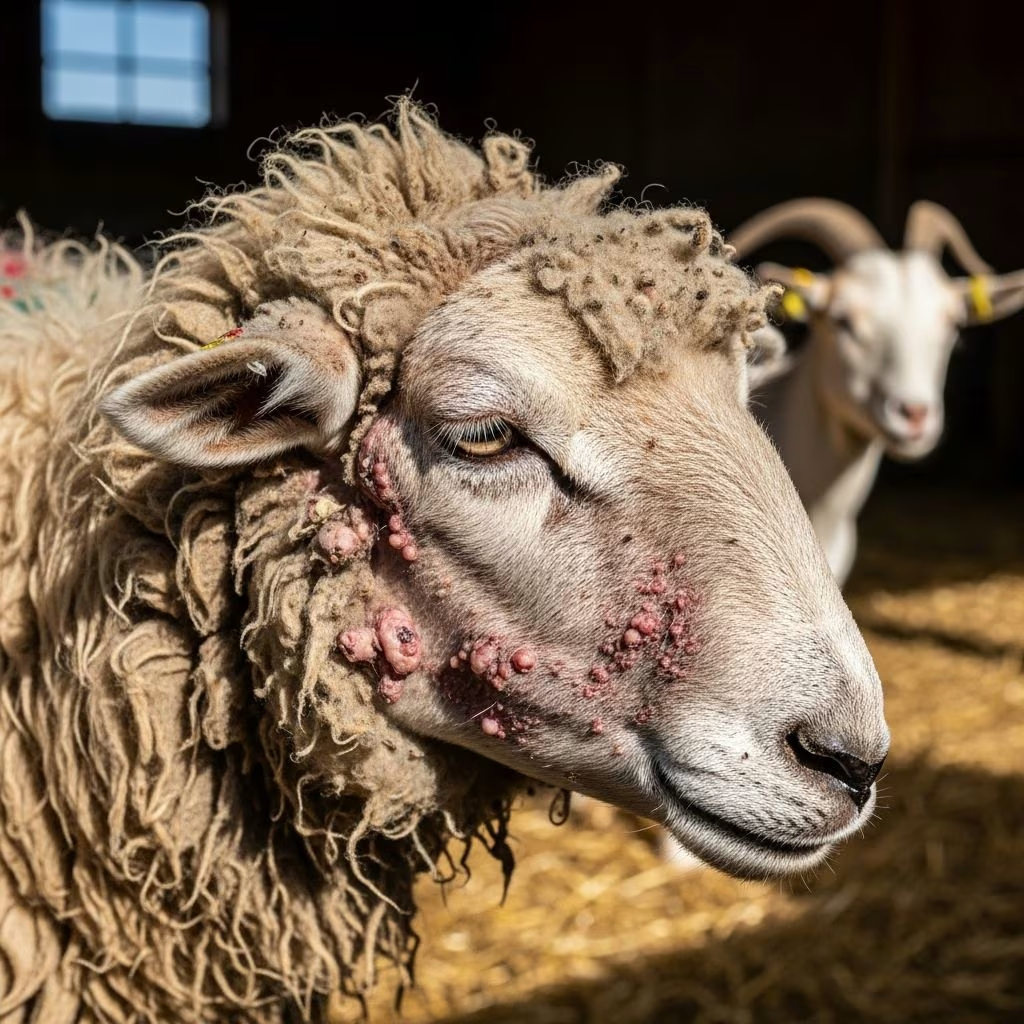
Mange represents a significant parasitic challenge for sheep and goat producers worldwide, caused by burrowing or surface-dwelling mites that damage the skin and compromise animal welfare. These infestations lead to intense itching, wool or hair loss, weight reduction, and reduced productivity, with goats often showing higher susceptibility than sheep. Early detection and intervention are crucial to curb outbreaks in flocks.
Understanding the Biology of Mange Mites
Mange mites are microscopic arachnids adapted to live on or within the skin of their hosts. Key species affecting small ruminants include Sarcoptes scabiei (sarcoptic mange), Psoroptes ovis and Psoroptes caprae (psoroptic mange), Demodex caprae (demodectic mange), and Chorioptes bovis (chorioptic mange). Sarcoptic mites tunnel into the epidermis, feeding on tissue fluids and causing severe inflammatory responses. Psoroptic mites reside on the skin surface, piercing the epidermis to suck lymph and injecting saliva that triggers hypersensitivity reactions. Demodex mites inhabit hair follicles, while chorioptic mites prefer the feet and lower legs.
The life cycle of these mites varies but typically spans 10-21 days, with females laying eggs that hatch into larvae, progressing through nymph stages to adults. Off-host survival is limited—hours to days for psoroptic mites under ideal conditions—but direct contact transmission dominates in close-confined flocks. Environmental factors like humidity and temperature influence viability, with warmer, moist conditions favoring persistence.
Prevalence and Distribution Patterns
Studies reveal mange prevalence varies by region, species, and management. In Eastern Amhara, Ethiopia, a cross-sectional survey of 324 sheep and 680 goats from 2011-2012 reported 1.2% prevalence in sheep and 7.5% in goats, with Sarcoptes and Demodex dominant in goats, and Sarcoptes and Psoroptes in sheep. Goats exhibited significantly higher rates (χ²=16.636, P=0.000), underscoring species-specific vulnerability.
Globally, sarcoptic mange is less common in sheep (0.4-14.28%) than goats (6.9-33.27%), while psoroptic forms prevail in sheep scab scenarios. Chorioptic infestations affect up to 90% of goats in some herds, often subclinical on feet. Factors like extensive grazing in lowlands correlate with elevated risks due to crowding during shade-seeking.
| Mange Type | Sheep Prevalence | Goat Prevalence | Key Regions |
|---|---|---|---|
| Sarcoptic | 0.4-14.28% | 6.9-33.27% | Ethiopia, Global |
| Psoroptic | Common in outbreaks | High in ears/feet | US, Europe |
| Demodectic | Rare | Moderate | Tropical areas |
| Chorioptic | Low | 80-90% subclinical | Herd studies |
Clinical Manifestations Across Species
Signs in Sheep
Sheep mange often starts subtly on non-wool areas like the brisket, axilla, scrotum, and face. Sarcoptic infestations cause papules, crusts, and alopecia, progressing to thickened, wrinkled skin with secondary bacterial infections. Psoroptic scab (sheep scab) features yellow-gray scabs, intense pruritus leading to wool slippage, and debility in untreated cases. Hair sheep breeds appear more susceptible than wool types, possibly due to absent lanolin protection. Affected rams show scrotal dermatitis impacting fertility.
Signs in Goats
Goats display more pronounced symptoms, with sarcoptic mange yielding crusty lesions around eyes, muzzle, ears, and perineum; extensive hair loss; and hyperkeratosis on udders or scrotum. Psoroptic ear mange causes head shaking and otitis, while demodectic nodules form papules on eyelids and limbs. Chorioptic mites provoke foot lesions, lameness, and higher infestation rates (up to 90%). Poor hygiene exacerbates spread to thighs and flanks.
- Common across both: Restlessness, rubbing against posts, weight loss, anemia, reduced milk/wool yield.
- Severe cases: Emaciation, dehydration, death from exhaustion or pneumonia.
Risk Factors Influencing Infestations
Host factors dominate: poor body condition correlates strongly with prevalence (χ²=141.85, P=0.000 in goats; χ²=5.513, P=0.019 in sheep), as malnutrition impairs immunity. Age and sex show no significant impact, but adults may harbor higher burdens. Goats’ browsing habits and thinner skin heighten exposure.
Environmental risks include overcrowding, damp bedding, and mixing with untreated animals. Lowland agro-climates foster higher rates via heat-induced clustering. Importation of infested stock without quarantine poses the greatest threat, as mites spread via contact or fomites like brushes.
Diagnostic Approaches for Accurate Identification
Diagnosis combines history, clinical exams, and microscopy. Deep skin scrapings (10% KOH digestion) reveal burrowing mites, eggs, or feces. Psoroptic types require surface scrapes. Hair plucks aid demodex detection. Biopsy confirms chronic cases. Differential diagnoses include ringworm, lice, nutritional deficiencies, and bacterial dermatitis. Veterinary labs enhance precision via PCR for species ID.
Effective Treatment Protocols
Treatment hinges on injectable or pour-on macrocyclic lactones like ivermectin (0.2 mg/kg SC, repeat 14 days) or doramectin, highly effective against sarcoptic/psoroptic mites. Lime-sulfur dips (2-5%) suit psoroptic scab, applied weekly. Supportive care includes antibiotics for secondary infections, nutritional boosts, and isolation. Withdrawal periods must comply with regulations; resistance monitoring is advised.
Treatment Comparison Table
| Method | Dosage/Frequency | Suitable Mites | Pros/Cons |
|---|---|---|---|
| Ivermectin Injection | 0.2 mg/kg, 2x @14d | Sarcoptic, Psoroptic | Systemic/Resistance risk |
| Lime-Sulfur Dip | 5%, weekly x3 | Psoroptic, Chorioptic | Topical/Handling stress |
| Moxidectin Pour-On | 0.5 mg/kg, single | All types | Easy apply/Longer withdrawal |
Prevention Strategies for Flock Health
Quarantine new arrivals for 30 days with acaricide treatment. Maintain clean, dry housing; rotate pastures. Strategic treatments pre-winter target high-risk periods. Biosecurity—disinfect tools, avoid shared equipment. Monitor via routine scrapings in endemics. Vaccination trials show promise but remain experimental. Integrated pest management combines these for sustainable control.
Economic and Welfare Implications
Mange slashes productivity: 20-50% wool loss, hides devalued by scars (up to 30% rejection), and mortality in naive flocks. Treatment costs, labor, and trade restrictions amplify losses. Welfare suffers from pruritus-induced behaviors, affirming ethical imperatives for control. Reportable status in regions like the US mandates surveillance.
FAQs on Mange Management
Q: Can mange spread to other livestock?
A: Yes, Sarcoptes is zoonotic and cross-infects cattle, horses; strict isolation needed.
Q: How long until symptoms appear post-exposure?
A: 2-6 weeks incubation; early pruritus signals onset.
Q: Is mange seasonal?
A: Peaks in winter due to confinement; year-round in tropics.
Q: Home remedies effective?
A: No; veterinary acaricides essential—oils soothe but don’t eradicate.
Q: Vaccinate against mange?
A: Experimental; focus on hygiene and treatments.
Future Directions in Control
Emerging resistance to MLs prompts research into isoxazolines and essential oils. Genomic mite studies aid targeted therapies. Producer education via extension services reduces incidence, as seen in declining Ethiopian rates post-awareness campaigns. Collaborative surveillance networks enhance early detection.
References
- Mange mites of sheep and goats in selected sites of Eastern Amhara — PMC/NCBI. 2016-04-02. https://pmc.ncbi.nlm.nih.gov/articles/PMC4815864/
- Sheep and Goat Mange — Line SSA Farms. Accessed 2026. https://linessafarms.com/sheep-and-goat-mange/
- External Parasites of Goats — Oklahoma State University Extension. Recent update. https://extension.okstate.edu/fact-sheets/external-parasites-of-goats.html
- Overview of Mange in Animals — Merck Veterinary Manual. 2022. https://www.merckvetmanual.com/integumentary-system/mange/overview-of-mange-in-animals



