

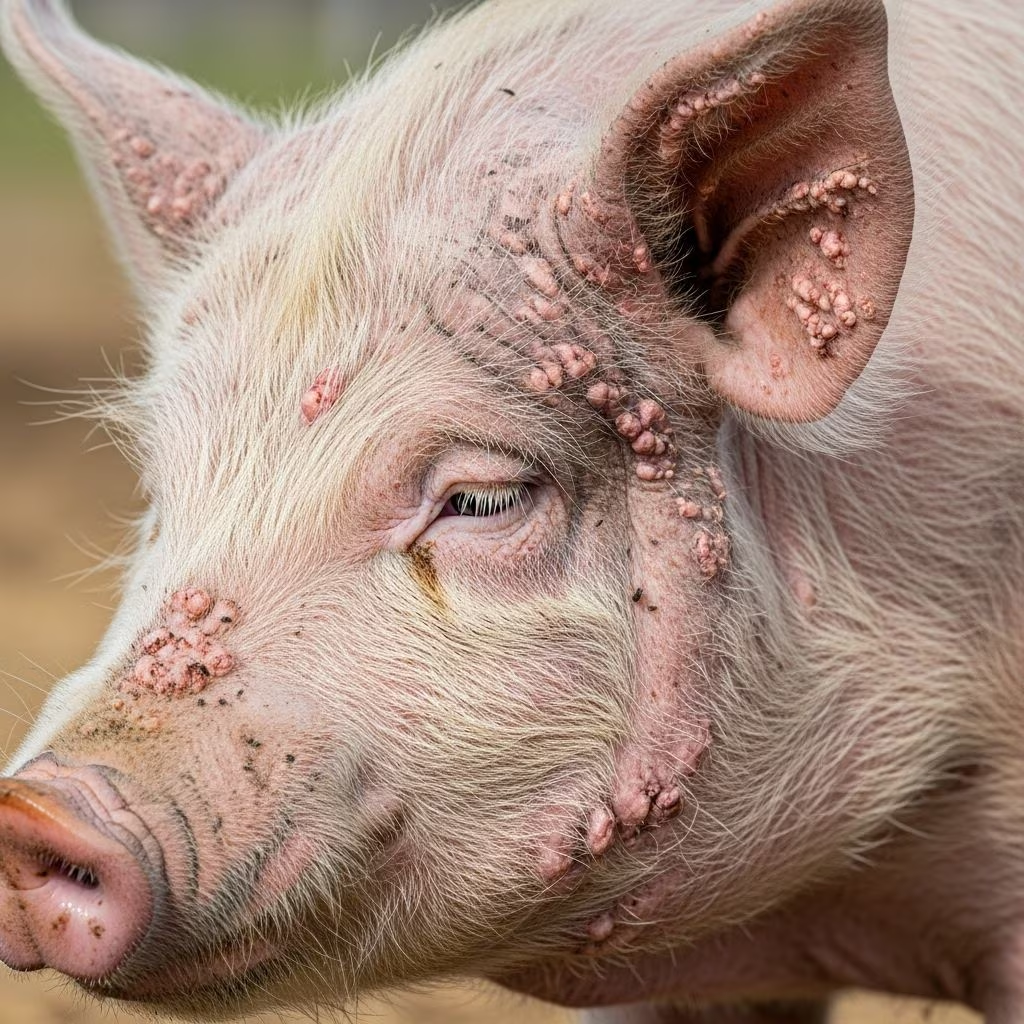
Sarcoptic mange, caused by the mite Sarcoptes scabiei var. suis, represents one of the most prevalent parasitic skin conditions affecting domestic pigs worldwide. These microscopic burrowers infest the skin, triggering intense itching, secondary infections, and significant production losses through reduced weight gain and feed efficiency. Early detection and targeted interventions are crucial for minimizing economic impacts in commercial swine operations.
Understanding the Biology of Sarcoptic Mites
The lifecycle of the sarcoptic mite unfolds entirely on the host pig, spanning 10-17 days. Females burrow into the stratum corneum, laying 2-3 eggs daily for about 20 days before dying. Eggs hatch into larvae within 3-5 days, which mature through nymph stages into adults. Transmission occurs via direct contact or fomites like contaminated bedding, tools, or housing surfaces. Pigs in intensive systems face heightened risk due to close confinement and poor hygiene.
Mites favor areas with thin skin, such as ears, snout, tail base, and limbs. Burrowing elicits hypersensitivity reactions, leading to papular eruptions and crusting. In heavy infestations, entire herds can become affected, with chronic cases persisting if untreated.
Recognizing Clinical Manifestations by Age Group
Symptoms vary by infection stage and pig age, demanding vigilant monitoring across production phases.
Piglets and Creep Phase
Newborns often acquire mites from infested sows during nursing. Initial signs emerge around 7-10 days post-exposure: subtle ear flicking escalates to vigorous head shaking and rubbing against pen fixtures. By 2-3 weeks, pinpoint red papules blanket the body, causing anorexia and stunted growth in severe cases.
Weaners and Growers
Post-weaning stress amplifies susceptibility. Acute infestations produce widespread erythema and pruritus, with pigs rubbing flanks and shoulders raw. Allergic responses manifest as rice-grain-sized vesicles, progressing to scaly patches. Untreated growers develop corrugated, thickened skin, impairing daily gains by 8-10%.
Adult Breeding Stock
Sows exhibit acute hypersensitivity 3-8 weeks post-infection: intense paroxysmal rubbing leads to bleeding excoriations, particularly along neck and limbs. Chronic lesions form asbestos-like scabs on ears, elbows, and hocks, serving as persistent mite reservoirs. Boars often harbor subclinical infestations in ear canals, spreading via mating.
| Age Group | Key Signs | Common Sites |
|---|---|---|
| Piglets | Head shaking, papules | Ears, head |
| Weaners | Rubbing, vesicles, scales | Body-wide, flanks |
| Sows/Boars | Thick scabs, chronic rubbing | Ears, elbows, hocks |
Diagnostic Approaches for Confirmation
Presumptive diagnosis relies on clinical history and lesions, but microscopic confirmation is essential. Collect deep skin scrapings from uncrusted margins using a #10 scalpel blade, applying mineral oil to preserve mites. Examine under 10x low power for pathognomonic cigar-shaped mites, eggs, or feces (scybala). Ear swab cytology detects mites in chronic ear cases. Rule out differentials like lice, ringworm, or nutritional dermatoses via complementary tests.
- Acute: Multiple mites visible in scrapings.
- Chronic: Fewer mites; rely on lesion morphology.
- Herd-level: Sample 10% of population, focusing on symptomatic animals.
Pharmacological Treatment Options
Timely therapy halts progression and restores productivity. Injectable avermectins dominate due to efficacy and systemic action.
Primary Treatments
Ivermectin: Administer 300 mcg/kg subcutaneously at two sites; repeat in 10-14 days for severe cases. Effective against mites, lice, and some internal parasites. Short meat withdrawal suits finishers.
Doramectin: 300 mcg/kg injectable; longer action, less injection-site pain than ivermectin. Ideal for breeding stock.
In-feed ivermectin (10 ppm for 7-10 days) targets weaners and growers, with shorter withdrawals.
Alternative Topicals
Phosmet pour-on (750-1000 ml/pig) or phoxim oral drench for weaners. Amitraz sprays for housing disinfection, though licensing varies by region. Avoid topicals in suckling piglets.
Treatment success hinges on dosage accuracy, repeat dosing to kill hatching larvae, and post-treatment hygiene.
Strategic Control Programs for Herds
Whole-herd approaches outperform individual treatments, curbing reinfestation.
Programme Overview
- Entry Prevention: Quarantine purchases 3 weeks; inject twice 14 days apart, then integrate.
- Routine Treatment: Sows at farrowing entry (phosmet); weaners day 0 (ivermectin injection or feed).
- Seasonal Boost: Breeding herd every 6 months; boars quarterly.
Post-treatment, relocate to sanitized pens sprayed with amitraz, empty 5-7 days. Expect 8-10% growth improvements in clean environments.
Full Eradication Protocols
Achieving mange-free status demands rigorous, multi-phase execution over 6-12 months.
Phase 1: Stabilize (Months 1-2)
- Inject all adults with doramectin; repeat 14 days later.
- Weaners: In-feed ivermectin 7 days at weaning, move to disinfected pens.
- Cull chronic ear lesion carriers.
Phase 2: Intensify (Months 3-6)
- Medicate creep feed; treat growers in-feed twice, 3 weeks apart.
- Biweekly ear scrapings on 20% herd; zero tolerance.
- Source replacements from certified mange-free breeders.
Phase 3: Verify (Months 7+)
Slaughter checks and scrapings confirm success. Failures often stem from incomplete cleaning or introductions. Segregated production (e.g., off-site weaning) enhances feasibility.
Environmental and Management Best Practices
Mite viability off-host is limited (2-5 days at 20°C), but biofilms protect them. Implement all-in-all-out systems, power-wash with hot detergent, and dry thoroughly. Amitraz fogging kills residual mites. Bedding rotation and ventilation reduce humidity hotspots. Biosecurity: footbaths, rodent control, and visitor protocols.
Economic Rationale for Intervention
Mange depresses feed intake by 10-15%, slashing gains and carcass value. Control yields rapid ROI via healthier pigs and premium markets demanding parasite-free certification. Breeding herds benefit from sustained sow longevity and litter sizes.
Frequently Asked Questions (FAQs)
What is the first sign of mange in piglets?
Ear shaking and rubbing typically appear 7 days post-exposure.
How many ivermectin doses are needed?
One for mild cases; two, 10-14 days apart, for clinical disease.
Can mange be eradicated from a farm?
Yes, via 6-12 month programs combining treatments, cleaning, and monitoring.
Is topical treatment effective?
Phosmet or amitraz works but requires repeats; injectables preferred for reliability.
What if withdrawal periods conflict with slaughter?
Use in-feed ivermectin for shorter holds.
References
- Sarcoptic Mange in Pigs — NADIS. 2023. https://www.nadis.org.uk/disease-a-z/pigs/sarcoptic-mange/
- Mange (Sarcoptic Mange) — Pig Progress. 2024. https://www.pigprogress.net/topic/mange-sarcoptic-manage/
- Sarcoptic Mange Mites (Sarcoptes scabiei) — The Pig Site. 2023. https://www.thepigsite.com/disease-guide/sarcoptic-mange-mites-sarcoptes-scabiei
- Mange (Sarcoptic Mange) — 3tres3. 2024. https://www.3tres3.com/en-af/pig-diseases/mange_64
- Controlling and Eliminating Mange Mite Infections in Pigs — Michigan State University Extension (CANR). 2023. https://www.canr.msu.edu/news/controlling-and-eliminating-mange-mite-infections-in-pigs
- Mange and Lice — NADIS. 2023. https://www.nadis.org.uk/disease-a-z/pigs/mange-and-lice/
- Mange in Pigs — MSD Veterinary Manual. 2025-02-01. https://www.msdvetmanual.com/integumentary-system/mange/mange-in-pigs



