

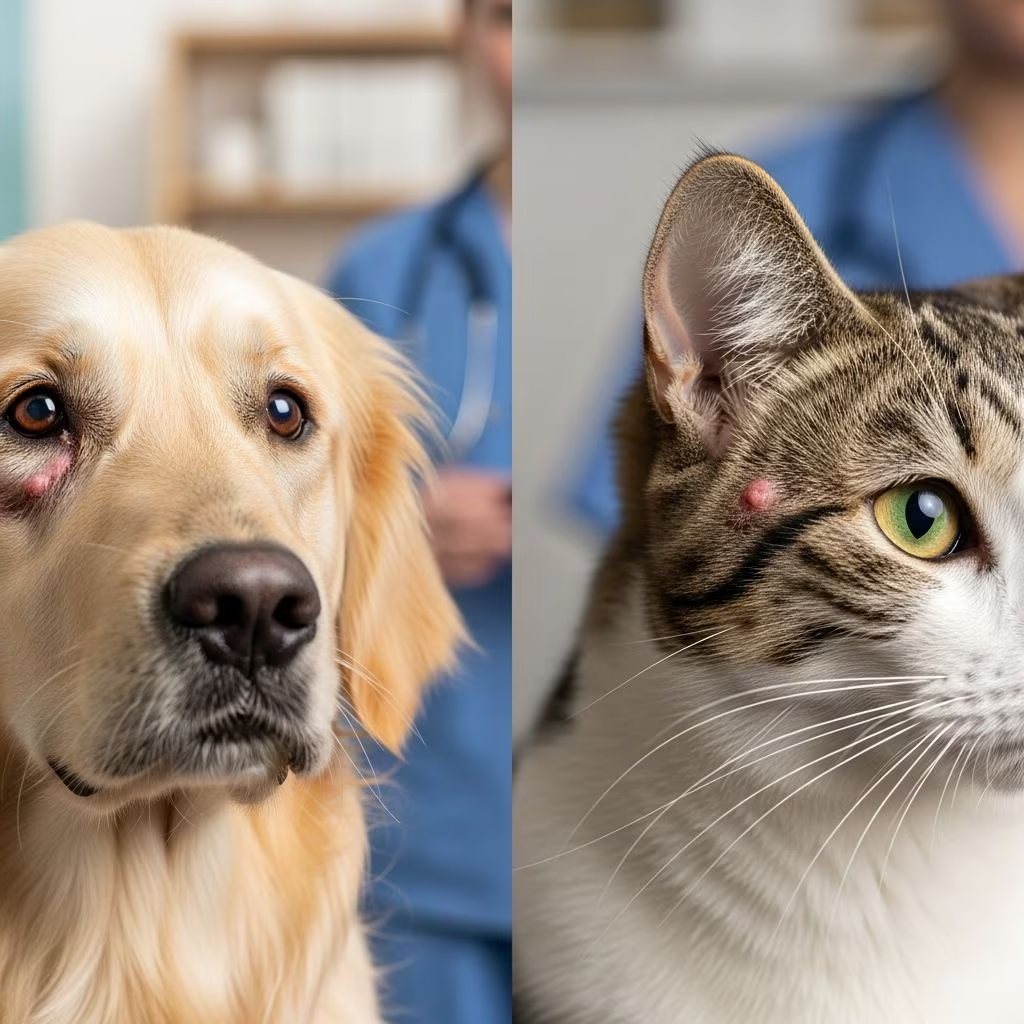
Mange represents a group of skin conditions in dogs and cats triggered by parasitic mites burrowing into the skin or residing on its surface. These infestations lead to intense itching, hair loss, and secondary infections if untreated. Understanding the distinct types, their causes, and management options is crucial for pet owners to ensure timely intervention and recovery.
Understanding the Types of Mange Affecting Companion Animals
Several mite species cause mange, each with unique characteristics and transmission patterns. In dogs, common culprits include Sarcoptes scabiei for sarcoptic mange, Demodex canis and Demodex injai for demodectic mange. Cats face issues from Notoedres cati (notoedric mange), Demodex cati, and Demodex gatoi.
- Sarcoptic Mange (Scabies): Highly contagious, caused by mites that burrow into the skin’s outer layer. Direct contact spreads it rapidly among dogs, with indirect transmission possible via shared bedding.
- Demodectic Mange: Non-contagious in most cases, linked to immune suppression. Dogs host short-bodied D. canis and long-bodied D. injai; cats have D. cati, regional D. gatoi, and others.
- Notoedric Mange in Cats: Similar to canine scabies, highly transmissible, starting on the head and spreading body-wide.
- Cheyletiellosis (Walking Dandruff): Surface-dwelling mites causing flaky skin, contagious to other pets and humans temporarily.
Symptoms and Clinical Signs in Dogs and Cats
Early detection hinges on recognizing subtle changes progressing to severe manifestations. Common signs include excessive scratching, redness, scaling, and alopecia in localized or widespread patterns.
| Mange Type | Dogs: Key Symptoms | Cats: Key Symptoms |
|---|---|---|
| Sarcoptic | Intense pruritus, papules, crusts on ears/elbows; secondary bacterial infections. | Rare; similar if occurs. |
| Demodectic | Patchy hair loss, folliculitis, comedones; juvenile or adult-onset. | Localized alopecia, mild itch; generalized with underlying illness. |
| Notoedric | Not applicable. | Head/neck crusting, hyperkeratosis, rapid spread. |
| Cheyletiella | Diffuse scaling, mild itch, visible mites as ‘dandruff’. | Similar, often dorsal trunk. |
Juvenile demodicosis in dogs under 18 months often signals genetic predisposition, while adult cases suggest underlying health issues like hypothyroidism or neoplasia.
Risk Factors and Breed Predispositions
Genetics play a pivotal role, especially in canine demodicosis. Breeds like English Bulldogs, Staffordshire Bull Terriers, American Staffordshire Terriers, Chinese Shar-Peis, and French Bulldogs show elevated risks, with studies noting over four-fold increases. In cats, D. gatoi spreads contagiously even in healthy individuals, unlike other forms tied to immunosuppression.
Other contributors include stress, poor nutrition, concurrent diseases, and certain medications. Puppies inherit mites from mothers during nursing, but proliferation depends on immune competence.
Diagnostic Approaches for Accurate Identification
Veterinarians rely on clinical exams combined with parasitological tests. Deep skin scrapings are gold standard for demodex, revealing mites, eggs, larvae, or nymphs. One mite may be incidental, but multiples confirm infestation.
- Skin Scrapings: Superficial for sarcoptic/Cheyletiella; deep for demodex.
- Tape Impressions or Acetate Strips: Useful for sparse mites like D. gatoi.
- Fungal Cultures: Essential, as ringworm mimics mange.
- Response to Trial Therapy: Itch relief post-scabicide supports sarcoptic diagnosis.
- Biopsies: For atypical cases or pododemodicosis (foot involvement).
Multiple scrapings from lesional edges boost yield. Systemic workups for generalized cases uncover predisposing conditions.
Treatment Strategies for Effective Resolution
Treatment varies by type, severity, and species. Goals: eliminate mites, manage secondary infections, restore skin barrier.
Canine Sarcoptic and Notoedric Mange
Sarcoptic responds to weekly lime-sulfur dips or systemic macrocyclic lactones like ivermectin (0.3-0.6 mg/kg daily, gradual escalation) or milbemycin oxime. Isoxazolines (fluralaner, afoxolaner) offer convenient monthly dosing. Treat all in-contact animals; disinfect environment.
Demodectic Mange in Dogs
Topical moxidectin/imidacloprid suits localized cases; systemic options include daily oral moxidectin (0.3-0.5 mg/kg), ivermectin, or weekly doramectin. Isoxazolines excel for generalized forms due to efficacy and safety. Monitor Collies/Aussies for MDR1 mutations.
Clip hair for severe cases, use antibacterial shampoos. Success rates exceed 90% with consistent therapy; cure confirmed by three negative monthly scrapings.
Feline Mange Management
For notoedric, lime-sulfur dips or selamectin monthly. Demodex cases: weekly lime-sulfur or amitraz baths (cats only for latter). Address comorbidities; D. gatoi requires treating all cats.
Supportive Care
Antibiotics for pyoderma, antihistamines/steroids for itch (short-term). Nutritional support aids recovery.
Prevention and Long-Term Control Measures
Prevent juvenile demodicosis by screening breeding stock—exclude those needing acaricide therapy. Routine ectoparasiticides (isoxazolines) mitigate risks. Quarantine new pets; clean environments thoroughly.
For recurrent cases, genetic counseling discourages breeding affected lines. Pyrethroids (dogs only) or fipronil prevent cheyletiellosis in high-risk areas.
FAQs on Mange in Dogs and Cats
Q: Is mange contagious to humans?
A: Sarcoptic and Cheyletiella mites can cause temporary human dermatitis, but demodex does not.
Q: How long does treatment take?
A: Sarcoptic: 4-6 weeks; demodectic: 2-4 months, with follow-up scrapings.
Q: Can mange resolve without treatment?
A: Localized demodex may self-limit in 80% of puppies, but generalized requires intervention.
Q: What home remedies work?
A: None reliably eradicate mites; veterinary care is essential to avoid complications.
Q: Are there vaccines for mange?
A: No; prevention relies on hygiene and prophylactics.
Breeding Implications and Genetic Considerations
Generalized demodicosis prevalence reaches 0.58% in US dogs, underscoring breeding caution. Exclude dams producing affected litters; prophylactic acaricides in whelping reduce incidence dramatically.
References
- Diagnosis and treatment of demodicosis in dogs and cats — Mueller et al., Veterinary Dermatology (ESVD and ACVD). 2020-01-01. https://wavd.org/wp-content/uploads/diagnosis-and-treatment-of-demodicosis-in-dogs-and-cats-mueller-et-al-2020-veterinary-dermatology.pdf
- Mange in Dogs and Cats — MSD Veterinary Manual. Last updated 2023 (accessed 2026). https://www.msdvetmanual.com/integumentary-system/mange/mange-in-dogs-and-cats



