

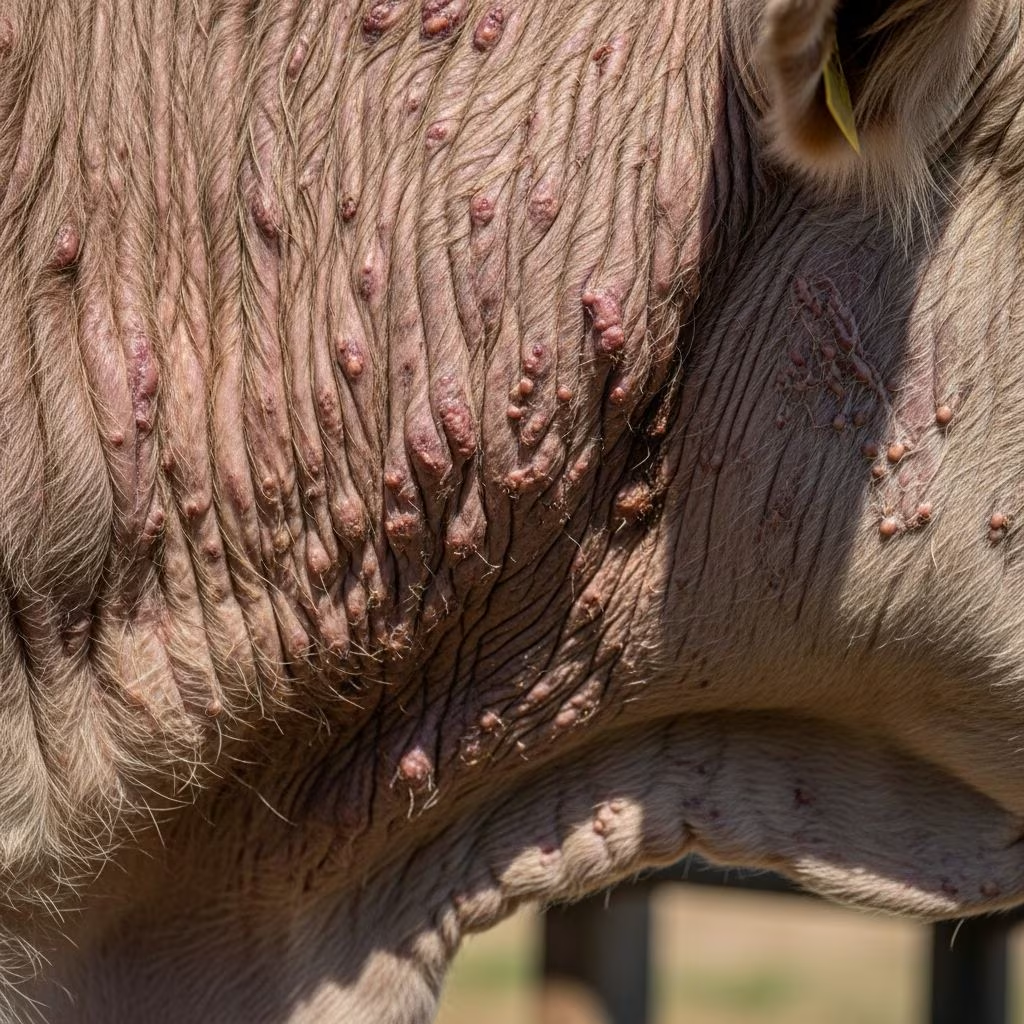
Mange represents one of the most challenging ectoparasitic conditions affecting cattle worldwide, leading to significant welfare concerns, productivity declines, and economic burdens for livestock producers. Caused by various mite species, this infestation disrupts skin integrity, causes intense discomfort, and can escalate to severe secondary complications if not addressed promptly.
Understanding the Biology of Mite Infestations
Mites responsible for cattle mange are obligate parasites that thrive on the host’s skin, feeding on tissues, fluids, or cellular debris. These tiny arachnids complete their life cycles rapidly under favorable conditions, perpetuating infestations within herds. Transmission occurs primarily through direct contact between animals, but mites can persist in the environment on bedding, fences, or grooming tools for up to two weeks, facilitating indirect spread.
Key mite species include Psoroptes ovis, Sarcoptes scabiei var. bovis, and Chorioptes bovis or C. texanus. Each exhibits distinct behaviors: surface-dwelling versus burrowing, influencing lesion patterns and severity.
Types of Mange and Their Distinct Characteristics
Psoroptic Mange: The Most Aggressive Form
Psoroptic mange, driven by Psoroptes ovis, is highly contagious and pathogenic. These non-burrowing mites reside on the skin surface, particularly along the back, flanks, and sides, piercing the epidermis to extract serum and cellular exudate. This feeding triggers severe hypersensitivity reactions, manifesting as erythematous papules that evolve into thick crusts, exudative dermatitis, and widespread alopecia.
Infested cattle display frantic rubbing against posts or walls, head shaking, and ear scratching, often leading to excoriations and secondary bacterial infections. In advanced cases, animals suffer profound weight loss, emaciation, and heightened susceptibility to other diseases due to chronic stress and immune suppression. Outbreaks peak in winter, exacerbated by close confinement in barns.
Sarcoptic Mange: Deep-Seated Burrowing Damage
Sarcoptic mange stems from Sarcoptes scabiei var. bovis, a burrowing mite that tunnels into the stratum corneum, provoking intense allergic responses. Initial lesions appear on the neck, brisket, inner thighs, and perianal region as papules, progressing to hyperkeratosis, lichenification, and severe pruritus.
The hypersensitivity cascade results in epidermal thickening, scaling, and hair loss, with cattle exhibiting relentless scratching that worsens hide damage. Notably, this mite can temporarily infest humans, causing transient itchy papules, underscoring the zoonotic potential. Untreated, sarcoptic mange impairs growth rates and feed efficiency substantially.
Chorioptic Mange: Subtle but Persistent
Chorioptic mange, induced by Chorioptes bovis or emerging C. texanus, involves surface mites favoring the perineum, udder, hocks, and tailhead. Lesions are milder, featuring papular dermatitis, crusting, and mild itching that prompts cattle to seek relief via mechanical brushing.
Though less severe, chronic infestations in housed dairy cows lead to discomfort, reduced grooming, and hide depreciation. Recent shifts in mite populations, with C. texanus gaining prevalence in Europe, highlight evolving epidemiology.
Recognizing Clinical Signs and Economic Impacts
Early detection hinges on observing behavioral changes: excessive rubbing, tail swishing, stomping, and restlessness. Skin alterations range from subtle scaling to florid crusting, fissures, and foul-smearing exudate in severe cases. Productivity hits include depressed weight gains (up to 20% loss), poorer feed conversion, milk yield drops, and cull value reductions from scarred hides.
Welfare implications are profound, with pruritus inducing chronic pain and stress, potentially elevating cortisol levels and immune dysregulation. In intensive systems, mange amplifies other health issues, compounding losses.
Risk Factors Fueling Mange Outbreaks
- Animal movements: Introducing infested purchases elevates herd risk significantly.
- Housing conditions: Overcrowded, humid barns with poor ventilation foster mite survival and spread.
- Seasonal patterns: Winter housing intensifies contact and environmental persistence.
- Breed susceptibility: Double-muscled breeds like Belgian Blue show heightened vulnerability.
- Treatment lapses: Incomplete regimens or underdosing breed resistance.
Diagnostic Approaches for Accurate Identification
Diagnosis combines clinical history, lesion mapping, and parasitological confirmation. Deep skin scrapings, taped to slides, reveal mites, eggs, or fecal pellets under microscopy—essential for species differentiation. Psoroptic mites show paired legs protruding from the body; sarcoptic exhibit shorter legs and triangular shapes; chorioptic display anal suckers.
In subclinical cases or post-treatment, PCR assays or acetate tape preps enhance sensitivity. Differential diagnoses include ringworm, lice, or allergies, necessitating lab submission for histopathology if needed.
Effective Treatment Protocols
Macrocyclic lactones (MLs)—ivermectin, doramectin, eprinomectin, moxidectin—form the cornerstone, offering systemic efficacy via injection or pour-on. Single doses often suffice for sarcoptic and chorioptic, yielding rapid pruritus relief and lesion regression.
| Mite Type | Recommended MLs | Dosage Form | Notes |
|---|---|---|---|
| Psoroptic | Doramectin, Ivermectin, Moxidectin | Injectable/Pour-on | Resistance reported in Europe; repeat if needed |
| Sarcoptic | Ivermectin, Doramectin, Eprinomectin | Injectable/Pour-on | High efficacy; treat all contacts |
| Chorioptic | Eprinomectin, Moxidectin | Pour-on | Multiple doses for dairy; zero milk withdrawal for some |
Alternatives include lime sulfur dips (95–105°F, repeated q12 days, max 3x) or phosmet sprays for sarcoptic. For resistant psoroptic cases, higher frequency MLs or vet-prescribed extras are advised. Always adhere to label dilutions, bodyweight dosing, and withdrawal periods.
Prevention and Control Strategies
Integrated pest management trumps reactive treatment:
- Quarantine newcomers: Inspect and treat incoming stock.
- Enhance hygiene: Regular bedding changes, barn disinfection, and fomite removal.
- Provide grooming aids: Brushes alleviate chorioptic discomfort.
- Strategic treatments: Whole-herd pour-ons pre-winter in endemic areas.
- Monitor resistance: Rotate classes judiciously; consult vets for efficacy checks.
Dairy-specific options like eprinomectin enable seamless interventions without milk discard.
Frequently Asked Questions (FAQs)
Can mange in cattle spread to humans?
Sarcoptic mites may cause temporary itching in handlers, but they do not establish in humans.
How long do mites survive off the host?
Up to two weeks in bedding or on fomites, emphasizing cleaning.
Is mange more common in beef or dairy cattle?
Both, but housed dairy herds face higher chorioptic risks year-round.
What if ML treatments fail?
Suspect resistance; seek vet for alternatives like lime sulfur or increased dosing intervals.
Can vaccination prevent mange?
No vaccines exist; focus on management and chemoprophylaxis.
Long-Term Herd Management for Mange-Free Operations
Sustained control demands vigilance: routine skin checks, biosecurity protocols, and data tracking of infestation rates. Collaborate with vets for tailored plans, incorporating emerging diagnostics like mite genotyping for resistance surveillance. By prioritizing prevention, producers mitigate welfare risks, sustain productivity, and protect profitability against this pervasive parasite.
References
- Cattle mange: causative agents, risk factors and control strategies — Ceva Ruminants. 2023. https://ruminants.ceva.pro/cattle-mange
- Mange – Cattle Diseases — Farm Health Online. 2023. https://www.farmhealthonline.com/disease-management/cattle-diseases/mange/
- Mange in Cattle – Integumentary System — MSD Veterinary Manual. 2023. https://www.msdvetmanual.com/integumentary-system/mange/mange-in-cattle
- Sarcoptic mange or scabies in cattle — Western College of Veterinary Medicine, University of Saskatchewan. 2023. https://wcvm.usask.ca/learnaboutparasites/parasites/sarcoptes-species-sarcoptic-mange-or-scabies-in-cattle.php
- Mange — The Cattle Site. 2023. https://www.thecattlesite.com/diseaseinfo/219/mange



