

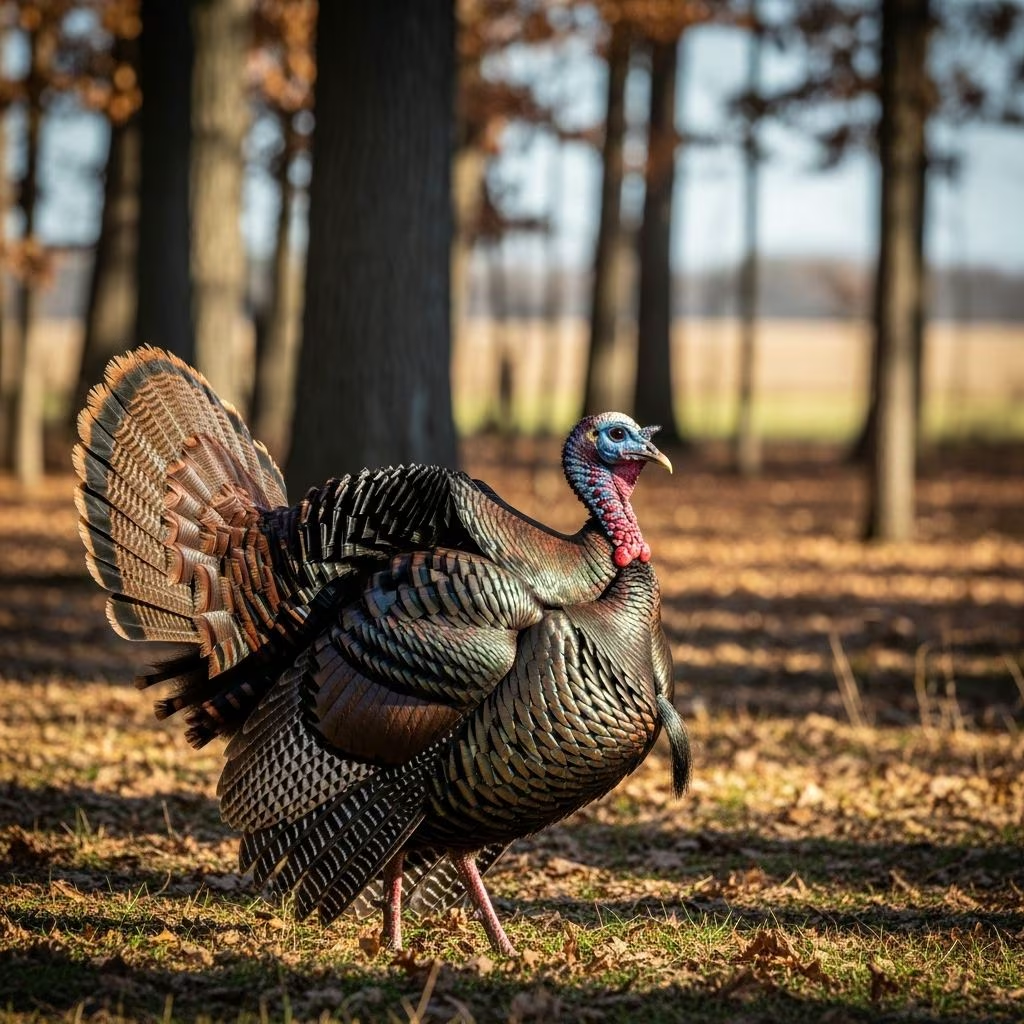
Wild turkeys have made a remarkable comeback across North America, thriving in diverse environments from forests to suburbs. Their adaptability brings them into closer contact with humans, sometimes leading to challenges like property damage or aggressive displays. This guide provides actionable advice on preventing issues, deterring turkeys safely, and fostering harmonious coexistence.
Understanding Wild Turkey Biology and Expansion
Wild turkeys (Meleagris gallopavo) are large ground-dwelling birds native to North America, known for their keen senses and social behaviors. Once nearly extinct due to overhunting and habitat loss, conservation efforts have restored populations to over 6.9 million birds across 49 states.
These birds prefer habitats blending wooded areas with open spaces, such as oak-hickory forests, mixed conifer stands, pastures, fields, and wetlands. They feed on acorns, seeds, insects, berries, and greens, scratching the ground to forage. In suburban areas, they exploit bird feeders and landscaped yards.
- Habitat Flexibility: Turkeys adapt to forests, agricultural lands, riparian zones, and urban edges, needing only scattered clearings for feeding and dense cover for roosting.
- Daily Patterns: Active by day, they roost in trees at night to evade predators, flying up to branches despite their size.
- Social Structure: Flocks follow a pecking order; males (toms) strut and gobble during spring breeding (March-May).
Population booms stem from reintroduction programs and abundant food in human-altered landscapes, increasing encounters.
Common Challenges Posed by Wild Turkeys
As turkeys expand into residential zones, issues arise. They may damage gardens by scratching soil, consume birdseed excessively, or leave droppings on patios. During breeding, males can charge people or pets, perceiving threats.
| Issue | Description | Seasonal Peak |
|---|---|---|
| Garden Damage | Scratching exposes plants, eats seedlings | Spring/Summer |
| Feeder Overuse | Depletes seed, scatters hulls | All year |
| Aggression | Males display or chase | March-May |
| Roosting Nuisance | Droppings on structures | Nighttime |
In areas like Massachusetts and Florida, turkeys habituate to humans, losing wariness and amplifying problems.
Prevention Strategies for Your Property
Proactive steps minimize attractants, reducing turkey visits without harm.
- Secure Food Sources: Remove fallen fruits, secure compost, and use squirrel-proof bird feeders elevated 5-6 feet with conical baffles.
- Landscape Wisely: Avoid dense shrubbery near houses; trim low branches to deter roosting on roofs or rails.
- Yard Maintenance: Mow lawns regularly, rake leaves promptly to limit foraging spots.
- Pet Safety: Supervise dogs/cats outdoors; turkeys may challenge leashed pets.
Making your yard less appealing encourages turkeys to favor wilder areas.
Humane Deterrence Techniques
When prevention falls short, non-lethal methods condition turkeys to avoid your space.
- Motion-Activated Devices: Sprinklers, lights, or noise makers startle birds effectively. Rotate locations to prevent habituation.
- Visual Barriers: Mylar tape, reflective pinwheels, or balloons with eyes scare flocks. Hang from trees or fences.
- Hazing Actions: Wave arms, clap, yell, or use air horns to assert dominance. Never run; stand tall and advance slowly.
- Repellents: Apply capsaicin-based sprays to plants (reapply after rain). Avoid poisons, illegal and inhumane.
Consistency is crucial; combine methods and involve neighbors for community-wide impact.
When Turkeys Become Aggressive
Breed-season males puff up, fan tails, and charge if feeling threatened, especially near hens or display areas. Females protect poults fiercely.
- Stay calm; make yourself large by raising arms.
- Back away slowly without turning.
- Discourage feeding to prevent boldness.
Most incidents stem from habituation; hazing restores fear. Children and elderly should avoid flocks.
Legal Considerations and Professional Help
Regulations vary by state. Feeding bans exist in places like Massachusetts to curb nuisance flocks. Hunting seasons manage populations humanely.
Report persistent issues to wildlife agencies (e.g., state DNR). Never relocate or harm turkeys yourself—violates federal Migratory Bird Treaty Act.
Promoting Long-Term Coexistence
Support habitat connectivity via conservation easements. Participate in citizen science like eBird to track populations.
Educate communities on turkey ecology to reduce fear. Balanced ecosystems benefit all, with turkeys controlling insects and dispersing seeds.
Frequently Asked Questions (FAQs)
Are wild turkeys dangerous?
Rarely; aggression is defensive, usually bluff displays. Hazing prevents escalation.
Can I feed wild turkeys?
No—creates dependency and conflicts. Opt for native plants attracting natural foods.
How do I stop turkeys from roosting on my roof?
Trim branches, install sloping barriers, use deterrents at dusk.
What if a turkey attacks my pet?
Protect pet, haze bird. Consult vet if injured; report to authorities.
Do turkeys carry diseases?
Low risk to humans; maintain distance, good hygiene.
References
- Wild turkey – Wikipedia — Wikipedia. 2023-10-15. https://en.wikipedia.org/wiki/Wild_turkey
- Meleagris gallopavo (wild turkey) – Animal Diversity Web — University of Michigan. 2024-01-12. https://animaldiversity.org/accounts/Meleagris_gallopavo/
- Wild Turkey | Audubon Field Guide — National Audubon Society. 2023-11-20. https://www.audubon.org/field-guide/bird/wild-turkey
- Learn about turkeys | Mass.gov — Massachusetts Government (.gov). 2025-06-10. https://www.mass.gov/info-details/learn-about-turkeys
- Wild Turkey | Ohio Department of Natural Resources — Ohio DNR (.gov). 2024-09-05. https://ohiodnr.gov/discover-and-learn/animals/birds/wild-turkey
- Eastern Wild Turkey Quick Facts – Maryland DNR — Maryland DNR (.gov). 2023-04-18. https://dnr.maryland.gov/wildlife/documents/turkey_curriculum_guide.pdf
- Wild Turkey Life History, All About Birds — Cornell Lab of Ornithology. 2024-02-28. https://www.allaboutbirds.org/guide/Wild_Turkey/lifehistory
- Wild Turkeys | FWC — Florida Fish and Wildlife Conservation Commission (.gov). 2025-03-15. https://myfwc.com/wildlifehabitats/profiles/birds/game-birds/wild-turkeys/



