

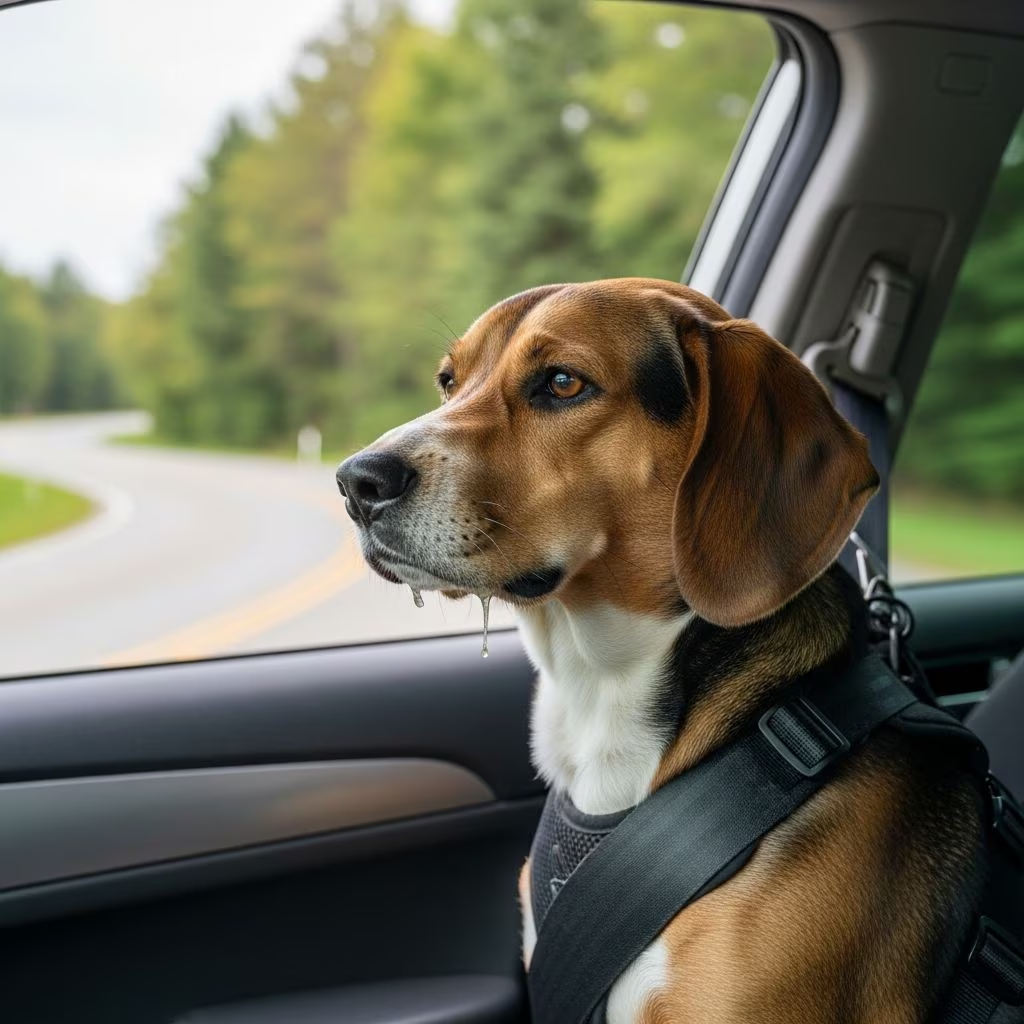
Travel sickness in dogs is a widespread concern affecting between 20% and 50% of pets, making it one of the most common challenges dog owners face when transporting their companions. Whether your dog experiences nausea during a brief trip to the veterinarian or longer journeys, understanding the underlying causes and available solutions can transform these stressful experiences into manageable situations. This guide explores the physical and psychological factors contributing to canine motion sickness and presents evidence-based strategies to help your dog travel more comfortably.
Understanding the Physiological Basis of Canine Motion Sickness
The foundation of motion sickness in dogs lies within the inner ear, specifically in a structure called the vestibular apparatus. This specialized sensory organ plays a crucial role in maintaining balance and spatial orientation. When a vehicle moves, the motion stimulates this balance center, sending signals to the brain stem’s vomiting center. In dogs whose vestibular systems are still developing, this sensory input can trigger uncomfortable nausea and related physical symptoms.
The connection between the inner ear and the vomiting center explains why motion sickness in dogs closely parallels the experience in humans. Just as young children are more susceptible to travel sickness than adults, puppies experience higher rates of motion sickness because their balance-related ear structures are not yet fully matured. Fortunately, many puppies naturally outgrow this sensitivity between 6 and 12 months of age as their vestibular systems continue developing.
Recognizing Motion Sickness Symptoms in Your Dog
Identifying motion sickness in dogs requires careful observation, as canines cannot verbally communicate their discomfort. Dogs do not display the characteristic paleness that humans show when nauseated, so pet owners must learn to recognize alternative warning signs. Early detection allows you to intervene before the situation escalates to vomiting or more severe behavioral changes.
Common Physical Indicators
- Excessive drooling: One of the earliest signs, often noticed before more severe symptoms develop
- Lip licking and smacking: Repetitive oral behaviors indicating nausea or anxiety
- Yawning: Frequent yawning, distinct from normal tiredness, often accompanying motion discomfort
- Panting: Rapid breathing or stress-related panting, even in cool temperatures
- Vomiting: The most obvious symptom, though not always present in mild cases
- Diarrhea or defecation: Gastrointestinal distress manifesting during or after travel
Behavioral and Emotional Signs
- Whining and vocalization: Persistent whining or crying throughout the journey
- Pacing and restlessness: Inability to settle, constant movement within the vehicle
- Lethargy and listlessness: Extreme inactivity and lack of responsiveness to stimuli
- Trembling or shaking: Visible signs of anxiety and physical stress
- General uneasiness: A detectable shift in temperament and comfort level
If you notice your dog beginning to display these symptoms during a car ride, stopping the vehicle and taking your dog for a brief walk may provide temporary relief by reducing the constant motion stimuli.
The Dual Nature of Motion Sickness: Physical and Psychological Causes
Motion sickness in dogs stems from two distinct but interconnected pathways: physical motion affecting the inner ear and psychological factors rooted in fear and anxiety. Understanding this distinction is essential for selecting the most appropriate intervention strategy.
Physical Factors
The primary physical cause involves stimulation of the vestibular apparatus through vehicle movement. Puppies and young dogs face inherent vulnerability due to incomplete ear development. Additionally, some adult dogs may have underlying medical conditions predisposing them to nausea, including middle or inner ear infections, vestibular disease, or medication side effects that trigger vomiting or diarrhea.
Psychological and Behavioral Factors
Many dogs develop anxiety and stress responses related to travel, independent of actual physical motion. Dogs that experience infrequent car rides—such as those taken primarily for veterinary visits—often associate vehicles with stressful outcomes. This negative conditioning creates anticipatory anxiety that manifests as physical symptoms even before the car begins moving.
Puppies that encounter frightening or traumatic first car experiences may similarly develop lasting associations between vehicles and distress, perpetuating motion sickness symptoms into adulthood. The psychological component often amplifies physical symptoms, creating a compounding effect where anxiety intensifies nausea and vice versa.
Treatment Strategies: Desensitization and Behavioral Modification
For dogs whose motion sickness has a significant psychological component, systematic desensitization represents a cornerstone treatment approach. This gradual conditioning process helps reshape your dog’s associations with vehicles and travel experiences.
Progressive Desensitization Protocol
Phase One: Vehicle Familiarization
Begin by allowing your dog to sit inside a stationary vehicle with the doors open. Provide praise and positive reinforcement whenever your dog remains calm in this setting. Reward with treats and affection to create positive associations with the vehicle environment itself, absent any motion component.
Phase Two: Extended Stationary Sessions
Progress to longer periods inside the parked vehicle with doors closed. Maintain a calm, positive demeanor to reassure your dog. Introduce treats and toys that your dog particularly enjoys, further strengthening positive associations. Allow your dog to exit whenever they show anxiety, then re-enter and try again with shorter duration intervals.
Phase Three: Short Movement Journeys
Once your dog demonstrates comfort in a stationary vehicle, begin with very brief drives—perhaps circling your driveway or traveling one short block. Choose destinations associated with positive experiences, such as a nearby dog park or favorite walking trail, rather than the veterinarian’s office.
Phase Four: Graduated Distance Increases
Gradually extend journey duration and distance as your dog becomes more comfortable. Maintain the practice of traveling to rewarding destinations. This repeated positive pairing helps override any previous negative conditioning.
Supporting Factors During Desensitization
- Ensure proper vehicle ventilation and comfortable temperature
- Provide a secure, confined space such as a well-fitted crate to increase feelings of safety
- Play calming music or white noise to mask potentially anxiety-inducing external sounds
- Maintain consistent, predictable travel schedules to develop routine comfort
- Practice desensitization during periods when you are not time-pressured or stressed
Medical Interventions and Veterinary Medications
When motion sickness persists despite behavioral conditioning or when physical factors predominate, veterinary pharmacological solutions become essential. Medications specifically designed to address motion sickness offer significant relief and may prevent the development of secondary anxiety disorders.
FDA-Approved Motion Sickness Medication
Maropitant Citrate (Cerenia®)
Maropitant citrate represents the only FDA-approved veterinary medication specifically formulated to treat motion sickness in dogs. This antiemetic drug works by blocking signals to the vomiting center in the brain stem, effectively interrupting the nausea response at its neurological source. Veterinarians typically administer this medication shortly before anticipated travel, allowing adequate time for the medication to reach effective levels in the bloodstream.
The medication’s efficacy extends beyond merely suppressing vomiting; by preventing nausea before it develops, Maropitant can help prevent the development of conditioned anxiety responses to travel. This preventive approach proves particularly valuable for dogs with strong negative previous experiences or those requiring regular vehicle transport.
Consultation and Medication Selection
Before starting any medication regimen, consultation with your veterinarian is essential. Your veterinarian can determine whether motion sickness stems primarily from physical or psychological causes, identify any underlying medical conditions contributing to nausea, and assess whether your dog takes any medications that might interact with motion sickness treatments.
Practical Travel Strategies and Environmental Modifications
Beyond formal desensitization and medication, several practical measures can significantly reduce your dog’s motion sickness risk during travel.
Pre-Travel Preparation
- Fasting protocol: Consider feeding your dog several hours before travel to reduce stomach contents and associated nausea triggers
- Hydration management: Offer water in limited quantities before travel; excessive water intake can exacerbate vomiting
- Exercise timing: Provide adequate exercise before travel to help your dog relax during the journey
- Bathroom breaks: Allow opportunity for elimination before departure to prevent additional stress
During-Travel Considerations
- Proper restraint: Use safety harnesses, carriers, or barriers designed for vehicle transport, providing security without inducing claustrophobia
- Window positioning: Allow your dog to see out the window if this provides comfort, though some dogs respond better to reduced visual stimulation
- Temperature control: Maintain comfortable cabin temperature; overheating increases nausea
- Smooth driving: Gentle acceleration, deceleration, and cornering reduces vestibular system stimulation
- Familiar comfort items: Bring favorite toys or blankets with familiar scents to promote security
Distinguishing Motion Sickness from Travel Anxiety
While motion sickness and travel anxiety frequently coexist and interact, distinguishing between them helps guide treatment selection. A dog experiencing pure motion sickness will show symptoms primarily during active vehicle movement, with symptoms resolving once the vehicle stops. Conversely, a dog with travel anxiety may display symptoms even in a stationary vehicle, merely from the anticipation of travel or the act of being placed inside the vehicle.
Many dogs present with a combination: true motion sickness that has secondarily produced anxiety through negative conditioning. In these cases, combination approaches addressing both components prove most effective.
Age-Related Considerations and Prognosis
Age significantly influences both the incidence and trajectory of canine motion sickness. Puppies experience motion sickness at much higher rates than adult dogs, yet most naturally outgrow the condition by approximately 12 months of age as their vestibular systems mature. This developmental timeline suggests that patience and consistent positive conditioning during puppyhood often leads to spontaneous resolution.
However, not all dogs overcome motion sickness with maturation. Dogs that experience traumatic early travel experiences or those with individual susceptibility may retain motion sickness sensitivity throughout adulthood. For these dogs, long-term management strategies—whether behavioral, pharmacological, or combined—become necessary for quality of life.
Long-Term Implications of Untreated Motion Sickness
The consequences of untreated or unmanaged motion sickness extend beyond the immediate discomfort of individual car rides. If left unaddressed, motion sickness can precipitate secondary behavioral problems including vehicle-specific anxiety, avoidance behaviors, and phobic responses that complicate all future travel situations. Some dogs develop such severe anticipatory anxiety that they refuse to enter vehicles entirely or display destructive or aggressive behaviors during attempted transport.
Early intervention—whether through desensitization, medication, or preventive strategies—helps interrupt this progression from simple motion sickness to complex behavioral anxiety disorder.
Frequently Asked Questions
At what age do puppies typically outgrow motion sickness?
Most puppies naturally outgrow motion sickness between 6 and 12 months of age as their inner ear structures fully develop. However, individual variation exists, and some dogs retain sensitivity into adulthood.
Can motion sickness medication be used preventively?
Yes, FDA-approved antiemetic medications like Maropitant citrate can be administered prophylactically before anticipated travel, preventing nausea development rather than treating existing symptoms.
How long does the desensitization process typically require?
Timeline varies considerably depending on individual dog temperament, severity of prior negative experiences, and consistency of conditioning efforts. Some dogs progress rapidly over weeks, while others may require several months of gradual exposure.
Should I fast my dog before car travel?
Feeding several hours before travel may reduce stomach contents and associated nausea triggers. However, consult your veterinarian for specific recommendations based on your dog’s health status and travel duration.
Can anxiety medications help with motion sickness?
While anxiety medications address the psychological component, they do not treat the underlying physical motion sickness. Consultation with your veterinarian can determine whether combination therapy is appropriate for your dog’s specific situation.
When to Seek Professional Veterinary Guidance
Contact your veterinarian if your dog exhibits severe or persistent motion sickness symptoms, if symptoms appear to worsen despite behavioral conditioning efforts, or if you suspect underlying medical conditions contributing to nausea. Additionally, seek professional guidance before starting any new medication or if your dog currently takes medications that might interact with motion sickness treatments.
Your veterinarian can perform appropriate diagnostic evaluations to rule out medical causes such as ear infections or vestibular disease, and can recommend the most appropriate treatment approach tailored to your dog’s individual needs and medical history.
References
- Motion Sickness in Dogs – Dog Owners — Merck Veterinary Manual, 2024. https://www.merckvetmanual.com/dog-owners/brain-spinal-cord-and-nerve-disorders-of-dogs/motion-sickness-in-dogs
- Motion Sickness in Dogs | VCA Animal Hospitals — VCA Animal Hospitals, 2024. https://vcahospitals.com/know-your-pet/motion-sickness-in-dogs
- Carsickness and Motion Sickness in Dogs — Small Door Veterinary, 2024. https://www.smalldoorvet.com/learning-center/wellness/carsickness-dogs
- Carsickness in Dogs: What to Know — American Kennel Club, 2024. http://www.akc.org/expert-advice/health/car-sickness-in-dogs/
- Dogs and Motion Sickness — WebMD, 2024. https://www.webmd.com/pets/dogs/dogs-and-motion-sickness
- Car Sickness | Wisconsin Humane Society — Wisconsin Humane Society, 2024. https://www.wihumane.org/car-sickness



