

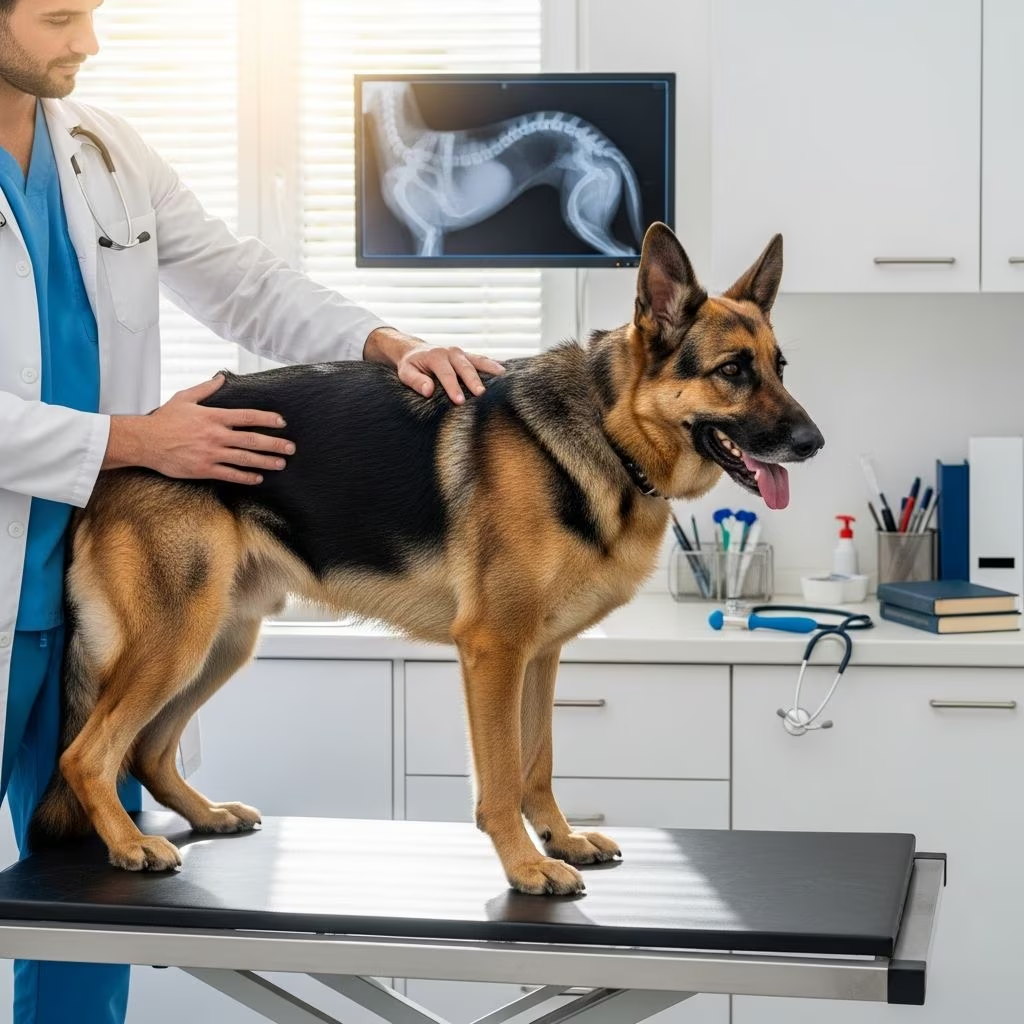
Scoliosis, characterized by an abnormal lateral curvature of the spine, affects dogs similarly to humans, potentially leading to pain, mobility challenges, and neurological issues if untreated. Early intervention plays a crucial role in improving outcomes for affected canines.
Understanding the Canine Spine and Scoliosis Basics
The dog’s spine consists of vertebrae, intervertebral discs, and supporting ligaments that provide flexibility and support for movement. Scoliosis occurs when this structure deviates sideways, often forming an S or C shape. Unlike congenital cases present at birth, acquired scoliosis can develop later due to trauma, infections, or degenerative conditions. Research indicates that spinal cord compression from such curvatures can cause significant discomfort and functional deficits in dogs.
In veterinary medicine, scoliosis is distinguished from other spinal deformities like kyphosis (forward hunch) or lordosis (swayback). While rare in dogs compared to humans, it warrants prompt attention to prevent progression. Factors such as breed predisposition—though not strongly linked—may play a role in certain large or deep-chested breeds.
Primary Causes of Spinal Curvature in Canines
Scoliosis in dogs arises from diverse etiologies. Congenital forms result from developmental anomalies during fetal growth, while acquired types stem from external or internal triggers.
- Congenital malformations: Hemivertebrae or malformed vertebrae lead to inherent curvature.
- Traumatic injuries: Fractures or dislocations from accidents alter spinal alignment.
- Inflammatory conditions: Immune-mediated diseases or infections can induce sudden curvatures, sometimes reversible with therapy.
- Degenerative diseases: Intervertebral disc disease or osteoarthritis contributes over time.
- Neoplastic growths: Tumors pressing on the spine may cause secondary scoliosis.
Experimental models using juvenile dogs demonstrate that asymmetric loading via tethering can induce three-dimensional deformities mimicking human adolescent idiopathic scoliosis, highlighting growth modulation’s role.
Recognizing Early Warning Signs
Dogs with scoliosis often exhibit subtle initial symptoms that owners might overlook. Common indicators include:
- Visible spinal asymmetry or a hunched posture when standing or walking.
- Reluctance to jump, climb stairs, or engage in play.
- Back pain evidenced by yelping, guarding the area, or sensitivity to touch.
- Neurological deficits such as dragging hind legs, wobbling gait (ataxia), or muscle weakness.
- Changes in appetite or behavior due to chronic discomfort.
Sudden onset in healthy dogs may signal acute inflammation, treatable with immunosuppressants. Monitoring posture and mobility at home aids early detection.
Diagnostic Approaches in Veterinary Practice
Veterinarians employ a multi-step process to confirm scoliosis and identify underlying causes. Initial assessment involves a thorough physical examination, observing gait, spinal alignment, and pain responses.
| Diagnostic Tool | Purpose | Details |
|---|---|---|
| X-rays | Visualize curvature | Standard views confirm degree of scoliosis; measures Cobb angle. |
| MRI/CT Scan | Assess soft tissue | Detects spinal cord compression, tumors; requires anesthesia. |
| CSF Tap/Myelogram | Evaluate neurology | Checks for inflammation or infection if advanced symptoms present. |
| Blood Work | Rule out systemic issues | Identifies infections or inflammatory markers. |
Referral to a veterinary neurologist or orthopedist is common for complex cases, ensuring precise diagnosis.
Non-Surgical Treatment Strategies
For mild scoliosis without pain or neurological compromise, conservative management suffices. Goals focus on pain relief, maintaining mobility, and halting progression.
- Pharmacological support: NSAIDs for inflammation, gabapentin for neuropathic pain, muscle relaxants like methocarbamol. Long-term use may be necessary.
- Rest protocols: Strict crate rest for 4-6 weeks reduces spinal stress.
- Supportive devices: Custom back braces stabilize the spine, especially in growing dogs.
- Physical rehabilitation: Underwater treadmill exercises build strength without impact; massage and laser therapy reduce inflammation; acupuncture aids pain management and mobility.
Bracing, the primary nonoperative option, prevents curve worsening but requires consistent wear, akin to human protocols.
Surgical Interventions for Severe Cases
When conservative measures fail—particularly with spinal instability, intractable pain, or neurological deterioration—surgery becomes essential. Options include:
- Spinal stabilization: Fusion techniques using rods and screws correct alignment; successful in select cases with post-op rehab.
- Decompression: Removes pressure on the spinal cord via laminectomy.
- Novel fusionless methods: Inspired by research, growth modulation with tethers or springs shows promise in juvenile dogs, preserving motion.
Post-surgical recovery demands 4-8 weeks of cage rest, followed by physiotherapy. Complications like infection or hardware failure are risks, but many dogs regain function.
Holistic and Adjunctive Therapies
Integrative approaches complement traditional treatments, enhancing recovery.
- Laser therapy: Low-level lasers promote tissue healing and pain reduction.
- Acupuncture: Targets pain points, improving circulation and nerve function.
- Hydrotherapy: Buoyancy-supported exercise strengthens muscles safely.
- Mobility aids: Wheelchairs or carts support paralyzed limbs, promoting independence.
Nutritional support with omega-3s and joint supplements bolsters spinal health.
Home Care and Long-Term Management
Owners play a pivotal role in ongoing care. Key practices include:
- Weight management to minimize spinal load.
- Low-impact exercises like short leash walks.
- Environmental modifications: ramps, orthopedic beds, non-slip flooring.
- Regular vet check-ups with serial X-rays to monitor progression.
- Pain monitoring: Track behavior, appetite, and mobility daily.
Avoid abrupt discontinuation of medications; consult vets for adjustments.
Prognosis and Quality of Life Considerations
Outcomes vary by scoliosis severity and timeliness of intervention. Mild cases often stabilize with conservative care, allowing normal lifespans. Severe, progressive disease carries guarded prognoses; surgery improves mobility in 60-80% of suitable candidates, per clinical reports. In refractory pain or total paralysis, humane euthanasia may be discussed to prioritize welfare.
With rehab and aids, many dogs maintain active lives. Research into minimally invasive techniques promises better futures.
FAQs on Canine Scoliosis
Can scoliosis in dogs be cured completely?
Complete reversal is rare, especially in adults, but management halts progression and alleviates symptoms effectively.
Is scoliosis hereditary in dogs?
Congenital forms may have genetic links, but most are acquired; breeding from affected lines is discouraged.
How much does scoliosis surgery cost for dogs?
Costs range from $3,000-$10,000+, depending on complexity and location; pet insurance may offset expenses.
Can physical therapy alone fix scoliosis?
It manages symptoms and strengthens support muscles but doesn’t correct the curvature without bracing or surgery in moderate-severe cases.
What breeds are prone to scoliosis?
No strong breed predilection, but seen in Bulldogs, Pugs (hemivertebrae), and large breeds with trauma history.
Preventive Measures for Spinal Health
While not all scoliosis is preventable, strategies reduce risks:
- Control jumping from heights in puppies.
- Maintain ideal body weight.
- Promptly treat infections or injuries.
- Regular wellness exams for early detection.
By fostering spinal awareness, owners safeguard their dogs’ vitality.
References
- Scoliosis in Dogs — PetMD. 2023. https://www.petmd.com/dog/conditions/musculoskeletal/scoliosis-dogs
- Lumbar Scoliosis Induction in Juvenile Dogs by Three-dimensional Posterior Tethering — PMC (NCBI). 2017-10-13. https://pmc.ncbi.nlm.nih.gov/articles/PMC5678258/
- Treating Scoliosis in Dogs — Fetch Pet. 2023. https://www.fetchpet.com/the-dig/treating-scoliosis-in-dogs
- 3 Things to Know About Scoliosis in Dogs — Best Friend Mobility. 2023. https://bestfriendmobility.net/blogs/blog/3-things-to-know-about-scoliosis-in-dogs
- Spinal Problems in Dogs — The Royal Kennel Club. 2024. https://www.royalkennelclub.com/health-and-dog-care/health-dog-care/health/health-and-care/a-z-of-health-and-care-issues/spinal-problems-in-dogs/



