

Scoliosis in cats refers to an abnormal lateral curvature of the spine, often present from birth due to vertebral malformations. This condition varies widely in severity, with many cats living normal lives without intervention while others require targeted care to maintain quality of life.
Understanding the Nature of Feline Scoliosis
Scoliosis manifests as a sideways bend in the spinal column, distinct from other deformities like lordosis or kyphosis. In felines, it is predominantly congenital, arising from failures in vertebral segmentation or fusion during embryonic development. Radiographic findings commonly reveal wedged vertebrae, hemivertebrae, or synostoses that contribute to the curve.
Unlike humans, where scoliosis often progresses during growth spurts, cats typically stabilize post-development. However, severe cases can compress the spinal cord, leading to neurological deficits. Early detection through routine imaging can identify asymptomatic curves, allowing proactive monitoring.
Recognizing Signs of Spinal Curvature in Your Cat
Many cats with mild scoliosis exhibit no outward symptoms, with the condition discovered incidentally on X-rays. When clinical signs appear, they include:
- Visible spinal asymmetry or a hunched posture.
- Difficulty jumping, wobbling gait, or reluctance to climb.
- Pain indicated by vocalizing, aggression when touched along the back, or reduced activity.
- In advanced stages, incontinence, limb weakness, or paresis due to cord compression.
Owners might notice these during play or grooming. Respiratory distress can occur if thoracic scoliosis restricts lung expansion, as seen in cases with concurrent lordosis.
Diagnostic Approaches for Confirming Scoliosis
Veterinarians start with a physical exam, palpating the spine for irregularities and assessing gait and neurological function. Diagnostic imaging is crucial:
| Method | Purpose | Key Findings |
|---|---|---|
| X-rays | Visualize bone structure | Vertebral wedging, rotation, curve degree |
| CT/MRI | Assess soft tissue/spinal cord | Compression, myelopathy, associated defects |
| Neurological tests | Evaluate reflexes | Paresis, hyperreflexia, pain response |
Bloodwork rules out secondary causes like infections. Regular radiographs track progression in moderate cases.
Non-Surgical Management Strategies
For mild to moderate scoliosis without significant neurological impact, conservative approaches prioritize comfort and mobility preservation.
- Medication: Anti-inflammatories (e.g., NSAIDs) and analgesics alleviate pain and swelling. Soft stool laxatives prevent constipation straining the spine.
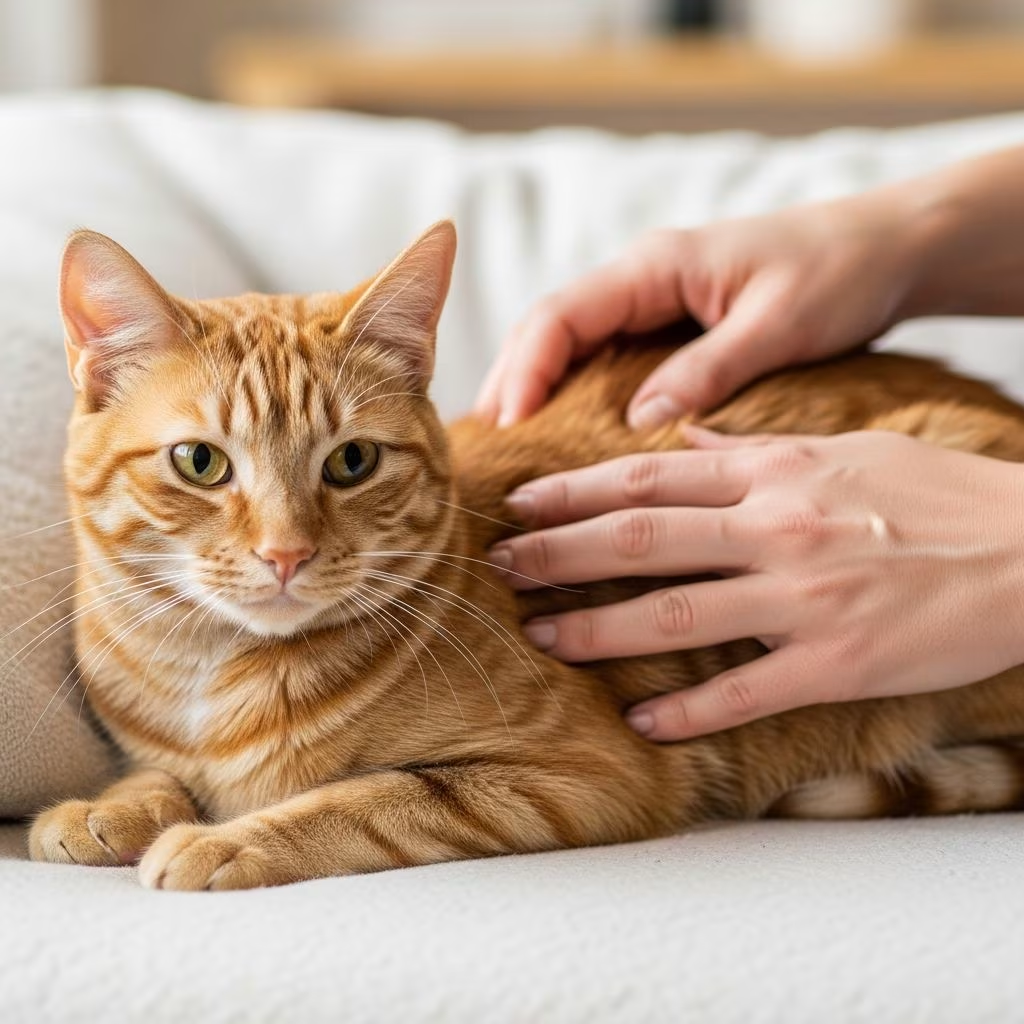
- Physiotherapy: Sessions improve strength, flexibility, and balance. Techniques include passive range-of-motion exercises, therapeutic massage, and balance board training.
- Hydrotherapy: Underwater treadmills reduce joint stress while building muscle, ideal for weight-bearing challenges.
- Environmental Modifications: Ramps, low-entry litter boxes, and orthopedic beds minimize jumping and twisting. Cage rest during flare-ups limits exacerbation.
Nutrition plays a role; high-fiber diets aid defecation, and weight control prevents spinal overload.
Surgical Interventions for Severe Cases
When scoliosis causes intractable pain, incontinence, or paresis, surgery may be warranted. Options include:
- Spinal Stabilization: Metal rods, screws, or plates straighten and fuse vertebrae, decompressing the cord.
- Thoracic Expansion: For restrictive deformities, sternal distraction or rib osteotomies increase chest volume.
- Decompression: Laminectomy relieves cord pressure in focal compressions.
Surgery risks are higher in small patients or those with comorbidities; recovery demands strict confinement, pain management, and rehab. Prognosis improves with early intervention before irreversible damage.
Home Care and Daily Support for Affected Cats
Post-diagnosis or surgery, pet parents are vital in ongoing care:
- Monitor for worsening signs like dragging limbs or appetite loss; update vets promptly.
- Implement low-impact exercise routines, avoiding high jumps.
- Provide soft bedding and heated pads for sore days.
- Schedule follow-up imaging to gauge progression.
- Consider pet insurance for costly treatments.
Emotional support through gentle play fosters bonding without overexertion.
Prognosis and Long-Term Outlook
Mild cases often yield excellent outcomes with minimal intervention; cats adapt remarkably. Moderate scoliosis managed conservatively maintains good quality of life. Severe, uncorrectable deformities may necessitate euthanasia if suffering persists despite therapy.
Studies show many cats remain asymptomatic lifelong, but vigilance is key. Orthopedic specialists offer tailored plans.
Preventive Measures and Routine Checkups
While congenital scoliosis isn’t preventable, breeding from unaffected lines reduces incidence. Annual vet exams with spinal palpation catch issues early. Kittens from at-risk breeds (e.g., those with short spine syndrome) warrant screening.
Frequently Asked Questions
Can scoliosis in cats resolve on its own?
No, as a structural defect, it persists but may not progress. Management focuses on symptoms.
Is surgery always successful for feline scoliosis?
Success varies; early cases fare better, but complications like non-union occur. Discuss risks thoroughly.
How much does scoliosis treatment cost for cats?
Conservative care: $200–$1,000; surgery: $3,000–$10,000+, varying by location and complexity.
Does diet influence scoliosis in cats?
Indirectly; obesity worsens load, constipation strains. Balanced, high-fiber nutrition supports.
Can physical therapy cure scoliosis?
It manages symptoms and prevents worsening but doesn’t straighten the spine.
References
- Scoliosis in Cats: Detection & Treatments (Vet Answer) — Catster. 2023. https://www.catster.com/ask-the-vet/scoliosis-in-cats/
- How to detect and treat scoliosis in cats — Fetch Pet Insurance. 2023. https://www.fetchpet.com/the-dig/treating-scoliosis-in-cats
- Congenital thoracic lordosis and scoliosis in a cat — PubMed Central (PMC). 2024-05-15. https://pmc.ncbi.nlm.nih.gov/articles/PMC11164155/
- Spinal and Vertebral Birth Defects in Cats — PetMD. 2023. https://www.petmd.com/cat/conditions/musculoskeletal/c_ct_spinal_malformations



