

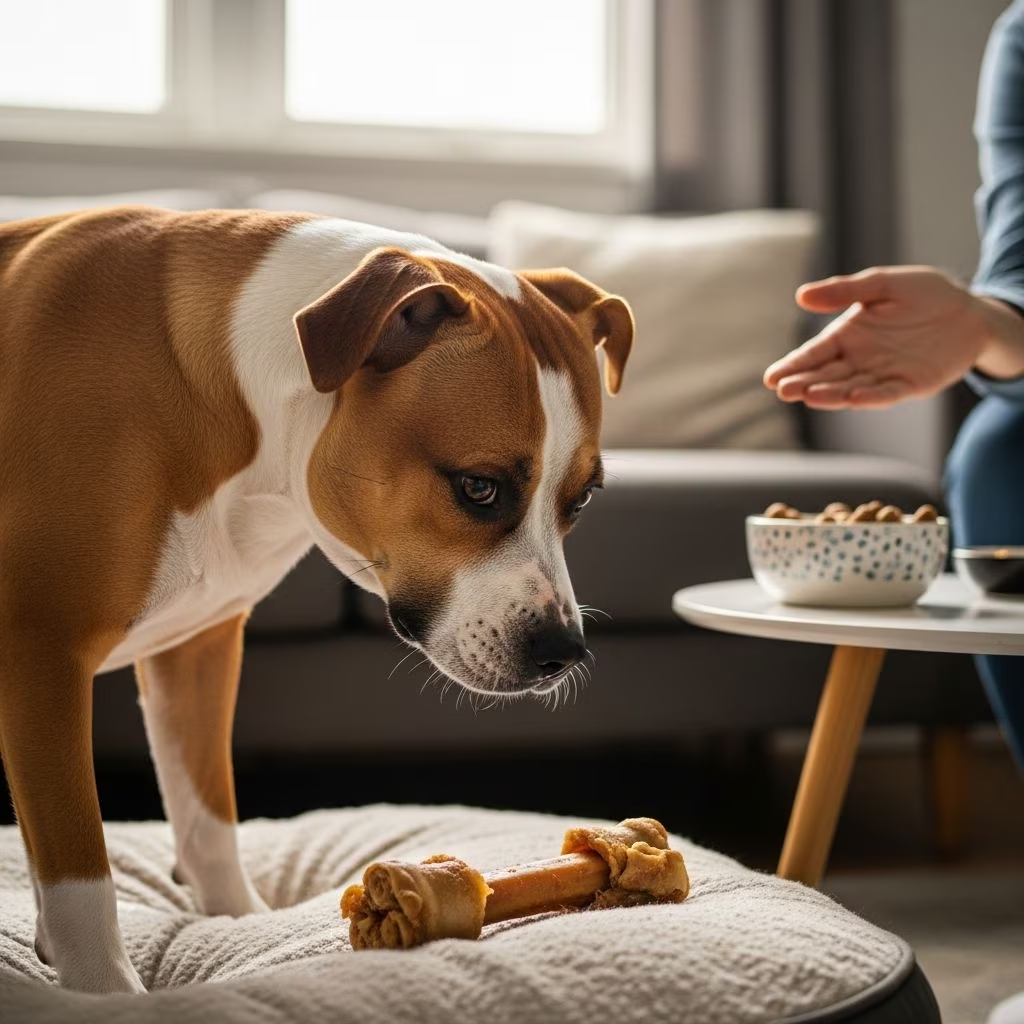
Resource guarding is a natural canine behavior where dogs protect items they value, such as food, toys, or spaces, from perceived threats. This comprehensive guide delves into its origins, manifestations, and humane management strategies to foster trust and safety between dogs and their owners.
The Instinctive Roots of Possessiveness
Dogs evolved in environments where resources were scarce, embedding a survival-driven impulse to safeguard essentials like meals and safe havens. This primal response ensures access to necessities amid competition from pack mates or wild threats. Unlike human notions of ownership, a dog’s sense of value stems from biological imperatives—food sustains life, toys mimic prey, and resting spots provide security.
Genetic predispositions play a key role; certain breeds, particularly those bred for hunting or herding like retrievers or spaniels, exhibit heightened guarding tendencies due to selective breeding. However, any dog can display this trait, underscoring its universality across breeds and backgrounds.
Environmental and Experiential Triggers
Beyond instincts, early life conditions profoundly influence guarding. Puppies from confined, competitive settings like puppy mills often develop intense protectiveness, associating limited space with rivalry over items. Conversely, strays with abundant space but scarce food rarely guard once rehomed with ample provisions, highlighting space constraints over mere scarcity.
Past traumas, including neglect or abuse, amplify anxiety, turning resources into anchors of stability. Dogs lacking socialization during critical puppy windows—typically 3-12 weeks—struggle with novel stimuli, perceiving approaches as invasions. Household dynamics exacerbate this; introducing a new dog to a guarding resident can spark generational patterns, where the novice learns defensiveness through observation or direct conflict.
Human Influences on Canine Defensiveness
Well-intentioned but misguided human actions often intensify guarding. Owners who routinely snatch bowls or toys to ‘test’ dominance inadvertently condition dogs to view human proximity as a prelude to loss, prompting preemptive aggression. Harsh corrections, like punishment for growling, suppress warnings but escalate bites, as fearful dogs skip cues.
Stressors—visitors, fireworks, or unmet needs like exercise deficits—heighten reactivity. A hungry or fatigued dog prioritizes bolting food over savoring it, mistaking interruptions for theft. Routine disruptions erode confidence, making controlled environments vital for stability.
Decoding Warning Signals and Escalation
Recognizing subtle precursors prevents bites. Initial signs include body stiffening, side-eye glances, or rapid consumption upon sensing approach. More overt displays involve hovering over items, low growls, or body-blocking access.
| Low-Level Signals | Mid-Level Warnings | High-Risk Aggression |
|---|---|---|
| Stiff posture | Growling | Snapping or biting |
| Side-eye stare | Lip curling | Chasing intruders |
| Speed eating | Body blocking | Full lunge |
These progress based on threat proximity and value; touching the dog spikes intensity. Females guarding puppies or high-drive individuals show amplified responses.
Prevention Strategies for Puppies and New Dogs
Proactive measures in young dogs build tolerance. Hand-feeding meals associates human presence with abundance, gradually introducing gentle touches near the bowl. Trade-up games—offering superior treats for yielding toys—teach voluntary surrender without force.
- Start sessions in low-distraction areas with high-value items.
- Progress slowly, rewarding calm relinquishment.
- Avoid competition; feed separately in multi-dog homes.
Socialize broadly, exposing pups to varied scenarios to normalize sharing cues.
Desensitization and Counter-Conditioning Techniques
For established cases, desensitization reduces reactivity by pairing approaches with positives. Begin at sub-threshold distances where the dog remains relaxed, tossing treats as you near.
- Identify trigger distance (e.g., 6 feet).
- Approach to half that, deliver treats, retreat.
- Incrementally close gap over sessions, never pushing thresholds.
Counter-condition by associating cues (your movement) with rewards, reshaping emotional responses from fear to anticipation. Consistency across household members prevents confusion.
Practical Management Tools and Routines
Environmental tweaks minimize confrontations. Use puzzle feeders to prolong meals, reducing gulp-and-guard cycles. Crate training offers private eating zones, especially beneficial for anxious dogs.
In multi-pet homes, stagger mealtimes and supervise interactions. Tether training—securing the dog during high-value moments—allows safe observation without invasion.
Navigating Multi-Dog Households
Resource conflicts surge with multiple dogs. Feed in isolated areas, removing items post-meal. Neutering may temper some drives but doesn’t eliminate guarding; behavior mod remains essential. Monitor play, intervening early on possessive standoffs.
Red Flags and Professional Intervention
Seek certified trainers (IAABC or CPDT) if bites occur, progress stalls, or children/pets are at risk. Avoid dominance-based ‘solutions’ like flooding, which heighten fear. Vets rule out pain (e.g., dental issues mimicking food guards).
Common Myths Debunked
- Myth: Guarding proves dominance. Fact: It’s fear-driven protection, not hierarchy assertion.
- Myth: Taking items away cures it. Fact: This reinforces defensiveness.
- Myth: Only strays guard. Fact: Securely raised dogs do too, per genetics/stress.
FAQs
Is resource guarding dangerous?
Untreated, it risks bites, but management prevents escalation. Prioritize safety by never challenging guards.
Can puppies outgrow it?
Some do with guidance; ignoring invites worsening. Early intervention yields best outcomes.
How long until improvement?
Weeks to months, depending on severity. Patience and consistency key.
Does neutering help?
It may reduce some triggers but isn’t a standalone fix.
What if my dog guards me?
Treat as space guarding; desensitize approaches similarly.
Building Lasting Trust
Managing resource guarding transforms potential conflicts into bonds of security. View growls as communications, not defiance—responding with empathy yields cooperative companions. Regular enrichment, exercise, and positive routines underpin success, ensuring dogs feel provisioned without possession battles.
References
- Understanding the Causes of Dog Resource Guarding Behaviour — Animal Wellbeing Centre. 2023. https://www.animalwellbeingcentre.com/blogs/underlying-causes-of-dog-resource-guarding-behaviour
- Why is My Dog Resource Guarding? — Beyond the Dog Training. 2024. https://beyondthedogtraining.com/dog-training/why-is-my-dog-resource-guarding/
- Resource Guarding: Why It Happens and How to Stop It — Peach on a Leash. 2023. https://peachonaleash.com/resource-guarding-why-it-happens-and-how-to-stop/
- Resource Guarding in Dogs: What to Do and NOT Do — Preventive Vet. 2025-01-15. https://www.preventivevet.com/dogs/resource-guarding-in-dogs
- Resource Guarding in Dogs — PetMD. 2024-06-10. https://www.petmd.com/dog/behavior/resource-guarding-dogs
- Resource Guarding in Dogs — Humane World for Animals. 2023. https://www.humaneworld.org/en/resources/resource-guarding-dogs
- Resource Guarding in Dogs — American Kennel Club. 2024. https://www.akc.org/expert-advice/training/resource-guarding-in-dogs/



