

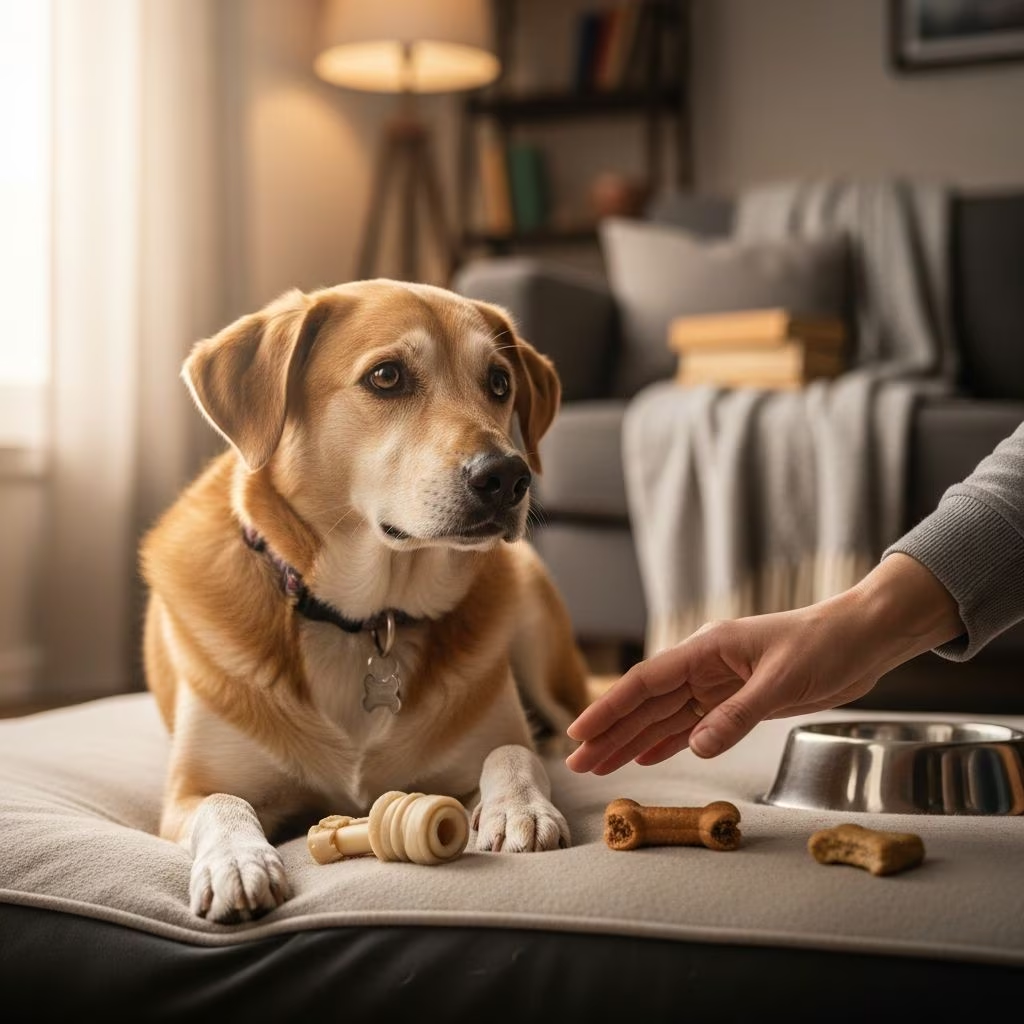
Resource guarding occurs when dogs display defensive or aggressive behaviors to protect items they value, such as food, toys, or personal space, stemming from natural survival instincts amplified by fear or past experiences. This common issue affects many households, but with proper understanding and techniques, owners can minimize risks and improve their dog’s quality of life.
Understanding the Instinct Behind Resource Guarding
Dogs evolved to guard resources as a survival mechanism in the wild, where food and safe spots were scarce, making this behavior innate rather than a sign of dominance. In modern homes, it manifests when a dog perceives a threat—real or imagined—to something precious, triggering responses like growling, snapping, or biting.
Not all dogs guard resources equally; factors like genetics, breed predispositions, and early life experiences play roles in intensity. For instance, dogs from competitive litters or resource-poor environments may develop stronger tendencies. Recognizing this as a fear-based response, not malice, is key to effective management.
Common Triggers and What Dogs Guard
Dogs guard a variety of items beyond just food. High-value targets include:
- Food and treats: Bowls, bones, or stolen human snacks, due to their survival importance.
- Toys and chews: Favorite playthings that provide entertainment and comfort.
- Personal space: Beds, crates, couches, or even proximity to owners.
- Other items: Stolen household goods like socks or tissues.
Triggers often involve approach by people, children, or other pets, especially during mealtimes or when the dog is relaxed with an item. Stressors like unpredictable routines or visitors can heighten reactions.
Root Causes Driving Guarding Behaviors
Several underlying factors contribute to resource guarding:
| Cause | Description | Examples |
|---|---|---|
| Fear and Anxiety | Dogs guard out of insecurity, viewing others as threats. | Poor socialization, new environments, or genetic predisposition. |
| Past Experiences | History of resource scarcity or punishment teaches defensive guarding. | Rescue dogs from neglectful homes or competitive litters. |
| Lack of Routine | Unpredictable schedules increase anxiety and perceived threats. | Inconsistent feeding or play times. |
| Medical Factors | Pain or hunger exacerbates irritability and guarding. | Arthritis, dental issues, or nutritional deficiencies. |
| Learned Success | Past growls that successfully deterred theft reinforce the behavior. | Owners backing away after warnings. |
Addressing these requires a holistic approach, starting with a vet check to rule out health issues.
The Serious Risks of Unmanaged Guarding
Resource guarding poses dangers to everyone involved. For dogs, chronic stress leads to health problems like gastrointestinal disorders, hair loss, and weakened immunity. It strains bonds with owners and other pets, fostering isolation and worsening behaviors.
For humans, especially families with children, bites during interventions create safety hazards and household tension. Routine tasks like medication or grooming become challenging, limiting care. In multi-pet homes, it sparks fights, escalating to injuries. Early intervention prevents escalation.
Prevention Strategies for Puppies and New Dogs
Proactive steps curb guarding before it starts:
- Hand-feed meals to associate human approach with positivity.
- Practice \”trade-ups\” with higher-value items to build trust.
- Ensure ample resources to reduce competition.
- Socialize early with calm exposures to people and dogs.
- Maintain consistent routines for meals and play.
These build confidence, making dogs less likely to view owners as threats.
Safe Management Techniques for Existing Guarding
Never punish guarding, as it heightens fear and aggression. Instead, use desensitization and counter-conditioning:
- Observe and Map: Note triggers, distance of reaction, and guarded items without intervening.
- Desensitize Gradually: Approach from farther than the reaction threshold, tossing treats to create positive links.
- Counter-Condition: Pair approaches with rewards until the dog remains relaxed.
- Manage Environment: Feed in crates, separate during high-value chews, and supervise interactions.
- Train “Drop It”: Use trades, not force, rewarding compliance.
Progress slowly; if bites occur, prioritize safety with muzzles during training.
Advanced Training Protocols
For severe cases, structured protocols yield results:
- Threshold Training: Start at sub-threshold distances, advancing as tolerance grows.
- Relaxation Exercises: Teach mat stays during meals to promote calm.
- Enrichment Boost: Increase exercise and puzzles to lower overall stress.
Consistency across family members prevents mixed signals. Track progress in a journal for adjustments.
When to Consult a Professional
DIY works for mild cases, but seek certified trainers (CPDT or IAABC) or veterinary behaviorists (DACVB) for:
- History of bites.
- Multiple triggers.
- No improvement after weeks.
Professionals tailor plans, often using force-free methods. Avoid dominance-based trainers, as they worsen fear.
Real-Life Success Stories and Tips
Owners report success with patience: one reduced food guarding by hand-feeding over months. Another managed toy guarding via consistent trades. Key tips include never turning guarding into a game and celebrating small wins.
Frequently Asked Questions (FAQs)
Can resource guarding be cured completely?
No, but it can be reliably managed to safe levels with training.
Is resource guarding dominant behavior?
No, it’s fear-driven, not about pack hierarchy.
What if my dog guards me from others?
This may be leash reactivity; assess with a pro.
How long does training take?
Weeks to months, depending on severity.
Should I rehome a guarding dog?
Rarely needed; management and training usually suffice.
By viewing resource guarding through empathy and science, owners foster secure, joyful canine companions. Implement changes gradually for lasting harmony.
References
- Resource Guarding in Dogs — PetMD. 2023. https://www.petmd.com/dog/behavior/resource-guarding-dogs
- Why Resource Guarding in Dogs Is a Problem & What to Do About It — Cincinnati Family Vet. 2024. https://www.cincinnatifamilyvet.com/services/dogs/blog/why-resource-guarding-dogs-problem-what-do-about-it
- Resource Guarding in Dogs: What to Do and NOT Do — Preventive Vet. 2023. https://www.preventivevet.com/dogs/resource-guarding-in-dogs
- Resource Guarding in Dogs: Causes and Solutions — Purina. 2024. https://www.purina.com/articles/dog/behavior/training/resource-guarding-in-dogs
- Understanding the Causes of Dog Resource Guarding Behaviour — Animal Wellbeing Centre. 2023. https://www.animalwellbeingcentre.com/blogs/underlying-causes-of-dog-resource-guarding-behaviour
- Resource Guarding in Dogs — American Kennel Club. 2024. https://www.akc.org/expert-advice/training/resource-guarding-in-dogs/



