

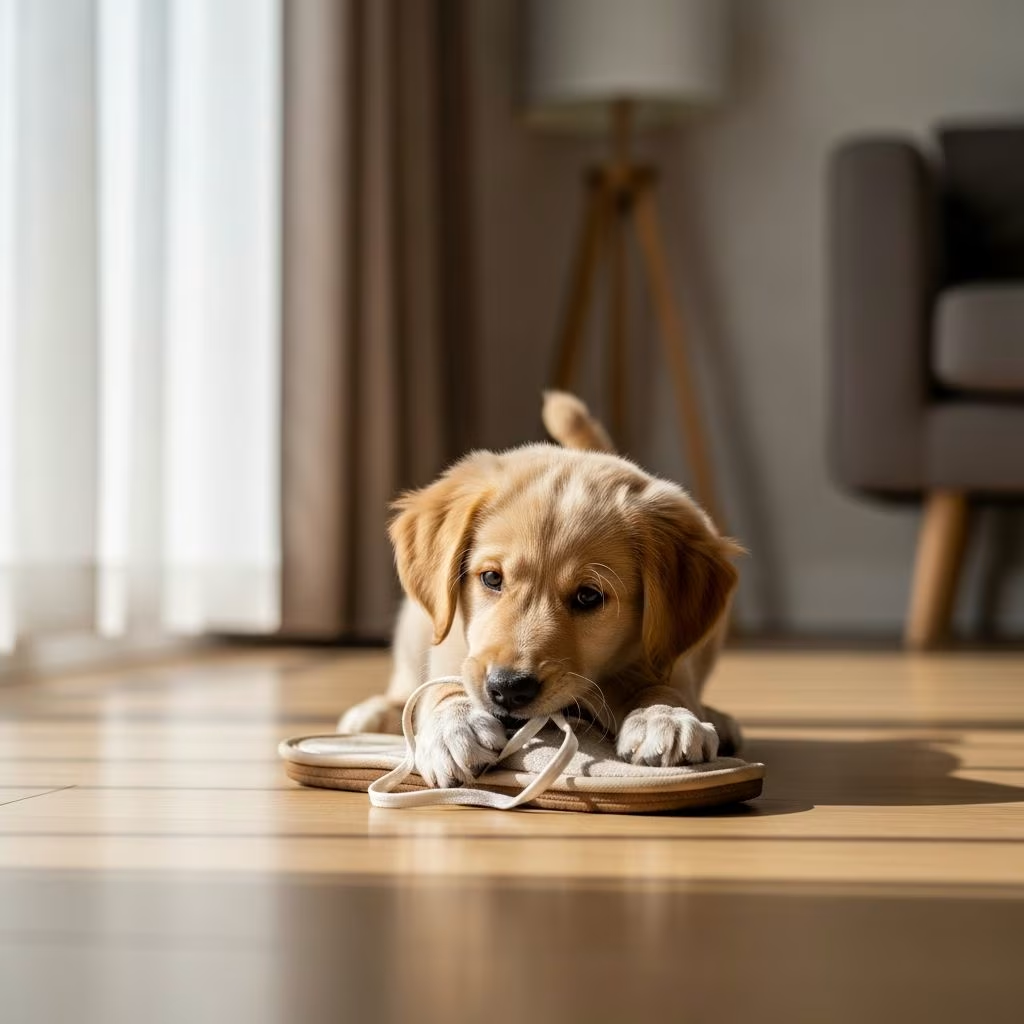
Puppies bring immense joy to households, but their boundless energy often leads to challenging behaviors that test new owners’ patience. From destructive chewing to incessant barking, these actions stem from natural developmental stages rather than deliberate defiance. Addressing them requires understanding their root causes and applying consistent, reward-based methods. This guide outlines key approaches to transform chaotic puppy antics into well-mannered companionship, drawing on established training principles.
Understanding the Roots of Puppy Challenges
Puppy misbehaviors typically arise during teething phases, exploration periods, or due to unmet needs like exercise and mental engagement. Teething puppies, for instance, chew to alleviate discomfort, while boredom prompts digging or vocalizing. Recognizing these as normal helps shift focus from punishment to prevention and redirection.
Establishing a predictable daily schedule forms the foundation. Feed at set times, incorporate frequent potty breaks after meals, play, and naps, and enforce quiet settle periods. This structure reduces anxiety and prevents many issues before they escalate.
Combating Destructive Chewing and Nipping
Chewing satisfies puppies’ instinctual urges to explore and soothe sore gums. Provide a variety of age-appropriate toys scattered throughout the home, rotating them to maintain novelty. Opt for durable options like rubber Kongs, nylon bones, and rope tugs suited to their size.
- Supervise closely and redirect mouths from hands, clothing, or furniture to toys immediately upon noticing the behavior.
- Praise lavishly when they engage with acceptable items to reinforce the choice.
- Restrict access to tempting areas using baby gates until reliable habits form.
For nipping during play, freeze motion and withdraw attention for a few seconds, resuming only when teeth stay gentle. This teaches that rough contact ends fun, promoting bite inhibition essential for safety. Consistency across family members prevents mixed signals.
Mastering House Training Fundamentals
Accidents indoors signal incomplete training rather than spite. Success hinges on frequent outings—every 1-2 hours for young pups, plus after key events—and immediate rewards for outdoor elimination. Enzyme-based cleaners eliminate scent markers that invite repeats.
Crate training accelerates progress by leveraging puppies’ aversion to soiling their den. Select a crate allowing comfortable standing and turning, using it for short absences and nighttime. Combine with a potty log to identify patterns and adjust schedules accordingly.
| Age Range | Ideal Potty Break Frequency | Crate Duration Max |
|---|---|---|
| 8-12 weeks | Every 1-2 hours | 2-3 hours |
| 3-6 months | Every 2-4 hours | 4-6 hours |
| 6+ months | Every 4-6 hours | 8 hours overnight |
Patience yields results; most puppies achieve reliability by 4-6 months with diligent effort.
Reducing Excessive Barking and Hyperactivity
Barking serves as communication—for alerts, excitement, or frustration. Differentiate triggers: close blinds for passersby, boost exercise for boredom-induced noise, and ignore attention-seeking yaps while rewarding silence. Teach a “quiet” cue by allowing 2-3 barks, then cueing calm with treats, gradually fading support.
Hyperactivity demands outlets for physical and cognitive energy. Daily walks, fetch sessions, and puzzle toys tire minds more effectively than exercise alone. Enroll in puppy classes for socialization and structured play, channeling zoomies productively.
- Incorporate scent games: hide treats for sniffing hunts.
- Use lick mats with peanut butter for focused calming.
- Practice “settle” on a mat with rewards for relaxation.
Building Independence and Preventing Separation Woes
Puppies prone to distress when alone benefit from gradual desensitization. Begin with brief exits—seconds to minutes—while providing stuffed toys. Develop neutral departure cues like picking up keys without leaving to decouple anxiety.
Hand-feeding meals builds trust, trading guarded items for higher-value treats to counter resource protection. Teach “drop it” by presenting toys, rewarding release, and returning them playfully.
Leash Manners and Jumping Control
Pulling on walks stems from eagerness; halt movement until slack returns, rewarding heel position with forward progress. Allow sniffing breaks as reinforcement for loose-leash walking.
Jumping greetings extinguish by turning away, folding arms, and only engaging when paws stay grounded. Practice with visitors using treats below knee level to encourage four-on-floor.
Daily Enrichment and Training Framework
Core training pillars—clear commands, precise rewards, brief sessions—underpin success. Target one skill weekly: break into micro-steps, mark correctness with a clicker or “yes,” and practice amid low distractions before advancing.
Enrichment prevents issues proactively: puzzle feeders, obedience drills, and nosework sessions daily. Track progress in a journal to celebrate milestones and tweak approaches.
Frequently Asked Questions
What if treats lose effectiveness?
Fade food lures by mixing with praise or play, using variable schedules to sustain motivation without dependency.
How much exercise suffices daily?
Young puppies need 20-30 minutes structured activity plus free play, scaling with age and breed energy levels.
When to seek professional help?
Consult certified trainers for aggression, severe anxiety, or stalled progress after 4-6 weeks of home efforts.
Does punishment work?
No— it erodes trust and worsens issues. Positive methods build lasting compliance.
Can older puppies still learn?
Absolutely; consistency yields improvement at any age, though prevention shines earliest.
Long-Term Success Habits
Sustained calm leadership—predictable rules without force—fosters security. Monitor health, as pain mimics misbehavior. Annual vet checks rule out medical contributors. Families uniting on methods amplify results, turning puppies into reliable partners.
Embrace the journey: small daily wins compound into profound bonds. With empathy and structure, most challenges resolve, paving joyful coexistence.
References
- Fix Puppy and Adult Dog Behavior Issues | Practical Training Guide — Founders Green. 2024. https://www.foundersgreen.com/fix-common-puppy-and-adult-dog-behavior-problems/
- 5 Common Behavior Problems And Solutions In Puppies — Pioneer Animal Hospital. 2023-10-15. https://pioneeranimalhospital.com/blog/5-common-behavior-problems-and-solutions-in-puppies/
- ‘Bad’ behaviour: dealing with your dog’s behaviour problems — PDSA. 2025-01-20. https://www.pdsa.org.uk/pet-help-and-advice/looking-after-your-pet/puppies-dogs/bad-behaviour
- 16 Common Dog Behavior Issues and Tips to Fix Them — CareCredit. 2024-05-12. https://www.carecredit.com/well-u/pet-care/dog-behavior-issues/
- How to Curb Unwanted Dog Behaviors — American Kennel Club (AKC). 2025-02-10. https://www.akc.org/expert-advice/training/how-to-curb-unwanted-dog-behaviors/
- Common Dog Behavior Issues — ASPCA. 2024-11-05. https://www.aspca.org/pet-care/dog-care/common-dog-behavior-issues
- Practical Solutions for Common Puppy Behavior Problems — Psychology Today. 2015-02-14. https://www.psychologytoday.com/us/blog/decoding-your-pet/201502/practical-solutions-common-puppy-behavior-problems



