
Managing Physical Injuries in Companion Birds
Expert guidance on stabilizing and treating traumatized pet birds
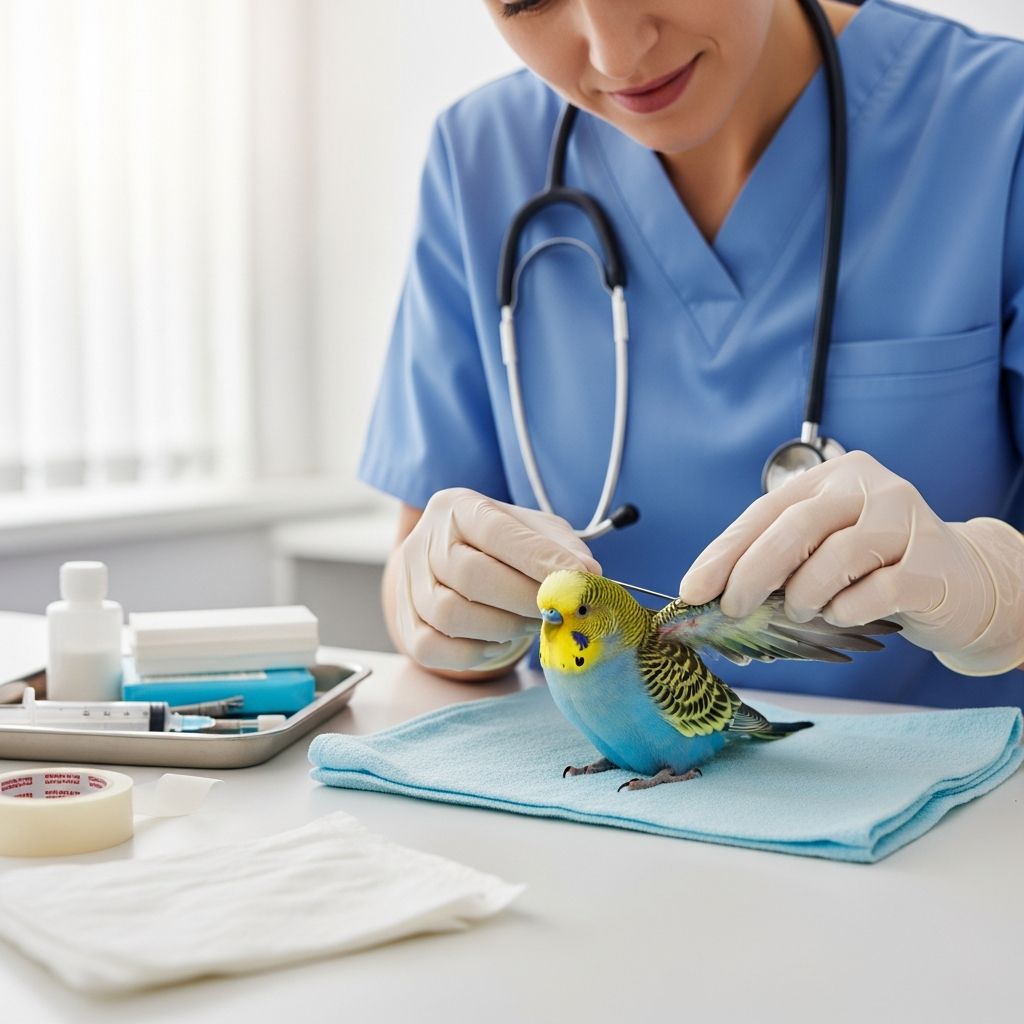
When a pet bird sustains a serious injury, the immediate response from the owner and veterinary team can make the difference between recovery and fatal complications. Birds are physiologically fragile creatures whose bodies respond dramatically to trauma, stress, and blood loss. Understanding the principles of emergency care for injured birds enables pet owners to recognize critical situations and work effectively with veterinary professionals to maximize survival chances.
The Critical First Hours: Why Immediate Stabilization Matters
Birds that have experienced traumatic injury present with multiple physiological challenges that require immediate intervention. Unlike mammals, avian patients often respond to trauma by entering a state of severe stress accompanied by hypothermia and potential hemorrhage. The body’s compensatory mechanisms are quickly overwhelmed, making the first few hours following injury absolutely crucial.
The primary goal during initial treatment should always be preservation of life rather than immediate correction of visible injuries. A bird that has been struggling against a caught leg band for hours, for instance, faces far greater danger from stress-related organ failure than from the underlying fracture itself. This principle guides all clinical decision-making during the acute phase.
Immediate Environmental Management and Observation
Upon arrival at a veterinary facility, an injured bird must be placed in a warm, oxygen-enriched incubator maintained at approximately 85-90°F. This controlled environment serves multiple purposes: it counteracts the hypothermia common in traumatized birds, provides supplemental oxygen to support cellular function, and reduces the stress of being handled by unfamiliar personnel in a strange environment.
Before any hands-on examination occurs, the bird should be observed from a distance for several key indicators:
- Respiratory patterns including tail bobbing or open-mouth breathing
- Presence of active bleeding or hemorrhage
- Ability to maintain proper perching posture
- Symmetrical use of both legs
- Presence or absence of wing drooping
- Overall responsiveness and level of consciousness
This preliminary assessment informs the veterinary team about the severity of the bird’s condition and helps determine whether additional handling can be safely performed or should be delayed until the patient achieves greater stability.
Developing a Strategic Approach to Examination and Treatment
Once preliminary observations are complete, the attending veterinarian must make a critical decision: whether the bird can tolerate a thorough physical examination and diagnostic testing, or whether more limited assessment with supportive care should be the immediate priority. This decision depends on the bird’s apparent stability, respiratory function, and level of consciousness.
Before handling begins, the entire treatment and diagnostic plan must be established and all necessary equipment must be assembled. This prevents repeated and stressful handling while the clinician searches for supplies or decides on the next step. If at any point during examination or treatment the bird shows signs of stress or weakness, it must be immediately returned to the incubator to recover before proceeding.
Breaking examination and treatment into multiple steps with recovery periods in between may extend the total care time, but this approach significantly improves outcomes by preventing acute decompensation. A stable bird that has recovered between procedures has far better chances than one pushed through a complete examination while in shock.
Fluid Therapy and Managing Hemorrhage
Fluid administration forms the cornerstone of supportive care for traumatized birds. Maintenance fluids in healthy birds are estimated at 50-100 mL per kilogram of body weight per day. However, injured birds with evidence of dehydration or blood loss require more aggressive fluid replacement protocols.
For moderately dehydrated birds, half of the total daily maintenance fluid requirement can be administered subcutaneously and repeated every 6-8 hours until hydration improves. This route avoids the stress of restraint required for intravenous catheter placement in the early stabilization phase.
Birds with significant blood loss, however, require either intravenous or intraosseous catheterization to deliver fluids rapidly and effectively. These routes allow administration of specialized fluids such as hetastarch, which helps restore colloid osmotic pressure and improves oxygen-carrying capacity. In severe cases with substantial hemorrhage, blood transfusion may be necessary to restore circulating blood volume and oxygen delivery to vital organs.
Analgesia, Anti-inflammatory Support, and Infection Prevention
Pain management in avian patients serves not merely to relieve suffering but also to reduce the physiological stress response that exacerbates trauma. Analgesics, anti-inflammatory medications, and antimicrobial agents form an essential triad of emergency treatments.
Birds experiencing both pain and stress often benefit from sedation during diagnostic procedures and treatment. Midazolam, a benzodiazepine, can be administered intramuscularly at doses of 0.5-1 mg/kg or intranasally at 1-2 mg/kg to reduce anxiety and facilitate handling. When combined with butorphanol, an opioid analgesic administered at 0.5-2 mg/kg either intramuscularly or intranasally, this combination provides both pain relief and additional sedation without respiratory depression.
Antimicrobial therapy becomes particularly critical in birds with penetrating wounds or bite injuries. Predator bites and similar penetrating trauma introduce anaerobic bacteria deep into tissue planes, requiring antimicrobial coverage against both aerobic and anaerobic organisms to prevent life-threatening infection.
Timing of Diagnostic Testing and Definitive Treatment
One of the most important principles in avian trauma medicine involves the appropriate timing of diagnostic imaging and surgical intervention. Birds presenting with trauma should not undergo extensive diagnostic testing or surgery until they have achieved hemodynamic stability, which typically requires 12-48 hours of supportive care.
During this stabilization period, physical examination findings should guide which diagnostic tests are truly necessary. Radiographic imaging to detect fractures or joint luxations can wait until the bird’s condition permits safe positioning and handling. Attempting comprehensive diagnostics on an unstable bird may trigger fatal complications.
Surgical repair of traumatized tissues should similarly be delayed until the bird demonstrates stable vital functions and appropriate recovery from the initial injury. However, certain injuries require prompt surgical attention: severed tendons, major nerves, or ligaments should be surgically repaired as soon as possible, as tissue contraction following injury can make later repair more challenging.
Wound Management and Healing Strategies
The approach to wound management depends on the timing of presentation and the bird’s overall stability. For wounds presented within 6-8 hours in a stabilized patient, primary closure is appropriate. For older wounds or those in birds too unstable for surgery, conservative management with appropriate dressing and bandaging allows healing through secondary intention.
Most avian wounds achieve skin closure within 10-14 days of injury. Healthy granulation tissue formation indicates appropriate healing and provides the foundation for either surgical closure or continued healing by second intention. Topical dressings should be applied to open, granulating wounds to enhance the healing process and prevent infection.
For penetrating wounds, minimal debridement is preferable during the acute stabilization phase. Once the bird achieves stability, more thorough surgical wound debridement and cleansing can be performed if indicated. Coelomic penetration requires surgical exploration to assess internal organ damage and determine appropriate repair strategies.
Special Considerations for Common Injury Types
Different injury patterns present unique management challenges:
- Lacerations and abrasions commonly result from enclosure wires, inappropriate toys, flight collisions, or interactions with other birds. These require careful cleaning, assessment for underlying tissue damage, and appropriate bandaging.
- Feather and blood feather injuries can cause significant hemorrhage, particularly when flight or tail feathers are affected. Blood feather removal and appropriate pressure dressing are often necessary.
- Leg band entrapment exemplifies injuries where stress from prolonged struggling poses greater danger than the underlying fracture. Prompt band removal, wound management, and pain control are essential.
- Burn injuries from fire, chemicals, or hot liquids require immediate flushing with cool (not cold) water for 10-15 minutes to stop ongoing thermal damage.
- Overheating emergencies require rapid cooling through alcohol sprays to feathers, cool water immersion of feet, or careful administration of water drops to the vent.
Creating an Optimal Recovery Environment
Beyond emergency stabilization and acute treatment, the recovery environment profoundly influences outcomes. Birds should be maintained in warm, quiet surroundings with minimal handling and visual stimulation. Access to food and water should be carefully managed, with assisted feeding or supplemental nutrition provided when the bird cannot eat independently.
Monitoring for shock and infection during the recovery period remains critical. Signs of deterioration require immediate veterinary reassessment and adjustment of treatment protocols. Regular assessment of wound healing, pain levels, and overall clinical status guides the transition from intensive care to convalescence.
Frequently Asked Questions About Avian Trauma Care
How can I tell if my bird is in shock?
Signs of shock in birds include lethargy, unresponsiveness, huddling in an abnormal position, and remaining on the bottom of the cage rather than perching. These signs indicate an emergency requiring immediate veterinary attention.
What should I do if my bird is actively bleeding?
Apply gentle but firm pressure with clean gauze or cloth to the bleeding area. Maintain pressure for several minutes while transporting the bird to a veterinary facility. Avoid applying tourniquets unless bleeding is from an extremity that could be sacrificed.
Can diagnostic testing wait if my bird seems stable?
Yes. In stable birds, diagnostic testing can typically be delayed 12-48 hours to allow further stabilization and recovery from the acute stress response. This delay actually improves outcomes by reducing stress during the acute phase.
How long does recovery from avian trauma typically take?
Recovery timelines vary widely depending on injury severity. Superficial wounds may heal within 10-14 days, while fractures, tendon injuries, and complex trauma may require weeks to months of gradual recovery and rehabilitation.
What role does nutrition play in bird recovery?
Proper nutrition is essential for tissue repair and recovery of immune function. Injured birds may require assisted feeding or supplemental nutrition until they resume normal eating, and dietary adjustments may support healing.
Conclusion: Prioritizing Survival in the Acute Phase
The management of traumatic injury in companion birds requires a fundamental shift in thinking from immediate repair of visible damage to prioritizing physiological stabilization and survival. By maintaining birds in warm, oxygen-enriched environments, providing appropriate fluid therapy and pain management, and delaying extensive diagnostics and surgery until stability is achieved, veterinarians and pet owners dramatically improve outcomes. The stress-related complications of trauma often pose greater danger than the injuries themselves, making the first 12-48 hours of conservative, supportive care the most critical phase of treatment.
References
- Merck Veterinary Manual: Traumatic Injury of Pet Birds — Merck & Co., Inc. 2026. https://www.merckvetmanual.com/exotic-and-laboratory-animals/pet-birds/traumatic-injury-of-pet-birds
- Stabilizing the Avian Trauma Patient — Auburn University College of Veterinary Medicine, Graham, J. 2019. https://www.vetmed.auburn.edu/wp-content/uploads/2019/10/4_Stabilizing-the-Avian-Trauma-Patient_GRAHAM.pdf
- Trauma Medicine — Harrison’s Bird Foods. 2024. https://www.harrisonsbirdfoods.com/wp-content/uploads/2024/03/417-433-Ch16-Trauma-Medicine.pdf
- Injuries and Accidents of Pet Birds — Paws Universe. 2026. https://pawsuniverse.com/self-care/injuries-and-accidents-of-pet-birds/
- Common Avian Emergencies — Delmar Exotics Animal Hospital. 2026. https://www.delmar-exotics.com/blog/1167305-common-avian-emergencies
Similar Articles








Read full bio of medha deb


