

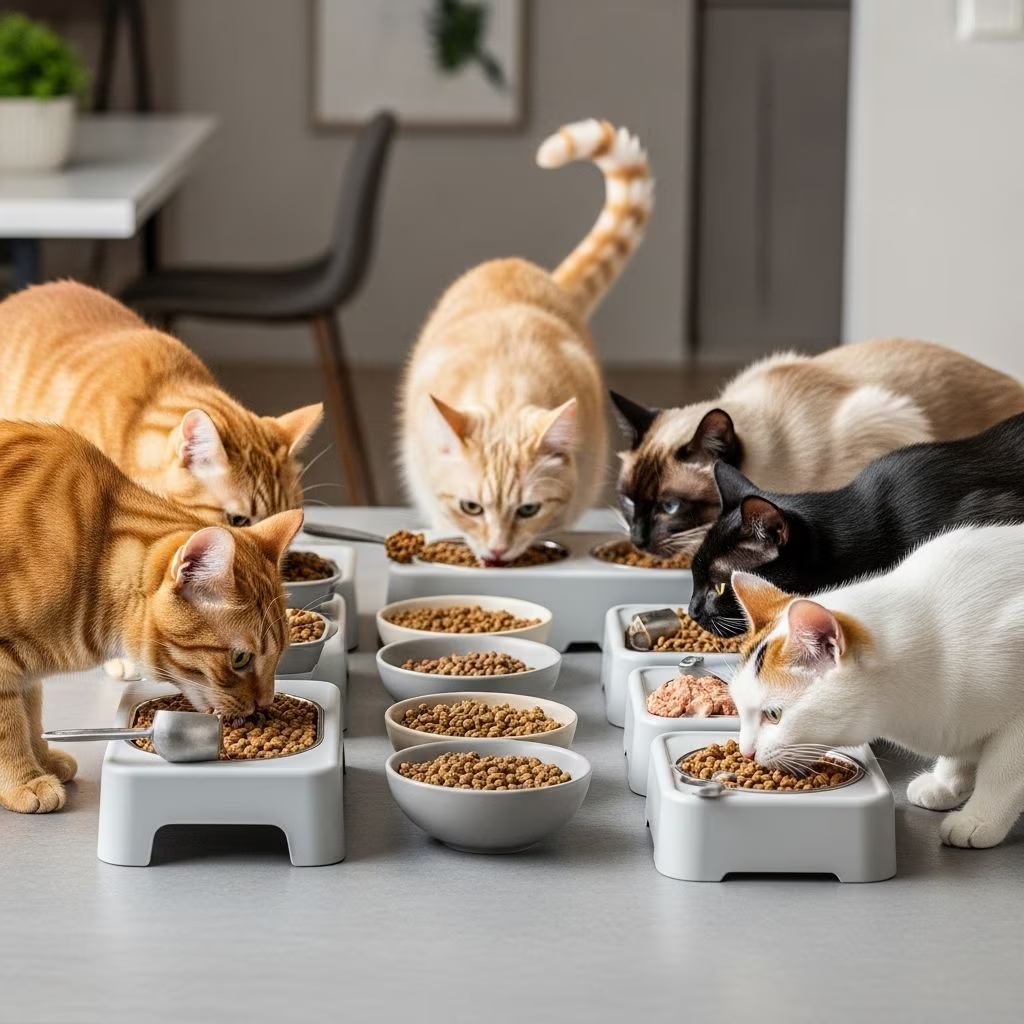
Households with multiple feline companions present unique feeding challenges that differ significantly from caring for a single cat. When you bring two or more cats into the same living space, mealtime dynamics shift considerably. Cats that might be perfectly content eaters in isolation can become territorial, competitive, or selective when sharing a living environment with other felines. Understanding how to navigate these complexities ensures that each cat receives adequate nutrition while maintaining household harmony.
Why Individual Feeding Approaches Matter
The decision to feed cats separately rather than in a communal arrangement stems from several practical and health-related considerations. When multiple cats eat from the same area, determining whether each animal receives appropriate nutrition becomes nearly impossible. A dominant cat may consume more than needed while a timid companion goes hungry. Additionally, behavioral issues around food can escalate quickly in multi-cat environments, creating stress that affects overall wellbeing.
Cats at different life stages require distinct nutritional profiles. A kitten needs significantly more calories and protein per pound of body weight than an adult cat to support growth and development. Senior cats may have different dietary requirements based on age-related changes in metabolism and digestive efficiency. When cats of varying ages share a home, feeding them the same diet compromises nutritional adequacy for multiple animals.
Medical conditions also necessitate dietary separation. A veterinarian may prescribe therapeutic food for one cat with kidney disease, diabetes, or gastrointestinal sensitivities while other household cats eat standard commercial diets. Mixing these foods makes it impossible to ensure the medically compromised cat receives the prescribed nutrition.
Physical Separation Strategies
Creating distinct feeding zones represents one of the most effective approaches to managing multiple-cat nutrition. The fundamental principle involves establishing enough physical distance between feeding stations that cats cannot easily access one another’s food. This can be achieved through simple spatial arrangement or more sophisticated solutions depending on your household layout and cat personalities.
Distance-Based Feeding Arrangements
The simplest approach places each cat’s food and water bowls in different areas of your home. This geographic separation naturally reduces competition and allows cats to eat without feeling threatened by housemates. Consider your cats’ movement patterns and natural preferences when selecting locations. A cat that enjoys elevated spaces might thrive eating from a shelf or cat tree perch, while another prefers ground-level dining.
Visual separation can prove equally important as physical distance. Some cats feel stressed eating within sight of other felines, particularly if dominance hierarchies create tension. Using furniture, closed doors, or architectural features to block sightlines between feeding zones can significantly reduce mealtime anxiety.
Height-Based Solutions
Cats naturally appreciate vertical space, and feeding strategies can leverage this preference. Placing one cat’s meal on a stable shelf, counter, or cat tree while another eats at ground level creates both physical and visual separation. This approach works particularly well when cats have different mobility levels. Older or injured cats that prefer ground-level feeding can avoid climbing while more agile companions access elevated stations.
Room-Based Separation
For households with serious mealtime conflicts, feeding cats in completely separate rooms offers the ultimate solution. Dedicated feeding stations in bathrooms, bedrooms, or other low-traffic areas allow cats to eat undisturbed. When you’re home during feeding times, simply open and close doors to control which cats access which rooms. For times when you’re away, electronic pet doors can restrict access based on microchip identification, ensuring only the intended cat enters specific areas.
Timing-Based Feeding Strategies
Creating separation through scheduled feeding offers an alternative or supplementary approach to physical space management. Rather than having all cats eat simultaneously, staggered feeding times allow you to supervise individual animals and ensure proper consumption.
Sequential feeding involves feeding one cat completely while other cats wait or are occupied elsewhere. Once the first cat finishes and leaves the feeding area, you can present food to the next cat. This method works well for households where cats have predictable eating speeds and you can be present at mealtimes. It also provides opportunities for individual attention and care, such as grooming or play sessions, while other cats eat.
For households where timing flexibility matters, electronic feeders programmed to dispense meals at preset intervals offer automation. These devices can release food at specific times, allowing multiple cats to eat at different hours without your physical presence. Microchip-activated feeders represent an advanced option, opening only when a specific cat approaches, preventing access by other household members.
Meal Frequency and Portion Control
Understanding appropriate feeding frequency impacts how you structure multi-cat feeding routines. Cats are biologically designed to consume multiple small meals throughout the day rather than one or two large feedings. In the wild, a cat might capture several small prey animals daily, consuming 50 calories per kilogram of ideal body weight distributed across numerous meals.
Kittens require feeding three times daily until approximately six months of age. Between six months and one year, twice-daily feeding becomes appropriate. Adult cats typically do well on once or twice-daily schedules, though research suggests more frequent small meals better align with feline biology. Senior cats (ten years and older) generally maintain adult feeding frequencies unless veterinary guidance suggests otherwise.
When implementing multiple feeding sessions, portion sizes decrease accordingly. Rather than doubling the volume of food simply because you’re feeding more frequently, divide the daily caloric requirement into appropriate portions for each meal. A cat receiving three meals daily eats approximately one-third of daily calories at each feeding.
Enrichment Through Puzzle Feeders and Interactive Solutions
Beyond addressing behavioral and nutritional concerns, feeding approaches can incorporate enrichment that satisfies cats’ natural hunting instincts. Puzzle feeders and slow-feed bowls serve dual purposes: they slow rapid eaters and provide mental stimulation that addresses anxiety or boredom.
Puzzle feeders work particularly well for cats displaying food-focused behaviors or eating-related anxiety. By requiring cats to work for their food, these devices satisfy the cognitive and physical elements of hunting behavior. Dividing daily food into six or seven small portions and presenting them in puzzle feeders throughout the home mimics natural foraging patterns.
Slow feeders benefit cats that consume food too quickly, which can cause digestive issues or prevent slower-eating companions from accessing adequate nutrition. By increasing the time required to consume a meal, slow feeders allow dominant eaters to finish without immediately moving to other cats’ bowls.
Combination Feeding Approaches
Many multi-cat households benefit from hybrid feeding strategies combining wet and dry food. Combination feeding involves offering canned food as scheduled meals while maintaining free access to dry kibble. This approach provides multiple advantages in multi-cat environments.
Scheduled wet food meals create natural feeding times when you can supervise and ensure appropriate consumption. During these structured meals, you maintain better appetite monitoring compared to purely free-fed situations. The addition of dry food available throughout the day provides cats flexibility while the wet food portion allows you to ensure each cat receives proper nutrition.
Nutritional Considerations Across Household Compositions
Understanding that cats have specific macronutrient preferences helps guide dietary selections in multi-cat homes. Research indicates that when cats can choose their diet composition, they naturally select approximately 52% protein, 36% fat, and 12% carbohydrate. This macronutrient profile should guide your selection of commercial diets for your household.
All cats require a minimum of 5.2 grams of protein per kilogram of ideal body weight daily to maintain neutral nitrogen balance. This requirement holds true regardless of household size or composition, though individual cats may need varying amounts based on age, activity level, and health status. When selecting foods for a multi-cat household where separate diets are necessary, ensure each diet meets these fundamental protein requirements.
Managing Behavioral Eating Issues
Multi-cat households frequently encounter specific behavioral challenges around mealtime. These situations require targeted solutions beyond simple physical separation.
Aggressive or Dominant Eaters
Cats displaying aggressive behavior around food present particular challenges. A dominant cat might actively prevent housemates from accessing food, leading to stress and malnutrition for more timid animals. Separation in different rooms provides the most reliable solution for serious cases, as even the most sophisticated automatic feeders cannot prevent direct harassment.
Picky or Slow Eaters
Conversely, some cats eat very selectively or take extended time with meals. These individuals require feeding arrangements ensuring they can finish without pressure or food theft. Separate feeding locations with adequate time for unhurried eating address this concern.
Implementing Your Multi-Cat Feeding System
Establishing an effective feeding routine requires assessment of your specific household needs. Consider factors including the number of cats, their ages and health status, their personalities and dominance hierarchies, your work schedule and availability during feeding times, and your home layout and physical space availability.
Begin by identifying which cats have special dietary needs and which have behavioral concerns around food. Use this information to determine whether simple spatial separation suffices or whether separate rooms and electronic management tools are necessary. Start with the simplest approach that works for your situation, recognizing that adjustments may become necessary as you observe your cats’ responses.
Consistency matters greatly in multi-cat feeding routines. Cats appreciate predictability, and maintaining regular feeding times reduces stress and behavioral issues. Once you establish a working system, maintaining it consistently reinforces positive habits in your feline household.
Frequently Asked Questions
Can I feed all my cats from the same bowl?
Free-feeding multiple cats from a shared bowl makes it impossible to ensure each receives appropriate nutrition and increases risk of conflicts. Separate bowls and feeding areas are strongly recommended.
How far apart should feeding stations be?
Ideally, place bowls as far apart as practicable in your home. The goal is sufficient distance that cats cannot easily see one another while eating, reducing competitive stress.
What’s the best feeding schedule for multiple cats?
Rather than a single universal schedule, the optimal approach depends on your cats’ ages, health needs, and personalities. Consistency matters most; select a schedule you can maintain reliably.
Do electronic feeders work for multi-cat households?
Electronic feeders, particularly microchip-activated models, can effectively control which cats access specific food portions, making them valuable tools in multi-cat homes.
How do I slow down a fast-eating cat?
Puzzle feeders, slow-feed bowls, and dividing meals into multiple small portions throughout the day all effectively slow rapid eaters.
References
- How to Feed Multiple Cats — Purina US. Accessed February 2026. https://www.purina.com/articles/cat/feeding/guides/how-to-feed-multiple-cats
- How Do I Feed the Multicat Household with Different Nutritional Needs? — Canadian Veterinary Medical Association. November 2021. https://www.canadianveterinarians.net/
- How To Feed Cats Separately in a Multi-Cat Home — PetMD. https://www.petmd.com/cat/nutrition/feeding-multiple-cats
- Meal Feeding vs. Free Feeding Cats: What’s Best? — Hill’s Pet Nutrition Canada. https://www.hillspet.ca/en-ca/cat-care/nutrition-feeding/how-to-feed-a-cat
- Tips for Feeding Multiple Cats — Preventive Vet. https://www.preventivevet.com/cats/tips-for-feeding-multiple-cats
- How Often Should You Feed Your Cat? — Cornell Feline Health Center, Cornell University College of Veterinary Medicine. https://www.vet.cornell.edu/departments/cornell-feline-health-center/health-information/feline-health-topics/how-often-should-you-feed-your-cat



