
Managing Nutrition in Multi-Cat Households
Strategies for feeding multiple cats with different dietary requirements and eating behaviors.
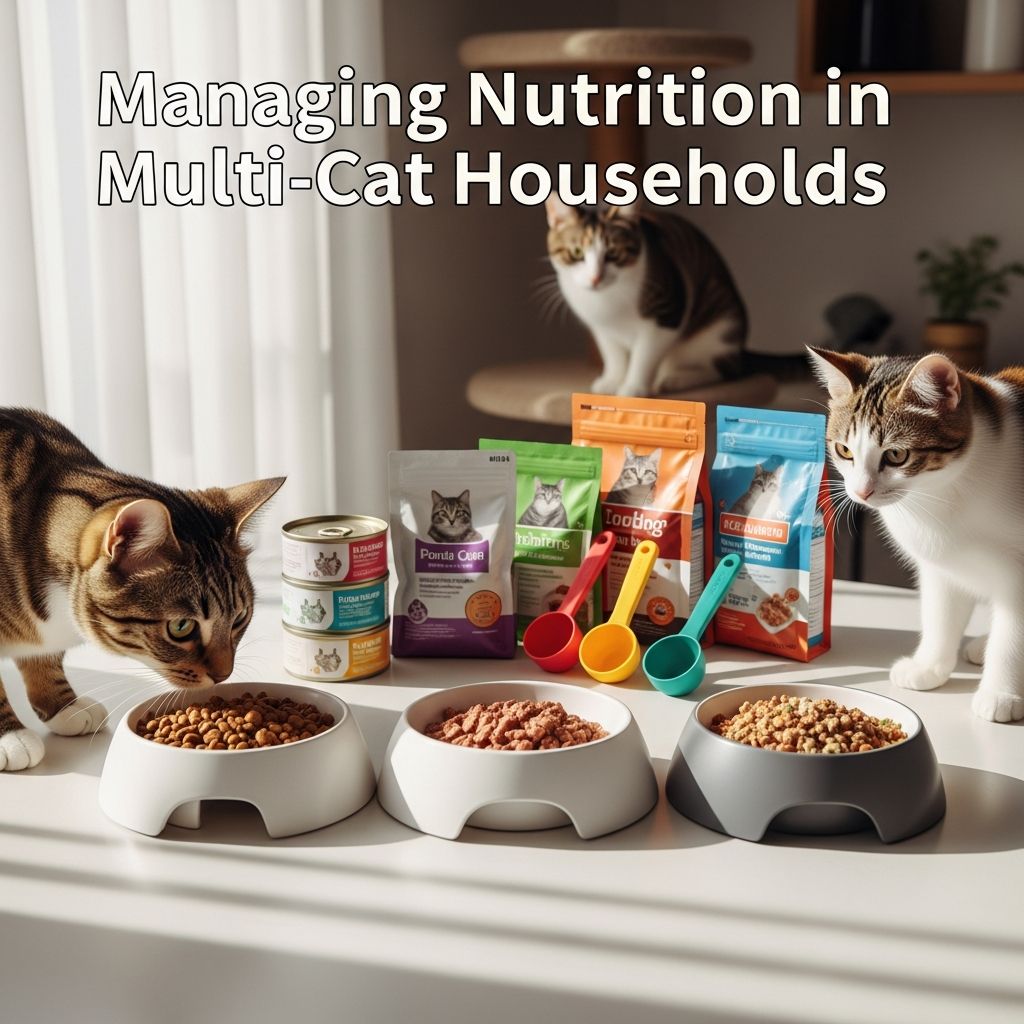
Households with multiple cats face unique nutritional challenges that single-cat owners never encounter. When you share your home with several felines, each with potentially different dietary requirements, activity levels, and eating behaviors, mealtimes can become complicated. The key to success lies in understanding your cats’ individual needs and implementing thoughtful feeding strategies that prevent common problems like food theft, overfeeding, and nutritional deficiencies.
Understanding Your Cats’ Individual Nutritional Profiles
Before establishing feeding protocols, recognize that each cat in your household may require different nutrition based on age, health status, weight, and activity level. A senior cat with kidney disease needs completely different macronutrient ratios than a young, active kitten. Similarly, a cat recovering from illness requires targeted nutrition distinct from a healthy, sedentary companion.
When cats consume foods intended for other household members, they may ingest nutrients inappropriate for their specific conditions. A young cat eating senior formula may miss essential proteins needed for muscle maintenance, while an overweight cat eating kitten food formulated for growth acceleration can gain unhealthy weight rapidly. This nutritional mismatch becomes particularly problematic when one cat has a diagnosed food allergy or medical condition requiring prescription diets.
The foundation of successful multi-cat feeding starts with consulting your veterinarian about each cat’s specific requirements. Your vet can recommend appropriate formulations and portion sizes based on individual health profiles, enabling you to tailor your feeding approach accordingly.
Spatial Separation: Creating Dedicated Eating Territories
One of the most effective strategies involves establishing distinct feeding zones throughout your home. Rather than using a single feeding station, position each cat’s bowls in separate locations at practical distances from one another. This spatial separation reduces visual competition and territorial tension during mealtimes.
Consider your home’s layout and your cats’ natural preferences when selecting feeding spots. A cat who enjoys elevated perches might be more comfortable eating atop a sturdy bookshelf or cat tree, while another cat may prefer ground-level feeding. Using these natural preferences as guides simplifies implementation and increases your cats’ comfort during meals.
For households with significant behavioral challenges, visual barriers become necessary. Placing feeding stations in different rooms, particularly rooms with closeable doors, provides the most complete separation. Bathrooms, spare bedrooms, or laundry rooms work well as dedicated feeding spaces. When feasible, position bowls in low-traffic areas where cats feel secure and undisturbed while eating.
Some households benefit from temporary barriers like baby gates or strategically placed furniture that allows smaller or more mobile cats access to their food while preventing larger or less agile cats from reaching specific feeding areas. This tiered approach accommodates cats with different physical abilities while maintaining nutritional separation.
Vertical Feeding Arrangements for Weight Management
Height-based feeding strategies work particularly well when cats have different weight management needs. Placing lighter cats’ meals on elevated surfaces—countertops, shelves, or cat furniture—while keeping heavier cats’ food at ground level can naturally limit unwanted food sharing.
This approach proves especially valuable when managing a household containing both lean and overweight cats. An overweight cat struggling with joint mobility or balance issues cannot easily access elevated feeding stations, while nimble cats can navigate higher surfaces with minimal effort. This natural segregation prevents overeating without requiring constant monitoring.
Safety remains paramount when using elevated feeding areas. Ensure platforms are stable enough that cats won’t slip, jump, or accidentally knock over bowls. Avoid surfaces where falling food or water could damage household items or create hazardous conditions.
Temporal Feeding Protocols: Strategic Meal Timing
Implementing scheduled feeding times rather than free-feeding throughout the day provides significant advantages for multi-cat households. Scheduled mealtimes allow you to monitor each cat’s intake, ensure adequate nutrition, and prevent the constant grazing competitions that trigger dominant behavior.
Staggered feeding times offer particular benefits. When you feed one cat early in the morning and another in the late afternoon, their hunger cycles naturally offset. The cat fed early becomes satiated as the second cat begins eating, reducing competition impulses and territorial displays.
This temporal separation also creates opportunities for individualized care. While one cat eats, you can engage with others through grooming, play sessions, or interactive activities. These moments strengthen your relationship with each cat while providing necessary mental and physical stimulation during the day.
For cats requiring multiple meals daily—particularly kittens, seniors, or those with specific medical conditions—distribute portions across the day in smaller quantities. Rather than providing large single or double meals, divide daily caloric requirements into three, four, or even six smaller portions. This approach better matches cats’ natural hunting and eating patterns while supporting metabolic health.
Technological Solutions: Microchip and RFID Feeders
Modern automatic feeding technology has revolutionized multi-cat household management. Microchip-enabled and RFID feeders recognize individual cats through collar-mounted chips and open only for authorized felines. This precise access control ensures each cat eats exclusively from designated bowls containing appropriate nutrition.
These intelligent feeders excel when managing cats with drastically different dietary needs. A cat requiring kidney-disease diet can eat exclusively from its designated feeder while other household cats access different formulations simultaneously. The technology eliminates the possibility of accidental dietary mixing.
Advanced models offer additional features including precise portion measurement, meal timing programming, and feeding activity monitoring. Some systems integrate with smartphone applications, allowing remote feeding control and real-time consumption tracking. These capabilities prove invaluable for working pet owners who cannot monitor mealtimes in person.
While intelligent feeders represent a significant investment, they provide unparalleled control over individual nutrition and reduce daily feeding stress considerably. The technology particularly benefits households where specific cats demonstrate aggressive eating behaviors or where nutritional requirements diverge substantially among residents.
Behavioral Modification: Addressing Eating Conflicts
Some cats exhibit problematic eating behaviors including rapid consumption, food stealing, or aggressive territorial displays during mealtimes. These behaviors often indicate underlying anxiety, competition stress, or learned patterns from previous environments.
Food puzzle feeders and slow-feed bowl systems effectively address rapid eating. These tools require cats to work for their food, slowing consumption and extending meal duration. Puzzle feeders particularly benefit households where one cat finishes quickly and then raids other cats’ bowls before they finish eating.
DIY slow-feeding methods work effectively for budget-conscious households. Placing a smaller bowl or cup upside-down inside a larger bowl creates irregular surface variation that naturally slows eating pace. Similarly, scattering measured portions across multiple small saucers throughout designated areas transforms feeding into a mild foraging activity that satisfies hunting instincts.
For cats displaying significant anxiety or aggression during mealtimes, temporary distraction techniques help redirect energy. While one cat eats undisturbed, engage anxious or aggressive cats with interactive play, treat-dispensing toys, or grooming sessions. Rotating which cat receives activity-based distraction ensures equitable attention distribution.
Managing Special Dietary Requirements
Households containing cats with food allergies, medical conditions, or prescription diet requirements face particular complexity. When shared food access becomes impossible, compartmentalization becomes essential.
Partial-day separation addresses these challenges effectively. A cat requiring a specialized renal diet might occupy a secured room during daytime hours with access to appropriate food and water. During evening hours, doors open allowing normal household mixing and socialization. This approach ensures medical nutrition requirements are met while preserving normal social interaction.
Any food left available in shared spaces must remain safe for all household cats. If one cat cannot tolerate specific ingredients, only hypoallergenic formulations can remain accessible throughout the home. Individual specialized meals must be provided separately through secure feeding arrangements.
When introducing new diets to any household member, make transitions gradually across several days. Abrupt dietary changes can trigger gastrointestinal distress and increase anxiety-related eating competition. Gradual transitions also reduce behavioral resistance to new formulations.
Monitoring and Adjustment Strategies
Successful multi-cat feeding requires ongoing observation and willingness to adjust strategies based on outcomes. Monitor each cat’s body condition regularly, checking for unexpected weight gain or loss. Observe eating behaviors, noting which cats eat quickly, slowly, reluctantly, or with apparent anxiety.
Track food consumption patterns over weeks and months. If one cat suddenly stops eating or eats significantly less, consult your veterinarian promptly. Changes in eating behavior often signal underlying health issues requiring professional intervention.
Assess your current feeding strategy monthly. If problems persist despite implementation of recommended techniques, consider alternative approaches. What works initially might require adjustment as cats age, health status changes, or household dynamics evolve.
Document which strategies prove most effective in your specific household. Taking notes on feeding location, timing, equipment, and outcomes helps refine your approach and provides valuable information for veterinary discussions.
Creating a Sustainable Long-Term System
The most effective multi-cat feeding strategy is one you can maintain consistently over months and years. Complex systems requiring constant adjustment or excessive daily effort eventually fail due to caregiver burnout.
Start with straightforward interventions—separate feeding bowls at a distance or different feeding times—before advancing to technology-based or labor-intensive solutions. Many households discover that basic spatial and temporal separation resolves most feeding challenges without requiring sophisticated equipment.
Build flexibility into your system. Life circumstances change; your ability to monitor mealtimes varies with work schedules and family situations. Develop backup strategies for when ideal routines cannot be maintained, ensuring nutritional standards remain consistent even during challenging periods.
Regular veterinary consultation supports long-term success. Annual wellness exams provide opportunities to discuss feeding strategies, verify that each cat maintains appropriate weight and body condition, and adjust recommendations based on aging and health developments.
Frequently Asked Questions
How can I prevent my cats from eating each other’s food without separating them during meals?
Microchip-enabled automatic feeders represent the most reliable technology-based solution. Additionally, feeding on different levels—one cat on the floor, another on an elevated surface—naturally restricts access. Timing separation, where cats eat at different scheduled times rather than simultaneously, also proves effective.
Is it unhealthy for cats to occasionally eat food intended for other household members?
Occasional consumption rarely causes serious problems in healthy cats, but consistent access to inappropriate formulations creates nutritional imbalances and health complications. Cats with allergies, kidney disease, or other medical conditions can suffer significant harm from consuming unsuitable foods.
What should I do if my overweight cat steals food from my slim cat’s bowl?
Implement vertical separation by elevating slim cats’ food beyond the overweight cat’s reach. Alternatively, establish different feeding times, feed in separate rooms, or use automatic feeders. Increasing the overweight cat’s exercise through play sessions also helps manage weight while reducing food-focused anxiety.
How often should I feed multiple cats in one household?
Feed adult cats twice daily at minimum. Kittens and senior cats benefit from three or more smaller meals distributed throughout the day. Your veterinarian can recommend specific frequency based on each cat’s age and health status.
Can I gradually transition my cats to a new feeding system?
Yes, gradual transitions work well. If implementing automatic feeders, introduce them gradually alongside familiar bowls. Allow cats to investigate and become comfortable with new equipment before exclusively relying on it. This reduces stress and behavioral resistance.
References
- How to Feed Multiple Cats — Purina US. 2024. https://www.purina.com/articles/cat/feeding/guides/how-to-feed-multiple-cats
- How To Feed Cats Separately in a Multi-Cat Home — PetMD. 2024. https://www.petmd.com/cat/nutrition/feeding-multiple-cats
- Feeding Strategies in a Multiple Cat Household — Ann Arbor Animal Hospital. 2024. https://annarboranimalhospital.com/blog/feeding-strategies-in-a-multiple-cat-household/
- How to Feed Multiple Cats with Differing Nutritional Needs — IAMS. 2024. https://www.iams.com/cat/cat-articles/how-to-feed-multiple-cats-with-differing-nutritional-needs
- How do I Feed the Multicat Household with Different Nutritional Needs? — Canadian Veterinarians Association. 2021. https://www.canadianveterinarians.net/
- Cat Feeding: How to Feed Multiple Cats In One Home — Whisker. 2024. https://www.whisker.com/blog/how-to-feed-multiple-cats
Similar Articles








Read full bio of Sneha Tete




