

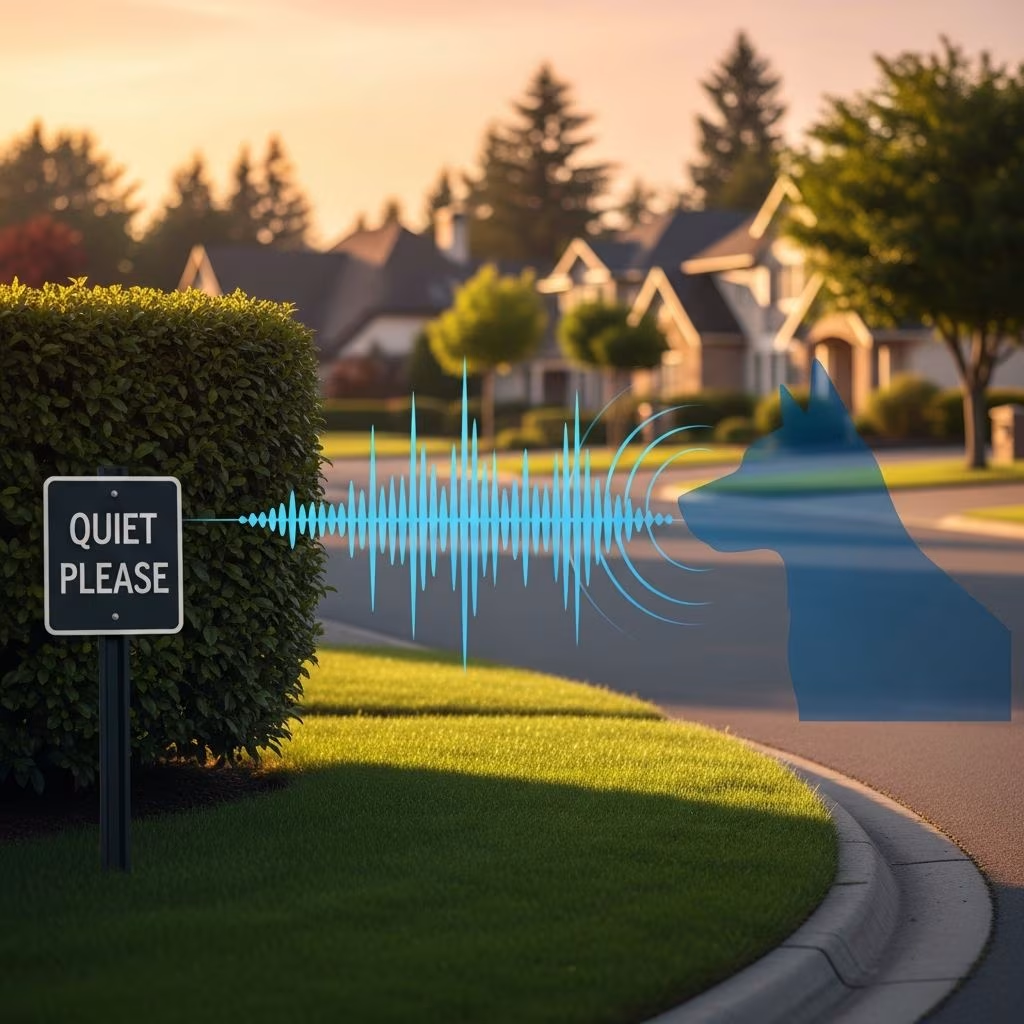
Persistent barking from a neighbor’s dog can disrupt your peace, affect your quality of life, and create tension in what should be a harmonious community. Yet addressing this issue requires more than frustration—it demands strategy, empathy, and clear communication. Whether the problem stems from a dog left alone during working hours, territorial behaviors, or lack of training, approaching your neighbor about their pet’s noise requires careful consideration of both your needs and theirs.
Understanding the Root of the Problem
Before initiating any conversation, it’s crucial to understand why dogs bark persistently. Dogs vocalize for various reasons, including anxiety when left alone, territorial defense, alerting to perceived threats, or seeking attention. Your neighbor may be completely unaware of the barking, especially if they work outside the home during peak barking hours or have hearing difficulties. Recognizing that the dog owner isn’t intentionally creating a nuisance sets a foundation for more productive dialogue.
Documenting the barking pattern provides valuable information. Note the times, duration, and circumstances—does it occur only during work hours, at specific triggers, or throughout the day? This information helps distinguish between normal canine behavior and excessive noise that warrants intervention.
The Foundation: Preparation Before Speaking
Successful conversations about barking dogs begin long before you knock on your neighbor’s door. Preparation involves several critical steps that increase the likelihood of a positive outcome.
Assess Your Own Perspective
Before addressing the issue, examine your expectations and emotional state. Are you approaching this conversation with frustration or with genuine problem-solving intent? Your internal mindset directly influences how your neighbor receives your message. Approaching from a place of blame creates defensiveness; approaching from a place of collaboration opens dialogue.
Clarify Your Objectives
What do you actually want to achieve? Are you seeking acknowledgment of the problem, active steps toward resolution, compensation for lost sleep, or simply acknowledgment from your neighbor that they’ll address it? Having clear, realistic goals prevents misunderstandings and helps direct the conversation productively.
Research Local Guidelines
Familiarize yourself with local noise ordinances, municipal codes, and animal control regulations before speaking with your neighbor. Understanding what constitutes legally actionable barking—duration, time of day, frequency—provides context for your complaint and shows you’ve done your homework. However, using legal information during initial conversations can feel threatening, so save this as a reference point for potential escalation rather than an opening argument.
Initiating the Conversation: Communication Strategies That Work
How you begin matters immensely. The initial approach sets the tone for everything that follows.
Choose Your Timing and Method Carefully
Never approach your neighbor immediately after a particularly loud or frustrating barking episode when tensions run high. Instead, wait for a calm moment when you can speak rationally and your neighbor isn’t dealing with the dog directly. Face-to-face conversation is far superior to notes or letters, as it allows for genuine dialogue and demonstrates your willingness to engage respectfully.
If you don’t have an established relationship with your neighbor or feel uncomfortable approaching them directly, a polite written note can serve as an initial opening that gives them time to prepare for a conversation. However, follow this with a personal visit to establish dialogue.
Lead with Curiosity, Not Accusation
Begin by asking questions rather than making statements. “I’ve noticed the dogs barking quite a bit during the day—have you noticed that too?” creates a shared observation framework rather than positioning you as a complainant. This approach gives your neighbor space to acknowledge the issue themselves, which is far more effective than presenting it as their failure.
Frame Issues Through Your Experience
Use “I” statements to express how the barking affects you personally rather than criticizing your neighbor or their dog. “I’m having difficulty concentrating during work-from-home hours” differs significantly from “Your dog barks constantly and you’re irresponsible.” The first invites problem-solving; the second invites defensiveness and conflict.
Key Communication Principles for Success
Certain communication fundamentals dramatically improve outcomes when discussing sensitive neighborhood issues.
- Assume Good Intentions: Most dog owners aren’t deliberately creating problems. Approaching with the assumption that your neighbor genuinely doesn’t know about or hasn’t adequately addressed the issue transforms the conversation from accusatory to collaborative.
- Demonstrate Empathy: Acknowledge that your neighbor loves their dog and likely doesn’t want their pet to be a neighborhood nuisance. This validation reduces defensiveness.
- Listen Actively: Your neighbor may have valid reasons for the current situation—working long hours, recent acquisition of the dog, ongoing training efforts. Understanding their constraints helps identify realistic solutions.
- Monitor Your Tone and Body Language: Speak calmly with a relaxed posture and, when appropriate, a genuine smile. Defensive body language—crossed arms, tense shoulders, pointing—escalates tension faster than critical words.
- Acknowledge the Normalcy of Barking: Dogs bark; it’s part of their nature. Distinguishing between normal barking and problematic barking shows you’re reasonable rather than expecting silence.
From Dialogue to Solutions: Building Collaborative Responses
Once you’ve established a respectful conversation, shift toward developing concrete solutions together. This collaborative approach often yields better results than demanding compliance.
Explore the Dog’s Situation
Help your neighbor understand what might be causing excessive barking. Is the dog experiencing separation anxiety? Does it lack adequate exercise or mental stimulation? Is it territorial about yard access? Understanding the underlying cause points toward appropriate solutions.
Suggest Practical Modifications
Offer concrete suggestions your neighbor might implement. These could include hiring a dog walker for midday visits, using puzzle toys or enrichment activities, adjusting the dog’s yard access schedule, or exploring professional training resources. Share resources about positive reinforcement training or anxiety management if appropriate.
Encourage Dog Familiarization
Suggest that your neighbor bring the dog to meet you in a neutral setting or allow introductions in your yard during calm moments. When dogs become familiar with their human neighbors, they often perceive them as less of a threat and bark less frequently.
Emphasize Mutual Benefit
Frame solutions as benefiting everyone—the dog, your neighbor, and yourself. Dogs that bark excessively often experience underlying stress or anxiety; addressing the root cause improves the dog’s wellbeing while reducing neighborhood disruption.
When Informal Solutions Fall Short
Despite your best efforts at diplomacy, some situations require escalation. Knowing when and how to escalate prevents prolonged suffering while preserving whatever relationship remains.
Documentation Is Essential
Before taking any formal action, maintain detailed records including dates, specific times the barking occurred, duration of episodes, and any communication attempts with your neighbor. Video or audio recordings of the excessive barking provide compelling evidence. This documentation proves invaluable if you need to file complaints or pursue legal remedies.
Mediation Services
Many communities offer mediation services designed specifically for neighbor disputes. These neutral third parties facilitate discussions and help develop mutually acceptable solutions without the adversarial nature of formal complaints.
Homeowners’ Association Involvement
If you live in a community with an HOA, they often have established processes for addressing pet-related disturbances and may offer mediation or enforcement options.
Animal Control and Local Authorities
Contact your local animal control agency to file a formal noise complaint if necessary. In many jurisdictions, animal control officers can mediate disputes and help establish compliance with noise ordinances. Provide them with your documentation and explain the steps you’ve already taken to resolve the matter informally. Some areas allow complaints to local law enforcement, though police typically prioritize other calls.
Escalation Strategies and Legal Options
Understanding the formal complaint process helps you navigate it effectively if necessary.
| Escalation Level | Action | When to Use | Documentation Needed |
|---|---|---|---|
| Informal Resolution | Direct conversation with neighbor | First attempt at resolution | Notes of conversation |
| Documented Communication | Follow-up letter or email summarizing discussion | After initial conversation to create record | Copies of all written communication |
| Mediation | Third-party neutral facilitator | Informal approach fails but relationship matters | Documentation of prior attempts |
| Formal Complaint | File with animal control or local authority | Persistent problem after multiple attempts | Dates, times, duration, audio/video evidence |
| Legal Action | Small claims court or attorney consultation | Last resort when other remedies fail | Complete documentation and evidence file |
Frequently Asked Questions
What if my neighbor becomes defensive or angry during our conversation?
Stay calm and don’t match their emotional intensity. Reiterate that you’re seeking a solution, not a confrontation. If the conversation becomes hostile, politely excuse yourself and follow up later when emotions have settled. You might propose mediation as a neutral approach.
Can I leave a note instead of talking face-to-face?
While a note can initiate contact, face-to-face conversation is more effective. Notes lack tone and body language cues, making it easier for neighbors to interpret them negatively. Use notes only as an opening if you’re genuinely uncomfortable with direct contact.
How long should I wait before filing a formal complaint?
Most experts recommend at least one documented conversation attempt and allowing reasonable time for your neighbor to implement solutions—typically 2-4 weeks. However, if the barking is constant or your neighbor is unresponsive after a reasonable period, pursuing formal complaints is appropriate.
Will calling animal control result in fines for my neighbor?
Not necessarily. Many animal control officers first attempt mediation and education rather than immediately issuing citations. They understand that dog behavior takes time to modify.
What if multiple neighbors are affected?
Coordinate with other affected neighbors. Filing complaints together demonstrates that this is a genuine community concern rather than a single person’s grievance. You might also suggest a neighborhood meeting with an animal control officer discussing responsible pet ownership.
Building Long-Term Community Harmony
Addressing barking dog issues constructively strengthens neighborhoods rather than fracturing them. Approaching these conversations with genuine curiosity, empathy, and a solution-focused mindset often yields surprising results. Many neighbors respond positively when treated respectfully and given the opportunity to address concerns collaboratively. Patience and persistence—combined with clear communication—transform frustrating situations into opportunities for community problem-solving. Remember that most dog owners care about their pets and their neighborhood; they simply may not realize the extent of the problem or how to solve it. By offering understanding alongside requests for change, you create space for genuine resolution that benefits everyone involved.
References
- How to Talk to Neighbors About Barking Dogs — Cathy M. Rosenthal. 2025-04-15. https://cathyrosenthal.com/blog/2025/04/15/how-to-talk-to-neighbors-about-barking-dogs/
- What to do when your neighbor’s dog won’t stop barking — Ultimate Bark Control. https://ultimatebarkcontrol.com/pages/neighbors-dog-wont-stop-barking
- Addressing a Neighbor Who Is Complaining About Barking Dogs — eHowPets. https://www.youtube.com/watch?v=7VvS2Q3C1kg
- The Neighbor’s Dog Barks Constantly! What Can I Do? — American Kennel Club Expert Advice. https://www.akc.org/expert-advice/training/neighbors-dog-barks-constantly/
- Talking to Neighbors Who Have a Barking Dog — Nolo Legal Encyclopedia. https://www.nolo.com/legal-encyclopedia/free-books/dog-book/chapter7-2.html



