

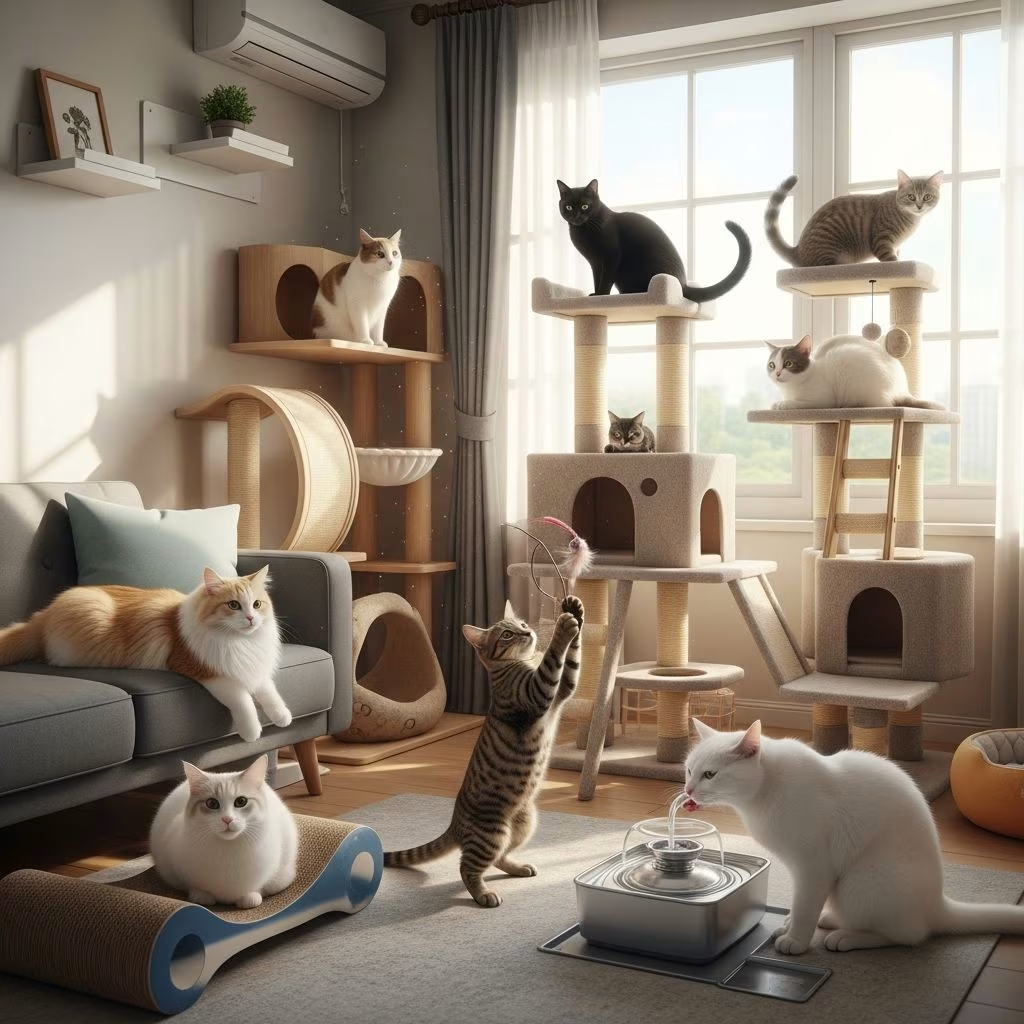
The decision to expand your feline family from one cat to three or more is a significant commitment that deserves careful consideration. While multiple cats can create a lively and interactive household, they also bring unique challenges that require preparation, resources, and dedication. Understanding both the rewards and responsibilities of managing a multi-cat environment will help you make an informed decision about whether this lifestyle suits your circumstances.
The Emotional and Social Rewards of a Multi-Cat Household
Consistent Companionship and Reduced Loneliness
One of the most compelling reasons to have multiple cats is the companionship they provide to one another. While cats have long been stereotyped as solitary, independent creatures that prefer to be alone, the reality is more nuanced. Cats are capable of forming meaningful bonds with other felines, and they can experience genuine pleasure from each other’s company. When you have three or more cats, they create a social structure within your household that can significantly reduce feelings of loneliness and isolation.
This is particularly valuable if your household experiences regular periods when family members are away at work or school. Rather than a single cat waiting alone for human interaction, multiple cats can entertain and comfort each other, providing emotional support that helps them feel secure. For cats that have experienced trauma or abandonment in their past, the steady presence of feline companions can be especially therapeutic.
Natural Entertainment and Mental Engagement
Multiple cats naturally stimulate one another through play, interaction, and social engagement. This peer-to-peer entertainment means your cats are less likely to develop stress-related behavioral problems that stem from boredom. Instead of relying entirely on you to provide enrichment through toys and play sessions, your cats can engage in mutual play-fighting, chasing, and grooming with each other.
These interactions serve an important purpose beyond simple amusement. The mental stimulation cats receive from social engagement with their peers helps keep their minds active and engaged, contributing to overall cognitive health. Physical activity naturally increases when cats have companions, as they chase each other, wrestle playfully, and explore together. This elevated activity level supports healthier weight maintenance and stronger muscle tone.
Learning Through Feline Role Models
In multi-cat homes, younger cats benefit enormously from the presence of adult cats. Kittens learn essential social behaviors, boundaries, and proper cat etiquette from mature felines. An older cat can serve as a guide, teaching younger cats how to communicate appropriately, how to resolve conflicts without escalating to aggression, and how to navigate the social dynamics of a shared space.
Practical Household Advantages
Maximum Utilization of Resources
Cat owners understand that purchasing toys, bedding, scratching posts, and other accessories represents a significant investment. With a single cat, these items may remain relatively unused, eventually becoming worn or outdated before they receive adequate use. However, when you have three or more cats, every toy, bed, and piece of furniture is thoroughly utilized and enjoyed by different cats at different times.
This extended lifespan of your cat supplies means better value for your money in the long run. Your investment in cat furniture, toys, and bedding stretches further because multiple cats collectively use these items far more intensively than a single cat would.
Abundance of Affectionate Moments
While individual cats display varying levels of affection, having three or more cats significantly increases the likelihood that at least one will be seeking your attention at any given time. If you work during the day and come home hoping for snuggling time, the odds are in your favor with multiple cats. Rather than potentially facing an aloof or disinterested single cat, you’re more likely to find at least one willing participant for lap time or cuddle sessions.
This increased availability of affection can be particularly rewarding during stressful periods. The calming effect of petting a cat has been scientifically recognized, and having multiple opportunities for these interactions throughout your day can provide consistent emotional support.
Financial and Practical Challenges
Substantially Increased Household Expenses
The most tangible disadvantage of maintaining a multi-cat household is the financial burden. Every cat requires their own food and water bowls, personal sleeping spaces, and appropriate accessories. Beyond basic supplies, each cat needs individual veterinary care, including regular check-ups, vaccinations, and preventative treatments for parasites.
The following expenses increase with each additional cat:
- Premium quality cat food (multiple cats consume significantly more)
- Litter and litter box maintenance
- Veterinary visits and routine care
- Vaccinations and microchipping
- Flea and tick prevention treatments
- Grooming services and supplies
- Pet insurance for each cat
- Emergency medical care (which becomes statistically more likely)
These costs compound quickly. A household with three cats faces roughly three times the veterinary expenses, three times the food costs, and ongoing expenses for additional litter boxes and supplies. For many households, this financial commitment may exceed their budget capacity.
Intensive Litter Box Management
One of the least glamorous but most demanding aspects of multi-cat ownership is managing litter boxes. The general guideline suggests having one litter box per cat, plus one additional box, meaning a three-cat household should have four litter boxes. These boxes require daily cleaning to prevent odor problems and maintain hygiene.
The commitment required goes beyond simply scooping. Neglecting litter box maintenance for even a single day can result in a foul-smelling home and significantly increased cleaning time the next day. Multiple cats produce substantially more waste, and the ammonia odor accumulates quickly in poorly maintained boxes. This ongoing responsibility demands consistent daily effort and attention.
Resource Competition and Space Requirements
Cats are territorial animals by nature. In multi-cat households, ensuring adequate space and resources is critical for maintaining harmony. Each cat needs their own feeding station, access to litter boxes, and preferred resting areas.
Competition for resources can trigger stress and conflict among cats. In homes without sufficient space or resources, cats may exhibit territorial behaviors including spraying, aggressive posturing, or preventing other cats from accessing essential facilities like litter boxes or food bowls. This territorial tension undermines the companionship benefits and creates an anxious household environment.
Health and Behavioral Considerations
Increased Disease Transmission Risk
Multiple cats living in close quarters create ideal conditions for illness transmission. Infectious diseases, parasites, and viruses can spread rapidly through a multi-cat household. Monitoring individual health becomes more challenging when multiple cats share a living space, as it’s harder to track each cat’s eating habits, litter box activity, and general behavior.
Maintaining rigorous veterinary protocols becomes essential. Regular check-ups, current vaccinations, and prompt treatment of any health issues can help minimize disease spread. However, the increased healthcare complexity requires diligent attention and financial resources.
Territorial Disputes and Aggression
Despite the companionship benefits, cats are inherently territorial animals. Introducing a new cat into an established home can trigger stress and aggressive responses if not managed carefully. Territorial conflicts may manifest through fighting, urine spraying, blocking access to resources, or other undesirable behaviors.
Not all cats have compatible personalities. Just as people clash, some cats simply do not get along regardless of introduction strategies. A cat that has lived alone for years may not adapt well to a multi-cat environment. Similarly, cats with dominant or aggressive temperaments may struggle to coexist peacefully with others.
Individual Behavioral Monitoring Challenges
In a multi-cat household, observing each cat’s individual behavior becomes significantly more difficult. Changes in appetite, litter box habits, activity levels, or social behavior may be overlooked when you’re managing multiple cats simultaneously. Early detection of health or behavioral problems becomes harder, potentially delaying necessary interventions.
Creating Harmony in Your Multi-Cat Environment
Strategic Resource Distribution
Preventing territorial conflicts requires thoughtful resource placement throughout your home. Rather than concentrating all litter boxes, food bowls, and resting areas in one location, distribute them strategically across multiple rooms. This allows each cat to access necessary resources without confronting other cats.
Key resource distribution strategies include:
- Placing litter boxes in separate locations away from main living areas
- Establishing multiple feeding stations in different parts of the home
- Creating vertical resting spaces on shelves or cat trees for each cat
- Providing multiple water bowls throughout the household
- Designating quiet spaces where each cat can retreat for solitude
Balancing Individual Attention
Each cat has unique personality traits and specific needs. Some cats crave constant attention while others prefer independence. Spending individual time with each cat—whether through dedicated play sessions, quiet cuddling, or grooming—ensures no cat feels neglected.
Cats can experience jealousy or stress if they perceive favoritism or inadequate attention. By making deliberate efforts to meet each cat’s emotional needs, you prevent behavioral problems that stem from feeling overlooked. This individual attention also strengthens your bond with each cat and helps you monitor their individual health and wellbeing.
Comprehensive Comparison Table
| Aspect | Advantages | Disadvantages |
|---|---|---|
| Companionship | Cats provide each other emotional support and reduce loneliness | Incompatible cats may cause stress and territorial conflicts |
| Entertainment | Peer interaction provides natural mental and physical stimulation | Play can escalate to aggression if personality types clash |
| Financial Cost | Toys and bedding are utilized more fully by multiple cats | Food, litter, and veterinary costs multiply substantially |
| Health Management | Peer interaction contributes to overall wellness and mental health | Disease transmission risk increases with multiple cats |
| Space Requirements | Multiple cats utilize vertical space and different areas | Insufficient space creates competition and territorial stress |
| Daily Maintenance | Cats entertain each other, reducing demand on your time | Litter box management requires consistent daily attention |
Frequently Asked Questions
What’s the ideal age difference when introducing multiple cats?
Cats of similar ages and energy levels tend to bond more easily and engage in compatible play. However, age differences aren’t absolute barriers. An adult cat can provide valuable behavioral guidance to a kitten, teaching appropriate social boundaries. The key is matching energy levels and temperaments rather than focusing strictly on age.
How many litter boxes do I actually need?
The general recommendation is one litter box per cat, plus one additional box. For three cats, this means four litter boxes. However, some multi-cat households find that having additional boxes in different locations helps prevent territorial conflicts and provides flexibility when boxes require cleaning.
Can cats with different personalities live together peacefully?
While some personality mismatches can be overcome through careful introduction and environmental management, not all cats are compatible. Some cats have fundamentally solitary or aggressive temperaments that make multi-cat living challenging. Professional assessment during the adoption process can help identify compatible cats.
Is it better to adopt cats together or introduce them gradually?
Cats adopted together as kittens often bond naturally. However, introducing adult cats requires patience and careful management. Gradual introductions, separate spaces initially, and supervised interactions help reduce stress and territorial aggression. Professional guidance is recommended when introducing cats with unknown histories or established territorial behaviors.
Making Your Final Decision
The decision to maintain a multi-cat household should be based on honest assessment of your financial capacity, physical space, time availability, and genuine desire to provide excellent care for multiple animals. While the companionship and entertainment benefits are genuine, they come with substantial responsibilities.
Consider whether your home provides adequate space and resources for each cat to maintain personal territory. Evaluate your financial situation to ensure you can afford quality food, veterinary care, and emergency medical treatment for multiple cats. Reflect honestly on your commitment to daily litter box maintenance, individual attention, and behavioral monitoring.
For households that can meet these requirements, multi-cat living offers genuine rewards: the pleasure of observing feline companionship, the entertainment value of multiple personalities, and the satisfaction of providing a enriching environment where cats can thrive together. However, this lifestyle is not suitable for everyone, and acknowledging your limitations ensures the wellbeing of your feline companions.
References
- The Pros and Cons of Living In a Multi-Cat Household — The Refined Feline. Accessed January 2026. https://www.therefinedfeline.com/the-pros-and-cons-of-living-in-a-multi-cat-household/
- The Pros and Cons of Living In a Multi-Cat Household — CatCurio. Accessed January 2026. https://catcurio.com/blogs/catlove/the-pros-and-cons-of-living-in-a-multi-cat-household
- The Benefits and Challenges of Multi-Cat Households — Snappy Tom. Accessed January 2026. https://www.snappytom.com/post/the-benefits-and-challenges-of-multi-cat-households
- Pros & Cons of Having 3 or More Cats: Our In-Depth Review — Catster. Accessed January 2026. https://www.catster.com/lifestyle/pros-and-cons-of-having-3-or-more-cats/
- Why Two Cats Are Better Than One: A Guide for Potential Cat Owners — Town Cats. Accessed January 2026. https://www.towncats.org/why-two-cats-are-better-than-one-a-guide-for-potential-cat-owners/



