

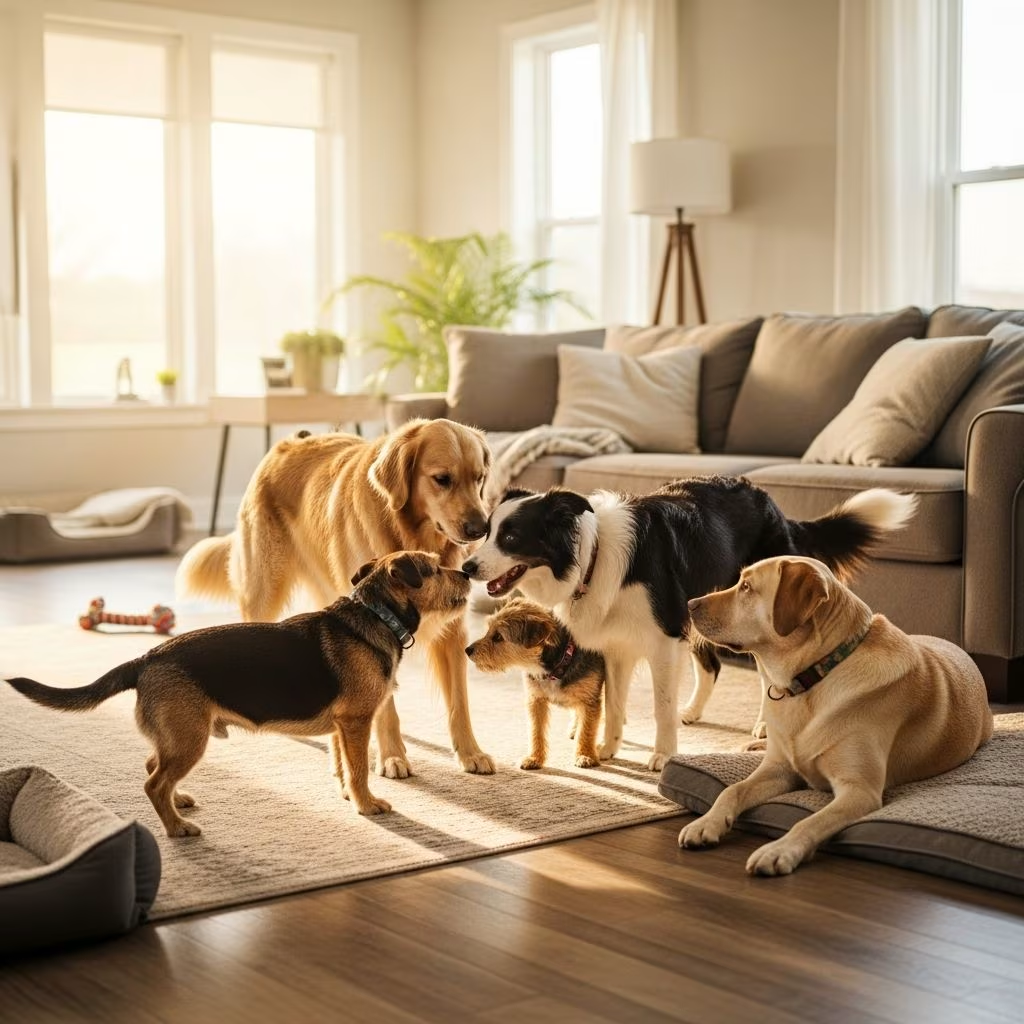
Managing a Multi-Dog Household: Tips & Strategies
Having a multi-dog household—typically defined as three or more dogs living together—offers unique advantages and challenges. While multiple dogs provide enhanced companionship, entertainment, and social stimulation for each other, they also require thoughtful management to ensure harmonious coexistence. Understanding the dynamics of living with several dogs, recognizing potential behavioral issues, and implementing effective strategies can transform your multi-dog home into a thriving environment where all your pets flourish.
The Benefits of Multi-Dog Living
A multi-dog household offers numerous advantages beyond the obvious joy of having multiple companions. When you share your home with several dogs, you’re not solely responsible for their entertainment and exercise. Dogs naturally wear each other out through play in ways that individual owners often cannot replicate, regardless of how active they are. This built-in entertainment system helps keep your dogs mentally stimulated and physically tired, which can reduce behavioral problems associated with boredom.
The emotional benefits are equally compelling. Multiple dogs provide more opportunities for cuddles, comfort, and affection. Whether you’re having a difficult day or simply relaxing at home, you’re likely to have multiple wagging tails greeting you and snuggly companions seeking your attention. Beyond personal comfort, living in a multi-dog household is genuinely better for your dogs. They benefit from social interaction, play opportunities, and the natural learning that occurs through observing and interacting with other dogs in their own environment.
Dealing with Aggression in a Multi-Dog Household
Not all dogs naturally get along, and aggression between household dogs is a concern many owners face. It’s important to understand that much of what appears to be aggression between familiar dogs is ritualized and harmless, occurring without actual biting. However, aggression can escalate, particularly when a new dog joins the household.
Understanding Aggression Patterns
Research examining cases where canine behaviorists were consulted for intra-household aggression has revealed several consistent patterns. Aggression is often instigated by a newly matured dog or by a new household member against an older, established dog. Same-sex pairs are particularly prone to conflicts, with female-female pairings showing notably higher rates of aggression than opposite-sex combinations.
Traditional Approaches vs. Modern Methods
Some canine behaviorists traditionally recommend consistently favoring one dog over others—typically the older or higher-ranking dog—by providing them with resources and attention first. However, behaviorist Patricia McConnell argues against this approach based on her professional experience, finding it ineffective in practice.
McConnell and other modern trainers advocate for alternative methods to reduce intra-household aggression. One particularly effective technique involves training dogs to maintain close proximity to one another while waiting politely for their turn to access a resource. This teaches dogs self-control and demonstrates that they obtain what they want through patient, courteous behavior rather than bullying or aggression.
Training Dogs for Peaceful Resource Sharing
McConnell demonstrates this training method with her own highly trained dogs—three Border Collies and a Great Pyrenees. She positions them in a line, kneels before them holding a pan containing meat, and then calls each dog by name to lick the pan. She then asks that dog to stop licking and back away when it’s the next dog’s turn. The visible body language of her dogs demonstrates the substantial self-control required to succeed in this situation, yet they consistently do. This training approach teaches dogs a crucial lesson: when they learn that they receive desired resources by politely waiting their turn, they’re significantly less likely to bully each other or their owners to gain access to valuable items and attention.
Understanding Pack Dynamics and Leadership
A common misconception about multi-dog households is that they operate under strict hierarchical pack rules similar to wolf packs in the wild. However, most multiple dogs do get along, and the factors influencing their relationships are more nuanced than simple dominance hierarchies.
Household Culture and Leadership
Research and observation suggest that relationships between a household’s humans and dogs, as well as relationships among the humans themselves, significantly influence how dogs interact with each other. People who model peaceful, generous, and courteous behavior create a household culture that dogs—who are highly attuned to social etiquette—readily recognize and adopt. Puppies raised in such households are especially likely to internalize this culture, establishing peaceful patterns of interaction from early in their development.
The Role of Human Behavior
Rather than enforcing artificial hierarchies, the most successful multi-dog households reflect the behavior patterns and values modeled by their human members. Dogs are astute observers of social dynamics and respond positively to calm, fair, and generous leadership. This understanding fundamentally changes how owners should approach managing multiple dogs, shifting focus from dominance-based training to creating an environment of mutual respect and peaceful coexistence.
Observing and Understanding Relationship Dynamics
Living with multiple dogs provides a unique opportunity to observe complex social relationships and interactions. Groups of dogs function as systems, meaning that any change affecting one dog influences all the others. Understanding these dynamics requires careful observation and attention to your dogs’ behavior patterns.
Recognizing Relationship Changes
Relationships between household dogs evolve over time. Old friends whose interest in playing together may have gradually decreased over the years can be energized and reinvigorated when a new dog joins the family. This can lead to these established companions spending more time playing with one another, demonstrating that relationship dynamics are fluid rather than static.
Reconciliation Behavior in Dogs
Research has documented an important social behavior in dogs: reconciliation. Shortly after a conflict between two dogs within their group, they tend to approach their former opponent to do something positive—such as touching muzzles or inviting play. Dogs and wolves are especially likely to reconcile when they place high value on their relationship, and these reconciliation moments provide windows into their emotional connections.
For example, a dog that became grumpy during play may, just moments later, offer a muzzle lick to the other dog. This behavior demonstrates emotional repair and the maintenance of important relationships. Interestingly, research also shows that if the dogs involved in a conflict fail to reconcile, a third, uninvolved dog is likely to approach the “victim” of the squabble and offer comfort through friendly behavior. This suggests that dogs recognize the emotional states of their housemates and actively work to restore social harmony.
Group Solidarity and Defense
Dogs living in the same household often exhibit remarkable solidarity when meeting unfamiliar dogs. Many owners observe their household dogs “closing ranks” when an unfamiliar dog exhibits even slight unfriendly behavior toward one of their own. If such behavior escalates to a genuine threat or fight, a dog may intervene directly to defend a housemate. This defensive behavior is particularly striking when a dog supports a housemate they don’t especially like or get along with at home, demonstrating that household bonds override personal preferences in the face of external threats.
Key Factors for Multi-Dog Compatibility
While not all multi-dog dynamics can be perfectly predicted, several factors influence compatibility and harmony among household dogs:
- Gender Pairing: Opposite-sex pairings typically have fewer conflicts than same-sex combinations, particularly with breeds prone to same-sex aggression. However, individual personalities and early socialization often matter more than gender alone.
- Energy Level Matching: Dogs with vastly different energy levels can create household stress. Matching energy levels generally produces more harmonious relationships, though complementary energy levels sometimes work well when dogs fulfill different household roles.
- Temperament and Social Styles: Some breeds are naturally more dog-social while others prefer human companionship. Understanding breed temperament tendencies helps predict compatibility between household members.
- Age Differences: Significant age gaps between dogs can affect relationship dynamics, often favorably, particularly when a younger dog is introduced to an established older dog.
- Early Socialization: Dogs socialized early and exposed to multiple dogs typically adapt more easily to multi-dog households than those with limited early exposure.
Managing Common Multi-Dog Challenges
Multi-dog households can face specific behavioral challenges that differ from single-dog homes:
Barrier Frustration and Leash Reactivity
Some dogs who get along well at home exhibit reactivity toward other dogs when on leash or separated by barriers. This reactivity doesn’t necessarily indicate problems with household relationships but rather reflects the excitement or frustration of being separated from or unable to greet familiar companions.
Pack Behavior and Mob Mentality
Multiple dogs sometimes develop pack behaviors that individual dogs wouldn’t display alone. This can include chasing, ganging up on other animals, or becoming more territorial as a group than they would be individually.
Increased Arousal and Energy
Multi-dog households often experience elevated energy levels as dogs feed off each other’s excitement. This heightened arousal can lead to more destructive behavior or difficulty settling down, requiring careful management and appropriate outlets.
Attention-Seeking Behaviors
Dogs may develop attention-seeking behaviors when competing for human interaction. These can include excessive barking, jumping, or destructive actions designed to capture their owner’s attention in a multi-dog environment.
Strategies for Harmony and Success
Creating a successful multi-dog household requires intentional management and ongoing attention to your dogs’ needs:
Individual Attention and Bonding
Consciously provide individual attention to each dog to prevent competition for human interaction. Training sessions, individual walks, and one-on-one bonding time help each dog feel secure in their relationships with family members. Multi-dog households benefit greatly when each dog has a strong bond with their owner, creating stability and reducing tension.
Space and Sleeping Area Management
Provide separate sleeping areas and safe spaces where each dog can retreat without competition. Some dogs need more personal space than others, especially during adjustment periods or when new dogs join the household. Territory and space sharing can create stress for dogs accustomed to being solo pets.
Resource Management
Manage access to valuable resources such as food, toys, and attention. Feed dogs separately to prevent food-related aggression, and provide multiple water bowls, toys, and resting areas so no single dog monopolizes resources.
Monitoring Communication Styles
Different dogs have varying communication styles and conflict resolution approaches. Some are naturally diplomatic while others are more direct. Mismatched communication styles can create ongoing tensions, so observing and understanding how your individual dogs communicate helps you intervene appropriately when needed.
Frequently Asked Questions About Multi-Dog Households
Q: Is it better to have same-sex or opposite-sex dog pairs?
A: Opposite-sex pairings generally have fewer conflicts, particularly with breeds prone to same-sex aggression. However, individual personalities, early socialization, and proper introductions often matter more than gender alone. Many same-sex pairs do wonderfully together with appropriate management.
Q: How can I prevent aggression between my household dogs?
A: Train dogs to wait politely for resources rather than fighting for them. Create a peaceful household culture by modeling calm, generous behavior. Provide individual attention, separate feeding areas, and safe retreat spaces for each dog. Monitor their interactions and intervene if necessary.
Q: Should I have a “pack leader” in my multi-dog household?
A: Modern dog behavior research suggests that strict dominance hierarchies aren’t necessary for multi-dog harmony. Instead, focus on creating a peaceful household culture where you model fair, generous leadership. Relationships between household dogs are more complex than simple hierarchies.
Q: What should I do if my dogs fight?
A: If fighting occurs, safely separate the dogs immediately. Never assume your dog will be okay with something if they’ve repeatedly shown they’re not comfortable with it. Consult a professional dog behaviorist to address underlying issues and develop management strategies.
Q: How do I help my dogs adjust to a new household member?
A: Introduce new dogs slowly and carefully. Use separate spaces initially, and allow dogs to become familiar with each other’s scents before face-to-face meetings. Opposite-sex pairings and significant age differences often ease introductions. Individual attention from owners helps established dogs feel secure.
Q: Can dogs living together become better friends?
A: Yes, relationships between household dogs are dynamic and can improve over time. Old friendships may be revitalized when a new dog joins the household, and dogs benefit from ongoing positive interactions that strengthen their bonds.
References
- Tips on Managing a Multi-Dog Household — Kinship. 2024. https://www.kinship.com/dog-behavior/multi-dog-household
- Multi-Dog Household Guide: Breed Compatibility and Pack Management — Wag Bar. 2024. https://www.wagbar.com/multi-dog-household-guide-breed-compatibility-and-pack-management
- Keeping the Peace in a Multi-Dog Household — On Good Behavior LLC. 2024. https://ongoodbehavior.com/keeping-the-peace-in-a-multi-dog-household/
- Multi-Dog Homes — BADRAP (Bay Area Dog Rescue, Rehabilitation and Reform). 2024. https://badrap.org/training-resources/multi-dog-homes/
- How to Manage a Multi-Dog Household — Whole Dog Journal. 2024. https://www.whole-dog-journal.com/care/managing-a-multi-dog-household/
- Multi-dog Households — Patricia McConnell Publishing Inc. 2024. https://www.patriciamcconnell.com/learning-center/multi-dog-households/



