

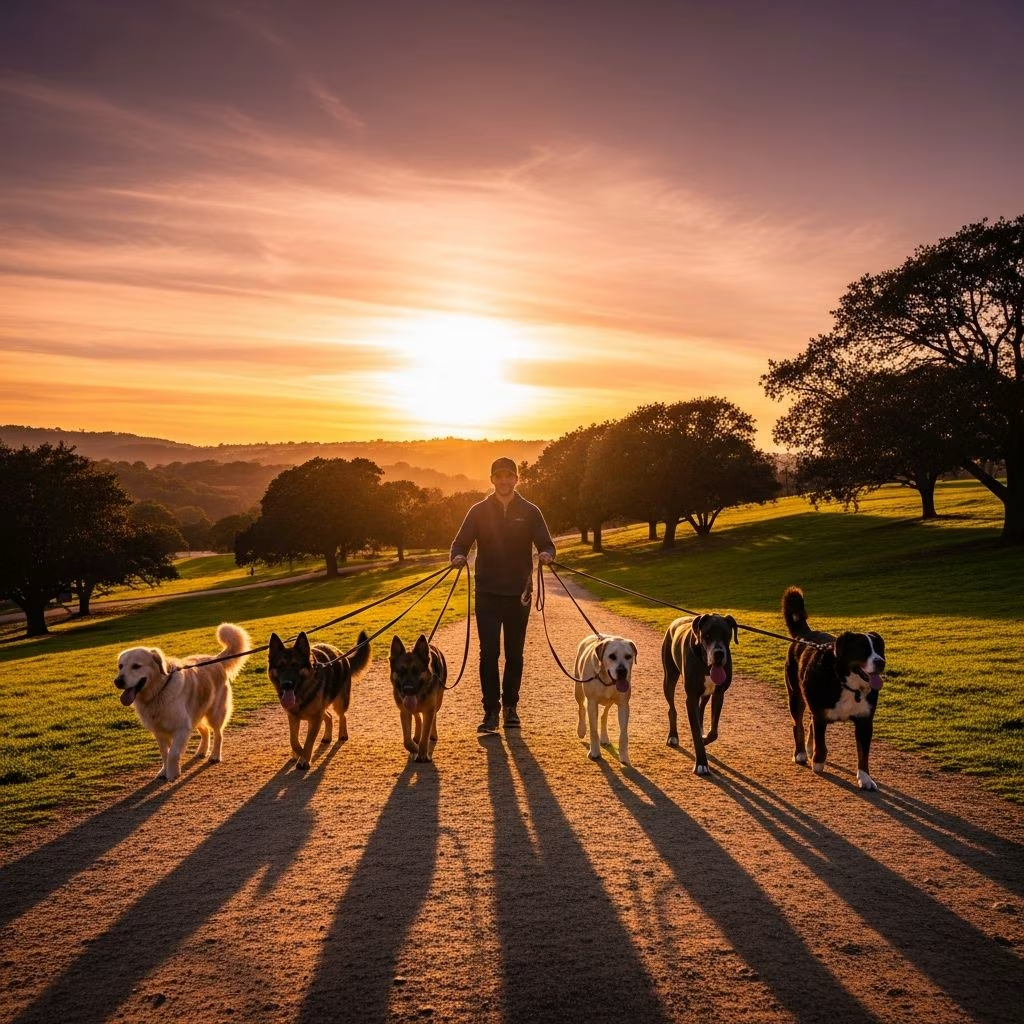
Walking a large dog presents unique challenges that extend beyond the typical walking experience with smaller breeds. When your canine companion weighs as much as or more than you do, the dynamics of a simple neighborhood stroll can shift dramatically. The combination of physical strength, unpredictable behavior, and environmental distractions creates situations where preparation and knowledge become essential. This guide explores evidence-based strategies and practical approaches to help you navigate walks with your large dog while maintaining safety and enjoyment for both you and your pet.
Understanding the Physical Dynamics
Large dogs possess considerable pulling power that can easily destabilize an unprepared handler. Unlike smaller dogs, where minor behavioral issues might be manageable, large dogs can create dangerous situations when they decide to lunge, bolt, or pull in an unexpected direction. The fundamental issue isn’t that large dogs are inherently disobedient; rather, their size amplifies the consequences of any behavioral misstep. Understanding this dynamic helps reframe walking as an activity requiring intentional structure rather than casual strolling.
The physics of dog walking involves leverage and momentum. A 100-pound dog moving at full speed can generate forces that make holding a leash difficult regardless of handler strength. This reality means that managing large dogs through training and equipment becomes a matter of safety rather than preference. Professional dog handlers consistently emphasize that proper technique supersedes raw physical strength when working with large breeds.
Establishing Foundation Training Before Walks
Training forms the cornerstone of successful large dog walking experiences. Beginning training early provides the most advantages, but dogs of any age can learn appropriate leash manners with patience and consistency. The fundamental goal involves teaching your dog that walking beside you, rather than ahead of you, produces the most rewarding experience.
Essential training components include:
- Teaching loose-leash walking through positive reinforcement with treats and praise
- Establishing reliable recall commands so your dog returns immediately when called
- Creating focus exercises that keep your dog’s attention on you rather than distractions
- Practicing directional changes to reinforce your leadership role
- Introducing desensitization to common triggers like other dogs, vehicles, and pedestrians
The training process begins without the leash. Rewarding your dog for standing or sitting beside you creates positive associations with proximity to you. Once your dog understands this concept, introduce the leash gradually during practice sessions at home before venturing into busier environments.
Selecting Appropriate Walking Equipment
Equipment selection significantly impacts your ability to safely manage a large dog during walks. The correct gear distributes force appropriately, prevents injury, and gives you better control without relying solely on strength.
Leash Specifications
Standard leash length recommendations range from six to eight feet, providing adequate distance for your dog to explore while maintaining control. This length offers flexibility for various situations while keeping your dog within a manageable range. Retractable leashes deserve particular caution with large dogs because they actively encourage pulling behavior by rewarding the dog’s forward motion with extended line. The retracting mechanism creates a dynamic that teaches dogs that pulling produces the desired result of more freedom.
Collar versus Harness Considerations
This decision fundamentally affects control and comfort during walks. Standard flat collars work adequately for well-trained dogs but offer limited control options. Harnesses distribute pulling forces across the chest and shoulders rather than concentrating pressure on the neck, making them more comfortable for your dog during extended walks. Many handlers of large dogs prefer harnesses specifically for this reason.
Head collars provide enhanced steering capability for strong-pulling dogs by giving you directional control at the dog’s head rather than requiring full-body restraint. However, proper introduction and conditioning remain essential because some dogs initially resist head collar placement. Avoid aversive training tools like choke collars or prong collars, which can cause physical and psychological harm without providing lasting behavioral change.
Leadership Positioning and Walk Structure
Establishing clear leadership during walks creates psychological frameworks that encourage your dog to follow your direction. In canine social structures, position communicates status and responsibility. When your dog walks in front of you, they naturally perceive themselves as the leader responsible for decisions about where to go, what to investigate, and how to react to environmental stimuli. This positioning encourages pulling, reactive behavior, and general disregard for your guidance.
Positioning your dog at your side or slightly behind you establishes you as the leader making decisions about the walk’s direction and pace. This psychological arrangement doesn’t involve dominance or harsh corrections; rather, it creates a framework where your dog naturally defers to your guidance. Consistent positioning during walks reinforces this dynamic with every outing.
Structured walking also involves deliberate changes in direction and pace. Walking straight becomes monotonous, but incorporating frequent turns, speed changes, and directional shifts keeps your dog mentally engaged while reinforcing that they should follow your lead rather than forge their own path.
Managing Pulling Behavior
When your large dog pulls, your response matters enormously for teaching appropriate behavior. Two primary strategies address pulling effectively without causing harm.
The stopping technique involves completely ceasing forward movement the instant your dog pulls. You stand still, creating a situation where pulling accomplishes nothing. This teaches your dog that pulling prevents progress toward their goals. Once they ease tension on the leash or return their attention to you, you resume walking. This method requires patience but builds understanding without punishment.
The redirectional approach involves walking in the opposite direction when your dog pulls. If your dog pulls toward something, you calmly turn around and walk away, demonstrating that pulling doesn’t lead toward desired destinations; instead, it takes them further away. This technique works particularly well for dogs motivated by environmental attractions like squirrels, other dogs, or specific locations.
Consistency proves critical with either method. Every household member must respond identically to pulling, preventing the dog from learning that different handlers enforce different rules. Additionally, reward your dog immediately when they stop pulling or check in with you, reinforcing the behaviors you want to see.
The Single Dog Advantage
Professional recommendation strongly advises against walking multiple large dogs simultaneously, particularly if they exceed your body weight combined. The challenges multiply exponentially when managing two powerful animals with independent minds. Even experienced handlers suggest walking only one large dog at a time, allowing complete focus on that individual’s behavior and safety concerns.
If circumstances occasionally require walking multiple large dogs, certain precautions become necessary. Maintain weight ratios no greater than two-to-one, meaning if one dog weighs 50 pounds, the other shouldn’t weigh less than 25 pounds. This ratio prevents significant power imbalances that could overwhelm your control. Additionally, ensure the dogs live together and know each other well before attempting simultaneous walks, as unfamiliar dogs may interact unpredictably.
Addressing Reactive and Distraction-Based Behaviors
Large dogs encounter numerous environmental triggers during walks: other animals, vehicle sounds, unfamiliar people, and unexpected movements. Your response to these triggers shapes your dog’s future reactions significantly.
Maintaining calm composure during reactive moments proves essential because dogs respond to your emotional state. If you tense up when encountering triggers, your dog interprets this as confirmation that the situation warrants concern, intensifying their reactive response. Instead, consciously relax your leash tension and project calm confidence, allowing your dog to follow your emotional lead rather than driving their own fear-based reactions.
Recall training becomes particularly valuable when addressing reactivity. Teaching your dog to respond immediately to a recall command provides an escape strategy if your dog breaks free or approaches a trigger too closely. Dogs with reliable recalls enjoy greater freedom during walks because handlers can call them away from dangerous situations quickly.
Environmental Adaptations for Large Dogs
Different environments present distinct challenges requiring adaptive strategies. Urban environments with heavy pedestrian traffic demand heightened awareness and control. Suburban walks may involve multiple dogs and families in parks, requiring social skills and appropriate behavior. Rural settings present wildlife encounters and potential for extended distance if your dog breaks free.
Some large dogs require slightly more distance from their handler during walks—sometimes called “wiggle room”—without this indicating disrespect or inattention. Dogs like German Shepherds may naturally prefer walking a few feet away while maintaining focus and responsiveness to commands. Allowing this preference while ensuring your dog remains responsive represents a valid walking arrangement that accommodates individual temperament variations.
Frequency and Duration Considerations
Large dogs require regular exercise, but the frequency and duration should match your dog’s age, health status, and energy level. Young large dogs need multiple walks daily to burn energy and maintain behavioral stability. Older dogs may benefit from shorter, more frequent walks that provide movement without excessive strain. Consistency matters more than duration; daily walks establish routine that large dogs depend on psychologically and physically.
Common Walking Scenarios and Responses
| Scenario | Challenge | Response Strategy |
|---|---|---|
| Meeting unfamiliar dogs | Unpredictable interactions between dogs | Maintain distance, use recall commands, redirect attention |
| Approaching strangers | Large dog may intimidate or jump on people | Practice greeting manners, request distance from others |
| Squirrel or wildlife sighting | Prey drive activation causes pulling or lunging | Use redirectional techniques, establish focus through treats |
| Vehicle sounds or movement | Startle response or reactive barking | Maintain calm demeanor, create distance when possible |
| Fatigue during walks | Dog slows down or refuses to continue | Shorten walk duration, assess health, adjust schedule |
Professional Assistance and Training Resources
If you find yourself struggling with large dog walking despite your efforts, professional dog trainers offer valuable guidance. Group training classes provide structured environments for learning techniques, while one-on-one sessions allow customized approaches for your specific dog’s challenges. Professional trainers assess your individual situation and provide tailored recommendations rather than generic advice.
FAQs About Large Dog Walking
At what age should I start training my large dog to walk properly?
Start training as early as possible, ideally when your dog is a puppy. However, dogs of any age can learn appropriate leash manners with consistent training and patience. Beginning training early simply provides more opportunity to establish good habits before your dog reaches full adult size and strength.
Is it ever safe to walk two large dogs at the same time?
While not recommended, it becomes slightly more feasible if the dogs live together, know each other well, neither exceeds your weight, and you maintain a maximum weight ratio of two-to-one. However, most experts recommend single-dog walks as the safest approach.
What should I do if my large dog suddenly lunges at something during a walk?
Maintain your calm demeanor, avoid jerking the leash sharply, and use directional redirection to turn away from the trigger. If your dog has reliable recall training, call them back to you. Creating distance from the trigger typically de-escalates the situation faster than confrontation.
How long should walks be for large dogs?
Duration depends on your dog’s age, health, and energy level. Younger, high-energy large dogs may need 45-60 minute walks or multiple shorter walks daily. Senior dogs might manage with 20-30 minute walks. Quality of engagement during walks matters as much as duration.
Can I use a retractable leash with my large dog?
Retractable leashes are generally not recommended for large dogs because they actively encourage pulling by rewarding extended line when the dog pulls forward. Standard six to eight-foot fixed leashes provide better control and don’t reinforce unwanted pulling behavior.
Building Confidence Through Consistency
Walking a large dog successfully doesn’t require extraordinary physical strength or innate talent. Instead, it demands consistency, clear communication, and appropriate tools. Each walk reinforces patterns of behavior, so every outing provides an opportunity to strengthen positive habits or accidentally reinforce problematic ones. By maintaining structure, using positive reinforcement, selecting appropriate equipment, and responding calmly to challenges, you transform large dog walking from a dreaded chore into a manageable activity that benefits both you and your dog.
References
- Walking Big Dogs Safely: Tips and Tricks from Dog Experts — Hill’s Pet Nutrition. 2024. https://www.hillspet.com/dog-care/play-exercise/walking-big-dogs-safely
- How to Take Bigger Dogs for Walks — Scout for Pets. 2024. https://www.scoutforpets.com/post/how-to-take-bigger-dogs-for-walks
- What Are Some Suggestions to Walk a Large and Rambunctious Dog? — North Georgia Dog Training. 2024. https://northgeorgiadogtraining.com/what-are-some-suggestions-to-walk-a-large-and-rambunctious-dog-johns-creek/
- Mastering the Walk — Pack Leader Dogs. 2024. https://packleaderdogs.com/mastering-the-walk/
- 8 Realities Of Walking A Big Dog — My Brown Newfies. August 31, 2023. https://mybrownnewfies.com/2023/08/31/8-realities-of-walking-a-big-dog/



