

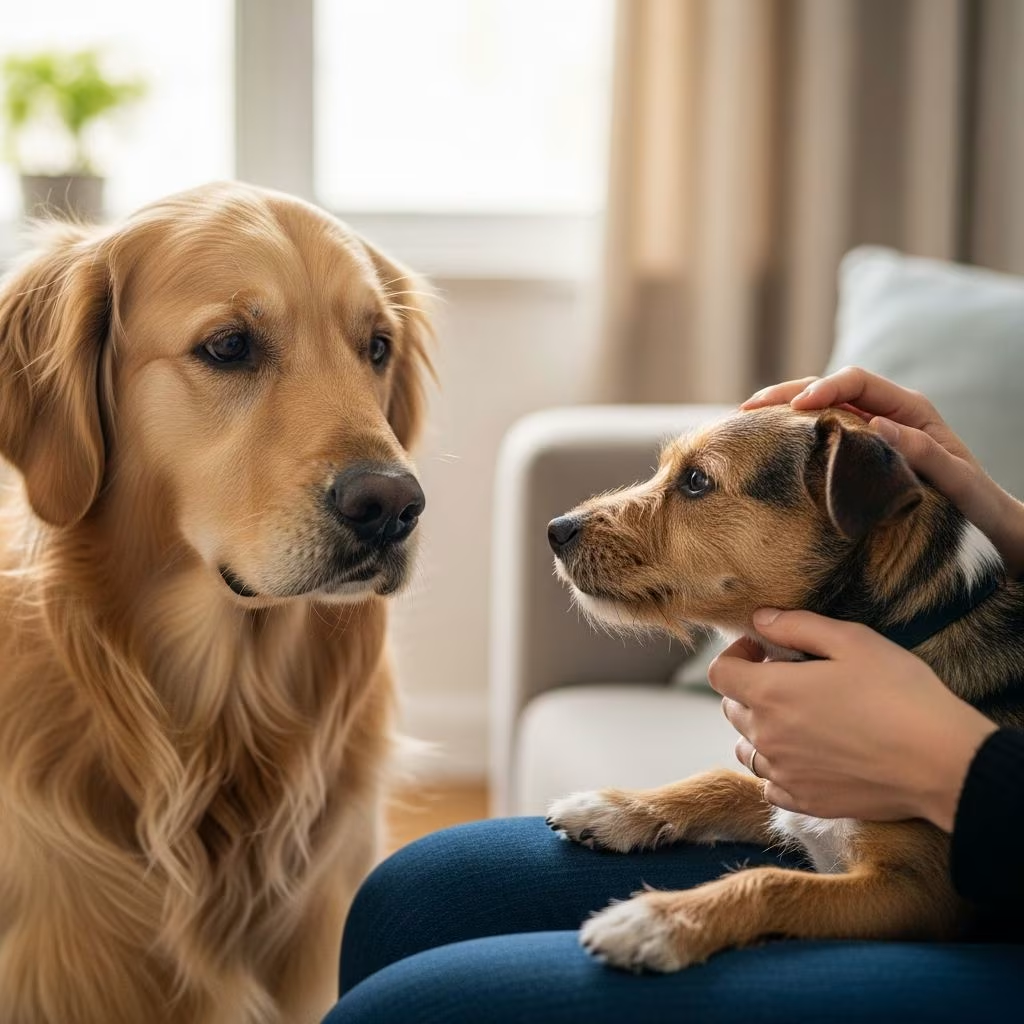
Dogs often display jealousy through aggressive or attention-seeking behaviors when they perceive threats to their bond with owners, such as new pets or people receiving affection. Effective management involves recognizing these signs early and implementing consistent training techniques to restore balance.
Recognizing Jealous Behaviors in Canines
Jealousy in dogs typically emerges as pushy or defensive actions aimed at reclaiming attention or resources. Common indicators include a dog inserting itself physically between the owner and another individual or animal, escalating from subtle nudges to overt aggression like growling or snapping.
- Physical Blocking: The dog positions its body to interrupt interactions, signaling discomfort with shared attention.
- Heightened Clinginess: Sudden increases in demands for petting or proximity when others are present.
- Aggressive Postures: Tense muscles, raised hackles, or vocalizations directed at perceived rivals.
These reactions stem from a dog’s strong attachment to its primary caregiver, viewing any diversion of focus as a loss. Unlike human jealousy rooted in complex emotions, canine versions often tie to resource guarding instincts.
Triggers That Spark Canine Jealousy
Several environmental and social changes can provoke jealous responses in dogs. Introducing a new family member, whether human baby or another pet, frequently disrupts established dynamics, prompting territorial displays.
| Trigger | Description | Common Reactions |
|---|---|---|
| New Pets or People | Arrival of housemates alters attention distribution | Growling, snapping at newcomers |
| Routine Disruptions | Changes in schedules like feeding or walks | Increased anxiety, destructive acts |
| Unequal Affection | Perceived favoritism toward others | Pushy demands, indoor accidents |
| Resource Competition | Sharing toys, food, or resting spots | Possessive aggression |
Dogs perceive owners as primary resources, leading to guarding behaviors that can intensify without intervention. Fear-based responses may mimic jealousy, where the dog drives away ‘threats’ to maintain security.
Differentiating Jealousy from Other Aggressions
Not all attention-seeking aggression qualifies as jealousy; distinguishing it from fear, protection, or possession aggression is crucial for targeted solutions. Jealousy specifically involves reactions to social interactions involving the owner, whereas resource guarding targets objects like food independently.
- Jealousy: Focuses on owner interactions, e.g., intervening during petting of another dog.
- Protective: Dog fixates on external threats, relaxing once resolved.
- Fear-Driven: Accompanied by avoidance signals like tucked tail before aggression.
Observation helps: record specific incidents noting body language and context to identify patterns accurately.
Practical Strategies to Reduce Jealous Behaviors
Addressing dog jealousy requires proactive training emphasizing positive reinforcement and balanced interactions. Start by ignoring undesirable actions to avoid reinforcing them, then reward calm independence.
- Establish Equal Routines: Schedule individual attention sessions for each pet to prevent perceived neglect.
- Desensitization Training: Gradually expose the dog to triggers while rewarding relaxed behavior.
- Obedience Commands: Teach ‘place’ or ‘wait’ to encourage self-control during social scenarios.
For multi-dog homes, feed and play separately initially, merging activities only when calm responses are consistent. Consistency across family members prevents mixed signals that exacerbate issues.
Advanced Training Techniques for Persistent Cases
When basic methods fall short, structured counter-conditioning proves effective. Pair the presence of ‘rivals’ with high-value treats delivered away from the owner, diluting the emotional response over time.
Professional tools like clicker training enhance precision: mark desired calm states instantly with a click, followed by rewards. This builds associations between triggers and positivity, reducing aggressive outbursts.
Sample Weekly Training Plan
| Day | Activity | Goal |
|---|---|---|
| 1-2 | Separate attention sessions | Build individual security |
| 3-4 | Controlled introductions with rewards | Desensitize to presence |
| 5-7 | Full interactions with commands | Reinforce calm behavior |
Monitor progress via video recordings to adjust techniques, ensuring safety by using leashes during early stages.
Preventing Jealousy in Multi-Pet Households
Proactive measures during introductions minimize jealousy risks. Provide each dog with dedicated spaces, toys, and exercise to foster independence from the outset.
- Rotate playtimes to avoid direct competition.
- Maintain predictable daily structures.
- Socialize puppies early to build tolerance for shared environments.
Owners should distribute affection evenly, avoiding scenarios where one dog witnesses another’s rewards, which heightens sensitivity.
When to Consult a Professional
If aggression escalates to bites or unrelenting intensity, seek a certified behaviorist. Underlying medical issues like pain can amplify behavioral problems, warranting veterinary checks first.
Experts use protocols like those from the Certification Council for Professional Dog Trainers, focusing on force-free methods for lasting change.
FAQs on Dog Jealousy
Can all dogs experience jealousy?
Yes, most dogs show jealous tendencies due to their social pack instincts, though intensity varies by breed and history.
Does punishing aggression help?
No, punishment increases fear and worsens cycles; positive reinforcement is far more effective.
How long does training take?
Typically 2-6 weeks with consistency, depending on severity and dog temperament.
Is jealousy linked to specific breeds?
No direct correlation, but guarding breeds may show stronger resource responses.
Can babies trigger jealousy?
Absolutely; prepare dogs with scent familiarization and controlled meetings.
Understanding and addressing jealousy transforms tense households into harmonious ones, strengthening bonds through patience and science-backed methods.
References
- Dog Jealousy: Signs & Solutions — OLK9 Dog Training. 2023-05-15. https://westvirginiadogtraining.com/understanding-dog-jealousy/
- Jealousy in dogs: How to spot it and stop it — Pooch & Mutt. 2024-02-10. https://www.poochandmutt.co.uk/blogs/lifestyle/jealousy-in-dogs-how-to-spot-it-and-stop-it
- Jealous Behavior (Owner Guarding) — Richmond Animal League. 2023-11-20. https://www.ral.org/pet-behavior-resources/jealous-behavior-owner-guarding
- Jealousy and Dog on Dog Aggression — Michael’s Dogs. 2025-06-07. https://www.michaelsdogs.com/2025/06/07/jealousy-and-dog-on-dog-aggression/
- Jealousy Aggression — Whole Dog Journal. 2024-08-12. https://www.whole-dog-journal.com/behavior/jealousy-aggression/
- When Your Dog Is Jealous: What to Do and Not Do — WebMD Pets. 2023-09-05. https://www.webmd.com/pets/dogs/features/what-do-dog-jealous



