

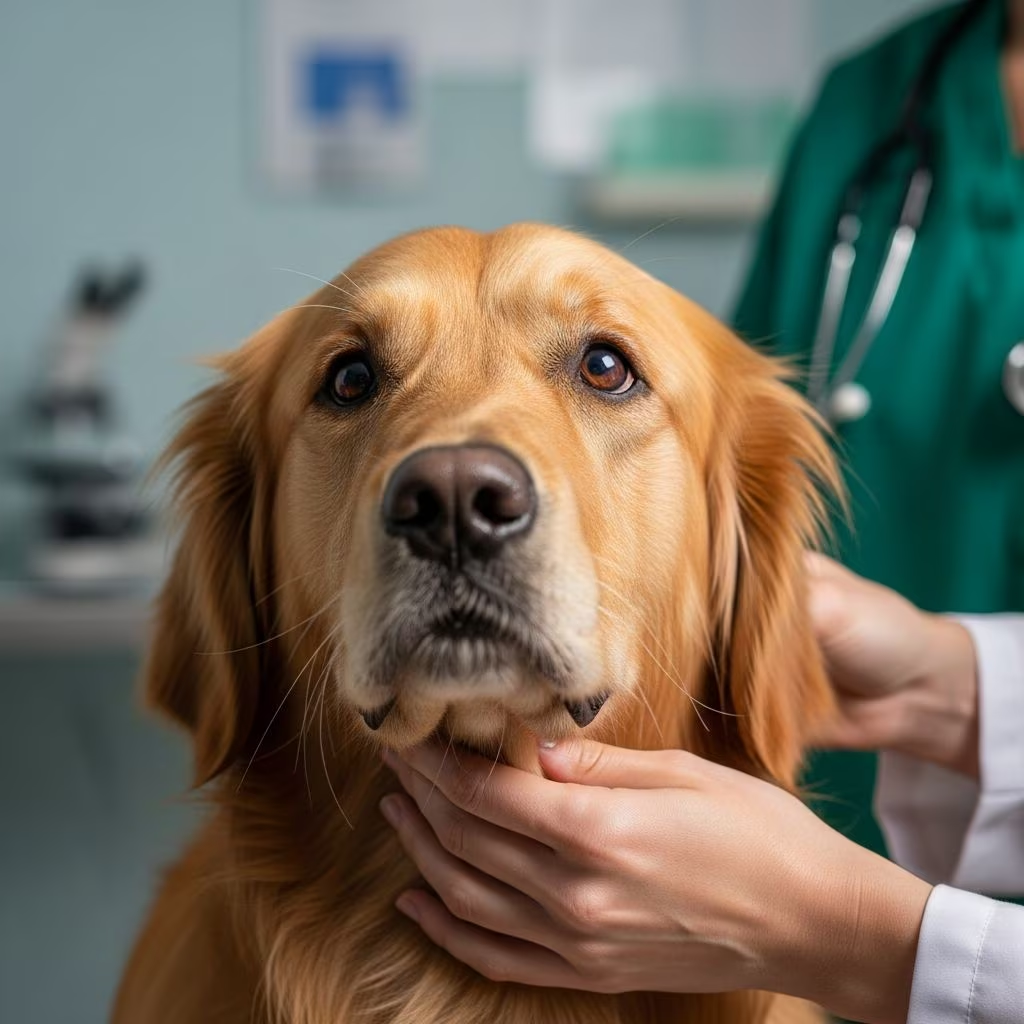
Hypothyroidism occurs when a dog’s thyroid gland fails to produce sufficient thyroid hormones, leading to slowed metabolism and various health challenges. This condition is prevalent in middle-aged dogs and requires lifelong management through hormone replacement.
Understanding the Thyroid’s Role in Canine Health
The thyroid gland, located in the neck, regulates metabolism, energy levels, and body temperature via hormones T4 and T3. In hypothyroidism, primary destruction of the gland, often autoimmune, reduces hormone output, affecting nearly every body system.
Unlike humans, canine hypothyroidism rarely stems from iodine deficiency. Instead, lymphocytic thyroiditis or idiopathic atrophy predominates, with congenital forms rare in adults. Breeds like Golden Retrievers, Dobermans, and Boxers face higher risks due to genetic factors.
Common Signs Your Dog May Have Low Thyroid Function
Recognizing symptoms early aids prompt intervention. Dogs often gain weight despite unchanged diets, appearing obese with fat deposits.
- **Lethargy and low energy:** Dogs sleep excessively, avoid play, and move sluggishly.
- **Coat and skin issues:** Dry, dull fur leads to symmetric hair loss on trunk, tail, and legs; skin thickens, darkens, and becomes infection-prone.
- **Cold intolerance:** Seeking warmth indicates poor thermoregulation.
- **Other effects:** Slow heart rate, high cholesterol, recurrent ear/skin infections, and slowed nail growth.[10]
Mental dullness manifests as reduced enthusiasm. In severe cases, infertility or neurological issues arise, though uncommon.[10]
Breeds and Factors Increasing Risk
Certain breeds show predisposition:
| Breed | Risk Level | Common Age Onset |
|---|---|---|
| Golden Retriever | High | 4-10 years |
| Doberman Pinscher | High | 5-8 years |
| Boxer | Moderate-High | 4-7 years |
| Daschund | Moderate | 6-9 years |
| Irish Setter | Moderate | 3-6 years |
Females and medium-to-large breeds are more susceptible. Age typically 4-10 years; puppies with congenital issues show stunted growth.
Diagnostic Process for Accurate Confirmation
Veterinarians start with history and exam, noting symmetric alopecia without itch. Blood tests measure total T4 (primary screen), free T4, and TSH (gold standard for primary hypothyroidism).
Low T4/TSH ratio confirms diagnosis; elevated cholesterol supports it. Conditions like illness mimic low T4, so repeat testing or TSH stimulation may be needed. Biopsy rarely required.
Primary Treatment: Hormone Replacement Therapy
Lifelong oral levothyroxine (e.g., Thyro-Tabs Canine, ThyroKare) restores levels. Start at 0.02 mg/kg once daily; some use twice-daily initially.
Energy rebounds in weeks; skin/coat improves over months. FDA-approved formulations ensure safety.
Dosing and Adjustment Guidelines
- Initial: 0.02 mg/kg q24h PO.
- Recheck: 4-6 weeks post-start, then every 6-12 months.
- Twice-daily if needed for better control.
- Fasting before tests for accuracy.
Monitoring Progress and Long-Term Care
Regular bloodwork tracks T4 (1-4 hours post-dose) and TSH. Owners note symptom resolution. Overdose risks tachycardia, polyuria; underdose sustains lethargy.
Lifelong commitment prevents relapse. Annual exams catch comorbidities like megaesophagus.
Supporting Your Dog’s Recovery with Nutrition
Balanced diet aids management. Focus on lean proteins, omega-3s for skin health, and antioxidants. Avoid soy/goitrogenic foods interfering with uptake.
- Iodine-rich kelp (vet-approved).
- Selenium/zinc supplements if deficient.
- Weight control via calorie restriction.
Hypoallergenic or novel protein diets help secondary infections.
Potential Complications and Co-Management
Untreated cases risk myxedema coma (rare). Concurrent Addison’s or diabetes complicates dosing. Neurological signs like megaesophagus need supportive care.
Monitor for laryngeal paralysis or heart issues.[10]
FAQs on Canine Hypothyroidism
Is hypothyroidism curable in dogs?
No, but manageable lifelong with medication.
How quickly do symptoms improve?
Activity surges in 1-2 weeks; dermatologic changes take 3-6 months.
Can diet alone treat it?
No, medication essential; diet supports.
What if my dog refuses pills?
Compounds or treats; consult vet.
Does spaying increase risk?
No direct link; genetic primary.
Lifestyle Adjustments for Thyroid Health
Encourage gentle exercise to combat lethargy. Warm bedding aids comfort. Regular grooming prevents matting.[10]
Holistic options like acupuncture may complement but not replace therapy; vet guidance crucial.
References
- Canine Hypothyroidism: Diagnosis and Treatment — Today’s Veterinary Practice. 2023. https://todaysveterinarypractice.com/endocrinology/canine-hypothyroidism-diagnosis-and-treatment/
- Hypothyroidism in Dogs: Causes, Symptoms, and Treatment — GoodRx. 2024. https://www.goodrx.com/pet-health/dog/signs-symptoms-of-hypothyroidism-in-dogs
- Thyroid Disease in Dogs: Causes, Signs, and Treatments — MedVet. 2023. https://www.medvet.com/thyroid-disorders-in-dogs/
- Hypothyroidism in Dogs — FDA Animal Health Literacy. 2022. https://www.fda.gov/animal-veterinary/animal-health-literacy/hypothyroidism-dogs-there-are-fda-approved-drugs-treat-it
- Hypothyroidism in Dogs — VCA Animal Hospitals. 2024. https://vcahospitals.com/know-your-pet/hypothyroidism-in-dogs
- Hypothyroidism — Cornell University College of Veterinary Medicine. 2023. https://www.vet.cornell.edu/departments-centers-and-institutes/riney-canine-health-center/canine-health-information/hypothyroidism



