

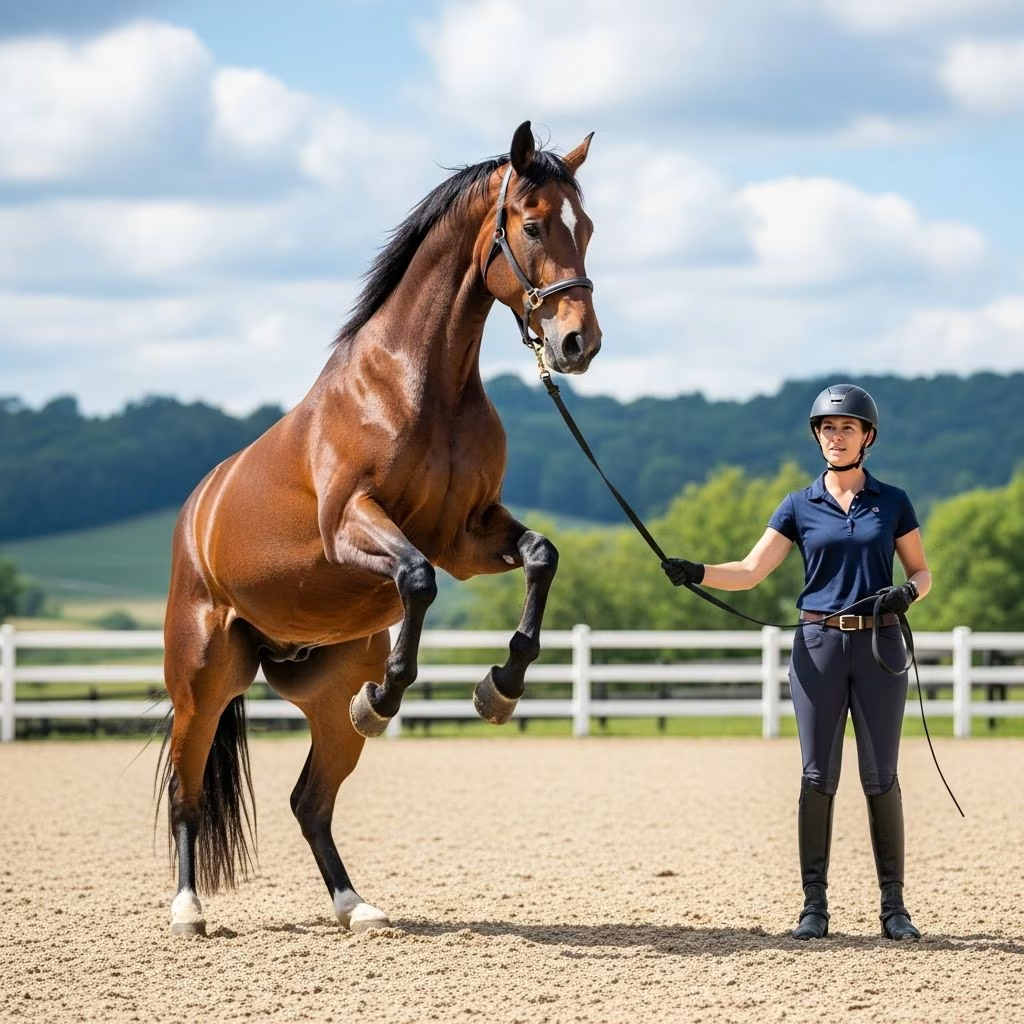
Horses exhibit a range of behavioral challenges that can compromise safety, health, and performance. These issues often arise from environmental stressors, inadequate management, or underlying medical conditions, affecting 10-40% of stabled horses.
Understanding the Roots of Equine Misbehavior
Behavioral problems in horses typically stem from unmet natural needs, such as foraging, social interaction, and physical activity. Confinement in stalls disrupts their herd-oriented lifestyle, leading to frustration and repetitive actions known as stereotypies. Poor feeding practices, isolation, and lack of mental stimulation exacerbate these tendencies, while pain from ill-fitting tack or injuries can trigger defensive responses.
Owners must first rule out physical causes through veterinary exams, as conditions like colic or back pain mimic behavioral defiance. Environmental factors, including limited roughage and social contact, directly correlate with higher incidence rates.
Recognizing Repetitive Stereotypies
Stereotypies are invariant, purposeless movements that horses perform compulsively, often replacing normal activities like eating or resting. These vices signal chronic stress and can cause secondary health issues such as weight loss or muscle damage.
- Cribbing/Windsucking: The horse grips a surface with incisors, arches its neck, and gulps air, potentially leading to colic from intestinal gas entrapment.
- Weaving: Swaying side-to-side while standing, which wears down legs and indicates boredom.
- Stall Walking/Pacing: Continuous circling or linear trotting along barriers, risking uneven spinal stress and rhabdomyolysis.
- Pawing: Repeatedly striking the ground, damaging hooves and stalls.
- Wood Chewing: Gnawing on structures, linked to oral fixation from insufficient fiber.
These behaviors rarely occur in free-ranging horses, highlighting management as the key culprit.
Aggressive and Defensive Reactions
Aggression poses significant risks to handlers, manifesting as bites, kicks, charges, or rearing. Signs include pinned ears, bared teeth, tail swishing, and squeals. Stallions may display heightened threats due to hormones, but any horse can aggress from fear, dominance disputes, or pain.
Defensive actions like bucking or rearing often result from saddle discomfort, rider imbalance, or unaddressed frustration during training. Kicking warns of irritation, frequently from hindquarter pain or invasion of personal space.
Social and Attachment-Related Challenges
As herd animals, horses form strong bonds, leading to separation anxiety or “buddy sour” tendencies. Affected individuals whinny excessively, pace, or resist leaving companions, complicating riding or trailering.
Barn sourness mirrors this, with reluctance to depart familiar stables, often escalating to bolting or balking. Sexual behaviors, like poor libido in stallions or silent heat in mares, disrupt breeding programs and stem from stress or health issues.
Disrupted Feeding Patterns and Pica
Eating disorders reflect nutritional or psychological distress. Pica involves consuming bedding, manure, or dirt, risking impactions or toxicity. Anorexia may follow illness, colic, or isolation, while obesity arises from constant access to high-calorie feeds overriding natural grazing limits.
Coprophagy occasionally occurs in young horses but persists in stressed adults, signaling fiber deficiency.
Prevention Through Optimized Management
Proactive strategies focus on mimicking natural conditions. Increase roughage to 1.5-2% of body weight daily, using varied hays to promote chewing and gut health. Provide straw bedding and ample turnout to reduce confinement.
Enhance social opportunities with compatible pasture mates and rotate groups to prevent hierarchies from solidifying aggression. Enrichment toys, slow feeders, and regular exercise combat boredom.
| Management Practice | Benefits | Implementation Tips |
|---|---|---|
| Increased Forage | Reduces oral stereotypies | Offer hay in multiple piles; use nets |
| Turnout Time | Lowers locomotor vices | 4+ hours daily in groups |
| Social Grouping | Alleviates anxiety | Match by age/temperament |
| Environmental Enrichment | Boosts mental stimulation | Jolly balls, hanging treats |
Corrective Training Techniques
Addressing entrenched issues requires patience and positive reinforcement. For aggression, desensitize gradually while maintaining safe distances, rewarding calm responses. Tackle bucking by ensuring proper saddle fit via certified fitters and vet checks.
Counter separation anxiety with progressive separation exercises: start with short, rewarding separations from the barn or buddy. Punishment worsens problems, as horses associate it with the handler rather than the behavior.
Professional input from equine behaviorists proves invaluable for complex cases, combining veterinary diagnostics with tailored plans.
Health Checks and When to Call a Vet
Not all misbehavior is purely habitual; pathological causes like head shaking or hormonal imbalances necessitate diagnostics. Routine exams rule out pain sources, with recent studies emphasizing back soreness in rearing horses.
For stereotypies, collars deter cribbing temporarily, but address root causes to prevent rebound. Monitor weight and performance, as vices drain energy and signal welfare deficits.
FAQs on Horse Behavior Management
Can horses learn bad habits from each other?
Evidence does not strongly support observational learning for vices like cribbing; environmental factors drive most cases.
How do I stop weaving?
Improve turnout, forage access, and companionship; mirrors or toys provide distraction but aren’t cures.
Is cribbing harmful?
Yes, it predisposes to colic and dental wear; management changes outperform collars long-term.
What causes bucking under saddle?
Often pain from tack or rider errors; always vet-check before training adjustments.
Are stallions more aggressive?
Hormones amplify risks, but proper handling and environment mitigate this.
Long-Term Welfare Improvements
Sustainable change demands holistic approaches, prioritizing species-appropriate living over quick fixes. Track progress with behavior logs, adjusting based on responses. Collaborative efforts with vets, trainers, and nutritionists yield the best outcomes, fostering trusting horse-human partnerships.
References
- Common Behavior Issues in Horses — PetMD. 2023. https://www.petmd.com/horse/common-behavior-issues-horses
- Dealing With Common Behavior Problems in Horses — Advanced Equine HV. 2024. https://www.advancedequinehv.com/dealing-with-common-behavior-problems-in-horses/
- Unwanted behaviors and vices in horses — University of Minnesota Extension (.edu). 2022-01-15. https://extension.umn.edu/horse-care-and-management/unwanted-behaviors-and-vices-horses
- Behavior Problems of Horses — MSD Veterinary Manual (.com, official veterinary resource). 2025. https://www.msdvetmanual.com/behavior/behavior-of-horses/behavior-problems-of-horses
- 8 Common Stereotypic Behaviours in Horses & What They Mean — Mad Barn. 2023. https://madbarn.ca/stereotypic-behaviour-in-horses/
- Looking Beyond “Problem Horses” — Horse Journals. 2021. https://www.horsejournals.com/riding-training/general/schooling/looking-beyond-problem-horses



