

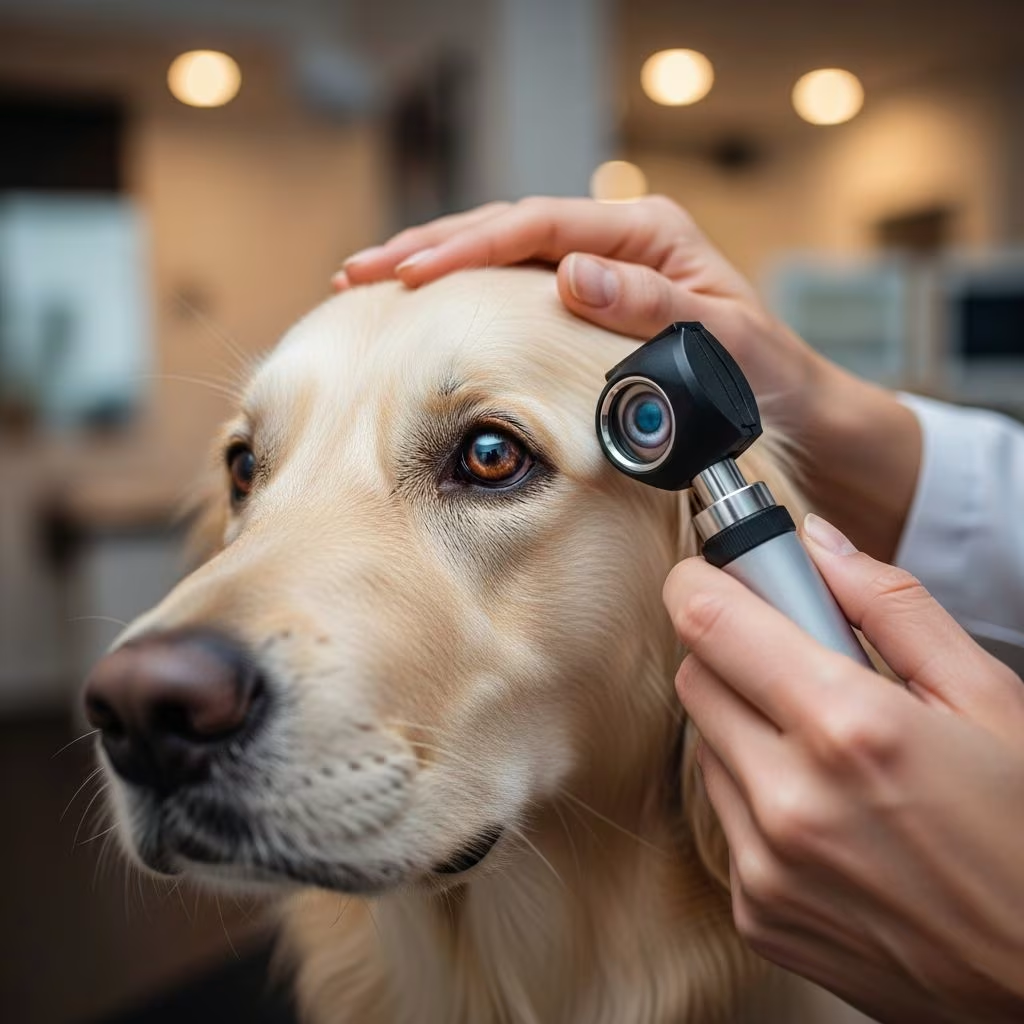
Glaucoma represents a critical ocular emergency in veterinary medicine, characterized by elevated intraocular pressure (IOP) that damages the optic nerve and retina, often leading to irreversible blindness if untreated. In dogs and cats, this condition arises from impaired aqueous humor drainage, demanding prompt intervention to safeguard vision and alleviate discomfort.
Understanding the Disease in Companion Animals
Primary glaucoma predominates in predisposed breeds like Cocker Spaniels, Basset Hounds, and certain cats, stemming from anatomical defects in the iridocorneal angle. Secondary forms develop from underlying issues such as lens luxation, uveitis, or cataracts. Early detection through tonometry, gonioscopy, and ophthalmoscopy is vital, as clinical signs including mydriasis, corneal edema, and episcleral congestion signal advanced stages.
Symptoms progress rapidly: pets may exhibit ocular pain manifested as blepharospasm, epiphora, or behavioral changes like reduced appetite. Measuring IOP above 25 mmHg confirms the diagnosis, guiding acute and chronic management protocols.
Core Principles of Pressure Reduction
Treatment hinges on lowering IOP via three mechanisms: decreasing aqueous production, enhancing uveoscleral outflow, and facilitating conventional trabecular meshwork drainage. Multimodal therapy combines topical agents for rapid effect with systemic options for sustained control.
Topical Medications: First-Line Defense
- Prostaglandin Analogs: Agents like latanoprost rapidly reduce IOP by 30-50% within hours through uveoscleral outflow enhancement. Administered once or twice daily, they induce miosis and are ideal for acute crises, though contraindicated in uveitis.
- Beta-Adrenergic Blockers: Timolol (0.5%) curbs aqueous production, effective in cats as monotherapy and in dogs combined with other drugs. Twice-daily dosing minimizes systemic absorption risks like bradycardia.
- Carbonic Anhydrase Inhibitors (CAIs): Dorzolamide and brinzolamide (2-1%) inhibit bicarbonate formation in the ciliary body, lowering IOP by 20-30%. Generic formulations improve affordability; combinations like dorzolamide-timolol (Cosopt) boost compliance.
These topicals form the backbone, often sequenced: prostaglandins for emergencies, followed by CAIs and beta-blockers for maintenance.
Systemic Support Options
Oral or intravenous CAIs such as methazolamide provide adjunctive reduction when topicals falter, though systemic side effects like anorexia limit use. Osmotic diuretics—mannitol IV (1-2 g/kg) or oral glycerin (1-2 g/kg)—offer swift IOP drops in acute cases by dehydrating the vitreous, effective within 30 minutes but requiring hydration monitoring.
| Drug Class | Examples | Mechanism | Dosage Frequency | Key Benefits |
|---|---|---|---|---|
| Prostaglandins | Latanoprost, Travoprost | Increases uveoscleral outflow | q8-24h | Rapid acute reduction |
| Beta-Blockers | Timolol | Reduces production | q12h | Effective in cats |
| CAIs | Dorzolamide, Brinzolamide | Decreases production | q8-12h | Low systemic risk |
| Osmotics | Mannitol, Glycerin | Vitreous dehydration | Acute only | Emergency IOP crash |
Advanced Surgical Interventions
When medical therapy fails to sustain vision, surgical options target IOP control or pain relief in blind eyes.
Anterior Segment Shunts and Implants
Drainage devices like Ahmed valves, Molteno, or Baerveldt implants redirect aqueous to subconjunctival reservoirs. Success rates improve with two-stage implantation to mitigate hypotony and fibrosis. Postoperative anti-inflammatories and IOP monitoring are essential.
Cyclodestructive Procedures
Trans-scleral cyclophotocoagulation (TSCP) using diode laser ablates ciliary processes, reducing production by 40-60%. Endoscopic cyclophotocoagulation (ECP) offers precision visualization, minimizing collateral damage, often paired with phacoemulsification.
Cyclocryotherapy employs nitrous oxide probes for noninvasive ablation, suitable for dogs, though risks include phthisis bulbi.
End-Stage Pain Management
For non-visual eyes, enucleation eliminates pain reliably. Alternatives include intrascleral prosthesis (evisceration) or chemical ablation with gentamicin, preserving cosmesis.
Species-Specific Considerations
Dogs: Breed Risks and Protocols
Predisposed breeds require gonioscopy screening. Acute attacks demand immediate latanoprost plus mannitol, transitioning to chronic combinations. Prophylactic dorzolamide/timolol prevents fellow-eye involvement.
Cats: Subtle Presentations
Feline glaucoma often secondary to uveitis; beta-blockers excel due to efficacy and tolerability. Avoid miotics to prevent pupil block.
Emerging and Investigational Therapies
Future directions include neuroprotection to halt retinal ganglion cell loss, gene therapies targeting outflow pathways, and stem cell regeneration. Netarsudil and latanoprostene bunod, human-approved, show promise in canines. Anti-fibrotic agents combat shunt failure.
EX-PRESS shunts and microinvasive glaucoma surgeries (MIGS) like iStent offer minimally invasive options with high short-term vision survival.
Monitoring and Prognosis
Regular tonometry tracks response; home monitoring aids early failure detection. Vision preservation averages 6-12 months medically, longer with surgery, but many progress to blindness.
Owner education on compliance and signs of recurrence enhances outcomes.
Frequently Asked Questions (FAQs)
What causes glaucoma in dogs?
Genetic angle closure in breeds like Shar Peis or secondary to lens issues.
Can glaucoma be cured in pets?
No cure exists; management delays progression.
How quickly does treatment work?
Prostaglandins lower IOP in 20-60 minutes.
Is surgery always needed?
Not initially; medical therapy suffices for many.
What if my pet goes blind?
Pain control via enucleation or ablation ensures comfort.
References
- The future of canine glaucoma therapy — PMC (National Library of Medicine). 2019-09-11. https://pmc.ncbi.nlm.nih.gov/articles/PMC6744300/
- Treatment of Glaucoma in Animals — Merck Veterinary Manual. 2023. https://www.merckvetmanual.com/pharmacology/systemic-pharmacotherapeutics-of-the-eye/treatment-of-glaucoma-in-animals
- Canine Glaucoma — University of Illinois Veterinary Medicine. 2023-05-12. https://vetmed.illinois.edu/2023/05/12/canine-glaucoma/
- Medical Options for the Treatment of Canine Glaucoma — VETgirl. Accessed 2026. https://vetgirlontherun.com/medical-options-for-the-treatment-of-canine-glaucoma-vetgirl-veterinary-continuing-education-blog/
- Your treatment options glaucoma small animals — dvm360. Accessed 2026. https://www.dvm360.com/view/your-treatment-options-glaucoma-small-animals-0
- Best Treatments for Canine Glaucoma — Rethink Healing (Vetrix). Accessed 2026. https://rethinkhealing.com/treatment-options-for-canine-glaucoma/
- Glaucoma — Colorado State University Veterinary Teaching Hospital. Accessed 2026. https://vetmedbiosci.colostate.edu/vth/services/ophthalmology/glaucoma/



