Managing Gas Bubble Disease in Aquarium Fish
Discover essential strategies to identify, prevent, and treat gas bubble disease in your freshwater and saltwater fish for a thriving aquarium.
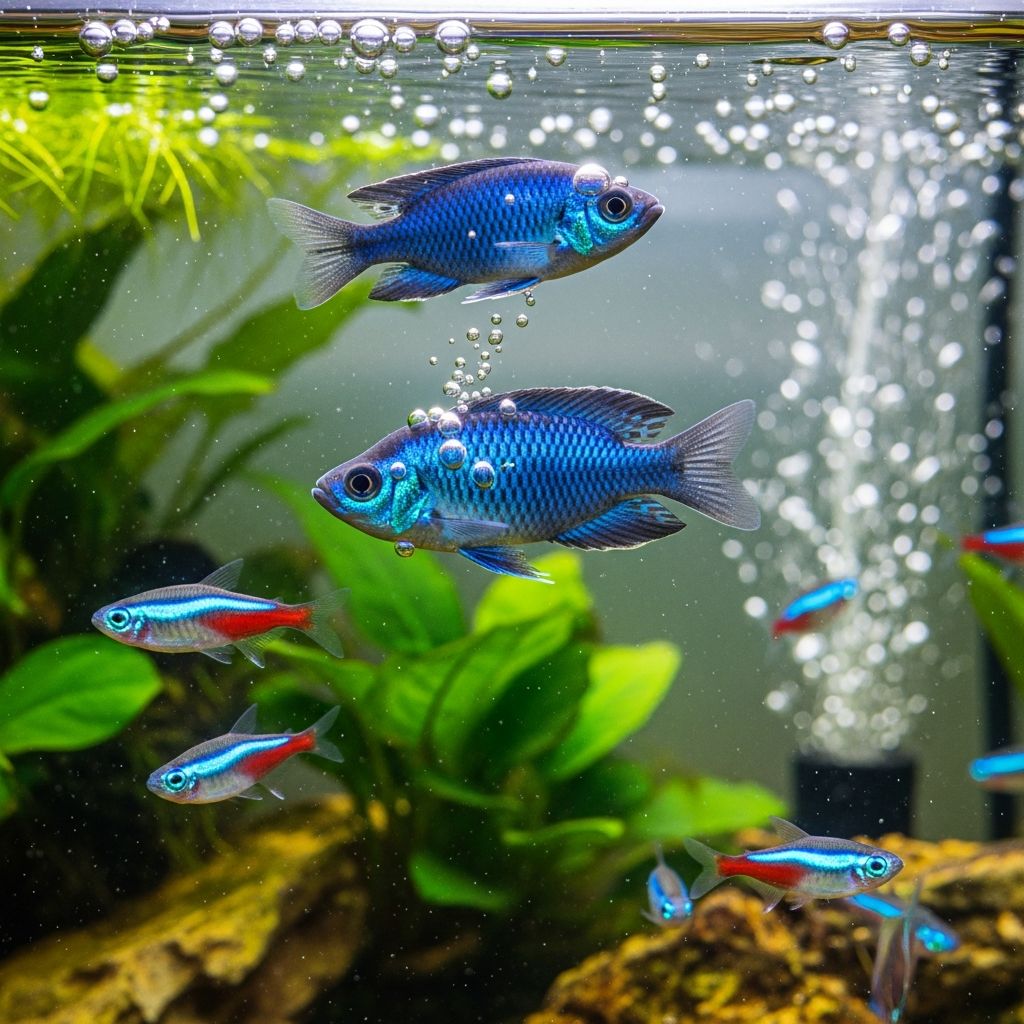
Gas bubble disease affects fish when excess gases form bubbles in their tissues, disrupting normal functions like blood flow and respiration. Quick recognition and intervention are crucial to prevent permanent damage or death in both freshwater and marine setups.
Understanding the Nature of Gas Bubble Disease
This condition arises from gas supersaturation in water, where levels of nitrogen, oxygen, or other gases exceed what the water can hold at normal temperatures and pressures. Fish absorb these gases through their gills, leading to bubble formation in blood vessels, fins, skin, eyes, and sometimes internal organs. Similar to decompression sickness in divers, it blocks oxygen delivery and causes tissue damage if untreated.
In aquariums, the disease progresses rapidly due to confined spaces amplifying gas buildup. Early stages might show subtle signs, but advanced cases can result in organ failure. Affected fish often struggle with buoyancy control, floating uncontrollably or sinking abnormally.
Common Triggers Behind Gas Buildup
Several factors contribute to supersaturation, making prevention a key focus for aquarists. Identifying the root cause helps tailor solutions effectively.
- Equipment Issues: Leaks in canister filters, hoses, or chillers introduce microbubbles directly into the water column. Worn tubing with pinprick holes is a frequent culprit.
- Temperature Fluctuations: Rapid warming releases dissolved gases, as colder water holds more air than warmer water. Sudden heater malfunctions exacerbate this.
- Pressure Changes: Transporting fish or altering tank depth mimics deep-sea pressure shifts, forcing gases out of solution.
- Biological Factors: Algae blooms produce oxygen spikes during photosynthesis, while decaying matter raises CO2 levels.
- Water Source Problems: Tap water aerated under high pressure or well water with natural gas pockets can introduce risks upon addition.
A table summarizing key triggers and their impacts:
| Trigger | Mechanism | High-Risk Scenarios |
|---|---|---|
| Filter Leaks | Microbubbles enter system | Older canister filters, external hoses |
| Temp Rise | Gas solubility decreases | Heater failure, seasonal changes |
| Algae Blooms | Oxygen supersaturation | High light, nutrient excess |
| Transport | Pressure drop | Shipping fish, tank moves |
Recognizing Early Warning Signs
Observant hobbyists spot issues before they escalate. Symptoms vary by severity and affected area.
- Bubbles visible on skin, fins, or gills, appearing as silvery spots.
- Protruding eyes (exophthalmia) or cloudy corneas from internal bubbles.
- Erratic swimming, surface gasping, or lethargy due to oxygen deprivation.
- Loss of appetite and positive buoyancy, where fish float near the top.
- In extreme cases, internal damage leads to blindness, fin rot, or respiratory distress.
Mild cases might resolve with minor adjustments, but eye involvement often signals advanced disease, potentially leading to permanent vision loss.
Step-by-Step Diagnosis Process
Confirming gas bubble disease requires ruling out similar conditions like popeye (bacterial infection) or swim bladder issues. Start with visual inspection under good lighting, then test water parameters.
- Water Testing: Measure dissolved oxygen, nitrogen, and temperature. Supersaturation shows DO above 110%.
- Equipment Check: Inspect for leaks by running filters outside the tank temporarily.
- Fish Examination: Gently net and observe for bubbles; avoid stressing further.
- History Review: Note recent changes like new fish, water additions, or power outages.
If unsure, isolate the fish in a quarantine tank for monitoring. Professional vets specializing in fish can perform advanced tests like gill biopsies.
Immediate Response and Treatment Options
Treatment focuses on reducing supersaturation and supporting fish recovery. Act swiftly to minimize tissue damage.
- Decompression: Move fish to a deeper tank or add water pressure gradually to redissolve bubbles.
- Water Exchange: Perform 25-50% changes with dechlorinated, temperature-matched water at normal pressure.
- Filter Fixes: Replace leaky hoses, clean airstones, and run powerheads to agitate surface without bubbles.
- Medication-Free Approach: Unlike infections, antibiotics are ineffective; focus on environment. Add tannins from Indian almond leaves for anti-inflammatory support.
- Surgical Intervention: Rare cases with eye bubbles may need enucleation (eye removal) by a vet; fish adapt well post-surgery.
Monitor progress daily. Recovery timelines: mild cases improve in 24-48 hours; severe ones take weeks with supportive care like low-flow hospital tanks.
Proven Prevention Strategies for Long-Term Success
Avoid recurrence through proactive maintenance. Integrate these habits into your routine.
| Strategy | Action Steps | Frequency |
|---|---|---|
| Regular Maintenance | Inspect equipment, change 10-20% water weekly | Weekly |
| Parameter Monitoring | Test temp (75-82°F ideal), DO, avoid rapid changes | Daily/Weekly |
| Algae Control | Limit light to 8-10 hours, manual removal | Ongoing |
| Source Water Prep | Age tap water 24-48 hours, use conditioners | Per change |
| Quarantine New Arrivals | Observe 2-4 weeks before main tank | New fish |
Maintain stable environments to keep gas levels balanced. Automated controllers for temperature and pH aid consistency.
Species-Specific Considerations and Risks
Not all fish respond equally. Goldfish and bettas show eye symptoms prominently, while tetras display fin bubbles. Community tanks amplify spread via stress. Vulnerable species include livebearers and egg-layers under high stocking densities.
Wild-caught fish face higher risks from transport supersaturation. Prioritize hardy varieties for beginners.
Advanced Monitoring Tools for Aquarists
Invest in digital testers for dissolved gases and pressure meters. Apps tracking tank logs help spot patterns. UV sterilizers reduce algae without chemicals, indirectly preventing oxygen spikes.
Frequently Asked Questions (FAQs)
Can gas bubble disease spread between fish?
No, it’s environmental, not contagious. Fix the tank to protect all inhabitants.
How long until symptoms appear?
Hours to days after supersaturation onset, depending on severity.
Is medication necessary?
Rarely; environmental correction suffices. Use antibiotics only if secondary infection suspected.
What if one eye is affected?
Treat as usual; the fish may lose vision in that eye but compensates.
Prevention in outdoor ponds?
Shade to curb algae, aerate properly, avoid overfeeding.
Case Studies: Real-World Recovery Examples
In one documented case, a reef tank with a leaky chiller saw multiple fish with fin bubbles. Replacing the hose and 30% water change resolved issues within 36 hours. Another freshwater setup with goldfish eye pop-outs improved after stabilizing temperature post-power outage.
These highlight the importance of swift action. Track your own incidents to refine protocols.
References
- Gas Bubble Disease in Fish — PetMD. 2023-05-15. https://www.petmd.com/fish/conditions/systemic/gas-bubble-disease-fish
- How Can Gas Bubble Illness Be Treated in Freshwater Fish — Kwik Pets. 2024-02-10. https://www.kwikpets.com/blogs/aquatic/how-can-gas-bubble-illness-be-treated-in-freshwater-fish
- There’s Something In The Water: Gas Bubble Disease In Fish — Veterinary Vision Center. 2022-11-20. https://veterinaryvisioncenter.com/theres-something-in-the-water-gas-bubble-disease-in-fish/
- Gas Bubble Disease — Wikipedia (informational, primary sources referenced). 2025-01-05. https://en.wikipedia.org/wiki/Gas_bubble_disease
- 11.19. Gas Bubble Disease — Aquarium Science. 2023-08-12. https://aquariumscience.org/11-19-gas-bubble-disease/
- Effective Management Avoids Gas Bubble Trauma — The Fish Site. 2024-06-18. https://thefishsite.com/articles/effective-management-avoids-gas-bubble-trauma
- How to Solve a Problem Like Gas Embolisms — Practical Fishkeeping. 2023-03-22. https://www.practicalfishkeeping.co.uk/features/how-to-solve-a-problem-like-gas-embolisms/
Similar Articles





Read full bio of medha deb