

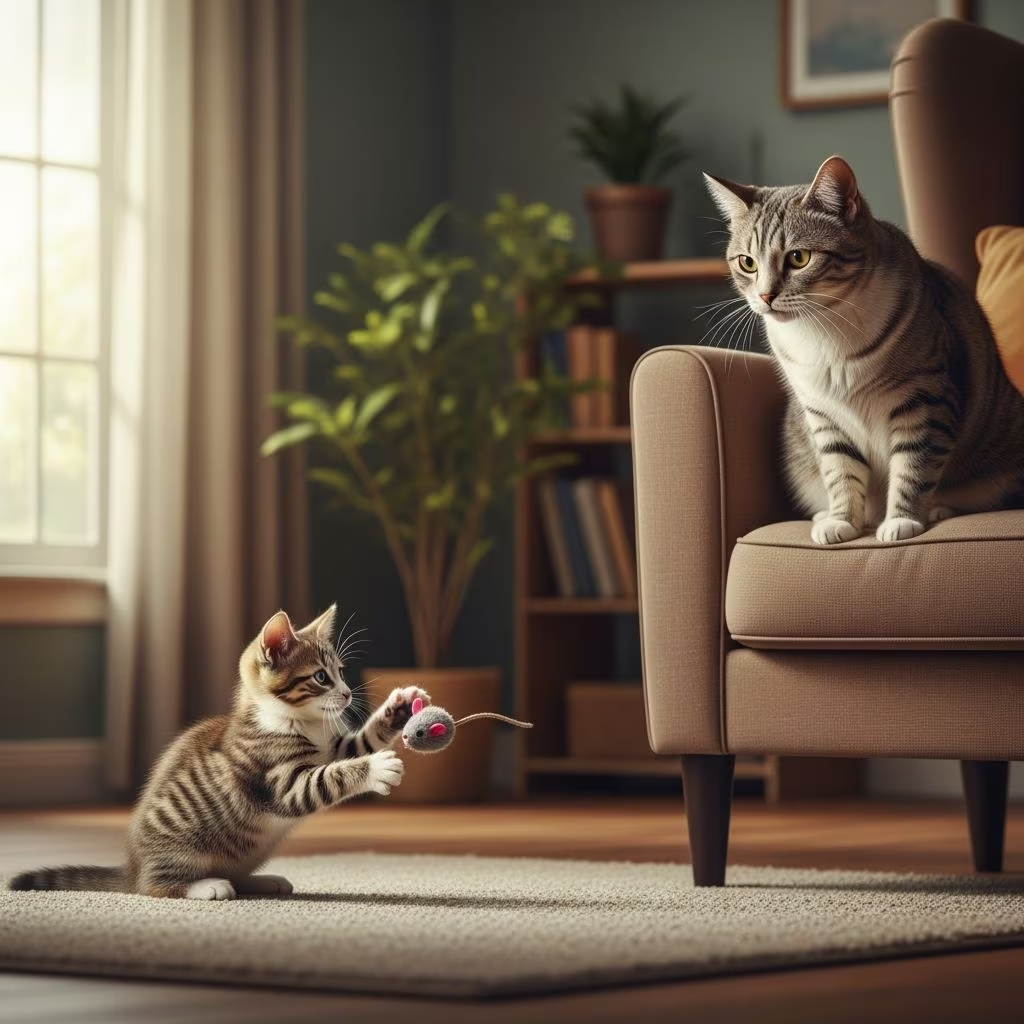
Bringing a new kitten into a home with an established cat can feel like introducing two complete strangers to share an apartment. The dynamics are complex, and the resident cat’s resistance is not simply stubbornness—it reflects genuine territorial instincts and the stress of unexpected change. Understanding why older cats react negatively to kittens and implementing a structured integration plan can transform potential conflict into cautious coexistence, and eventually, genuine companionship.
Understanding Feline Territorial Response
Cats are inherently territorial animals, and your resident cat views your home as their established domain. From their perspective, every corner represents familiar territory they have marked and claimed through their own scent glands. When a new kitten arrives, it represents an uninvited intrusion into this carefully established kingdom. This territorial response is not a behavioral flaw—it is an ancient survival mechanism that helped wild cats maintain resources and safety within their defined territories.
The intensity of resistance varies significantly between individual cats. Some older cats may simply maintain distance and avoid the kitten, while others may display more aggressive warning behaviors such as hissing, swatting, or growling. These warning signals are actually the cat’s attempt to communicate boundaries without resorting to serious injury. Hissing, in particular, is considered a preliminary vocal warning—more of a “bark than bite”—and indicates the cat is establishing their place in the household hierarchy and setting rules for acceptable interaction.
Kittens, by contrast, are typically oblivious to these subtle social signals. Their playful energy, combined with incomplete understanding of adult cat communication, can provoke frustration in older cats who feel their boundaries are being violated. This mismatch in communication styles creates the appearance of conflict when, in reality, the older cat is attempting to teach the kitten proper feline etiquette.
Creating a Safe Arrival Environment for Your New Kitten
The first phase of introduction begins before the kitten and older cat ever see each other. Proper environmental preparation reduces stress for both animals and establishes the foundation for successful integration.
Establishing a Separate Kitten Territory
When a kitten first arrives, confining them to a single room creates a controlled environment where they can acclimate to your home without immediately triggering territorial conflicts. This dedicated space should be thoroughly kitten-proofed to eliminate hazards such as live electrical cables, toxic plants, open windows, and small objects they could swallow. Stock this room with essential resources including a litter box, food and water bowls, a comfortable sleeping area, and toys for mental stimulation.
This separation strategy serves multiple purposes. It allows your older cat to maintain normal movement throughout the home without constant monitoring or feeling pursued by an energetic kitten. Your resident cat can visit their food, water, and litter facilities without anxiety. Additionally, the kitten benefits from a low-stress environment where they can gradually become familiar with new surroundings at their own pace.
Resource Distribution and Prevention of Competition
A critical mistake many cat owners make is placing all cats’ resources in shared locations. Cats perceive food, water, and litter as valuable commodities, and competition for these resources intensifies territorial tension. Instead, place each cat’s food and water bowls in separate locations that feel safe and accessible to them. Position litter boxes in different areas of your home, ensuring your older cat can access their preferred box without encountering the kitten.
This resource distribution acknowledges each cat’s individual space while preventing the stress that arises from perceived resource scarcity. Your older cat should never feel that their established facilities have been taken over or compromised by the new arrival.
The Scent Swapping Phase: Building Familiarity Before Face-to-Face Contact
Before your cats meet face-to-face, introducing them to each other’s scent is a crucial intermediate step that significantly eases the eventual introduction. This technique works because cats recognize and accept other cats partly through scent recognition—if a scent becomes familiar and associated with safety, the cat’s defensive response diminishes.
Initial Scent Introduction Technique
Begin by selecting a soft fabric item such as a tea towel, blanket, or small cushion. Gently stroke your kitten with this fabric, paying particular attention to their face, cheeks, and the area around their neck where scent glands are concentrated. This captures the kitten’s unique scent profile. Place this scented item in an area where your older cat frequents naturally—perhaps near their favorite resting spot or feeding area—and allow them to investigate at their own pace.
Your older cat’s reaction provides valuable information. Some cats show immediate interest and sniff thoroughly, while others appear to ignore the new scent entirely. More reserved reactions might include stiffening or bristling fur. These varied responses are normal and do not indicate failure. Different cats require different timeframes to accept new scents, so this process may need to continue for several days before proceeding to the next step.
Reciprocal Scent Exchange
Once your older cat appears comfortable with the kitten’s scent—indicated by relaxed behavior or even lying down on the scented item—begin the reciprocal exchange. Stroke your older cat with a second fabric item, then offer that scent-laden fabric to your kitten. This bidirectional scent exchange helps both cats begin perceiving each other as members of the same social group, a crucial concept in feline social hierarchy.
Watch for your older cat to rub their face and body against the kitten-scented fabric. When you observe this self-directed grooming behavior on the scented item, it indicates genuine acceptance and readiness to move toward visual contact. Rushing this phase can undo progress, so patience during this foundation stage pays significant dividends.
Structured Visual Introduction: The First Meeting
The initial face-to-face meeting requires careful management to prevent negative associations that could persist for months. The goal is to allow your older cat to approach and observe the kitten while maintaining complete control over the interaction and an easy escape route if needed.
Controlled Viewing Techniques
One effective method involves placing your kitten inside a large, comfortable carrier containing their bed, a hiding box, food, water, and litter. This setup allows your older cat to approach, investigate, and establish visual familiarity while the kitten remains contained and safe. Your older cat can choose their distance and retreat whenever they feel overwhelmed, maintaining their sense of control throughout the interaction.
Alternatively, use a baby gate or stair gate positioned across the kitten’s room door. This barrier allows cats to see and smell each other while preventing physical contact. Position yourself nearby to manage any escalating behaviors, but avoid actively intervening unless necessary—cats need space to process this new information independently.
Recognizing Healthy Versus Concerning Behaviors
When your older cat exhibits relaxed body language around the kitten—sitting calmly, lying down, or grooming themselves—these indicate positive progression. The older cat is communicating that they have assessed the situation and determined it is not an immediate threat.
Concerning behaviors include prolonged staring, stalking postures with low-slung bodies, rapid tail twitching, or ears pinned backward. If you observe these signals, separate the cats and return to the scent-swapping phase for additional days. Rushing past these warning signs can result in injury or establish negative associations that make future introductions substantially more difficult.
Gradual Unsupervised Proximity and Shared Space
Once your older cat demonstrates consistently relaxed behavior around the kitten during controlled introductions, begin allowing brief periods of supervised proximity without physical barriers. Keep these initial sessions short—ten to fifteen minutes—and maintain your presence to intervene if needed.
Environmental Modifications for Safe Coexistence
Provide vertical escape routes throughout your home by installing cat trees, shelves, or window perches where your older cat can retreat to elevated spaces. Cats feel safer when they can move vertically and observe their environment from heights, reducing their stress during the adjustment period. Your older cat should always have accessible high ground to use if the kitten’s energy becomes overwhelming.
Similarly, maintain physical barriers such as stair gates that your older cat can jump over but the younger kitten cannot yet traverse. This allows your established cat to move freely throughout the home while controlling when they interact with the kitten.
Monitoring Play Dynamics and Aggression Boundaries
During this phase, expect your older cat to alternate between playing with the kitten and delivering stern warnings. This vacillation is normal as your older cat establishes their dominant position and teaches the kitten appropriate play boundaries. The older cat is essentially saying, “I will engage with you, but only on my terms, and there are limits to acceptable behavior.”
Kitten play can be intense and involve biting and scratching, behaviors that sometimes exceed your older cat’s tolerance threshold. When the older cat hisses, swats, or walks away, they are establishing these boundaries. Allow the older cat to enforce their own limits—this is healthy cat-to-cat communication and far preferable to human intervention.
Supporting Your Established Cat Through the Transition
While managing the kitten’s behavior is important, equally critical is reassuring your older cat that they remain valued and secure within their home hierarchy.
Priority Attention and Affection
Greet your older cat first when you enter your home or any room, even before acknowledging the kitten. This behavioral prioritization communicates that your older cat maintains their established position. Dedicate specific daily time to interactive play with your older cat using their preferred toys, such as fishing rod-style wands that simulate hunting. These sessions reinforce your bond and provide essential mental and physical stimulation.
Your older cat may experience genuine anxiety during this adjustment period, manifesting as changes in eating habits, litter box behavior, or increased vocalization. Any significant behavioral changes warrant a veterinary check to rule out medical issues, as stress can exacerbate underlying health conditions.
Maintained Routine and Familiar Comforts
Preserve your older cat’s established routine regarding feeding times, play sessions, and rest periods. Consistency provides security during unsettling transitions. Allow them access to their favorite resting spots, toys, and furniture without competition from the kitten. If your older cat has established preferences for certain rooms or areas, preserve these refuges as kitten-free zones when possible.
Extended Timeline: When Integration Takes Longer
While some cats progress through introduction phases relatively quickly, others require weeks or even months to reach genuine acceptance. This extended timeline is not unusual and does not represent failure. Individual cat personalities, age differences, prior experiences, and household dynamics all influence the integration speed.
Continue maintaining separation during your absence and overnight for several weeks, even if daytime interactions appear positive. This extended separation prevents stress-related conflicts when you cannot monitor the interaction, and it allows both cats to decompress in their own territories after shared time together.
Some cats eventually establish “time share” arrangements where they use shared spaces sequentially rather than simultaneously. Others may eventually share beds or play together. The goal is not necessarily friendship but rather peaceful coexistence where both cats feel safe and secure in your home.
When Professional Help Becomes Necessary
If your older cat displays escalating aggression despite implementing these structured introduction techniques, or if the kitten shows signs of injury or severe stress, consult with a certified animal behaviorist or feline behavior specialist. Professional guidance can identify specific stressors or behavioral issues that require customized intervention strategies beyond general introduction protocols.
Building Long-Term Harmony
Successfully integrating a new kitten into a household with an older cat requires patience, planning, and recognition that your established cat’s resistance is not personal rejection but rather a normal feline response to territorial change. By implementing gradual introduction techniques, managing resources effectively, and maintaining your older cat’s sense of security and value within the household, you create the conditions for peaceful coexistence that may eventually develop into genuine companionship.
The effort you invest during the initial integration phase pays dividends throughout the years, resulting in a multi-cat household where both animals feel safe, secure, and content. Each cat has their own space while sharing your home, and the household dynamics reflect respect for each individual cat’s personality and needs.
References
- Introducing a Kitten to an Older Cat — Vets4Pets. https://www.vets4pets.com/pet-health-advice/cat-advice/kitten/introducing-kittens-to-adult-cats/
- Introducing a New Kitten to an Older Cat — Animal Behaviorist. https://animalbehaviorist.us/newkittenoldcat.html
- 6 Tips for Introducing a New Kitten to Your Resident Cat — 1st Pet Vet. https://1stpetvet.com/pet-health-information/6-tips-for-introducing-a-new-kitten-to-your-resident-cat/
- 5 Tips for Introducing a Kitten to Adult Cats — Fear Free Happy Homes. https://www.fearfreehappyhomes.com/5-tips-for-introducing-a-kitten-to-adult-cats/
- The Do’s and Don’ts of Introducing Cats — Jackson Galaxy. https://www.jacksongalaxy.com/blogs/news/the-dos-and-donts-of-introducing-cats



