

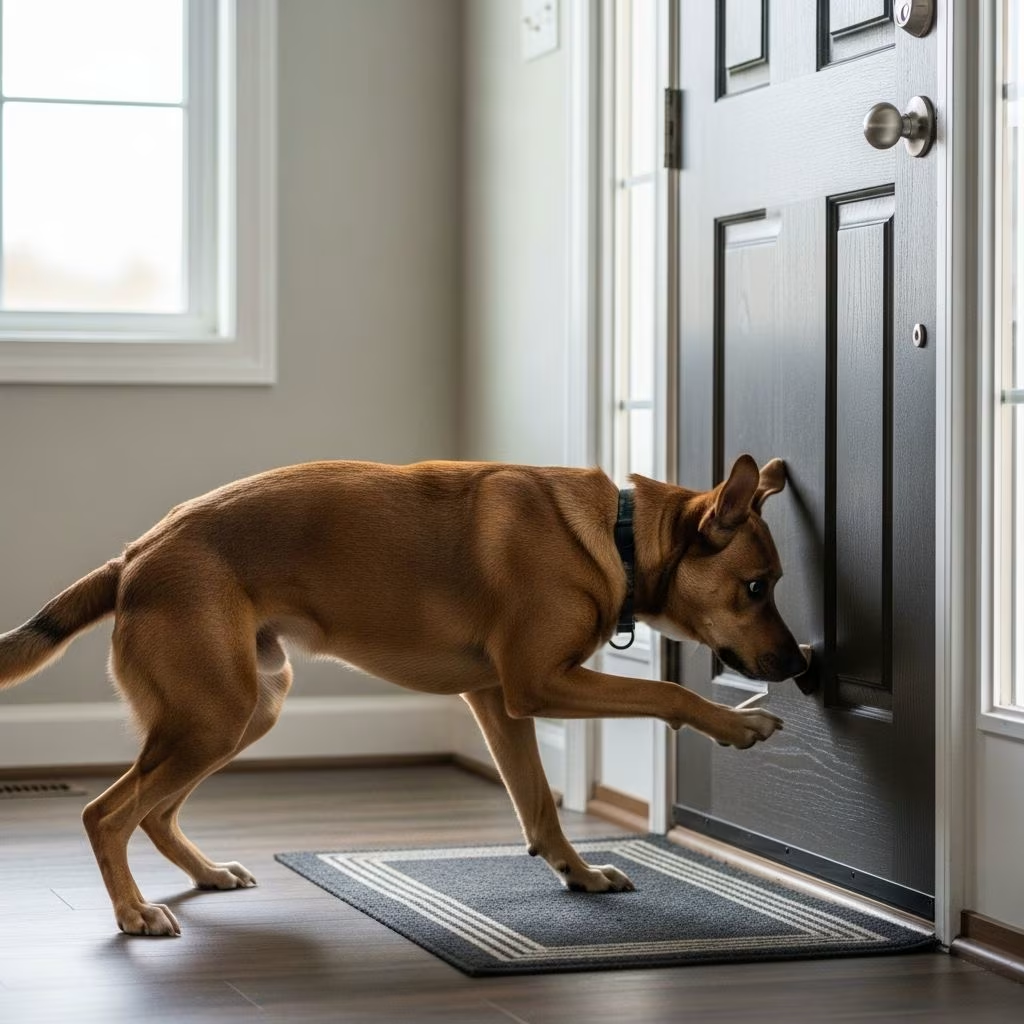
Doors represent one of the most stimulating environmental cues for dogs. Whether your dog charges through openings, jumps frantically at the threshold, or barks uncontrollably when someone arrives, door-related behaviors can create stress for both pets and owners. These reactions stem from natural canine instincts, including territorial awareness, curiosity about the external environment, and excitement about potential activities. Understanding the root causes of door-related behaviors and implementing structured training approaches can transform this common household challenge into an opportunity for improved obedience and household harmony.
Understanding Why Dogs React at Doorways
Dogs exhibit various behavioral responses at doors due to multiple interconnected factors. The threshold between the home and outside world represents a boundary that triggers natural protective instincts in many dogs. This territorial behavior is rooted in canine genetics and survival mechanisms, causing dogs to perceive the area around doors as requiring monitoring and defense. When dogs have unrestricted access to yard boundaries through pet doors or frequent unsupervised access, these protective tendencies can intensify, resulting in excessive barking and boundary-focused reactivity.
Beyond territorial concerns, doors themselves are inherently exciting. The unknown possibilities beyond a closed door—new scents, people, animals, or adventures—create anticipatory excitement in many dogs. Additionally, dogs that lack sufficient physical and mental stimulation often become chronic door-bolters or exhibit escalated door-related excitement. These typically intelligent, problem-solving dogs seek outlets for their natural exploration and exercise drives when appropriate opportunities aren’t available. When dogs don’t receive adequate structured activities, they will independently seek the environmental enrichment and physical outlets they require.
Identifying the Specific Door Behavior Challenge
Door-related behaviors manifest in different ways, and identifying your dog’s specific pattern helps determine the most effective intervention strategy:
- Door charging or bolting: The dog dashes through open doors or pushes through barriers without permission
- Jumping and barking: Excited or anxious greeting responses when visitors arrive or when the door opens
- Boundary reactivity: Aggressive barking, growling, or lunging at the threshold when perceiving external stimuli
- Escape attempts: Persistent efforts to break through closed doors or exploit small openings
- Attention-seeking behaviors: Pawing, scratching, or vocalization directed at doors to solicit interaction
Each behavior type requires slightly different management approaches, though the fundamental training principles remain consistent across all door-related issues.
The Foundation: Prevention and Environmental Management
Before implementing training interventions, establishing management strategies prevents your dog from practicing unwanted behaviors. This prevention phase is crucial because each time your dog rehearses door-related excitement or bolting, the behavior becomes more ingrained and difficult to modify. Preventing practice opportunities significantly accelerates behavioral change.
Essential management strategies include:
- Installing baby gates or barriers that prevent unsupervised access to high-traffic doors
- Using leashes to maintain control when doors must open
- Redirecting your dog to a separate area when you need to open doors during the training phase
- Removing your dog from the space when guests arrive until training improves significantly
- Securing pet doors or using them only under supervision until behavioral patterns change
- Establishing restricted access to areas with windows overlooking external stimuli that trigger reactivity
Management isn’t a permanent solution, but it creates the controlled environment necessary for successful training by preventing rehearsal of problematic responses.
Building Physical and Mental Enrichment
Many chronic door-related behavioral problems stem from insufficient exercise and mental stimulation. Dogs requiring more activity outlets often exhibit escalated door reactivity because they’re attempting to create their own environmental engagement opportunities. Addressing this underlying cause dramatically improves training success rates.
Implement a structured enrichment program including:
- Daily aerobic exercise appropriate to your dog’s age, breed, and health status
- Problem-solving games and shaping exercises that engage your dog’s cognitive abilities
- Nose work activities that provide mental stimulation and satisfying outlet for natural instincts
- Structured training sessions that channel your dog’s intelligence into productive behaviors
- Interactive toys that require problem-solving to access rewards
- Rotating toy availability to maintain novelty and engagement
Dogs receiving adequate physical and mental stimulation typically exhibit reduced reactivity at doors and other threshold-related challenges. Meeting your dog’s fundamental needs creates the behavioral foundation necessary for successful training interventions.
Establishing Default Doorway Responses Through Training
The core training strategy involves teaching your dog an automatic, default behavior that occurs whenever approaching a threshold or sensing door-related activity. This replacement behavior serves as an incompatible response to jumping, bolting, or excessive excitement.
The most effective default behaviors include:
- Sit: Teaching your dog to automatically sit when approaching doors or perceiving door-related cues
- Carpet targeting: Training your dog to place all four paws on a designated mat or carpet when doors open
- Focus or watch: Teaching your dog to maintain eye contact with you during door-related activity
- Stationary position: Training a stay in a designated location during door transitions
The sit behavior works particularly well because it’s incompatible with jumping or charging, and it naturally becomes a cue for good things to follow. Eventually, the sight of a door becomes an environmental trigger for your dog to automatically sit and await further instruction, without requiring explicit verbal cues.
Response Substitution: Replacing Unwanted Behaviors
Response substitution is a behavior modification technique that replaces undesirable responses with appropriate alternatives. Rather than focusing on stopping unwanted behaviors, this approach emphasizes teaching and reinforcing the desired response.
The substitution process involves:
Phase One: Teaching the Alternative Behavior
Train your chosen replacement behavior in calm, distraction-free environments. Practice sessions should be brief, positive, and consistently rewarded. Build reliability and consistency before introducing door-related contexts.
Phase Two: Applying the Behavior to Doors
Begin with low-stimulation door contexts. Practice your dog’s default behavior when opening interior doors to low-traffic areas before progressing to more stimulating thresholds. Gradually increase the challenge level as your dog demonstrates reliable responses.
Phase Three: Introducing Real-World Distractions
Once your dog responds consistently to quiet door openings, introduce controlled distractions such as family members approaching the door, external noises, or visible movement. Progress slowly, maintaining success and positive associations throughout the process.
Training should always occur when your dog is calm. Attempting to train during heightened excitement or anxiety compromises effectiveness and may reinforce undesirable arousal levels.
Addressing Specific Door Behaviors
Managing Door-Bolting Behavior
Dogs with histories of door-dashing require careful, gradual desensitization to open doors. Beginning training at interior doors provides low-stakes practice opportunities without real escape risks. As reliability improves at bedroom or laundry room doors, progress to more stimulating thresholds. Avoid using external doors during initial training phases when possible. When unavoidable, maintain strict management and prevention to minimize opportunities for rehearsal.
Accidental reinforcement often strengthens door-dashing behaviors. Family members chasing escaped dogs or dogs successfully pursuing external animals or stimuli create powerful rewards that intensify the behavior. Identifying and eliminating these reinforcement sources accelerates training progress.
Reducing Door-Related Jumping and Barking
When dogs are already exhibiting jumping and barking responses, focus on building the desirable replacement behavior rather than attempting to suppress the unwanted response directly. This positive approach builds the behaviors you want while naturally crowding out problematic reactions. Until training progresses significantly, remove your dog from the area when doors must open, preventing practice and maintaining household management.
Addressing Territorial Aggression at Doors
Dogs displaying aggressive responses at doors benefit from counterconditioning approaches that associate door activity with positive outcomes. Create low-intensity scenarios where your dog is aware of external stimuli or visitors but the situation remains non-threatening. Gradually reduce distance as your dog demonstrates comfort at each stage. Visual barriers and tethering during uncontrolled situations prevent aggressive displays while you build positive associations.
Positive reinforcement should accompany the arrival of visitors and external stimuli, helping dogs perceive these situations as predictive of rewarding experiences rather than threats requiring defensive responses. This shift in perception fundamentally changes behavioral responses at doors.
Training Progression Timeline and Expectations
Behavioral modification requires consistency, patience, and realistic expectations. Most dogs demonstrate noticeable improvement within several weeks of consistent training, though complete reliability may require ongoing reinforcement.
Expected progression includes:
- Weeks 1-2: Establishing default behavior in calm environments; minimal door-related practice
- Weeks 3-4: Applying behavior to quiet, interior doors; introducing minor distractions
- Weeks 5-8: Progressing to more stimulating thresholds; building reliability with external distractions
- Weeks 8+: Varying rewards and reinforcement schedules; reducing reliance on management strategies
Your dog’s response speed typically accelerates over time. Behaviors that initially required explicit cuing become automatically offered environmental responses. Eventually, doors function as environmental cues that reliably trigger appropriate responses without deliberate training sessions.
When Professional Support Becomes Necessary
While many door-related behaviors respond well to owner-implemented training, certain situations warrant professional guidance. Consulting certified behavior consultants or trainers becomes appropriate when:
- Aggressive responses intensify despite consistent training efforts
- Your dog poses safety risks to household members or visitors
- Door-related behaviors indicate underlying anxiety or fear requiring specialized intervention
- Previous training attempts have been unsuccessful
- Coordinating family member responses requires professional mediation
Qualified professionals assess individual situations, identify contributing factors you might have overlooked, and design customized protocols addressing your dog’s specific needs and your household’s circumstances.
Family Participation and Consistency
Successful behavioral modification requires consistent responses from all household members. When some family members enforce expectations while others inadvertently reinforce problematic behaviors, progress slows dramatically. Establish clear protocols addressing:
- What behavior you expect at doors
- How each family member will respond to both desired and undesired responses
- Consequences for inconsistent implementation
- Celebration of progress and behavioral improvements
Family members often unconsciously reinforce excitement by becoming excited themselves when visitors arrive or when leaving the home. Calmness and predictability from humans create the environmental context that supports behavioral change. When family members maintain composure and consistent responses, dogs more readily adopt calm threshold behaviors.
Long-Term Management and Maintenance
Once your dog reliably demonstrates appropriate door behaviors, maintenance requires ongoing reinforcement. Varying reward types—sometimes treats, sometimes verbal praise, sometimes freedom to engage in rewarding activities—maintains motivation and prevents extinction of trained responses.
Environmental changes can temporarily disrupt established behaviors, particularly when you relocate, acquire new pets, or experience significant household transitions. Briefly returning to foundational training protocols reinforces established patterns during these transitions.
Common Questions About Door Behavior Training
Q: How long does door behavior training typically require?
Most dogs demonstrate significant improvement within 4-8 weeks of consistent training, though complete reliability may require ongoing reinforcement. Individual timelines vary based on prior learning history, severity of the behavior, and consistency of implementation.
Q: Can I use punishment-based approaches to stop door behaviors?
Punishment-based methods typically intensify door-related excitement and anxiety, particularly with jumping and bolting behaviors. Positive reinforcement of replacement behaviors proves far more effective and maintains your dog’s confidence and trust.
Q: What if my dog has already learned door-dashing behavior extensively?
Even deeply ingrained behaviors respond to systematic retraining. Expect a longer timeline and heightened management requirements, but behavioral modification remains achievable through persistence and consistency.
Q: Should I use pet doors during training?
Pet doors require removal or supervised-only access during the initial training phase. Unsupervised pet door access typically reinforces the very behaviors you’re attempting to modify. Once behaviors are reliably controlled, supervised pet door access can be gradually reintroduced.
Q: How do I prevent my dog from going back to old behaviors?
Consistent reinforcement of appropriate responses, ongoing management of high-stimulation situations, and maintaining adequate physical and mental enrichment prevent regression. Brief refresher training during transitions or environmental changes also helps maintain established patterns.
References
- How to Prevent Door-Dashing — Clicker Training, Karen Pryor Academy. https://clickertraining.com/how-to-prevent-door-dashing/
- Dog Behavior Problems: Barking and Jumping at the Door — VCA Animal Hospitals. https://vcahospitals.com/know-your-pet/dog-behavior-problems-greeting-behavior-door-charging
- Preventing Door-Dashing — Kathy’s Dogs Always Outstanding. https://www.kathysdao.com/articles/preventing-door-dashing/
- Doggy Doors Debunked: A Closer Look at Training Complications and Behavioral Issues — Canine Evolutions. https://www.canineevolutions.com/news/DoggyDoorsDebunked
- How to Stop a Dog From Acting Aggressive to People at the Door — Doggone Problems. https://www.doggoneproblems.com/baxter-stop-a-dog-from-acting-aggressive-to-people-at-the-door/
- A Holistic Dog Behavior Consultant’s Opinion on Dog Door Aggression — Whole Dog Journal. https://www.whole-dog-journal.com/behavior/a-holistic-dog-behavior-consultants-opinion-on-dog-door-aggression/



