

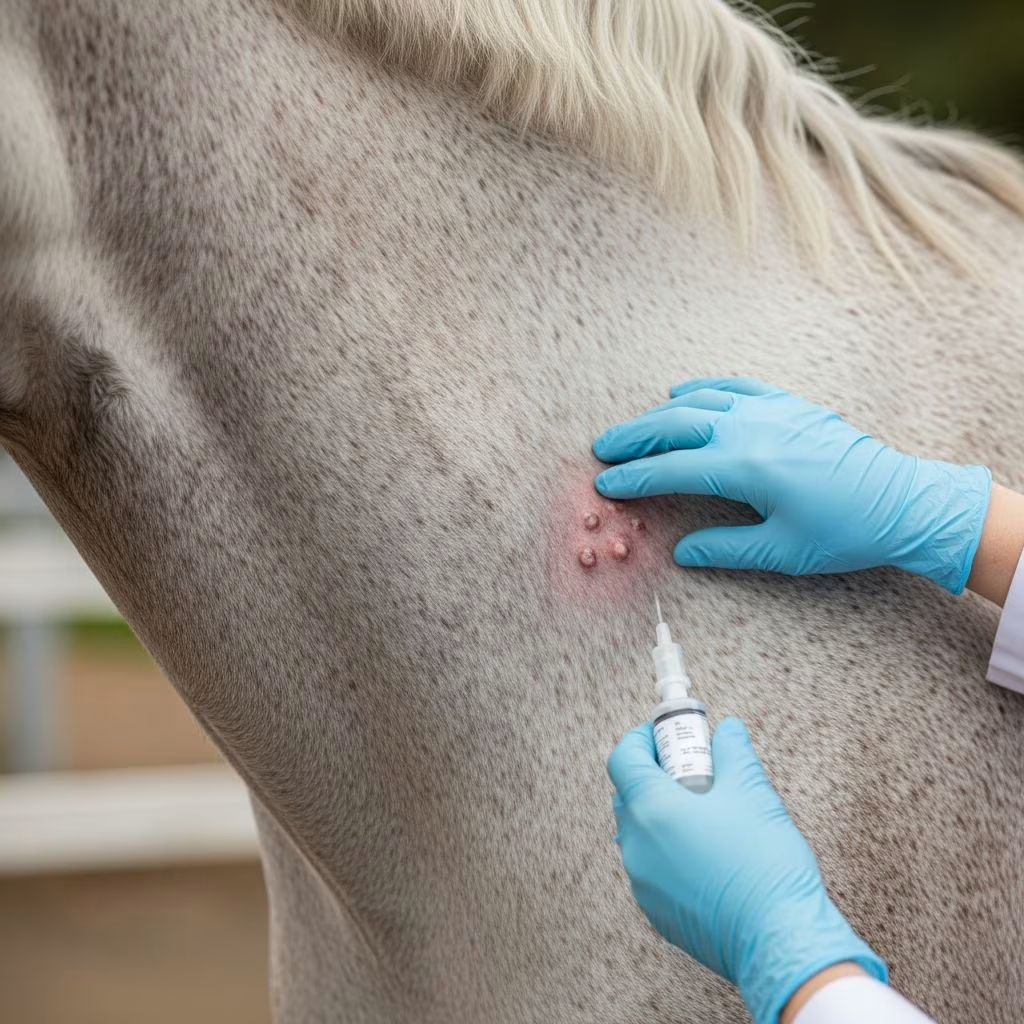
Equine skin allergies represent a prevalent challenge for horse owners, manifesting as intense itching, inflammation, and discomfort that can compromise a horse’s quality of life. These conditions often stem from hypersensitivity to environmental triggers, insects, or contact irritants, requiring prompt identification and targeted management to restore skin health.
Understanding the Roots of Skin Allergies in Horses
Skin allergies in horses arise primarily from an overactive immune response to harmless substances, categorized as type 1 hypersensitivity where mast cells release histamines upon allergen exposure. Common culprits include insect saliva from midges, flies, and mosquitoes, which provoke reactions like sweet itch—a seasonal dermatitis affecting mane and tail areas.
Environmental allergens such as pollen from grasses, weeds, and trees also play a significant role, particularly during peak seasons. Contact allergens from shampoos, tack materials like rubber or plastics, and certain plants can trigger localized reactions. Less commonly, food sensitivities or photodermatitis from UV exposure combined with liver issues exacerbate skin sensitivity.
Bacterial or fungal overgrowth can secondary infect allergic sites, while conditions like pastern dermatitis often involve microbial invasion in moist environments, linking allergies to opportunistic infections.
Recognizing Key Symptoms Early
Horses exhibit distinctive signs of skin allergies, enabling owners to intervene swiftly. Persistent rubbing against fences or stalls leads to hair loss, especially along the back, mane, and tail base. Affected skin appears red, inflamed, thickened, or develops hives—raised, itchy welts that may spread across the body.
- Itching and self-trauma: Horses bite, scratch, or roll excessively, creating bald patches and scabs.
- Skin changes: Flaky dandruff, crusting, oozing lesions, or greasy seborrhea indicate ongoing irritation.
- Hives (urticaria): Sudden swelling forming firm lumps, often resolving but recurring with re-exposure.
- Secondary issues: Infections cause pustules, foul odors, or lameness in pastern dermatitis cases.
Seasonal patterns, worsening in summer with insect activity, provide diagnostic clues. Respiratory signs like coughing may accompany airborne allergies.
Diagnostic Approaches for Accurate Identification
Veterinary evaluation is essential, starting with a thorough history of onset, location, and triggers. Physical exams assess lesion distribution—dorsal midline for insects, ventral for contact allergies. Skin scrapings, cytology, or biopsies rule out infections or parasites.
Allergy testing via intradermal injection of suspects or serum IgE analysis pinpoints culprits, guiding immunotherapy. Elimination trials for feed allergies involve dietary changes over weeks. Bloodwork checks for underlying conditions like Cushing’s predisposing to infections.
| Diagnostic Method | Purpose | Advantages |
|---|---|---|
| Intradermal Testing | Identifies insect/environmental allergens | Direct skin response; high specificity |
| Serum Allergy Testing | Detects IgE antibodies | Non-invasive; useful for multiple allergens |
| Skin Biopsy | Confirms hypersensitivity vs. infection | Histological detail |
| Cytology/Swab | Rules out bacteria/fungi | Quick results for secondary issues |
Immediate Relief Strategies
Symptom control prevents self-trauma and secondary infections. Topical corticosteroids like hydrocortisone creams reduce inflammation locally, while soothing shampoos with oatmeal or chlorhexidine cleanse and calm skin. Antihistamines such as hydroxyzine offer mild relief, though less effective in horses than dogs.
Omega-3 fatty acid supplements support skin barrier function, reducing itch over time. For acute flares, oral prednisolone—preferred for lower laminitis risk—provides systemic anti-inflammatory effects without long-term use.
Advanced Treatment Options
For chronic cases, allergen-specific immunotherapy (ASIT) desensitizes the immune system via escalating injections of identified allergens, achieving control in 60-80% of horses after 6-12 months. Lifelong maintenance may be needed, but many taper successfully.
Steroid injections like dexamethasone offer potent short-term relief but carry risks like immunosuppression. Emerging options include oclacitinib (Apoquel equivalent) for itch modulation, pending equine approvals. Combined with environmental management, these yield best outcomes.
Infectious complications demand targeted antimicrobials: antibacterial shampoos for Dermatophilus in rain scald or pastern dermatitis, antifungals for yeast overgrowth.
Prevention: Proactive Environmental Controls
Minimizing exposure forms the cornerstone of management. Insect control via daily pyrethrin-based repellents, fly sheets, masks, and stable fans during dawn/dusk reduces bites. Pasture rotation avoids high-pollen areas; clipping long manes/tails limits midge access.
- Feed from ground level to minimize dust inhalation linked to allergies.
- Use hypoallergenic bedding and tack; rinse thoroughly post-bath.
- Regular grooming removes allergens; avoid over-bathing to preserve oils.
For photodermatitis, sun-blocking rugs protect sensitive skin. Quarantine new horses prevents introducing allergens or infections.
Case Studies: Real-World Management Success
A 12-year-old Quarter Horse with summer sweet itch saw 90% symptom reduction after ASIT plus fly control, eliminating steroids. Another case of pastern dermatitis resolved with bacterial culture-guided topicals and hoof management, preventing recurrence.
These illustrate tailored approaches outperform blanket treatments.
Frequently Asked Questions (FAQs)
What is the most common cause of skin allergies in horses?
Insect bites, particularly from Culicoides midges, trigger sweet itch in susceptible horses.
Can diet cause skin issues?
Yes, though rare; proteins in feeds like alfalfa may provoke reactions, confirmed via elimination diets.
Are steroids safe long-term?
Short courses are safe under vet supervision; prolonged use risks laminitis or immunosuppression.
How long does immunotherapy take?
Up to 12 months for full effect, with gradual dose increases.
Can allergies be cured?
Not cured, but managed effectively to minimize flares.
Long-Term Monitoring and Owner Tips
Regular vet check-ups track progress, adjusting plans seasonally. Owners should log symptoms, triggers, and responses for data-driven care. Nutritional support with biotin and zinc aids coat health, complementing allergy management.
By integrating prevention, diagnostics, and therapies, most horses achieve comfortable lives despite allergies.
References
- Horse Dermatitis: Symptoms, Treatment, and More — Vetericyn. 2023. https://vetericyn.com/blogs/vetericyn/horse-dermatitis-symptoms-treatment
- How to treat skin allergies in horses — Vet Voice. 2023. https://www.vetvoice.com.au/ec/horses/skin-allergies/
- Sweet Itch in Horses: Symptoms, Causes, and Treatment Options — PetMD. 2023. https://www.petmd.com/horse/conditions/skin-health/sweet-itch-in-horses
- Horse Summer Dermatitis — Texas A&M College of Veterinary Medicine. 2023. https://vetmed.tamu.edu/news/pet-talk/horse-summer-dermatitis/
- Skin Irritations in Horses: Hives, Infections, Allergies & Hair Loss — Mad Barn. 2023. https://madbarn.com/skin-irritations-in-horses/
- Hives and Skin Allergies — Park City Equine Center. 2023. https://www.parkcityequinecenter.com/horse-vet-blog/hives-and-skin-allergies
- Equine allergic skin diseases: Clinical consensus guidelines — PubMed (International Journal of Dermatology). 2023-05-01. https://pubmed.ncbi.nlm.nih.gov/37154488/



