

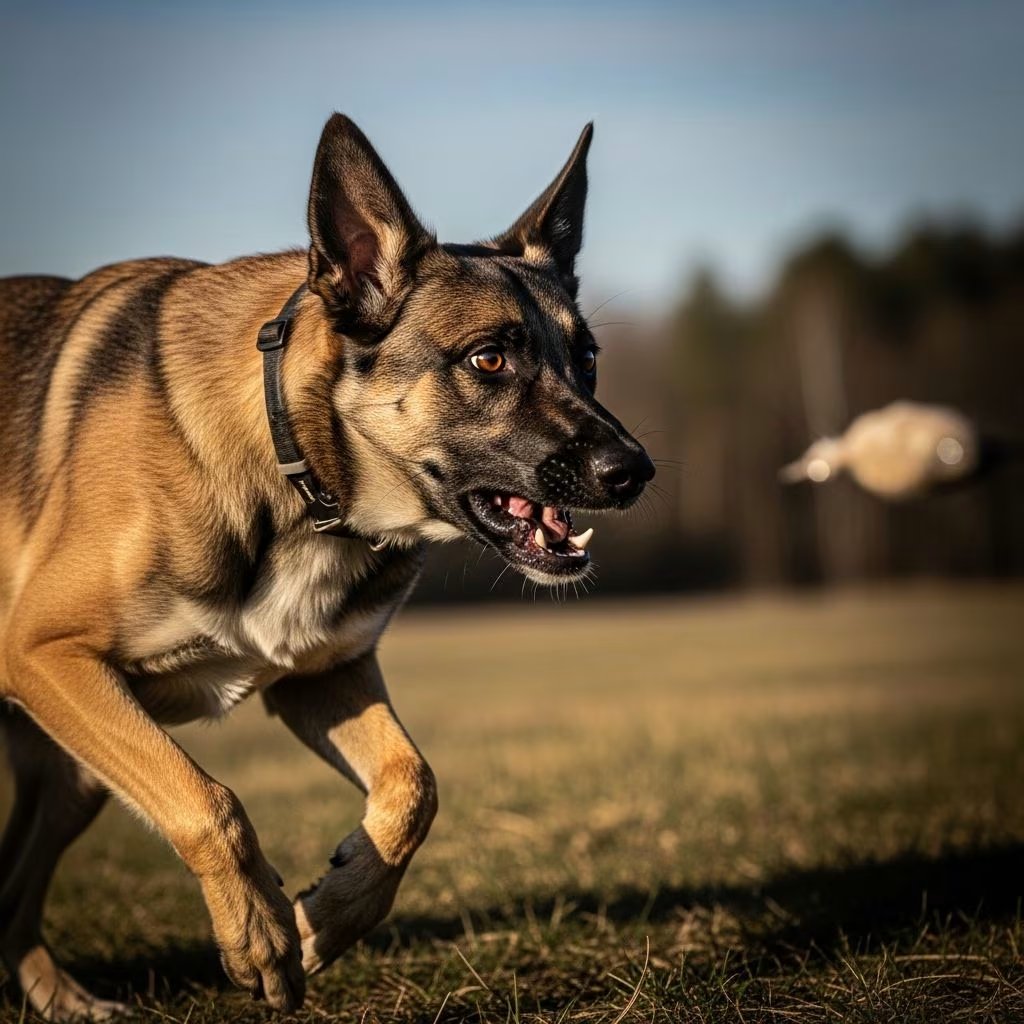
Dogs with high prey drive exhibit natural hunting behaviors that can pose challenges in modern pet environments. These instincts, rooted in their evolutionary past, manifest as fixation on moving objects, pursuit, and capture attempts, requiring proactive management to ensure safety for all involved.
The Foundations of Canine Hunting Instincts
Every dog inherits a predatory motor sequence, a series of innate behaviors triggered by potential prey. This sequence begins with awareness and progresses through targeted actions leading to consumption, though domestic dogs often halt at intermediate stages.
Understanding this progression helps owners anticipate triggers. For instance, rapid movements like scurrying animals or thrown toys activate the drive, turning play into focused pursuit.
Breaking Down the Predatory Sequence Step by Step
The predatory sequence unfolds in distinct phases, each building intensity. Recognizing early signs allows intervention before escalation.
- Orient and Eye: The dog turns toward movement, locking eyes intensely. This fixation can persist, signaling full engagement.
- Stalk: Slow, stealthy approach minimizes detection, often with a lowered posture.
- Chase: Burst of speed follows, with agile turns to close distance.
- Grab-Bite: Mouth contacts prey to seize without immediate lethality.
- Possess: Holding and carrying the item, common in retrievers.
- Kill-Bite: Vigorous shake aims to subdue.
- Dissect and Consume: Tearing apart and eating follow success.
Not all dogs complete every phase; breed genetics influence emphasis. Terriers excel in grab and kill, while herders intensify eye and stalk.
How Breeds Shape Predatory Tendencies
Selective breeding amplifies specific sequence elements. Herding dogs like Border Collies prioritize stare and stalk for control, hounds focus on tracking scents before chase, and terriers target underground prey with tenacious biting.
| Breed Group | Dominant Phases | Example Behaviors |
|---|---|---|
| Herding | Eye, Stalk | Intense staring at livestock, low creeps |
| Hound | Orient, Chase | Scent tracking, pursuit over distances |
| Terrier | Grab-Bite, Kill-Bite | Shaking toys, digging for rodents |
| Retriever | Possess, Carry | Gentle holding of objects |
These traits, while functional historically, demand tailored outlets in homes.
Predatory Drift: When Play Turns Perilous
Predatory drift occurs when rough play morphs into hunting mode, especially with size disparities or groups. Initial fun escalates to stalking, chasing, and injurious bites, risking severe harm.
Risk amplifiers include large-small dog pairs, fearful yelps mimicking prey distress, and ‘finishers’ with wildlife kill histories. High arousal blurs play-predation boundaries, with stress responses like flight triggering chase.
Spotting Early Warning Signs
Owners must discern predatory cues from normal play. Key indicators:
- Prolonged, unblinking stare without play bows.
- Silent stalking over bouncy approaches.
- Chasing that ignores recalls or escalates speed.
- Hard bites lacking give-take, progressing to shakes.
Leash lunging at small animals or fixation on joggers signals strong drive needing address.
Safe Management Techniques for Daily Life
Channel instincts constructively rather than suppress. Start with prevention: secure fencing blocks wildlife access, leashed walks curb chasing.
Training emphasizes impulse control. Teach ‘leave it’ for distractions, rewarding calm. Long-line recalls build reliability off-leash.
Enrichment Games to Satisfy the Drive
Flirt poles mimic stalk-chase-grab safely. Scatter feeding fulfills hunt-consume via foraging.
- For Stalk/Chase: Drag toys, laser pointers (supervised).
- Grab/Possess: Multiple tug toys for carrying.
- Kill/Dissect: Floppy toys for shaking, destructible items like cabbages.
- Consume: Puzzle feeders post-game.
Rotate activities to prevent boredom, matching breed strengths.
Navigating Multi-Dog Households
Supervise interactions rigidly. Match playmates by size/energy, interrupt drift precursors like ganging up. Separate high-drive dogs during arousal peaks.
Professional Help When Needed
If behaviors endanger others, consult certified trainers using force-free methods. They assess sequence intensity, customize protocols. Avoid punishment, which heightens frustration.
Owner Mindset and Lifestyle Fit
High prey drive suits active owners providing outlets. Note: studies link such dogs to owners prone to risk-taking, underscoring responsible selection. Daily mental exercise prevents frustration-fueled incidents.
Frequently Asked Questions
Can prey drive be eliminated?
No, it’s innate, but management redirects it effectively.
Is high prey drive dangerous?
Potentially, toward small pets/wildlife, but training mitigates risks.
How to test my dog’s drive?
Observe reactions to moving toys/small animals per sequence checklist.
Best toys for high-drive dogs?
Durable tugs, flirt poles, destructibles tailored to phases.
Does neutering reduce prey drive?
Limited impact; behavior roots are genetic.
Long-Term Success Strategies
Consistency yields results. Track progress, adjust enrichments, prioritize exercise. High-drive dogs thrive as partners in agility, nosework, converting instincts to achievements.
References
- Understanding the Canine Predatory Sequence — The Training of Dogs. 2023. https://www.thetrainingofdogs.com/post/understanding-the-canine-predatory-sequence
- Predatory Drift – What is it? How to avoid it! — Dog Training Fresno. 2022. https://www.dogtrainingfresno.com/predatory-drift-what-is-it-how-to-avoid-it/
- Predatory Behavior — Whole Dog Journal. 2023. https://www.whole-dog-journal.com/blog/predatory-behavior/
- Psychological Characteristics of Owners of Aggressive Dog Breeds — Psychology Today. 2009-03-29. https://www.psychologytoday.com/us/blog/canine-corner/200903/psychological-characteristics-of-owners-of-aggressive-dog-breeds
- Predatory Behaviors In Pet Dogs — Aggressive Dog. 2024-05-06. https://aggressivedog.com/2024/05/06/predatory-behaviors-in-pet-dogs/
- Understand predatory drift in dogs — Best Dog Learning and Stuff. 2023. https://bestdoglearningandstuff.co.uk/understand-predatory-drift-in-dogs
- Prey Drive in Dogs: Understanding & Managing — Hill’s Pet Nutrition. 2024. https://www.hillspet.com/dog-care/behavior-appearance/prey-drive-in-dogs



