

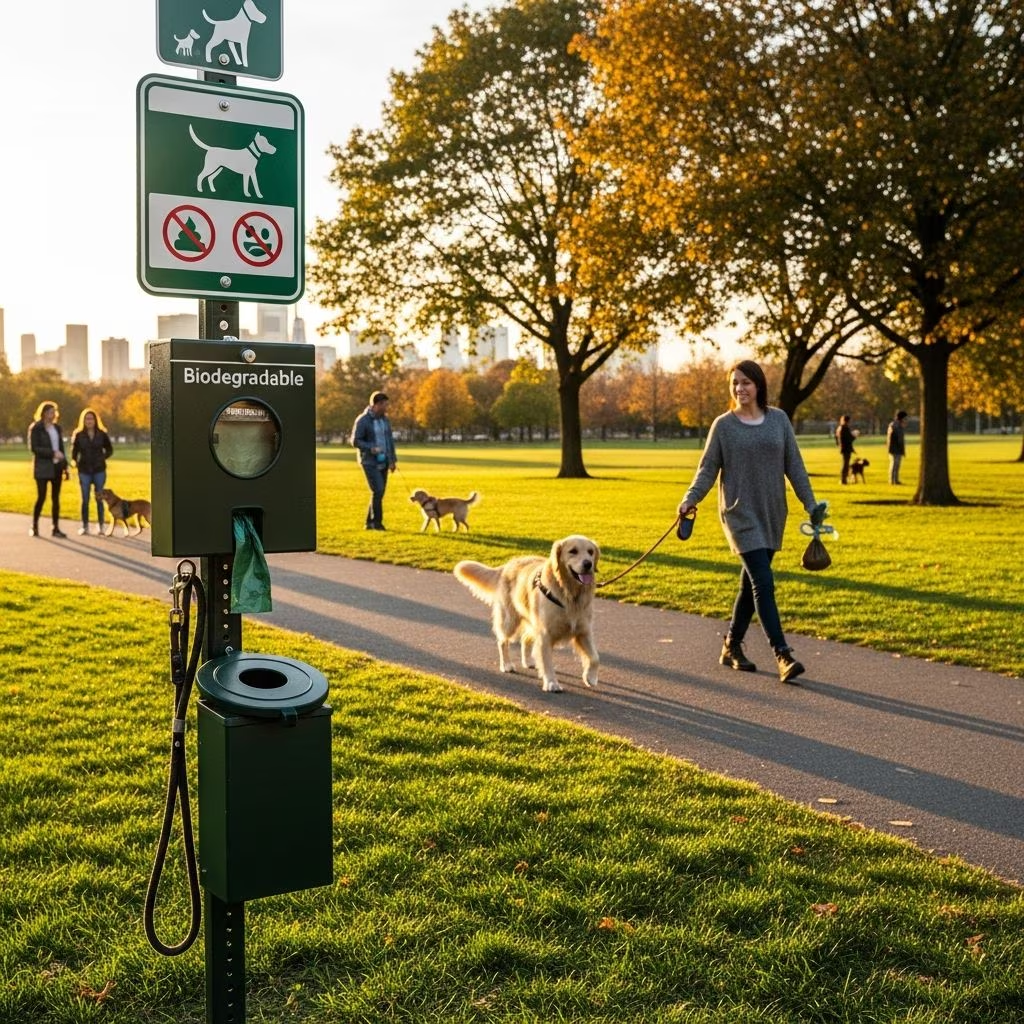
Dog waste poses significant challenges in urban parks, contributing to pollution, health risks, and increased maintenance costs. Effective management requires a blend of education, infrastructure, and enforcement to foster cleaner public spaces.
The Hidden Dangers of Unmanaged Pet Waste
Dog feces contain high levels of nitrogen, phosphorus, bacteria like E. coli, viruses, and parasites that persist in soil for years. Unlike wildlife waste, pet waste from domesticated diets does not break down quickly, leading to long-term contamination of soil and waterways.
In urban settings, stormwater runoff carries this waste into sewers and directly into rivers, lakes, and streams. Studies indicate that up to 30% of bacteria in urban watersheds originates from dog waste, impairing water quality and endangering aquatic life.
Health risks extend to humans and animals. Pathogens can spread diseases to children playing in parks, spread parasites among dogs, and cause gastrointestinal issues. Municipalities face overuse of landfills, with park audits showing 40-80% of garbage bin contents as pet waste, and up to 97% contamination in recycling bins.
Quantifying the Scale of the Problem
Canada alone generates over 2.5 million kilograms of dog waste daily, totaling 924 million kilograms annually. In the U.S., a single watershed like Four Mile Run sees 5,000 pounds from 11,400 dogs daily, contributing majorly to fecal coliform exceedances.
| Region | Daily Waste (kg) | Annual Waste (million kg) | Key Impact |
|---|---|---|---|
| Canada (National) | 2,500,000 | 924 | Watershed pollution |
| Four Mile Run, VA | 2,268 (5,000 lbs) | N/A | Bacteria exceedance |
| Urban Parks (General) | Varies | N/A | Landfill overuse |
These figures underscore the urgency for targeted interventions in densely populated areas.
Building Responsible Pet Ownership Habits
Education campaigns raise awareness about environmental harm, encouraging owners to pick up waste consistently. Public signage in parks reminds visitors of responsibilities, while providing free bag dispensers removes excuses for non-compliance.
Combining these with “pooper scooper” ordinances mandates cleanup in public spaces, with fines for violations. Such laws, pioneered in places like New York City, have improved cleanliness historically.
- Install bag dispensers at park entrances.
- Use clear, multilingual signs explaining health risks.
- Launch community workshops on proper disposal.
- Enforce bylaws with visible patrols.
Innovative Infrastructure for Waste Collection
Traditional bins overflow quickly with dog waste, causing odors, extra labor, and contamination. Specialized solutions address these issues effectively.
In-ground containment systems feature narrow chutes that accept only bagged waste, preventing misuse. Stored underground, they minimize odors and hold up to 500 kg, reducing emptying frequency from 22 manual trips to one mechanical haul.
Anaerobic digesters process collected waste into biogas for energy, as implemented in Waterloo and planned in Edmonton. This diverts waste from landfills, turning a liability into a resource.
Training Pets for Designated Elimination Zones
Designated areas train dogs to use specific spots, minimizing scattered waste. Choose accessible, low-traffic locations with appropriate surfacing like gravel or sand.
- Select a consistent spot with attractants like grass or scent markers.
- Use positive reinforcement: reward immediately after elimination.
- Gradually increase distance from the spot during walks.
- Maintain cleanliness to encourage repeated use.
For apartments or urban dwellers, services like pooper scoopers ensure hygiene in shared spaces.
Advanced Disposal Technologies
Beyond bags and bins, innovative units promote sustainability:
- Doggy Loos: In-ground decomposers requiring minimal maintenance, ideal for small parks.
- Pooch Patches: Sand areas around poles where dogs are trained to go, with nearby bins.
- Long Grass Principle: Less-mowed zones (10 cm height) where waste naturally disintegrates.
- Doggie Dooleys: Home septic-like tanks for private yards.
These reduce public cleanup needs and integrate with stormwater management.
Health and Environmental Benefits of Proper Management
Reducing pet waste cuts nutrient pollution causing algal blooms, protects drinking water, and lowers disease transmission. Cleaner parks boost community well-being, reduce pest attraction, and cut municipal costs on waste handling.
Air quality improves with less decomposition odors, and recycling contamination drops, extending landfill life.
Case Studies: Success Stories from Cities
The City of Waterloo’s digester program converts waste to power, proving scalability. Northern Virginia’s awareness efforts in Four Mile Run highlight education’s role in bacteria reduction.
Edmonton’s upcoming facility signals growing adoption of tech-driven solutions.
Challenges and Solutions Overview
| Challenge | Solution | Benefits |
|---|---|---|
| Non-compliance | Bags, signs, education | Higher pickup rates |
| Bin overflow/odors | In-ground systems | Less labor, no smell |
| Landfill burden | Anaerobic digestion | Energy production |
| Scattered waste | Training zones | Contained cleanup |
FAQs
What makes dog waste more harmful than wildlife droppings?
Dog diets lead to higher nutrient and pathogen concentrations that don’t degrade quickly.
How much dog waste enters urban waterways?
Up to 30% of bacteria in urban watersheds traces to pet waste via runoff.
Are pooper scooper laws effective?
Yes, they enforce cleanup and have cleaned cities like New York historically.
Can dog waste be recycled?
Anaerobic digesters turn it into biogas for energy.
How do I train my dog to use a potty area?
Use rewards, consistency, and clean the spot regularly.
Community and Municipal Partnerships
Success hinges on collaboration: municipalities provide infrastructure, vets offer training tips, and residents participate in cleanups. Grants for dispensers and digesters accelerate progress.
Pet stores can stock eco-bags, while apps track clean parks, gamifying responsibility.
References
- Dog Waste Dilemma — Municipal World. 2023. https://www.municipalworld.com/feature-story/dog-waste-dilemma/
- Pet Waste Management — GeoSyntec Consultants. 2023. https://megamanual.geosyntec.com/npsmanual/petwastemanagement.aspx
- Animal Waste Collection — Henrico County Soil & Water Conservation District. 2023. https://www.hcswcd.org/uploads/1/5/4/8/15484824/animal_waste_collection_-_cwp.pdf
- How to Train Your Pet to Use a Designated Area — Doggy Dogz. 2023. https://doggydoggz.com/how-to-train-your-pet-to-use-a-designated-area-for-waste-elimination/
- Dog Waste and City Life — Woofpanion. 2023. https://woofpanion.com/blogs/news/dog-waste-and-city-life
- Stormwater Best Management Practice, Pet Waste Management — EPA. 2023-01-01. https://www.epa.gov/system/files/documents/2023-01/bmp-pet-waste-management.pdf



