

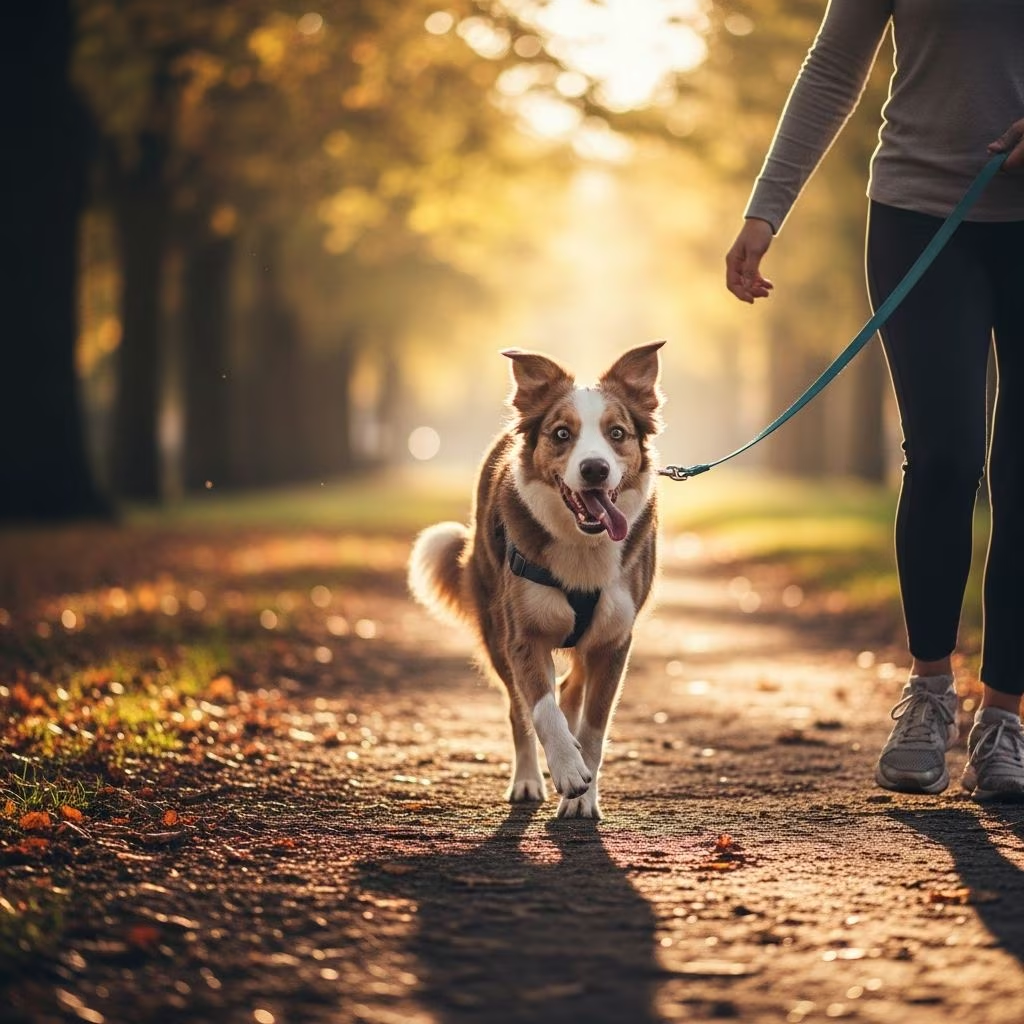
One of the most common challenges dog owners face is managing excessive enthusiasm during walks. When a dog becomes overstimulated before or during a leash walk, the experience becomes stressful for both pet and owner. This enthusiastic behavior stems from genuine excitement and anticipation, but without proper guidance, it can escalate into pulling, jumping, barking, and general loss of control. Understanding the root causes and implementing systematic training approaches can transform these chaotic moments into enjoyable, bonding experiences.
Understanding Canine Excitement and Energy Levels
Dogs experience genuine excitement when they recognize the signs of an impending walk. Their enthusiasm represents a desire for adventure, exploration, and mental stimulation. However, this natural eagerness becomes problematic when it manifests as uncontrollable behavior. The intensity of a dog’s excitement varies based on several factors, including breed characteristics, age, individual temperament, and prior conditioning. Some breeds, particularly those bred for high-energy work like Border Collies or herding dogs, experience naturally elevated arousal levels that require specific management strategies.
Recognizing your dog’s individual excitement threshold is crucial. A dog’s energy exists on a spectrum, ranging from completely calm to intensely hyperaroused. Understanding where your specific dog falls on this spectrum helps determine which intervention strategies will be most effective. An exceptionally calm dog requires different approaches than one exhibiting extreme enthusiasm.
Pre-Walk Physical Conditioning: Reducing Excess Energy
One of the most effective strategies for managing walking excitement involves addressing excess energy before the leash even comes out. When dogs carry high levels of pent-up energy, they become increasingly difficult to manage during structured walks. This approach isn’t about complete exhaustion but rather taking the edge off their excitement levels.
Pre-walk conditioning can take several forms depending on your dog’s needs and your available resources:
- Backyard Play Sessions: Spend 15-20 minutes engaging your dog in active play, such as fetch or ball tossing. This focused activity provides immediate physical exertion without requiring neighborhood walks.
- Indoor Training Games: For dogs needing mental rather than physical stimulation, structured training games like “find the treat” or retrieval exercises challenge their problem-solving abilities.
- Directed Training Work: Intensive obedience drills or shaping exercises that require mental focus can be surprisingly tiring for dogs.
- Running or Vigorous Exercise: For extremely high-energy dogs, brief runs (5-10 minutes) before structured walks can dramatically improve their ability to focus and respond to training.
This pre-conditioning phase teaches dogs that their excitement has an outlet before the formal walk begins. Once this excess energy is channeled appropriately, dogs become more receptive to learning calm walking behaviors and responding to handler direction.
Establishing Calm Boundaries Before Departure
The moments immediately before a walk—when you pick up the leash, approach the door, and prepare to step outside—represent critical training windows. Many owners inadvertently reinforce excited behavior by proceeding with walks when their dogs remain in heightened states. This teaches dogs that enthusiasm produces the desired outcome.
Instead, implementing a staged calmness requirement teaches a fundamentally different lesson. The process involves several distinct phases, each requiring calm behavior before advancement:
- Leash Pickup Stage: Calmly pick up the leash when your dog is settled. If excitement erupts, place the leash down and wait for composure to return.
- Door Approach: Only move toward the door when your dog remains calm. Pausing when excitement reappears teaches that arousal reverses progress.
- Threshold Crossing: Practice stepping outside only after your dog demonstrates calm, focused behavior at the doorway.
- Walking Initiation: Begin your walk only after your dog settles into a calm state of mind.
This approach requires patience and consistency but creates a powerful association: calm behavior opens doors to wonderful experiences, while excitement closes them. Dogs quickly learn this trade-off when it’s applied consistently.
Mastering Directional Redirects During Walks
Once you’re walking, certain real-time techniques help manage pulling and sustained excitement. The about-face technique provides a particularly effective method for addressing pulling behavior while teaching directional awareness and pack focus.
When your dog reaches the end of the leash and begins pulling forward, immediately execute a 180-degree turn while cheerfully calling a redirect cue such as “This way!” This isn’t a correction or punishment; it’s a simple redirection. Your dog will quickly learn that pulling ahead creates an unexpected consequence—moving further away from desired destinations. Repeated applications teach dogs that maintaining attention on their handler’s direction produces better outcomes than pulling ahead.
Beyond directional changes, unpredictability serves an important engagement function. Varying your walking pace—alternating between slow strolls and quicker movement—and making random directional changes keeps your dog mentally engaged. These changes require your dog to monitor your movements, naturally reducing focus on environmental distractions like other dogs or wildlife.
Reinforcing Voluntary Connection and Check-Ins
Walking successfully with an excited dog depends partly on the strength of your relationship and your dog’s willingness to maintain focus on you. During walks, dogs frequently offer spontaneous check-ins—glancing back at you or briefly looking toward you. These moments represent gold-standard training opportunities.
When you notice your dog checking in with you without prompting, immediately mark this behavior with enthusiastic verbal praise and reward it with a treat or affection. This reinforcement teaches your dog that maintaining connection with you produces positive consequences. Over time, dogs begin offering these check-ins more frequently because they’ve learned this behavior earns rewards.
By rewarding voluntary connection, you’re essentially teaching your dog that you’re more interesting than the ground-level smells or distant distractions. This transforms you from merely the person holding the leash into a genuine source of engagement and excitement. Dogs walking with owners they’ve bonded with through this method demonstrate significantly improved focus and reduced pulling.
Environmental Considerations and Leash Selection
The physical tools you use during walks influence your ability to manage excitement. Proper leash selection matters more than many owners realize. For dogs exhibiting significant pulling or excitement, shorter leashes (4-6 feet) provide better control than extended lines, which allow dogs to build momentum and pull with greater force.
Certain high-energy breed types benefit from additional management tools. For example, weight vests or backpacks can help channel intense energy by providing dogs with a sense of purpose and additional physical exertion. When dogs carry weight, they naturally moderate their pace and become slightly fatigued, improving their ability to focus and respond to training.
Environmental selection also matters during training phases. Beginning your calm-walking training in quiet, familiar environments with minimal distractions sets your dog up for success. As your dog improves, gradually introduce more stimulating environments, building their ability to maintain composure despite increased distractions.
Consistency and Progression Through Training Stages
Successfully managing an excited dog requires breaking the training process into smaller, manageable components. Rather than expecting your dog to suddenly walk perfectly during structured neighborhood walks, practice individual elements at home without initially leaving your property. This deliberate staging prevents dogs from becoming overexcited before they’ve had opportunities to practice calm behaviors.
Consistency from all family members handling the dog is essential. If one person enforces calm-before-proceeding while another permits excited behavior, training progresses slowly or stalls entirely. Establishing household protocols that everyone follows ensures your dog receives consistent feedback regardless of who’s holding the leash.
The Handler’s Mindset and Energy Management
Dogs are exceptionally perceptive to handler tension and hesitation. When owners feel anxious about their dog’s pulling strength or uncertain about training techniques, dogs sense this uncertainty and respond by either becoming more anxious themselves or testing boundaries more aggressively. Conversely, handlers who project calm confidence provide their dogs with psychological security and clear direction.
Developing a calm, confident demeanor during walks—even when managing excitement—sets the appropriate tone. This doesn’t require suppressing your personality; it involves maintaining composure and conviction in your training approach. Your dog looks to you for leadership and security. Communicating confidence through steady handling and calm redirection teaches your dog that you’re capable of managing their excitement and maintaining their safety.
Addressing Breed-Specific Energy Requirements
Different dog breeds were developed for vastly different purposes, and these inherited drives influence their baseline energy levels and enthusiasm during walks. Herding breeds, sporting breeds, and working breeds typically require substantially more physical and mental stimulation than companion breeds. Ignoring these breed-specific requirements often results in chronic overexcitement and difficulty managing walks.
Understanding your dog’s breed background helps you tailor your approach appropriately. A Border Collie requires different walking management than a Basset Hound. High-drive breeds benefit from activities that channel their specific motivations—retrieving games for sporting breeds, scent work for hound breeds, or herding-style exercises for herding dogs. When dogs receive appropriate outlets for their breed-driven behaviors, they become calmer and more manageable during regular walks.
Building Long-Term Walking Success
Transforming an excited dog into a calm walking companion requires patience, consistency, and realistic expectations. Most dogs don’t suddenly change their behavior after one training session. Meaningful behavioral modification typically requires repeated practice over weeks or months, with frequent short sessions producing better results than occasional lengthy attempts.
Tracking progress helps maintain motivation and identify what’s working versus what needs adjustment. Many owners find that charting their dog’s excitement levels during walks reveals gradual improvement that might otherwise seem invisible. Celebrating small victories—like your dog maintaining calm through a doorway transition or checking in with you once during a walk—reinforces that training is progressing.
References
- Walking An Excited Dog — Whole Dog Journal. Accessed March 2026. https://www.whole-dog-journal.com/behavior/walking-an-excited-dog/
- Leash Training Your Dog When It’s Too Excited to Walk — The Online Dog Trainer. Accessed March 2026. https://theonlinedogtrainer.com/leash-training-your-dog-when-its-too-excited-to-walk/
- How to Teach a Dog to Not Get Over Excited Before a Walk — Doggone Problems. Accessed March 2026. https://www.doggoneproblems.com/rowlfy-teach-a-dog-to-not-get-over-excited-before-a-walk/



