

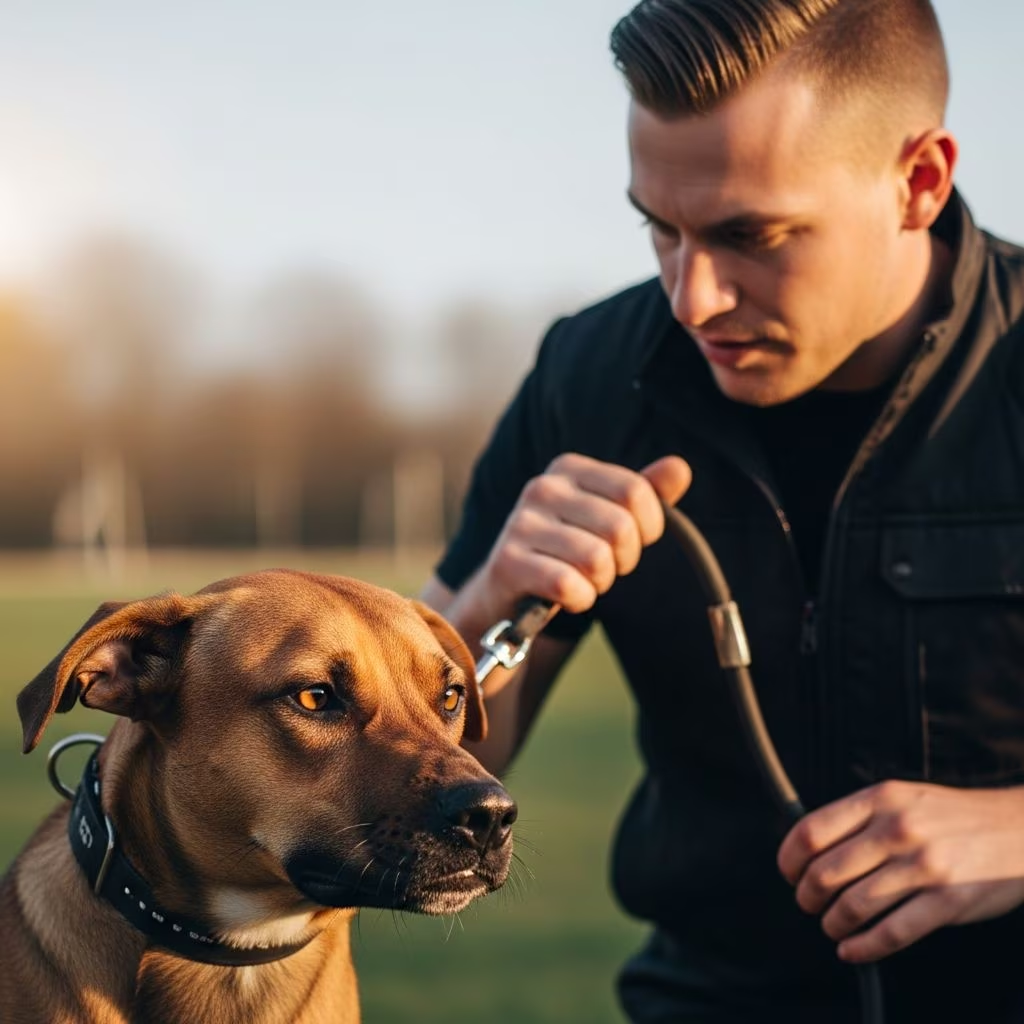
Dog aggression manifests through growling, snapping, or biting and often stems from fear, pain, or inadequate socialization, but it can be addressed through structured prevention and modification techniques.
Recognizing the Early Indicators of Canine Aggression
Spotting aggression before it escalates is crucial for safety. Dogs communicate discomfort via stiff posture, raised hackles, lip curling, or intense staring, which signal an impending reaction. These subtle cues often precede overt actions like lunging or nipping, allowing owners to intervene promptly.
- Stiff body language: Frozen movements or forward-leaning posture indicate tension.
- Vocal warnings: Low growls or snarls serve as auditory alerts to back off.
- Facial signals: Bared teeth, wrinkled muzzle, or whale-eye (whites showing) reveal unease.
- Tail positions: A rigid, high tail differs from playful wagging and suggests arousal.
Observing these in context helps differentiate play from threat. For instance, resource guarding over food might show as hovering or snapping when approached.
Unpacking the Primary Causes Behind Aggressive Displays
Aggression rarely occurs without provocation. Common triggers include fear from unfamiliar stimuli, territorial instincts, or frustration from unclear boundaries. Medical issues like pain from arthritis or dental problems can also provoke irritability, mimicking behavioral problems.
| Cause Category | Description | Examples |
|---|---|---|
| Fear-Based | Dog perceives threat, reacts defensively | Strangers approaching too closely, loud noises |
| Possessive | Guarding valued items | Food bowls, toys, or sleeping areas |
| Pain-Induced | Underlying health discomfort lowers tolerance | Injuries, infections prompting sudden changes |
| Frustration | Blocked goals or conflicting signals | Leash restraint during excitement |
Environmental factors, such as inconsistent handling across family members, exacerbate these, leading to confusion and heightened responses.
Prioritizing Safety in Households with Aggressive Tendencies
The initial response to aggression must focus on prevention of incidents. Create physical barriers like baby gates or crates to separate the dog from triggers during high-risk times, such as mealtimes or guest arrivals. Leash management and head halters provide control without confrontation.
Avoid punishment, as it intensifies fear and aggression; studies link aversive methods like shock collars to worsened outcomes. Instead, log all incidents to identify patterns, informing tailored interventions.
- Use crates for calm confinement, trained positively beforehand.
- Employ visual barriers in yards to prevent inter-dog conflicts.
- Maintain supervision or separation when adults are absent.
Building a Foundation Through Socialization and Routine
Prevention begins early. Puppies benefit immensely from diverse exposures to people, animals, and environments, fostering confidence. For adults, gradual introductions paired with rewards build tolerance.
Establish consistent rules: designate off-limits zones and feeding protocols to curb possessiveness. Daily exercise discharges pent-up energy, reducing frustration-driven outbursts.
Core Training Techniques for Behavior Shift
Positive reinforcement forms the backbone of effective training. Reward calm responses with treats and praise to associate good outcomes with desired actions. Redirect from triggers by cueing alternatives like ‘sit’.
Desensitization involves sub-threshold exposure to stimuli, progressing slowly. Counter-conditioning pairs triggers with positives, reshaping emotional responses from fear to anticipation.
- Identify tolerance threshold via distance or intensity.
- Expose at safe levels, delivering rewards immediately.
- Gradually intensify while monitoring for stress.
Foundation skills like ‘settle’ or muzzle training enhance manageability.
When Medical Evaluation is Essential
Sudden aggression warrants veterinary scrutiny to exclude pain or neurological issues. Bloodwork or imaging may reveal treatable conditions. If behavioral, vets can prescribe anxiolytics alongside therapy, improving trainability.
Professional Guidance for Complex Cases
For persistent issues, certified behaviorists craft customized plans, assessing via observation and history. They integrate management, modification, and monitoring, often yielding high success rates with owner commitment.
Group classes suit mild cases, while private sessions address severe ones. Progress tracking ensures adjustments.
Common Missteps and How to Avoid Them
Owners often misinterpret aggression as dominance, leading to confrontational tactics that backfire. Overlooking medical roots delays resolution. Inconsistency undermines training; all household members must align.
- Myth: Alpha rolls establish control. Fact: They heighten fear.
- Myth: Aggression self-resolves. Fact: It reinforces without intervention.
Long-Term Strategies for a Peaceful Coexistence
Sustained calm requires ongoing enrichment: puzzle toys, scent games, and obedience drills. Regular check-ins with pros maintain gains. Most dogs respond well, transforming into confident companions.
Frequently Asked Questions
Can all aggressive dogs be rehabilitated?
Yes, most can through early, professional intervention, though severity and history influence outcomes. Safety remains paramount.
Is punishment ever appropriate?
No, it escalates aggression; focus on rewards and avoidance.
What if aggression appears suddenly in an older dog?
Consult a vet immediately for pain or illness checks.
How long does training take?
Weeks to months, varying by case; consistency accelerates progress.
Should I rehome an aggressive dog?
Only as a last resort after exhausting professional options; many thrive with proper management.
References
- Preventing Dog Aggression — Evergreen Animal Hospital. 2025-11-14. https://evergreenanimalhospital.com/2025/11/14/preventing-dog-aggressive-behavior/
- Dog Behavior Problems – Aggression – Getting Started – Safety and Management — VCA Animal Hospitals. N/A. https://vcahospitals.com/know-your-pet/dog-behavior-problems—aggression—getting-started—safety-and-management
- Canine Aggression: Diagnosis and Treatment — Canadian Veterinary Medical Association. N/A. https://www.canadianveterinarians.net/media/phwj42pc/outline-canine-aggression.pdf
- Dog Aggression: Signs, Causes, and How to Manage — Best Friends Animal Society. N/A. https://bestfriends.org/pet-care-resources/dog-aggression-signs-causes-and-how-manage
- Aggression — ASPCA. N/A. https://www.aspca.org/pet-care/dog-care/common-dog-behavior-issues/aggression
- The Truth About Aggression and Dominance in Dogs — UC Davis School of Veterinary Medicine. N/A. https://www.vetmed.ucdavis.edu/sites/g/files/dgvnsk491/files/inline-files/The_Truth_About_Aggression__Dominance_dogs.pdf
- Dogs and Canines Behaviour – Aggression — RSPCA. N/A. https://www.rspca.org.uk/adviceandwelfare/pets/dogs/behaviour/aggression



